


 13/05/2026
  330 views
Establishing a reasonable and effectively applied reward and penalty system is a concern for many managers, leaders, and HR departments. The concept of a 5S reward and penalty system has become a popular rule for creating reward and penalty charts in every business. So how can this 5S rule be applied effectively? Let’s find out in the article below!
Mục lục
- I. What is the 5S rule? Benefits of applying 5S to build a reward and penalty system
- II. What does a 5S reward and penalty policy for company employees include?
- III. 7 steps to build an effective 5S reward and penalty policy for businesses
- 1. Consult the legal basis for building the policy
- 2. Consider establishing a Salary Policy Development Council
- 3. Establish an annual salary fund for the company/enterprise
- 4. Establish a system of job titles and salary grades
- 5. Determine the method, timing, and process for paying employees
- 6. Develop a framework for evaluation, rewards, and penalties
- 7. Applying the policy in practice
- IV. Detailed template for salary, bonus, allowance, and penalty policy for businesses
I. What is the 5S rule? Benefits of applying 5S to build a reward and penalty system
1. What is the 5S rule?
The 5S rule, with the motto “Even small improvements can have a positive impact on overall productivity,” is being applied by many businesses to innovate various areas within the company.
5S is one of the quality management systems applied in all Toyota factories. This system of principles helps create and maintain a tidy, organized, and clean workspace.
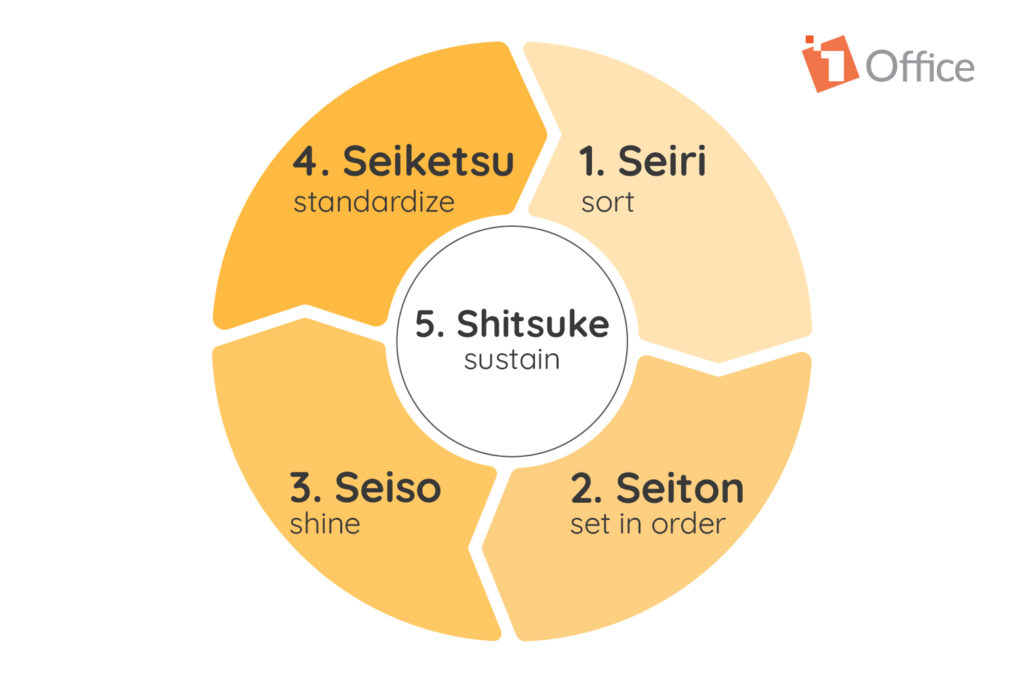
Not only is it applied to workspace layout, but the 5S rule is also effectively used in building a reward and penalty system for employees. 5S is an acronym for 5 Japanese words corresponding to a 5-step process:
- Seiri – “Sort”
Eliminate all unnecessary items in the reward and penalty system, overlooking minor details to focus on important factors for a fair and effective system.
- Seiton – “Set in Order”
Scientifically arrange the important factors you have sorted so the reward and penalty system is easy to track and apply.
- Seiso – “Shine”
Present the reward and penalty system in a clear and transparent layout so employees can easily follow it.
- Seiketsu – “Standardize”
Regularly update changes and improvements to the reward and penalty system to align with the company’s situation and the market.
- Shitsuke – “Sustain”
This is the core element of the 5S system; it is the final step but one that never ends. Be ready for any changes in the reward and penalty system for the company to operate most effectively.
| Read more: INCREASE WORK EFFICIENCY BY 200% WITH WORK IMPROVEMENT IDEAS |
2. Benefits of applying 5S to build a reward and penalty policy
Thanks to the easy-to-understand, easy-to-remember, and highly systematic nature of the 5S method, you can creatively apply it to build a reward and penalty policy for employees in your business.
The 5S rule is suitable for the labor and workforce characteristics of each business (depending on the industry’s specifics, work may involve strenuous tasks, hazardous chemicals, night shifts, etc.).
For the business, this rule brings long-term benefits in terms of culture, reputation, and most importantly, work efficiency. As for employees, 90% of staff are primarily concerned with salary and bonuses when working for a company. A clear reward and penalty system will significantly affect employees when receiving or tracking their salaries.
II. What does a 5S reward and penalty policy for company employees include?
| Types of salary |
|
| Allowances and subsidies |
|
| Read more: 6 steps to standardize the process of building a transparent and fair salary policy |
III. 7 steps to build an effective 5S reward and penalty policy for businesses
1. Consult the legal basis for building the policy
Although it is an internal company document, the reward and penalty policy still needs to comply with legal regulations regarding employee rewards and penalties. To build the most accurate salary and bonus policy for employees, you should refer to several documents such as:
- Official Letter 4320/LĐTBXH-TL from the Ministry of Labor, Invalids and Social Affairs guiding how to build a salary payment process for state-owned enterprises.
- Decree 49/2013/NĐ-CP detailing the implementation of articles of the Labor Code on wages.
- Decree 51/2016/NĐ-CP regulating labor management, wages, and bonuses for employees in one-member limited liability companies with 100% charter capital held by the State.
- Decree 52/2016/NĐ-CP regulating wages, bonuses, and remuneration for managers of one-member limited liability companies with 100% charter capital held by the State.
2. Consider establishing a Salary Policy Development Council
The Policy Development Council is established to ensure it is based on the principles of transparency and democracy, including a council chairperson, a standing member, and members such as representatives from the trade union, party committee, and various departments.
| See more: 5+ Most Common Employee Payroll Templates for 2022 |
3. Establish an annual salary fund for the company/enterprise
The ratio of salary and bonuses to revenue is called the salary rate. This figure is the basis for you to clearly determine the basic salary for employees, the 13th-month bonus policy, and other salary calculation bases.

4. Establish a system of job titles and salary grades
A job title system is a group of jobs with similar nature, difficulty level, and responsibility. This is also the basis for determining the employee’s salary coefficient. To build this job title system, HR can rely on the detailed job description for each position.
5. Determine the method, timing, and process for paying employees
To pay employees correctly and appropriately, HR needs to determine the right method, timing, and payroll process. Businesses and organizations can consider the following forms of payment:
- Fixed salary: This form is applied to administrative positions (Marketing, HR, IT, etc.)
- Piece-rate salary: This form is applied to positions that directly create or sell products (production workers or sales staff).
- A combination of the two forms above: Official salary = basic salary + piece-rate salary.
6. Develop a framework for evaluation, rewards, and penalties
The business should research actual situations within the company to build a criteria table that is most relevant to each department and individual. This way, the evaluation framework can provide strong motivation and encouragement to employees.
7. Applying the policy in practice
For the salary and bonus policy to be put into practice, businesses need to go through the following steps:
- Drafting: The policy should be drafted to be concise, easy to understand, and clear.
- Issuing and applying
- Collecting feedback: After applying the policy, HR needs to collect opinions from company employees to see if it meets everyone’s expectations.
- Amending and supplementing: Employee feedback is the best thing for the Council to review and evaluate.
IV. Detailed template for salary, bonus, allowance, and penalty policy for businesses
=> View and download the detailed 5S reward and penalty policy template here
Through the article above, 1Office has provided you with detailed information on how to build a 5S reward and penalty policy, along with a detailed template that any business can apply. We hope the information above will be useful for businesses. For more detailed information, please contact:
- Hotline: 083 483 8888
- Fanpage: https://www.facebook.com/1officevn/
- Youtube: https://www.youtube.com/channel/UCeTIRNqxaTwk0_kcTw6SxmA
















