10/05/2026
  184 views
Laissez-faire leadership style is a leadership style effectively used by many business owners in their operations. So, what are the special characteristics of this style? What are its pros and cons? Let’s find out with 1Office in the article below!
Mục lục
- 1. What is the laissez-faire leadership style?
- 2. Pros and Cons of the Laissez-Faire Leadership Style
- 3. What factors influence leadership style?
- 4. When to use and not to use the laissez-faire leadership style
- 5. Examples of Laissez-Faire Leadership Style
- 6. When to Use and Avoid the Laissez-Faire Leadership Style
- 7. Frequently Asked Questions about Laissez-Faire Leadership (FAQs)
- 8. Conclusion
1. What is the laissez-faire leadership style?
The laissez-faire leadership style is a personnel management method where leaders create conditions for employees to manage their own work and make decisions independently.
Simply put, the laissez-faire leadership style involves leaders delegating authority and responsibility to their staff to achieve goals. This promotes creativity, enhances personal accountability, and leads to better performance.

At the same time, the laissez-faire leadership style also demonstrates the leader’s trust in the employees’ abilities and capabilities, as well as providing support and resources when needed. This creates a work environment that encourages active participation, creative thinking, and a stronger sense of self-responsibility. On this basis, the business can easily improve its business efficiency and achieve sustainable development and success.
>> Read more: The Art of Leadership – The Key Factor to Get Employees to Give 100%
2. Pros and Cons of the Laissez-Faire Leadership Style
2.1. Pros of the Laissez-Faire Leadership Style
Currently, many businesses use the laissez-faire leadership style with extremely high efficiency. The benefits and advantages of the laissez-faire leadership style include:

- Encourages creativity: Creates a favorable environment for the development of innovative ideas from the staff. Personnel are encouraged to be creative and contribute ideas, especially in situations that require new and different solutions.
- Enhances personal accountability: By delegating authority and responsibility, personnel will self-manage and ensure that goals are achieved. This also promotes responsibility and strengthens a managerial mindset.
- Motivates and boosts performance: When employees have the authority to make their own decisions and influence outcomes, they often work with higher commitment and achieve better performance.
- Develops talent: The laissez-faire leadership style helps employees develop leadership and management skills, communication, conflict resolution, and problem-solving abilities. This creates opportunities for personal and professional growth.
- Builds relationships: Leaders and employees can comfortably discuss and exchange ideas, creating a foundation for continuous learning and improvement. Employees must proactively contact relevant colleagues to complete their work. This helps to connect employees, strengthening team spirit and sharing.
2.2. Disadvantages of the laissez-faire leadership style
Besides the advantages of the laissez-faire leadership style, if a leader does not apply it skillfully and intelligently, it can easily lead to situations such as:

- Leader fails to fulfill management role: Risk of delays and poor quality due to the leader lacking sufficient management skills to control and oversee the work.
- Uneven performance: Not all employees are capable of self-management and working independently. Uneven performance can occur when some employees feel lost or lack self-management abilities.
- Difficulty in conflict management: Without the leader’s intervention, resolving conflicts becomes more difficult, leading to tension and instability within the team.
- Leader blames employees: Empowering employees and delegating responsibility can easily lead to leaders avoiding accountability and blaming employees when incidents occur. This affects development and comprehensive problem-solving.
3. What factors influence leadership style?
Leadership style is the result of the dynamic interaction between the manager’s personal characteristics, the team’s capabilities, and the specific context of the business’s operating environment.
Factors that directly impact leadership style include:
3.1. Work environment
The work environment can strongly influence the ability to apply a laissez-faire leadership style. In an environment that promotes creativity and innovation, this style is often more effective.
Conversely, an environment where decisions must go through multiple levels and are tightly controlled can hinder the effectiveness of the laissez-faire leadership style.
3.2. Personal traits
A leader with an open personality, who is willing to listen and motivate, is well-suited to leverage the laissez-faire leadership style. In this case, the leader can easily adapt to different situations.
However, if the leader has an overly controlling personality or lacks trust in the team’s abilities, this style may not be effective.
3.3 Manager’s qualifications and capabilities
The manager’s level of knowledge and leadership skills play a crucial role in fostering the team’s understanding and acceptance of the laissez-faire leadership style.
The leader needs to know how to support, guide, and create conditions for the team to self-manage effectively.
3.4 Team’s qualifications and capabilities
The self-management ability and personal responsibility of the team members greatly influence how the laissez-faire leadership style is implemented. A team that is confident and capable of making decisions can respond positively to this style.
If the team lacks personal responsibility or the ability to self-manage, applying the laissez-faire leadership style can lead to inefficiency.
4. When to use and not to use the laissez-faire leadership style
The laissez-faire leadership style is suitable for flexible work environments where creativity and independent thinking are highly valued. However, care must be taken to avoid a lack of control or disruption in the management process and to ensure that the organization’s overall goals are still achieved.
Below is a summary table of situations where the laissez-faire leadership style should and should not be used:
| Scenario | When to use | When not to use |
| Projects requiring creativity | – Empower self-management and implementation of creative ideas | – Demanding too much detailed instruction |
| – Encourage employees to propose new ideas | – Excessive management and control | |
| Projects requiring discipline | – Provide clear goals and necessary support | – Not tracking or controlling progress |
| – Empower self-management and personal responsibility | – Not managing or providing support when needed | |
| Boosting morale | – Encourage participation in decision-making and contributing ideas | – Disregarding employee opinions or participation |
| – Foster a spirit of creativity and teamwork | – Harsh evaluation or criticism | |
| Managing self-management | – Support employees in self-managing and directing their work | – Not providing resources or support when needed |
| – Encourage a spirit of autonomy and collaboration | – Excessive intervention or control | |
| Promoting innovation | – Support experimenting with new ideas and innovations | – Limiting diversity and not being open to new ideas |
| – Encourage learning and adjustment | – Discouraging experimentation or change | |
| Creating motivation | – Encourage a spirit of autonomy and personal responsibility | – Excessive control or not allowing self-management |
| – Encourage participation and contribution of ideas | – Not allowing participation or self-management |
5. Examples of Laissez-Faire Leadership Style
When discussing the laissez-faire leadership style, the famous figure Warren Buffett immediately comes to mind. He is one of the greatest entrepreneurs and investors of all time. He is the chairman and CEO of the multinational conglomerate Berkshire Hathaway.
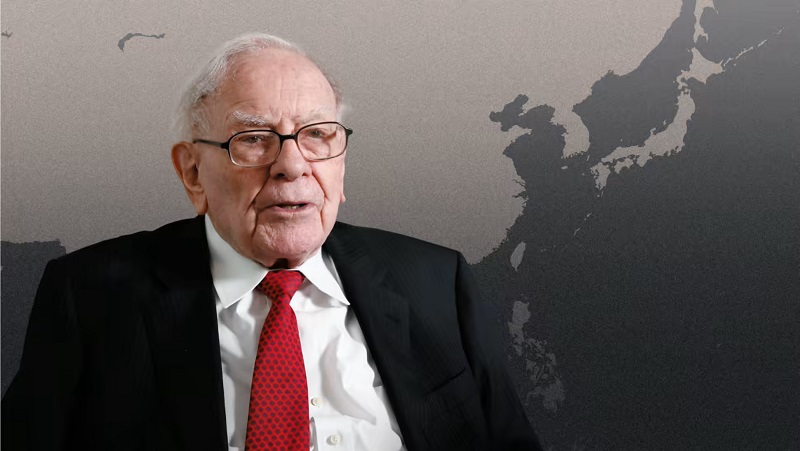
Warren Buffett applied the laissez-faire leadership style in managing Berkshire Hathaway. He allows employees and managers to be autonomous and self-manage their work. This style is based on the principles of empowerment and trust in the abilities of those working under him.
Warren Buffett’s laissez-faire leadership style has achieved incredible success. Berkshire Hathaway has grown strongly and become one of the largest multinational conglomerates in the world. By creating conditions for managers and employees to self-manage, he has fostered a spirit of creativity, innovation, and higher work performance within the organization.
Buffett has proven that trusting and believing in the team’s abilities is the key to boosting performance and achieving success. He encourages leaders to focus on the company’s common interests rather than just personal gain. By creating a free and comfortable environment, he has encouraged creativity and innovation within the company. At the same time, praising and motivating the team has helped build a positive work spirit and motivation.
Next, former U.S. President Herbert Hoover also used the laissez-faire leadership style in his administration. He was known for creating conditions for experienced advisors to take on tasks for which he lacked knowledge and expertise.
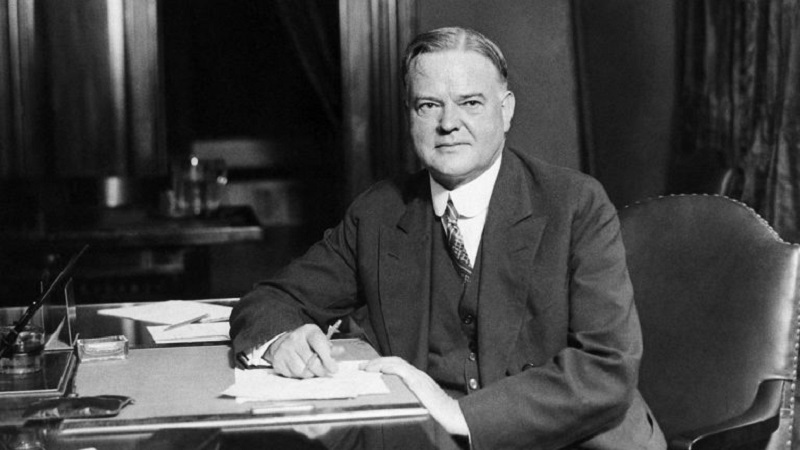
Hoover leveraged the wisdom of experts and specialists in the government to address complex economic and political challenges. He was not afraid to delegate authority and create an environment for capable advisors to contribute ideas and solutions in areas where he was not an expert.
Herbert Hoover’s laissez-faire leadership style helped open the door to a diversity of opinions and thinking, creating conditions for creativity and innovation in problem-solving. This contributed significantly to crisis management and spurred the recovery of the U.S. economy during a difficult period.
6. When to Use and Avoid the Laissez-Faire Leadership Style
The laissez-faire leadership style is not suitable for every context and should be applied selectively. Managers need to understand when to use it to maximize effectiveness and when to avoid it to prevent chaos within the organization.
6.1. When to Apply the Laissez-Faire Leadership Style
- The team is highly skilled and self-managing
The laissez-faire leadership style is most effective when the team has a strong professional foundation and good self-management skills. In this case, members typically have a firm grasp of techniques, clearly understand work objectives, and have experience handling situations independently, so they do not require close supervision from management.
For example, in software engineering teams with many senior developers and capable product owners, or in R&D groups with scientists and specialized technical experts, empowerment allows them the flexibility to make decisions and test optimal solutions. When employees are free to choose their approach, they tend to come up with more creative solutions and shorten implementation time, while still maintaining a high quality of work.
- Creative environments that require many ideas and experiments
The laissez-faire leadership style is also particularly suitable for environments that demand creativity and continuous experimentation. Organizations such as marketing agencies, design studios, content departments, or innovation labs often need space for employees to freely develop ideas without being constrained by rigid processes.
For instance, in an advertising campaign, the team needs to constantly generate and test numerous ideas to find the best approach. In a game studio, creative freedom allows the design team to dare to experiment with new game mechanics. Applying the laissez-faire leadership style in these contexts encourages employees to maximize their individual potential and embrace a “trial and error” mindset, leading to distinctive products, campaigns, or ideas that bring high value to the business.
- Projects or tasks that are independent and have few interdependencies
For projects or tasks that are largely independent, the laissez-faire leadership style is a logical choice as it helps reduce layers of middle management and optimizes implementation speed. This model is particularly effective for specialized tasks or micro-projects where an individual can complete the entire work from start to finish without needing close coordination with multiple parties.
For example, a data analyst can independently research, compile, and deliver an in-depth report, or a copywriter assigned to write all the content for a campaign can work proactively at their own pace. In such situations, granting autonomy helps employees develop self-reliance, saves communication time, and enhances work efficiency, while the leader can focus on the overall strategy rather than micromanaging small tasks.
- The goal is to develop individual capabilities and create a proactive environment
Beyond work efficiency, the laissez-faire leadership style is also an effective tool for developing people and a proactive culture within the organization. When a leader wants to build a team with a high sense of responsibility, ready to solve problems independently and advance to management positions, assigning challenges and allowing employees to create their own action plans is the most effective practical training method.
Instead of micromanaging every step, the leader acts as a guide and provides feedback. Employees are empowered to make decisions, take responsibility for the outcomes, and learn from their mistakes. Through this process, they gradually develop strategic thinking, planning, and work management skills, while also fostering a culture of “taking initiative instead of waiting for instructions”—a crucial value in modern organizations.
- The organization has clear processes and quality standards
The laissez-faire leadership style is only truly effective when implemented within a system that has a clear framework of processes, quality standards, and control mechanisms. When the organization has established specific KPIs, SOPs, or output standards, reducing direct intervention from the leader can still ensure stable work quality.
For example, in a laboratory with strict testing procedures or an operations department with detailed output evaluation criteria, employees can proactively carry out their work within a safe framework, measured by transparent metrics.
However, to mitigate risks when applying this style, leaders need to establish some clear principles: define specific scopes of authority (regarding budget, time, and decision-making), set regular checkpoints like weekly syncs or review meetings to monitor progress, maintain a channel for professional support when employees face difficulties, and clearly define result evaluation criteria to ensure fairness and transparency. This way, freedom remains within a controlled framework, helping the business be both flexible and maintain effective governance.
6.2 When not to apply the laissez-faire leadership style
Despite its many benefits in fostering creativity and autonomy, the laissez-faire leadership style is not always suitable. In some contexts, granting too much freedom can lead to a loss of control, decreased performance, or even pose serious risks to business outcomes. Below are situations where businesses should consider limiting or avoiding this style.
- When the team is new, inexperienced, or lacks self-discipline
In the early stages of team formation, when employees do not yet fully understand processes and lack self-management skills and the ability to make independent decisions, applying a laissez-faire style can lead to chaos.
For example, in newly established businesses, employees often need specific guidance on tasks, procedures, and work standards. If a leader delegates authority too early without initial direction or control, the team is likely to go in the wrong direction, duplicate work, or miss important tasks.
During this stage, businesses should prioritize a directive or coaching leadership style, and then gradually expand autonomy as the team matures.
- When the business requires speed, discipline, and tight control
In fields that demand high precision and strict adherence to processes, such as manufacturing, transportation, logistics, or supply chain, decision-making needs to be fast, consistent, and controlled. A laissez-faire leadership style in these environments can easily lead to a loss of discipline, directly impacting progress and output quality.
For example, on a production line, if each work team independently changes methods or operating procedures without management approval, the risk of product defects or workplace safety incidents will increase. Similarly, in logistics, handling tasks freely without following standards can cause order delays, shipping errors, or property damage.
Therefore, in cases requiring stability, compliance, and seamless coordination, a controlling (autocratic or transactional) leadership style is more suitable.
- When a project is high-risk or has a major impact on business strategy
For strategic projects with large budgets, high risks, or a direct impact on the company’s image and finances, a laissez-faire leadership style can lead to a lack of unified direction.
When each member is allowed to make important decisions without approval, the business may face strategic misalignment, unexpected costs, or a communications crisis.
For example, during a new product launch, if the marketing, production, and sales teams act independently without central coordination, the brand message can become inconsistent, causing significant damage to the company’s image.
Therefore, in contexts that require strategic unity, rapid response, and tight risk management, a coordinating or directive (strategic leadership) style is a more optimal choice.
- When the organization is in a period of crisis or major change
During periods when the business faces a crisis, restructuring, or revenue decline, employees often need a leader to provide clear guidance, help them find direction, and stabilize their morale.
If, in this situation, the leader maintains a “laissez-faire” style—with little intervention and minimal direction—the team can become disoriented, lose motivation, and experience a decline in unity.
Instead, the leader should switch to a decisive, directive, and inspirational leadership style (transformational or directive) to reinforce trust and re-establish internal order before returning to granting autonomy later.
- When the management system, processes, or monitoring tools are incomplete
The laissez-faire leadership style can only be effective when the business has a transparent management system, measurement tools, and a clear feedback mechanism. Without these elements, granting autonomy can lead to leaders losing track of progress and finding it difficult to detect problems early.
For example, in a company without project management software or a regular reporting mechanism, employees working freely in their own way can lead to delays or errors that the leader cannot intervene in time to correct.
In such cases, the business needs to first build a clear governance foundation (KPIs, processes, work management tools) before applying the laissez-faire style to ensure a balance between empowerment and control.
7. Frequently Asked Questions about Laissez-Faire Leadership (FAQs)
How is laissez-faire leadership different from ‘neglecting’ employees?
The difference lies in direction. A laissez-faire leader still sets goals (KPIs) and provides resources but does not interfere with the methods. Neglect is abandoning both the process and the results, providing no direction, which easily leads to failure.
How do you know if a team is ready for this leadership style?
A team is ready when it has all three elements: Strong expertise (can handle tasks independently), High self-discipline (does not need to be pushed), and a Sense of responsibility (proactively makes decisions and is accountable for the results).
What is the biggest risk of applying the laissez-faire leadership style?
The biggest risk is losing control of progress. Without regular checkpoints, it is difficult for a manager to detect deviations in time, leading to the project going in the wrong direction or a lack of consistency between departments.
Should the laissez-faire style be applied to new employees (Newbies)?
No. New employees need specific guidance on processes and culture. Applying the laissez-faire style too early can make them feel lost and prone to errors. Start with a directive style and only grant autonomy once they have mastered their expertise.
How can you lead with a laissez-faire style while still controlling work performance?
Leaders need to build a system of standard operating procedures (SOPs) and use centralized management tools. Tracking results through real-time dashboards helps monitor progress at all times without deeply interfering with employees’ autonomy, ensuring that freedom is exercised within a safe framework.
8. Conclusion
The article above has shared the most useful content about the laissez-faire leadership style. We hope it has provided you with insightful perspectives and a deep understanding of this leadership approach. Based on the specific nature of your business operations, you can also apply the laissez-faire leadership style to boost business efficiency. We wish you success!