


 11/05/2026
  808 views
The PESTEL model is a tool that helps businesses analyze external environmental factors such as political, economic, social, technological, environmental, and legal. Applying PESTEL correctly will help businesses identify opportunities, risks, and develop appropriate strategies. In this article, 1Office will help you understand what PESTEL is, how to analyze it in detail, and provide practical, easy-to-apply examples.
Mục lục
- 1. What is the PESTEL model?
- 2. Why do businesses need to analyze the PESTEL model?
- 3. The PESTEL analysis process for all business sectors
- 4. Industries That Most Frequently Need PESTEL Analysis
- 5. Real-World Example of the PESTEL Model in a Vietnamese Business – Vinamilk
- 6. Applications of the PESTEL model in corporate strategy
- 7. What are the advantages and limitations of the PESTEL model?
- 8. How to proceed when PESTEL analysis does not yield the desired results
- 9. Frequently Asked Questions
1. What is the PESTEL model?
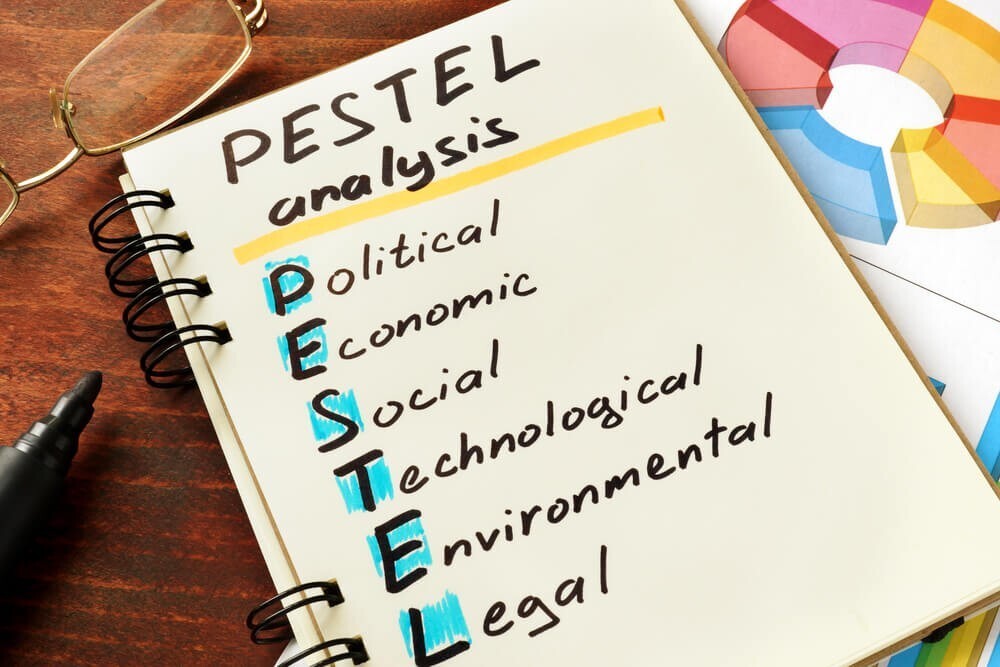
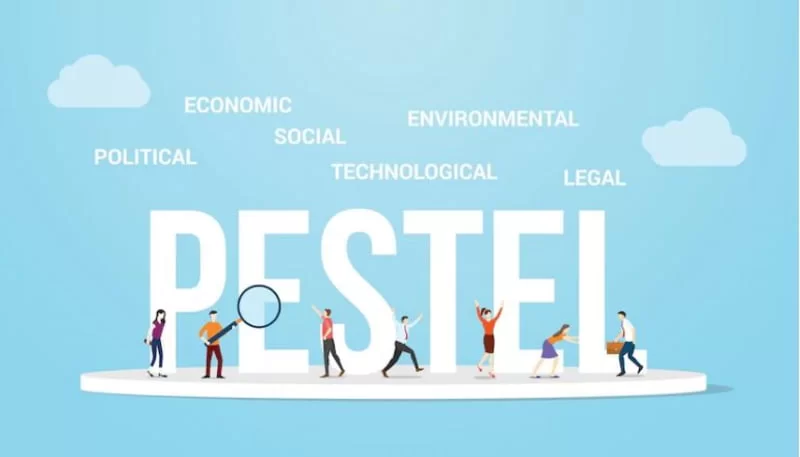
The PESTEL model is a business environment analysis tool used by companies to assess external factors affecting their business operations. This model includes 6 factors: Political, Economic, Social, Technological, Environmental, and Legal. These are external factors that businesses must face and consider when making strategic decisions.
2. Why do businesses need to analyze the PESTEL model?
Currently, the PESTEL model is widely used in business and strategic management. It helps managers make appropriate strategic decisions, capitalize on external market opportunities, and minimize potential risks.
Additionally, regular PESTEL analysis helps businesses stay updated on the latest trends in the business environment, thereby developing new products and services or creating more effective Marketing strategies. This enables businesses to seize opportunities and face the challenges present in the market.
In summary, the PESTEL model is a crucial tool for business environment analysis and is widely applied across various business areas. Companies need to analyze PESTEL factors to better understand the business environment and make strategic decisions that align with their goals and values.
>> See more: A guide to creating the most professional and detailed business plan for your company [Template included]
3. The PESTEL analysis process for all business sectors
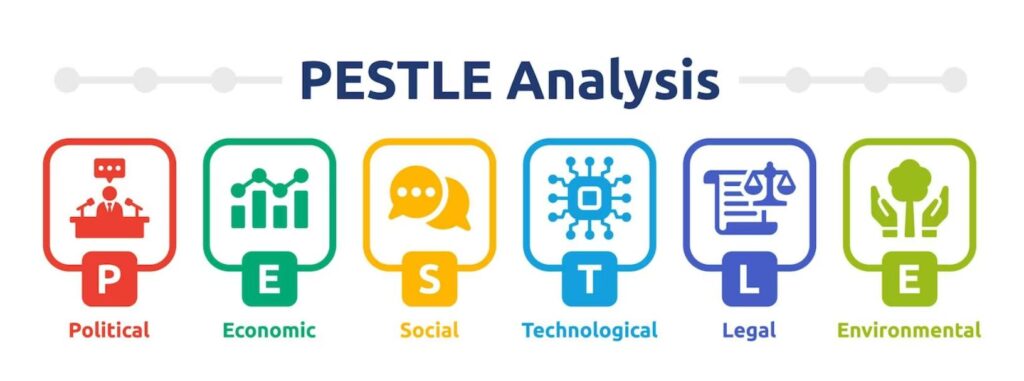
Step 1: Analyze the 6 factors in the model
- Political factors: Relate to policies and regulations established by governments and international organizations. These factors include tax policies, legal regulations, political stability, international relations, and other administrative policies.
For example, a natural gas production company must comply with government regulations related to resource management and environmental protection.
- Economic factors: Relate to the overall economic situation of a country or region and its impact on the business. These factors include economic growth rate, exchange rates, inflation, fiscal policy, and real estate.
For example, a phone manufacturing company must face changes in the industry and competition within its market segment.
- Social factors: Relate to the social conditions of a country or region and their impact on the business. These factors include cultural diversity, religion, education, consumer habits, and other social issues.
For example, a fashion business must adapt to changing fashion trends and customer preferences.
- Technological factors: Relate to advancements in technology and their impact on the company’s products and services. Additionally, technological factors involve strategies for product and service innovation, developing online sales channels, and enhancing data management and information security.
For example, a computer manufacturing company must contend with changes in computer technology and competition among companies in the industry.
- Environmental factors: Relate to the impact of the environment on the business and its products, including climate change, resource depletion, and pollution issues.
For example, a children’s toy manufacturer must comply with government regulations regarding product safety and environmental quality.
- Legal factors: Relate to the rules and regulations governing business operations. This includes areas such as intellectual property rights, human resource management, environmental protection, and occupational health and safety…
For example, a retail business must face government regulations on consumer protection and comply with legal regulations related to registration and certification.
Step 2: Research and Information Gathering
Gather information from various sources to get a comprehensive and accurate view of the business environment. Information should be collected from different sources such as newspapers, books, research and statistical reports, and dialogues with customers, partners, and competitors.

Besides internet search engines, there are two other notable options for finding necessary information. The first is reports from non-governmental organizations, such as non-profits or other government organizations. These reports often contain a large amount of reliable data on specific topics and can help you better understand the issue you are interested in.
The second is reports from professional research and consulting firms (third parties). Although they often come at a significant cost, these reports contain specific, reliable information that may not be found elsewhere. Additionally, the PESTEL analysis must be conducted accurately and honestly, without misinformation or influence from subjective viewpoints.
Step 3: Evaluate and Prioritize
It is necessary to focus on analyzing the most important factors for the business’s operations. Over-focusing on unimportant factors will waste the company’s time and resources. At the same time, the PESTEL analysis needs to consider the future so that the business can develop plans and strategies suitable for the long-term business environment.
Step 4: Report the PESTEL Analysis Results
Finally, it is necessary to draw conclusions about the impact of PESTEL factors on the business and provide recommendations for the company’s future strategies and operations. The business can combine this with a SWOT analysis: Combining PESTEL analysis with SWOT analysis (Strengths, Weaknesses, Opportunities, Threats) will help the business gain a more comprehensive view of its operations, thereby developing suitable plans and strategies.
4. Industries That Most Frequently Need PESTEL Analysis
In a volatile economy, not all businesses are equally affected by external factors. Industries with a high dependency on policy, markets, and social behavior often need to use PESTEL periodically to identify risks and seize opportunities. This serves as a “guiding star” that helps businesses in sensitive sectors always maintain a proactive stance.
PESTEL analysis within each industry is not just a theoretical tool but also a way to measure the real pressures of the business environment. Clearly identifying which factors have the strongest impact will help managers avoid making decisions based on intuition and develop more precise response plans.
- In the finance and banking sector, PESTEL helps businesses assess changes in interest rates, monetary policies, or legal regulations. This industry is directly influenced by macroeconomic policies, so regular analysis helps control risks and forecast capital market fluctuations.
- For real estate, legal and economic factors are decisive. PESTEL analysis will reveal the impact of planning, land policies, taxes, as well as supply and demand fluctuations. This allows businesses to orient project development in line with the current business environment.
- In the pharmaceutical and healthcare industry, legal and social factors are particularly important. Changes in drug circulation regulations, the trend of an aging population, or health safety requirements compel businesses to closely follow PESTEL analysis to ensure compliance and capture market demand.
- The information technology industry is strongly influenced by technological and legal factors. PESTEL helps businesses identify digital transformation trends, data security policies, or legal frameworks for AI. Regular analysis helps tech companies stay ahead of trends and maintain a competitive edge.
- For F&B and retail, social and environmental factors are most prominent. PESTEL helps businesses predict changes in consumer behavior, green nutrition trends, or the impact of food safety regulations. As a result, businesses can flexibly adjust their product strategies and distribution channels.
As can be seen, each industry has its own unique characteristics, but the common thread is that they are all strongly influenced by macroeconomic factors. PESTEL analysis not only helps businesses “know themselves and know others” but also becomes an early warning tool, ensuring that development strategies do not deviate in the face of business environment fluctuations.
5. Real-World Example of the PESTEL Model in a Vietnamese Business – Vinamilk
Vinamilk is one of the leading dairy companies in Vietnam and has applied the PESTEL model to assess the impact of environmental factors on its business operations.
- Political: Vinamilk has had to deal with implementing government regulations on food safety and other quality standards. They have had to increase investment costs to meet these requirements.
- Economic: The Vietnamese dairy market is growing strongly, but Vinamilk faces competitors in terms of price and product quality. They have to find ways to increase productivity and reduce production costs to compete.
- Social: The demand for dairy products is increasing, but consumer trends are shifting towards fresh milk and specialty milk – this is a major challenge for Vinamilk. They have had to invest in research and development of new products to meet market demand.
- Technological: Technology in dairy production is advancing, and Vinamilk has invested heavily in research and development to create high-quality products that meet quality standards.
- Environmental: Ensuring a healthy environment and protecting animals during the production process are important factors for Vinamilk. They have invested in waste treatment technology and enhanced environmental protection activities.
- Legal: Regulations related to food safety and product quality are crucial factors for Vinamilk. They have invested in research to meet food safety and product quality standards.
By analyzing the key factors of the PESTEL model, Vinamilk has gained a comprehensive view of its business environment, enabling it to make sound strategic decisions and meet the needs of customers and the market.
6. Applications of the PESTEL model in corporate strategy
The PESTEL model is a very useful business environment analysis tool that helps businesses better understand the external factors affecting their operations. By analyzing PESTEL factors, businesses can make more accurate and effective strategic decisions. Specifically, the PESTEL model is applied in the following areas:
- Market development strategy:
The PESTEL model helps businesses get an overview of the business environment and assess market potential to build a suitable development strategy.
- Product strategy:
PESTEL factors such as culture, technology, and environment can affect the reception and use of a company’s products. Therefore, analyzing these factors will help businesses build a product strategy that aligns with market needs and trends.
- Pricing and brand positioning strategy:
Economic, political, and social factors can affect a company’s pricing and brand positioning. Analyzing PESTEL factors will help businesses make more effective decisions on pricing and brand positioning.
- Risk management strategy:
The PESTEL model also helps businesses assess risks and opportunities in the business environment. This helps businesses identify and address potential issues and build an effective risk management strategy.
- Sustainable development strategy:
Environmental and social factors can affect business operations and shape the company’s image. Analyzing PESTEL factors helps businesses assess the impact of their operations on the environment and society, thereby building business plans and sustainable development strategies that align with the company’s values and criteria.
- International expansion strategy:
Different political, economic, and social factors in various countries can affect a company’s business operations. Analyzing PESTEL factors helps businesses assess the risks and opportunities in the business environments of different countries and build an effective international expansion strategy.
>> See more: What is STP? Applying STP strategy in Marketing to help businesses conquer the market
7. What are the advantages and limitations of the PESTEL model?
7.1 Advantages:
Easy to apply: This model does not require deep expertise in economics, law, or technology, making it very easy to apply within a business.
Broad scope of analysis: It includes 6 factors covering many different aspects of the business environment, helping businesses get a comprehensive overview.
Helps make more accurate decisions: Because PESTEL analysis helps businesses better understand the market situation, strategic direction, and assess risks and opportunities.
Prepares for the future: The PESTEL model not only analyzes current factors but also provides forecasts for the future, helping businesses prepare for various scenarios and create suitable plans.
Helps increase competitiveness: By better understanding the market, customers, competition, and other factors, businesses can develop suitable products and services and increase their competitiveness in the market.
7.2 Limitations:
Does not provide specific solutions: PESTEL analysis only provides information and assesses the external environment, but it does not offer specific solutions to solve problems.
Does not differentiate the impact of factors: The PESTEL model does not assess the degree of influence of each factor, failing to distinguish between important and unimportant factors.
Easily influenced by subjective views: PESTEL analysis can be easily influenced by the subjective opinions of managers and experts.
Can become outdated: The business environment often changes continuously and rapidly, so businesses need to constantly update information to ensure the PESTEL model remains effective.
8. How to proceed when PESTEL analysis does not yield the desired results
- Review the collected information: Re-check the collected information to ensure it is complete and accurate. If necessary, you can collect new information.
- Re-analyze the factors: If the analyzed factors are not detailed enough or are inappropriate, you can re-analyze them using other methods.
- Re-examine the interplay between factors: If the factors have been analyzed without considering their interactions, you can perform the analysis again to examine the impact they have on each other.
- Seek other information sources: If the PESTEL model does not produce the desired results, you can look for other information sources to obtain new and updated information.
- Revisit assumptions: If the analysis results are not as expected, you can review your assumptions and adjust your analysis accordingly.
- Perform the analysis again: If necessary, you can redo the entire PESTEL analysis to achieve accurate results that are suitable for the business’s objectives.
9. Frequently Asked Questions
From this article, it’s clear that PESTEL analysis is a very useful tool that helps businesses better understand the business environment and the external factors affecting their operations. See more related articles from 1Office:
















