


What is Unearned Revenue? How to account for account 3387


Unearned revenue is an accounting item that can be easily misunderstood, especially when a business receives money from customers before fulfilling its obligation to provide goods or services. If you want to understand what unearned revenue is, when to record it in Account 3387, and how to account for it correctly, this article will help you grasp everything from the concept to practical examples.
Mục lục
- 1. What is unearned revenue?
- 2. The difference between unearned revenue and customer prepayments
- 3. Accounting methods for unearned revenue
- 4. How to present unearned revenue on financial statements
- 5. The importance of unearned revenue in financial management
- 6. Common mistakes when accounting for unearned revenue
- 7. Frequently Asked Questions about Unearned Revenue (FAQ)
- Conclusion
1. What is unearned revenue?

Unearned revenue is the money an organization or company receives in advance from customers for products or services that the business has not yet provided or has not finished providing. It represents the business’s future obligation to the customer.
In financial statements, unearned revenue is recorded using Account 3387 – Unearned Revenue. This account belongs to Group 3 – Revenue on the balance sheet.
Read more:
What is net revenue? The most accurate way to calculate net revenue
What are revenue deductions? How to account for Account 521
2. The difference between unearned revenue and customer prepayments

In essence, both unearned revenue and prepayments from customers reflect money received in advance from customers, where at the end of the accounting period, the business has not yet completed the delivery of goods or services to that customer. Therefore, both of these figures are considered liabilities corresponding to the obligations the business must fulfill as committed in the future.
However, in cases where money is received in advance from a customer but, by the end of the accounting period, the business has not yet completed the procedures for transferring goods or providing services to the buyer, the conditions for recognizing sales revenue or service revenue have not been met (according to the principle of prudence, Vietnamese Accounting Standard No. 01, and the principle of recognizing revenue and other income of Vietnamese Accounting Standard No. 14). In this case, the amount received in advance from the customer will be recorded in the customer prepayments account (Credit side of Account 131), as stipulated in Clause 2, Article 18 of Circular 200/2014/TT-BTC.
So, in which cases is money received in advance from customers considered unearned revenue, and when is it recorded in the customer prepayments account? Let’s analyze the difference between these two items with 1Office.
Conditions for recognizing unearned revenue
An amount received in advance from a customer is only recognized as unearned revenue when this amount is prepaid for a single service or a service spanning one or more accounting periods. The seller’s remaining obligation is to provide the corresponding service as committed.
Depending on the specifics of each business type and sector, the seller may require the buyer to pay in advance for service fees related to one or more periods. This includes services such as asset leasing, passenger or goods transportation, software subscription services, and many other types of services, before the corresponding service is provided.
Conditions for recognizing the customer prepayments account
When the seller requires the buyer to pay a portion of the transaction value for goods or services in advance to ensure commitment, the amount received from the customer will be recorded in the customer prepayments account. The buyer is then responsible for paying the remaining contract value once the seller completes the delivery of goods or provision of services.
Differentiating examples
Example 1: Company A provides office rental services with the following sales policy: The lessee must pay a minimum of 6 months’ rent in advance within 30 days from the lease start date. Upon receiving the payment, Company A will recognize the advance payment for 6 months’ rent as unearned revenue. Subsequently, on a monthly basis, Company A will record an increase in service revenue and a corresponding decrease.
Example 2: On May 1, 2024, Company A signs a contract with Company B to supply office furniture. According to the contract terms, the buyer (Company B) must pay 30% of the contract value in advance within 10 days of signing, and the remaining 70% of the contract value will be paid within 30 days of the completion of goods delivery to Company B. Upon receiving the 30% advance payment, Company A will record it under the customer prepayments item. Revenue will be recognized when the delivery is complete and accepted for payment by Company B, based on the delivery completion confirmation.
3. Accounting methods for unearned revenue
| Item | Debit Side | Credit Side |
| Opening balance | Unearned revenue at the end of the accounting period; | |
| Transactions incurred during the period |
|
|
| Closing balance | Unearned revenue at the end of the accounting period; |
In cases of receiving advance payments for multiple periods from leasing activities, to account for unearned revenue from leasing fixed assets and investment properties under operating leases, the revenue for the accounting period will be determined by dividing the total amount received from leasing fixed assets and investment properties by the number of prepaid periods in the leasing activity (unless revenue is recognized once for the entire prepaid amount), as stipulated in section 3.5, clause 3, article 57 of Circular 200/2014/TT-BTC.
Example 3: Company A signed an office lease agreement with Company B for a term of 1 year, starting from April 1, 2020. Company B commits to using the leased asset for the agreed purpose, with a rental price of 22,000,000 VND/month (including VAT). On April 15, 2020, Company B paid 6 months of office rent, totaling 132,000,000 VND.
At the time of receiving the 6-month advance office rent payment from the customer, the company’s accountant records it as follows:
- Debit Acct 112: 132,000,000
- Credit Acct 3387: 120,000,000
- Credit Acct 3331: 12,000,000
At the end of each month, the company’s accountant recognizes the corresponding service revenue as follows:
- Debit Acct 3387: 20,000,000
- Credit Acct 511: 20,000,000
Cases involving a difference between the committed deferred/installment sale price and the immediate payment sale price
When selling on a deferred or installment basis, only the revenue from sales and service provision for the accounting period is recognized at the immediate payment price. The difference between the deferred or installment sale price and the immediate payment price will be recorded in account 3387, as stipulated in section 3.6, clause 3, article 57 of Circular 200/2014/TT-BTC.
Other cases where unearned revenue is recognized
In addition to the cases stipulated in section 3, article 57 of Circular 200/2014/TT-BTC regarding unearned revenue, in practice, there are also advance payments for one or more accounting periods that are recorded under this item.
Example 5: Company C operates in the internet service provider sector and has the following sales policy: The monthly fee for the standard service package for individuals and households is 220,000 VND (including VAT). The payment deadline is within the first 10 days of the following month. In 2020, Company C introduced a promotional package: Customers who prepay for 12 months of service will receive an additional 3 months of free service.
At the time of receiving the 12-month advance payment for the standard package, the company’s accountant records it as follows:
- Debit Acct 112: 2,904,000
- Credit Acct 3387: 2,640,000
- Credit Acct 3331: 264,000
At the end of each month, the company’s accountant recognizes the corresponding service revenue as follows:
- Debit Acct 3387: 176,000
- Credit Acct 511: 176,000
4. How to present unearned revenue on financial statements
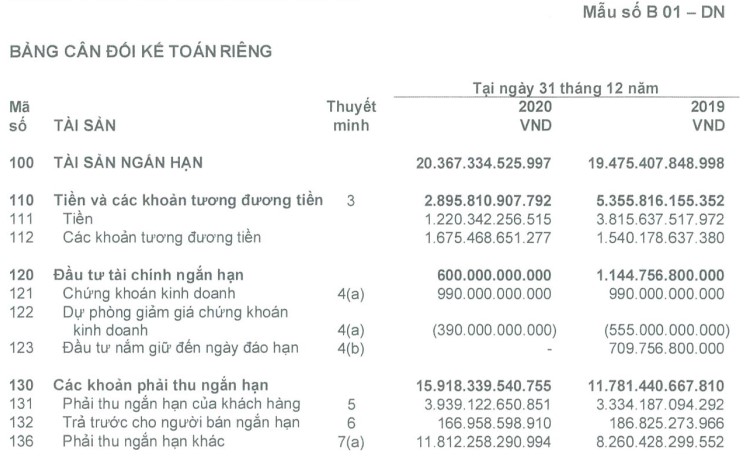
According to point e), clause 1.4 of article 112 in Circular 200/2014/TT-BTC on guiding the preparation of the balance sheet for enterprises meeting the going concern assumption, unearned revenue is allocated to the Liabilities section (code 300) and is divided into short-term (code 318) and long-term (code 336) items.
The short-term unearned revenue item (code 318) reflects unearned revenue amounts corresponding to obligations that the enterprise must fulfill within the next 12 months or within a normal production and business cycle at the reporting date.
The long-term unearned revenue item (code 336) reflects unearned revenue amounts corresponding to obligations that the enterprise must fulfill after the next 12 months or after a normal production and business cycle at the reporting date.
When the conditions for revenue recognition are met, that revenue amount will be recorded in the income statement for the period in which the conditions were met.
5. The importance of unearned revenue in financial management
Unearned revenue is a crucial item in accounting and financial statement analysis for a business, especially for companies involved in deferred sales, installment sales, or long-term service provision. Accurately tracking and accounting for this item not only helps financial statements correctly reflect the business situation but also supports the company in cash flow management, planning, and strategic decision-making. Specifically:
-
Impact on the income statement:
Unearned revenue is not yet recognized as current revenue. If recognized prematurely, profits will be inflated, leading to an income statement that does not accurately reflect reality. Conversely, proper timing in accounting ensures accurate reporting, increases the transparency and reliability of internal reports, and allows managers to assess business performance more accurately. -
Assessing cash recoverability and planning cash flow:
Unearned revenue reflects the amount of money a business has not yet collected but for which it has an obligation to provide goods or services. Detailed tracking helps to:-
Forecast cash flow, ensuring the ability to cover operating expenses.
-
Identify bad debts and late-paying customers early.
-
Plan for collections and appropriate investments, avoiding cash flow shortages in subsequent periods.
-
Example: A business signs a 6-month deferred payment sales contract, and the revenue is recorded in account 3387. Without tracking, the business might assume the cash has been collected and make unreasonable spending plans.
-
Compliance with accounting standards:
According to VAS (Vietnamese Accounting Standards) and IFRS (International Financial Reporting Standards), revenue is only recognized when:
- Goods/services have been delivered.
- The rights and obligations of all parties have been clearly defined.
- The collectibility of payment from the customer is certain.
Properly accounting for unearned revenue helps businesses avoid audit risks and increases transparency and credibility in the eyes of investors and shareholders.

6. Common mistakes when accounting for unearned revenue
In practice, many businesses and accountants find it difficult to distinguish unearned revenue from similar items, leading to accounting errors. Common mistakes include:
-
Recognizing revenue before conditions are met:
- Some accountants recognize revenue before goods are delivered or services are completed.
- Consequence: “phantom” profits on financial statements, affecting investment decisions, budget allocation, and business performance evaluation.
Example: A business signs a 12-month maintenance service contract but recognizes the entire revenue upon signing, leading to inflated profits in the first period.
-
Confusing it with customer prepayments or prepaid expenses:
- Unearned revenue – the obligation to provide goods/services has arisen, but payment has not been collected or the service is not yet complete.
- Customer prepayments – the customer has paid, but the business has not yet provided the goods/services.
- Prepaid expenses – costs that have been paid, but the service has not yet been used.
This mistake leads to incorrect account entries, and financial statements that do not accurately reflect obligations and rights, thereby affecting the assessment of the company’s financial situation.
-
Failing to track deferred payments and installments:
- If installment or deferred payment sales contracts are not tracked, account 3387 will not fully reflect the company’s obligations.
- Consequence: actual cash flow deviates from the plan, and the business cannot proactively manage debt collection and payments.
Example: A business sells a product worth 100 million VND on a 5-month installment plan. Without tracking, the accountant might mistakenly assume the entire revenue has been collected, leading to inaccurate cost and profit forecasts.
-
Failing to update information when contract conditions change:
- If a customer renews a contract, changes the quantity, or alters payment terms, and the accountant does not update this, the unearned revenue on the books will be inaccurate.
- Solution: always check the contract and adjust account 3387 according to actual changes to ensure accuracy.
7. Frequently Asked Questions about Unearned Revenue (FAQ)
Is unearned revenue considered taxable income?
No. Unearned revenue is not considered taxable income at the time it is recorded in Account 3387.
-
Unearned revenue is the amount of money a business has received but has not yet fulfilled its obligation to provide goods or services
-
This amount does not yet meet the criteria for revenue recognition, so it is not included in taxable income
However, it is important to distinguish between:
-
VAT:
-
If the business has issued an invoice, VAT may need to be declared and paid at the time the invoice is issued, even if the accounting revenue has not yet been recognized
-
-
CIT (Corporate Income Tax):
-
It only arises when revenue is recognized in the business results, not when it is recorded in Account 3387
-
Unearned revenue is not yet subject to CIT, but the VAT obligation depends on the invoice issuance date.
When should unearned revenue be transferred?
Unearned revenue is transferred to revenue for the period when the business has completed its obligation to provide goods or services, corresponding to the value of the portion performed.
The timing of the transfer is usually based on:
-
Contract performance progress
-
Service delivery period
-
Volume of work completed
-
The period the customer receives the service
Some common examples:
-
Revenue from house or office rent collected in advance → transferred monthly
-
Revenue from maintenance and warranty services → transferred over the performance period
-
Revenue from deferred or installment sales → the difference is recognized gradually over the period
Unearned revenue must be allocated and transferred appropriately for each accounting period, ensuring the matching principle between revenue and expenses is followed.
Which side does Account 3387 have a balance on?
Account 3387 – Unearned Revenue has a credit balance.
-
When unearned revenue arises, the accountant records:
-
Credit Account 3387 – reflecting the obligation to be performed in the future
-
-
When revenue is recognized in the business results:
-
Debit Account 3387
-
Credit Revenue Account (511, 515…)
-
The credit balance of Account 3387 represents:
-
The revenue the business has collected but has not yet recognized
-
A liability (the obligation to perform services/provide goods)
On the financial statements, Account 3387 is presented as:
-
A current or non-current liability, depending on the time to fulfill the obligation
Does unearned revenue affect profit?
It does not directly affect profit at the time unearned revenue is recorded, but it indirectly affects the profit of subsequent periods.
Specifically:
-
When recording unearned revenue:
-
Does not increase revenue
-
Does not increase profit
-
-
When recognizing unearned revenue:
-
Revenue increases
-
Profit increases (if costs remain unchanged)
-
If accounted for incorrectly:
-
Recognizing revenue too early → this period’s profit is inflated
-
Failure to recognize in the correct period → profits for the periods are misstated
Conclusion
1Office hopes that through this article, your business will gain more knowledge and new information about unearned revenue, how to account for it, and things to note when accounting for account 3387. We wish your business and you success!




