10/05/2026
  10709 views
An essential element in any industry is customer service. It is considered the leverage that helps businesses get closer to their customers. To gain a deeper understanding of customer service, 1Office would like to share some insights with you below.
Mục lục
- 1. What is customer service?
- 2. The role of customer service for businesses
- 3. The most popular types of customer service today
- 4. Elements of Perfect Customer Service
- 5. 4 Ways to Create a Professional Customer Experience
- 6. KPIs for Evaluating Customer Service Effectiveness
- 7. Modern Customer Service Trends
1. What is customer service?
Customer Service is the process of providing support, guidance, and problem-solving for customers before, during, and after they purchase a product or use a service. It is a crucial part of business operations aimed at ensuring customers feel satisfied and loyal to the brand.
2. The role of customer service for businesses
- Competitive advantage: When a business has good service, customers will trust it, stay longer, and be less likely to switch to another product. Therefore, this becomes an advantage that helps the business be more competitive against its rivals.
- Cost savings: A business typically spends a lot on marketing, but when customer service is fully utilized, the business may only need to spend 50% of its initial marketing budget.
- Brand recognition: Most customers are regular social media users. Therefore, when they are satisfied with a company’s service, they will not hesitate to share their positive experiences with the product and service on social media and with family or friends.
- Revenue stability: For a business with good customer care, the rate of returning customers is naturally high. As a result, the company’s revenue will remain stable and may even increase.
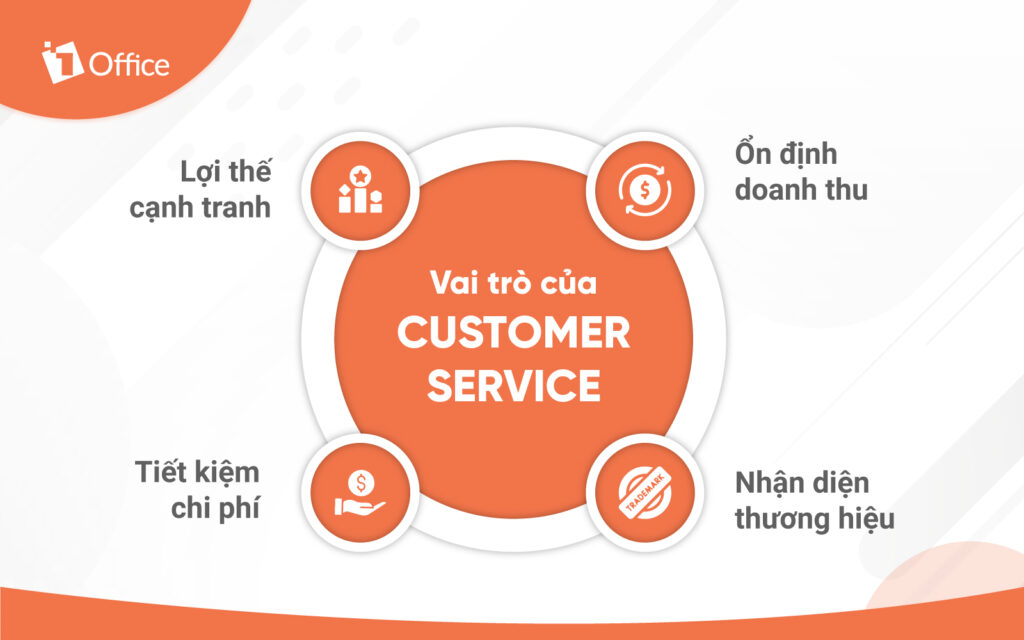
Customer service is a key part of the business strategy that every company pursues. Applying business models combined with a customer care strategy will help a company achieve an effective business strategy.
3. The most popular types of customer service today
Today, businesses can implement customer service across various channels and formats to optimize the experience and meet diverse customer needs. Popular types of service include in-person experiences at the point of sale, customer care via Email, SMS, mobile apps, or other online platforms. Choosing the right type of service that suits the customers and the product helps increase satisfaction, maintain long-term relationships, and enhance business efficiency.
3.1. In-store customer service experience
During the COVID pandemic, online shopping became more popular. However, the customer’s desire to purchase and experience products in person has not changed.
At this point, in-store service is very important. A good Customer Experience can help resolve buyers’ concerns, or they can try the product immediately before making a purchase decision. During the shopping process, if employees provide all the information the buyer needs, the likelihood of them making a purchase and returning in the future is very high.
3.2. Customer care service via Email Marketing
Email marketing is a natural marketing channel between a business and its customers. It is an effective method for businesses to promote their products and services.
Customers always use their personal email, so when they have questions about a product, they will leave their email address along with their inquiries. At this point, the business needs to respond quickly and promptly.
Businesses can use automated email software to shorten response times and provide customers with a better service experience. This will also give customers a better impression of the business, which can help encourage the purchasing process.
3.3. Customer care service via SMS
Most businesses today have also shifted to using SMS due to its convenience and personalization, but also largely because customers primarily use Facebook Messenger, WhatsApp, and SMS.
Customers repeatedly ask a series of similar questions. It would be very time-consuming for individual employees to answer them all. Businesses should opt for an automated chatbot to resolve this issue as quickly as possible. This helps the customer service experience build more trust with buyers.
Some automated chatbots you can consider:
- Ahachat
- Botbanhang
- Bizfly chat
- Fchat
- Hana.ai
3.4. Mobile Customer Service
Similar to in-store service, when communicating over the phone, consultants can better understand the customer’s emotions and psychology. This allows them to convey the right information that the customer needs. Most customers own a mobile phone, making this a highly accessible channel where urgent issues can be resolved more quickly.
See more: What is Retention Rate? Effective Methods to Improve Customer Retention
4. Elements of Perfect Customer Service
Excellent customer service relies not only on processes but also on core elements that create a positive and memorable experience. This includes a deep understanding of the product, a professional service attitude, the ability to resolve issues quickly, and attentiveness to customer needs and emotions. When these elements are synchronized, a business can build trust, loyalty, and enhance its brand value in the long run.
4.1. Deep Product Knowledge
Deep product knowledge is the key to helping any business sell more effectively. Putting ourselves in the customer’s shoes, we can see that if the representative understands their product well and communicates smoothly and confidently, they will easily earn our trust.
Grasping product knowledge is essential for a salesperson. It makes it easier to resolve any product-related issues and to communicate with and approach customers effectively. Furthermore, it helps salespeople become more enthusiastic about their work and more confident in their communication.
4.2. Attitude
Undeniably, attitude is the deciding factor for customers when evaluating whether customer service is good or not. Customers cannot always rate their satisfaction at 100% during their online or offline shopping journey.
There’s a great saying: “It is your attitude, not your aptitude, that will determine your altitude.” Indeed, a customer might not choose a good product because of a poor service attitude. Maintaining a positive attitude and conveying positivity to customers can move them to act. This leads to higher conversion rates and an increasing rate of returning customers.
4.3. Problem-Solving Ability
Problems are unavoidable in any business and can arise at any time. This directly affects the customer’s experience with the service. As many as 80% of customers choose not to buy a product because they feel the business cannot solve their problem.
Be tactful in every situation. Regardless of where the fault lies, be the first to apologize, as this will create goodwill with the customer. Always remember to highlight the value of your business’s service to ensure the customer has a positive and memorable experience.
4.4. Remembering Customers and Appreciation Gifts
Always remember and regularly send appreciation gifts to customers. This will make them feel genuinely cared for and noticed. Moreover, this becomes truly effective when you leverage software applications to store customer information. A notable example is the sales management software from 1Office – a leading company in digital transformation. It not only helps store all purchasing activities and customer experience information but also offers many other useful features.
5. 4 Ways to Create a Professional Customer Experience
5.1. Upsell Correctly
For businesses, especially those in the sales department, this concept is not unfamiliar. There are 4 important principles for successful upselling:
- Principle 1 – Right Timing: The business and the salesperson need to choose the right moment to offer advice that stimulates the customer’s purchasing desire. You should observe the customer carefully and not overlook small details.
- Principle 2 – Don’t Pressure the Customer: Pressuring and pestering customers will only make them more uncomfortable. They will not have a good impression and will find it difficult to trust the salesperson. This will create a negative image of the business and the salesperson in the customer’s mind.
- Principle 3 – Put the Customer’s Interests First: Beyond sales figures, we often think about profit but forget about the customer’s benefit. By putting yourself in the buyer’s position, the business can truly understand their desires and what the best choice is for them.
- Principle 4 – Measure and Control: Every business should make adjustments for each sales campaign to maintain a more stable revenue stream.
You can refer to how to sell to become a Best-Seller: HERE
5.2. Problem-Solving Skills
Many problems will arise in the future that even business owners cannot anticipate. They won’t be able to guide each individual to solve those problems. Therefore, every employee and department needs to have a more objective perspective.
Always maintain a positive and flexible attitude in all situations. And cultivate product knowledge that directly addresses the problems customers are facing. Work with customers to find solutions, clearly understand their needs, and help them in the most dedicated way.
5.3. Quick Response Time
No customer will be patient enough to wait for a consultation if the response time is too long. During that time, they might look for new products and contact another business for advice. Therefore, time is always a crucial factor, decisive in many issues for both the business and the customer. Reply to messages and respond to customers as quickly as possible. Prioritize their choices so they can see the dedicated service provided by your business.
5.4. Thorough Understanding of the Company’s Products
The product is the foundation of a business’s existence. Therefore, a thorough understanding of the product is extremely necessary. In Marketing, a product is anything offered to the market to satisfy customer needs.

Once a salesperson has a thorough understanding of their products, they can use various skills and methods to introduce the products to customers. Salespeople with good communication skills will know how to adapt to all types of customers to present the product in the most suitable and effective way.
5.5. Listen and Be Proactive
It’s no coincidence that large businesses always prioritize their customer care process. Listening and understanding is the crucial first step to show the business’s concern for its customers, creating closeness and respect for their feedback. This will reduce customer churn, improve customer loyalty, increase customer retention rates, and enhance opportunities for upselling and cross-selling, in addition to building a closer relationship with customers.
5.6. Pay Attention to and Focus on the Customer’s Emotions
Human emotions are an extremely sensitive matter, one might say they are “as unpredictable as the weather“. When advising customers, if you delve too deeply into opposing thoughts or provoke them, it can cause them to turn to another service or product. That is a failure for a consultant and a problem for the entire business in general. Therefore, always pay attention to every detail of the customer’s emotions. Always satisfy them to create a good impression of the business.
5.7. Help Customers Make the Right Choice
Many businesses focus only on sales. They will only encourage customers to buy their products and services without paying attention to which products and services are suitable for them. This leads to wrong choices and causes them not to return to the business a second time. That is a failure of the business in retaining customers.
6. KPIs for Evaluating Customer Service Effectiveness
To measure the effectiveness of customer service, businesses need to track important KPIs. These metrics help assess service quality, identify weaknesses, and optimize the customer experience, while also directly impacting revenue and loyalty. Some common KPIs include:
-
Average Response Time: measures the average time from when a customer submits a request until an employee provides the first response. A quick response time helps customers feel valued and increases satisfaction.
For example, if the team receives 500 requests in a month with a total response time of 25,000 minutes, the average time is 50 minutes/request. Improvement solutions include implementing a chatbot, categorizing requests, and prioritizing important issues.
-
Customer Satisfaction Rate: the percentage of customers who rate the service positively out of the total number of responses.
For example, 80/100 satisfied customers → CSAT = 80%. To improve CSAT, businesses should train employees in communication skills and service attitude, while also personalizing customer care.
-
Customer Retention Rate: measures the percentage of customers who continue to use a product/service over a specific period.
For example, if you have 1,000 customers at the beginning of the month, acquire 200 new ones, and have 950 customers at the end of the month → Retention Rate ≈ 75%. Improve this rate through loyalty programs, after-sales care, and personalized offers.
-
First Contact Resolution (FCR) Rate: the percentage of requests resolved during the first contact.
For example, if there are 500 requests in a month and 400 are resolved on the first contact → FCR = 80%. Improve FCR by training staff, standardizing processes, and providing adequate support tools.
Overall, tracking and optimizing these KPIs helps businesses improve service quality, create positive customer experiences, and increase customer loyalty.
7. Modern Customer Service Trends
Modern customer service goes beyond simply responding to requests; it aims for a comprehensive, personalized, and proactive experience. Key trends include:
-
Personalizing the customer experience: using customer data to suggest products and offers tailored to individual needs, which helps increase loyalty and repeat purchases.
Example: sending automated emails suggesting products based on purchase history.
-
Integrating AI and Chatbots: Chatbots automatically answer common questions 24/7, reducing wait times, while AI analyzes data to predict customer needs and provide proactive solutions.
Example: a chatbot reminding a customer about their order or assisting with exchanges/returns.
-
Omnichannel Support: connecting all service channels (in-store, website, email, phone, social media) into a seamless experience. Customers can start a conversation on one channel and continue on another without interruption.
Example: a customer inquires about a product via Messenger, continues the consultation over the phone, and receives an order confirmation email.
-
Proactive instead of reactive service: contacting customers in advance to inform them of their order status, remind them of maintenance schedules, or offer valuable suggestions before they ask.
Example: calling to remind a customer about an expiring warranty or sending promotional notifications based on their previous needs.
These trends help businesses create a seamless experience, enhance customer satisfaction and loyalty, and solidify their competitive position in the market.

Above are a few insights from 1Office on topics surrounding customer service. We hope you found this information helpful. Thank you for reading our article!
For more details, please visit:
- Hotline: 083 483 8888
- Fanpage: https://www.facebook.com/1officevn/
- Youtube: https://www.youtube.com/channel/UCeTIRNqxaTwk0_kcTw6SxmA