10/05/2026
  199 views
Market segmentation is a crucial step that helps businesses determine who they are selling to and how to craft messages to reach the right customer groups. But what is market segmentation, and why do businesses need to do it? This article will help you understand everything from the concept to practical application.
Mục lục
- 1. What is market segmentation?
- 2. The relationship between market segmentation, target marketing, and positioning
- 3. What are the goals of market segmentation?
- 4. The importance of market segmentation for businesses
- 5. Principles of market segmentation
- 6. Commonly Applied Types of Market Segments
- 7. Market Segmentation Steps Applicable to All Businesses
- 8. Examples of Market Segmentation by Major Companies
- 9. Common Mistakes Businesses Make in Market Segmentation
- Frequently Asked Questions about Market Segmentation
- Conclusion
1. What is market segmentation?
Market segmentation is the process of dividing a market into distinct smaller groups based on factors such as demographics, interests, habits, needs, etc., to better understand the target audience.
Through market segmentation, businesses can gain a more detailed view of each customer group they serve, enabling them to make appropriate decisions, strategies, and policies for each segment.
Sometimes, businesses may even modify their products to suit different market segments.

For example:
Kinh Do mooncakes segments its market into many different groups, including:
- The middle-aged customer group who buys cakes as gifts, so the products are often packaged in beautiful and luxurious boxes.
- Meanwhile, the younger customer group who buys simply to enjoy them often gets simpler packaging but with many unique and new flavors, etc.
-

Market segmentation helps businesses identify the right customer groups

2. The relationship between market segmentation, target marketing, and positioning
Market segmentation, target marketing, and positioning are a series of events that lead to a comprehensive marketing strategy. All three rely on each other to execute a perfect marketing plan. Segment marketing classifies the customer base according to their interests.
This helps marketers identify potential target customers with suitable products. This will optimize their marketing strategy. Take YouTube’s market segmentation as an example; it segments users and then places ads according to their interests.
When marketers have relevant data about customers and their requirements, they can position the product in a way that checks all the boxes for the user. This way, marketers can effectively position a product or service and improve their conversion rates on leads.
3. What are the goals of market segmentation?
The core goal of market segmentation is to break down a large-scale market into specific customer groups, helping businesses optimize resources to meet their needs precisely, thereby enhancing competitive advantage and business efficiency.
3.1 Product
Creating successful products is one of the main goals of organizations and one of the reasons why they conduct market research. This allows you to add the right features to your product and will also help you reduce costs to meet the needs of your target audience.
For example: Coca-Cola’s soft drink products are aimed at customers from middle age downwards, especially targeting young people, so they have eye-catching, colorful packaging designs, along with a sweet, highly carbonated taste.
3.2 Price
Another goal of market segmentation is to set the right price for your product. Determine what the public is willing to pay for this product or service.
For example: Both are gel pens, but regular pens for students are very cheap, only 20 to 30 thousand VND each. However, signature pens for business people are very expensive, costing several million, or even tens or hundreds of millions of VND (Comparing only on price, not considering other factors).
3.3 Promotion
Promotion helps you target each segment and select them in different categories. From there, you can orient your strategy appropriately.
For example: Biti’s Hunter targets a young, dynamic audience, so we can see they effectively apply the strategy of using influential celebrities like Son Tung M-TP and Soobin Hoang Son.
3.4 Identifying the Target Market
The final goal is to decide where you will offer a product, which areas are primary, and which are secondary. This way, you can easily have an effective and accurate measurement table after conducting actual market segmentation.
To make accurate decisions about selecting a target market, please refer to the article: Strategies for accurately and effectively identifying a target market for your business
4. The importance of market segmentation for businesses
Businesses segment their markets because it offers several distinct advantages. According to the latest research by 1Office on 5,000 businesses nationwide, up to 83% of CEOs and C-level executives find that segmentation is a key factor in increasing profits.
4.1. Delivers an effective Marketing strategy
This is the biggest and most obvious benefit of market segmentation. With good segmentation and a clear understanding of customer needs, you can identify effective marketing strategies. From there, you can find ways to approach customers and improve their interaction and experience with your business’s products and services.
4.2. Creates a competitive advantage in the market
The messages from your Marketing strategy create a distinct advantage that makes your brand stand out in the market. This increases your brand’s visibility and repetition in the public’s mind, effectively building trust in the message you convey. This differentiation is also considered a major competitive advantage.
4.3. Creates a niche market
When your team creates detailed and clearly oriented segmentation plans, it generates significant advantages. Besides the large, overarching segment that the business pursues, there is also the niche market, which deviates from the initial plans and differs from competitors. This creates an opportunity to grow the brand and make it a strong force in the market.
4.4. Attracts more potential and high-quality customers
-

Segmentation helps create niche markets and attract target customers more effectively

You will also find that with more targeted marketing, you are aiming for long-term potential customers for a long-term strategy. You are reaching the right people, and they will start to notice you, become interested, and purchase your products.
4.5. Creates connections and maintains customer relationships
By identifying your customers based on their needs, you can implement an irresistible marketing strategy. You can provide compelling reasons for them to choose you. This helps increase customer retention, loyalty, and lifetime value.
Read now: What are business objectives? How to build effective business goals
5. Principles of market segmentation
Defining effective market segmentation criteria allows companies to create the marketing campaigns necessary for your growth and development. Here are 5 criteria you need to know:
5.1. Measurable
The size and purchasing power profile of your market must be measurable. This means that quantitative data about it is available. Consumer profiles and data provide marketing strategists with the necessary information on how to execute their campaigns.
It would be very difficult to create advertisements for markets with little or no data, or for an audience that cannot be measured.
Always ask whether there is a market for the type of product or service your business wants to produce, then determine how many potential customers and consumers exist in that market.
5.2. Accessible
Accessibility means that customers and consumers can be easily reached at a reasonable cost. This helps determine how certain advertisements can reach different target markets and how to make the advertising more profitable.
A good question to ask is whether placing ads online, in print, or in-home would be more practical. For example, collect data on the websites that a specific target market frequently visits so you can place more ads on those sites.
5.3. Actionable
Finally, your target segments need to be actionable, meaning they have practical value. A segment must be able to respond to a specific marketing strategy or program and have results that can be easily quantified.
As a business owner, it is important to determine which type of marketing strategy is suitable for a given segment. Once those strategies have been identified, ask yourself if the business is capable of implementing them.
5.4. Differentiable
When segmenting the market, you should ensure that different target markets respond differently to different marketing strategies. If a business is only targeting one segment, this may not be much of an issue.
For example, if your target market is college students, it is essential to create a marketing strategy to which both freshmen and seniors respond in the same positive way. This process ensures that you are creating more effective and cost-efficient strategies.
5.5. Substantial
The market a brand wants to penetrate must be of a significant size, meaning a number that impacts business results. You should clearly define the consumer profile by collecting data on their age, gender, occupation, socioeconomic status, and purchasing power.
It makes no sense to try and reach an unreasonable number of people – you would just be wasting resources. However, you also don’t want to market the brand to a group so small that the business does not become profitable. Keep this B2B/B2C sales guide handy.
| Effective application: 3 types of business leverage to help businesses optimize profits |
6. Commonly Applied Types of Market Segments
There are four types of segmentation based on their unique attributes. Each type is divided into smaller categories to facilitate better division. They include:
6.1. Geographic Segmentation
People are classified based on their residential area and geographical boundaries. To better market products to customers, you need to clearly understand the audience in this geographical area. Factors such as climate, cultural preferences, and the division into urban, suburban, and rural areas are also elements for segmenting consumers appropriately for your budget.
-

Customers are also divided into many different geographical groups

A relevant example of geographic market segmentation comes from the response of e-commerce businesses to the Covid-19 pandemic. During various stages, many businesses shifted their focus to local communities to highlight that their services could still be delivered online. As the economy began to show signs of reopening, these brands had to change their plans and return to their original segmentation.
6.2. Demographic Segmentation
This is the simplest and most general category in market segmentation. It creates large groups of people based on their age, gender, ethnicity, religion, income, education level, company status, and occupation.
For example, a cosmetic product is more suitable for women aged 16 to 35 than for men. Therefore, your marketing budget is not wasted by directing your message to people who are unlikely to purchase your product.
6.3. Psychographic Segmentation
People who think alike often shop alike. Consumers are segmented based on their attitudes, lifestyles, interests, or values. Although psychographic segmentation is not as easy to define as demographics, it provides your business with deeper insights into your target audience.
For example, if a consumer is very concerned about the security features of their smartphone, they might choose to buy an iPhone. This means the customer’s desired need here is security.
In the psychographic segmentation method, we can consider factors such as: personality traits, interests, life goals, values, beliefs, and lifestyle. Psychographic segmentation allows for effective marketing that helps consumers connect with your product on a deeper level.
6.4. Behavioral Segmentation
Marketing expert John Miler said: “Knowing who your customer is is great. Knowing how they behave is even better.” Behavioral segmentation divides customers based on what they do, using insights gained from customer actions. It is based on behavioral patterns displayed by customers when they interact with a company or make a purchasing decision.
The behavioral market segmentation method is based on factors such as: spending habits, purchasing habits, browsing habits, brand interactions, brand loyalty, and previous product feedback. All of these are data sets that can be collected from a user’s activity on your website.
Below is a table with the most basic overview of the types of segmentation:
|
Demographic |
Psychographic |
Behavioral |
|
|
Definition |
Classification based on individual attributes. |
Classification based on attitudes, aspirations, values, and other criteria. |
Classification based on behaviors such as product usage, technology adoption lag, etc. |
|
Examples |
|
|
|
|
Decision criteria |
You are a smaller business or you are running your first project. |
You want to target customers based on values or lifestyle. |
You want to target customers based on purchasing behavior. |
|
Difficulty |
Simpler |
More advanced |
More advanced |
Table analyzing the factors for identifying market segments
| >> Learn more: What is the PESTEL model? Applications? Examples in business |
7. Market Segmentation Steps Applicable to All Businesses
So, we have understood market division at a theoretical level. Now let’s dive into the practical activities to learn the effective market segmentation steps for a business. You can approach market segmentation using the following 5 steps:
-

5 Market Segmentation Steps to Target the Right Market
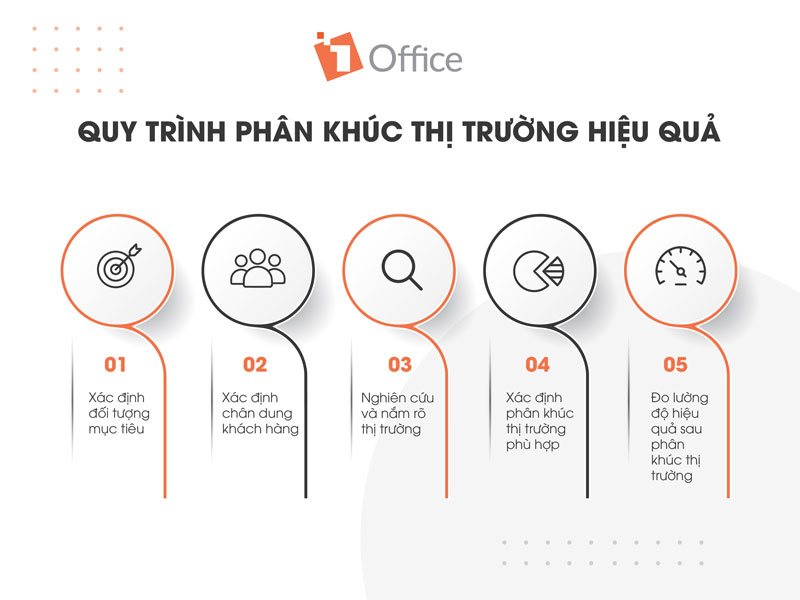
Step 1: Define the Target Audience
Defining the target audience helps marketers like you understand customer behavior. You must regularly get their feedback on their experience with the product. Then, analyze their preferences and their behavior towards the products and services you offer. From there, identify the target audience you need to win over.
Step 2: Identify Consumer Persona Groups
At this stage of segmentation, you should focus on exploring how large the market is, where your brand fits in, whether your product is capable of delivering on its promises, and especially who it is for.
Once you have a clear understanding of your target customer persona, you can paint a complete picture of your target user group. This will help you get a 360-degree view of your consumers and create a suitable marketing strategy to target them.
To obtain this important data, businesses need to research What is Customer Insight? How to identify customer insights effectively and accurately to direct marketing strategies to the right people at the right time
Step 3: Create Brand Positioning for the Product
When a marketer clearly understands who their potential customers are, it becomes easier to position the product in a way that solves users’ problems.
You can conduct a preliminary research survey, focus group, poll, etc. Ask questions related to your chosen segment and use a combination of quantitative and qualitative questions.
Step 4: Identify the Right Segment and Launch the Campaign
This is the step where you link your product positioning with consumer requirements. For example: What problem does your product solve? Is there a customer segment whose needs are not being met? Link both and find the user segment that is a good fit for the products and services you provide.
Then, launch your campaign based on the analyses and objectives set. Launch based on the planned marketing strategies, perform audience scanning, and implement a series of proposed activities with pre-prepared materials.
Step 5: Measure Effectiveness
Once you have implemented your market segmentation strategy, regularly monitor its effects. Look out for potential positive and negative feedback, as crises or risks can arise at any time. Check whether your segmentation has reached the right target audience. This is also considered one of the effective strategies for optimizing the customer journey in the process of boosting business operations.
You should use modern measurement tools such as: Google Analytics, and measurement metrics from other media channels to get accurate data. If the results are not very optimistic, start with a more suitable and effective market segmentation.
|
After accurately segmenting the market, businesses need to implement suitable Marketing campaigns to effectively address customer needs and increase sales efficiency: |
8. Examples of Market Segmentation by Major Companies
To get the clearest view of what market segmentation is, let’s look at some real-life case study examples below:
8.1. TH True Milk’s Market Segmentation
-
TH True Milk’s market segmentation for its customers

TH True Milk (TH Food Joint Stock Company), established in 2009, is a company under the TH group. TH True Milk’s product portfolio includes sterilized milk sourced from the corporation’s own dairy farms.
TH True Milk’s target market segmentation includes:
- Demographic segmentation: Female, aged 15 – 25 (extended to 25-35), with stable and relatively high income.
- Geographic segmentation: Urban areas, focusing on large, dynamic, and modern cities.
- Psychographic segmentation: Individuals who are concerned about their own and their family’s health.
8.2. Pepsi’s Market Segmentation
-

Market positioning of Diet Pepsi for people on a diet
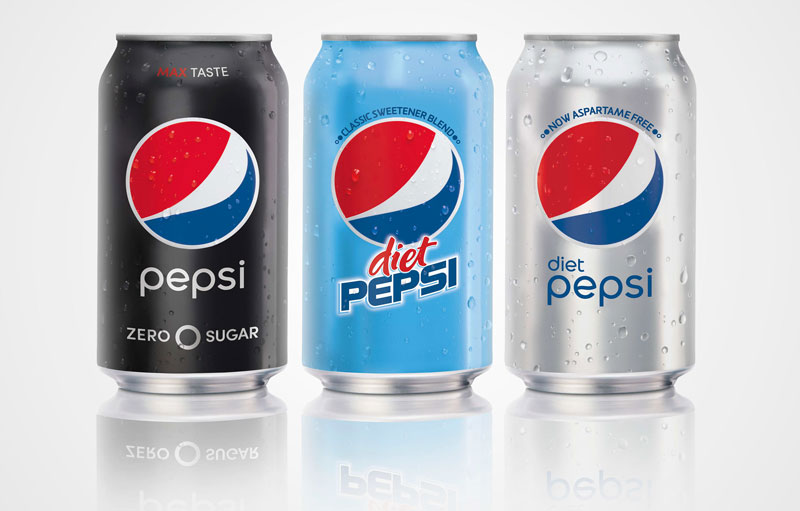
PepsiCo operates in three target business segments: Beverages, Restaurants, and Snacks. The beverage segment is the corporation’s oldest. The Pepsi Cola beverage company produces and markets various drinks: Pepsi Cola, Mountain Dew, Slice. The Pepsi Cola brand has implemented marketing strategies and campaigns that have resonated emotionally with users and achieved enormous profits.
For campaigns dedicated to Diet Pepsi, the segmentation is as follows:
- Psychographic segmentation:
People who are concerned about their diet and weight, and worry about overeating and gaining weight during holidays. Individuals who are trying or want to lose weight but still desire to drink sweet, carbonated beverages.
- Behavioral segmentation:
Customers who actively search for diet solutions, weight-loss foods, or drinks that are not high in fat. This customer group tends to buy and spend more on diet-related products. They are easily attracted to colors and packaging labels with phrases like “good for health,” “low fat,” “diet,” etc.
Thus, market segmentation is an incredibly effective strategy for your organization or business. It allows you to identify which customers are interested in your products and services and understand their needs, enabling you to deliver successful messages to them. Furthermore, if your business invests in measurement, analysis, and evaluation tools like Marketing management software, it will enhance the practicality and efficiency of your business operations.
9. Common Mistakes Businesses Make in Market Segmentation
Market segmentation is a crucial foundation of marketing strategy, helping businesses clearly define their target customer groups. However, during implementation, many businesses make mistakes that prevent their campaigns from achieving the desired results. Here are the 3 most common mistakes to avoid:
9.1. Segmenting Too Broadly, Lacking Focus
One of the most typical mistakes is trying to reach too many customer groups at once, which leads to scattered resources and an unclear communication message.
For example, a cosmetics brand targeting students, office workers, and middle-aged individuals simultaneously will have a diluted marketing campaign that fails to create a deep emotional connection with any specific group.
Solution:
-
Identify the “primary target segment” based on the company’s competitive advantages.
-
Focus messaging and budget on the customer group with the highest conversion potential.
9.2. Relying on Intuition Instead of Data
Many small businesses still define their target customers based on personal experience or subjective assumptions, rather than on actual data like purchasing behavior, website visit frequency, or CRM data.
The consequence is a misaligned marketing campaign that fails to address the real needs of customers.
Solution:
-
Collect data from multiple sources (CRM, Google Analytics, social media).
-
Use data analysis tools or CRM software to identify consumer trends and behaviors.
-
Continuously update data to ensure segmentation accurately reflects reality.
9.3. Failing to Update When Customer Behavior Changes
The market and consumer behavior are constantly changing – especially in the context of digital transformation and the e-commerce boom. However, many businesses still use old segmentation data from years ago without re-evaluation, leading to outdated marketing strategies.
Solution:
- Re-evaluate segments at least once every 6–12 months.
- Track changes in search behavior, consumer habits, and social trends.
- Apply AI and Data Analytics technology to update customer behavior in real-time.
Frequently Asked Questions about Market Segmentation
What segmentation criteria should a business prioritize when just starting out?
You should start with demographics and geography as these two data sets are easy to collect, low-cost, and help define the target customer base most quickly.
How is market segmentation different from identifying a target market?
Market segmentation is the process of dividing the overall market into multiple groups; identifying a target market is the act of selecting one or more specific groups from those to focus business resources on.
How do you know if a market segment is too small (Over-segmentation)?
A segment is considered too small when the cost to reach and serve that group (advertising, custom production) is higher than the profit generated, or the customer base is not large enough to sustain business operations.
How do AI and Big Data support behavioral segmentation today?
AI helps analyze large volumes of interaction data in real-time, allowing businesses to automatically group customers based on predicted future shopping trends rather than just past purchase history.
To bring these capabilities into management, platforms like 1Office have integrated tools to help businesses centralize data and systematically track customer behavior. With the 1CRM module, you can easily manage the entire interaction history, thereby building more accurate and automated marketing scenarios.
Register for a free feature demo!
Why does a product need to change its positioning when entering a new geographic segment?
Because each geographic region has different cultures, climates, and consumer habits. Maintaining the old positioning could lead to the communication message being misunderstood or the product not addressing the actual local problems correctly.
Conclusion
Market segmentation is only truly effective when built on a foundation of accurate, focused, and regularly updated data. Businesses should view segmentation as a continuous process, not a one-time task to be completed and forgotten.
To learn more details about effective marketing management software, explore the 1Office system!
For more detailed information, please contact us via:
- Hotline: 083 483 8888
- Fanpage: https://www.facebook.com/1officevn
- Youtube: https://www.youtube.com/c/1OfficeNềntảngquảnlýtổngthểDoanhNghiệp