


 10/05/2026
  613 views
HRM software for the e-commerce industry helps automate HR processes, from recruitment and timekeeping to payroll and performance evaluation. In this article, let’s join 1Office to review the TOP 16+ most suitable HRM software for e-commerce businesses.
Mục lục
- 1. Top 16+ popular HRM software for the e-commerce industry today
- 2. Benefits of HRM Software for the E-commerce Industry
- 3. Criteria for Choosing HR Management Software for the E-commerce Industry
- 4. Frequently Asked Questions about HRM Software for the E-commerce Industry
1. Top 16+ popular HRM software for the e-commerce industry today
HRM (Human Resource Management) software is an HR management solution that helps e-commerce businesses automate the entire HR process, from recruiting warehouse, operations, and customer care staff, managing records, timekeeping and payroll by shift or order, to evaluating work performance and training teams, helping to optimize operations and improve business efficiency.
1.1. Top 10+ domestic HRM software for the e-commerce industry
1.1.1. 1Office HRM Software
1Office HRM software is a solution developed by 1Office Vietnam Joint Stock Company – a “Make in Vietnam” comprehensive management platform established in 2015. This solution is suitable for e-commerce businesses of all sizes, helping to optimize HR management in a flexible work environment with multiple parallel departments such as marketing, online sales, logistics, and customer care.
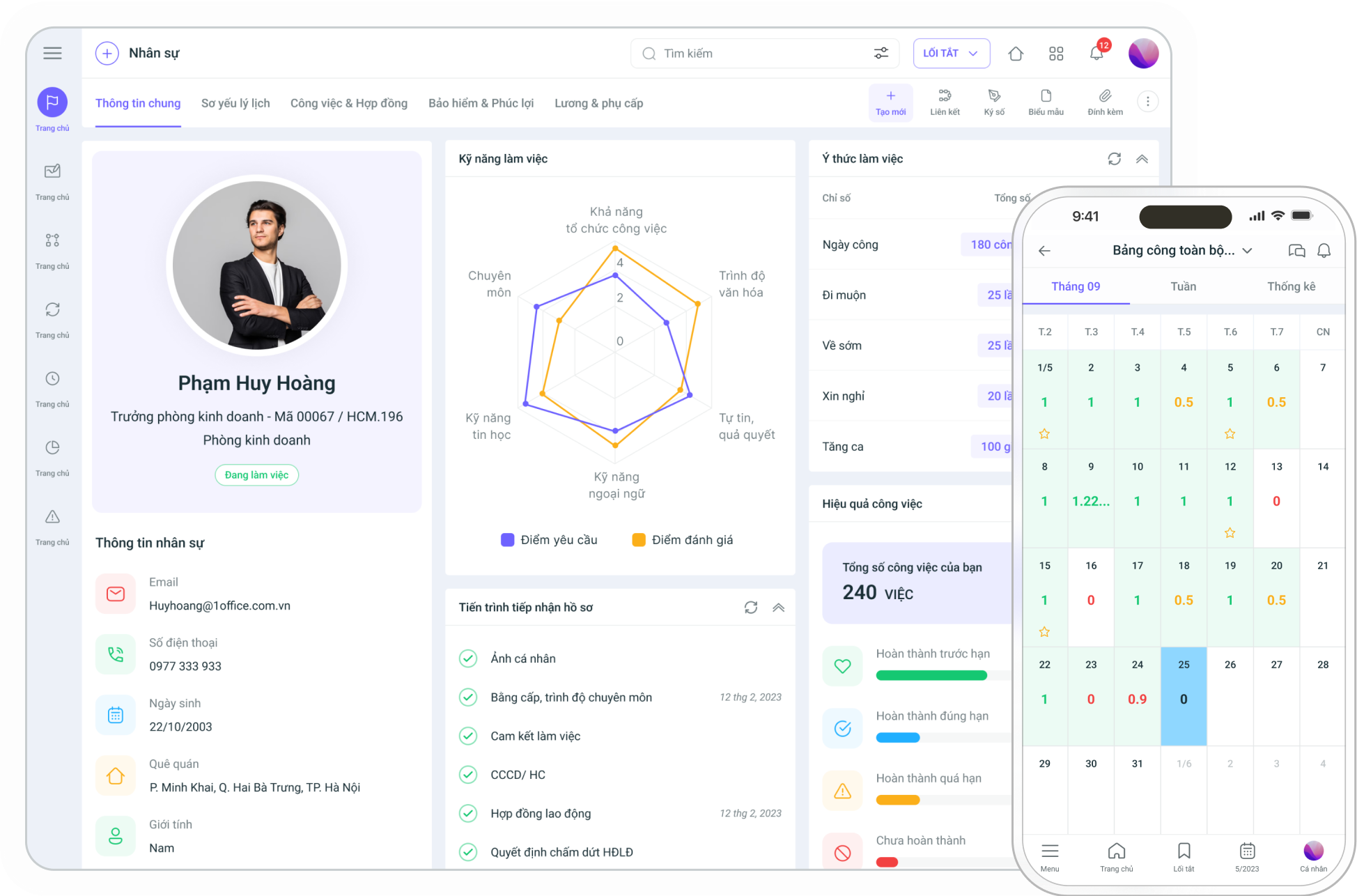
Some outstanding features of 1Office – HRM software for the e-commerce industry:
- Manage personnel by campaign and department: Centralized storage of employee records, categorized by group (warehouse, online sales, marketing, customer service…) and by sales campaign. Easily track personnel fluctuations during peak seasons or Flash Sales.
- Fast and automated recruitment: Automate the process from job posting to onboarding. AI application screens CVs based on e-commerce skills (SEO, running Ads, livestreaming, order processing…), integrates with popular recruitment channels, and effectively manages recruitment costs for each position.
- Flexible timekeeping & payroll: Supports multiple timekeeping methods (QR, GPS, scanner, mobile app), suitable for teams working in shifts or seasonally. The system automatically calculates salaries based on sales revenue, packing – shipping KPIs, and bonuses based on campaigns or shift performance.
- Dynamic performance evaluation by KPI/OKR: Track performance by group (sales, operations, marketing), connecting revenue and order data in real-time. Helps managers quickly identify strengths/weaknesses and adjust personnel plans flexibly.
- Visual reporting & data analysis: Dashboard summarizes productivity by department, branch, and campaign. Helps administrators get a comprehensive view of HR efficiency and labor costs in each business phase.
Pros and cons of 1Office HR management software:
| Advantages | Disadvantages |
|
|
1Office HRM software cost: E-commerce businesses can register for a free consultation and demo of the 1Office software HERE to receive a detailed introduction to the feature packages, with flexible pricing based on the number of employees and business season.
| >>> Read more: 1Office Review: A Detailed Review of the 1Office Business Management Software |
1.1.2. MISA AMIS HRM
MISA AMIS HRM is an HR management solution developed by MISA Joint Stock Company – a Vietnamese technology company with over 30 years of experience. The software is designed to be suitable for e-commerce businesses of all sizes, from startups operating small sales floors to multi-industry corporations, helping to automate HR processes and optimize operational costs.
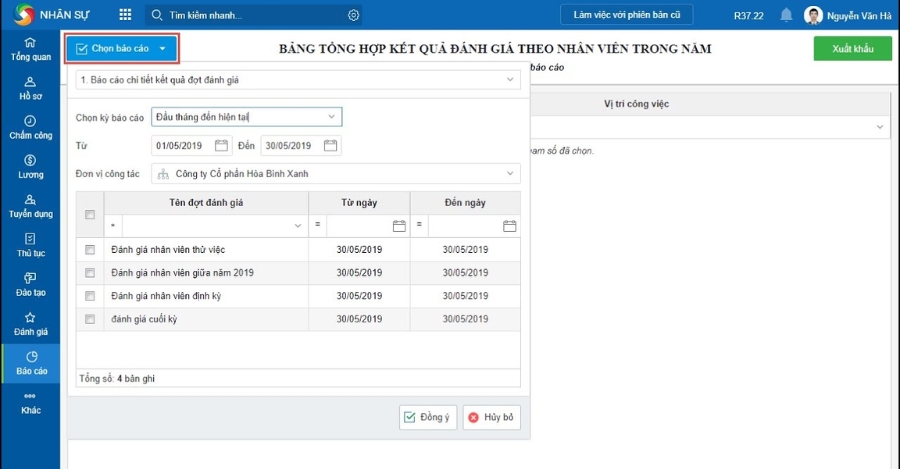
Key features of MISA AMIS HRM for e-commerce businesses:
- Manage the entire employee lifecycle: From recruitment, training, and evaluation to offboarding – suitable for the high employee turnover characteristic of the e-commerce industry.
- Smart and flexible timekeeping: Supports facial recognition, GPS, QR code, and syncs with timekeeping devices at warehouses, order processing centers, or for delivery teams.
- Performance evaluation based on actual KPIs: Track the productivity of each department such as Customer Service, Sales, Operations, or Marketing, helping to optimize efficiency during peak seasons.
Pros and cons of MISA AMIS HRM software:
| Advantages | Disadvantages |
|
|
MISA AMIS HRM software implementation costs for the e-commerce industry
- Basic package: From 5,100,000 VND/year for about 30 users.
- Extended package: Flexible pricing based on the number of personnel, departments, and modules used.
- Free 15-30 day trial, helping e-commerce businesses easily experience the interface and features before official implementation.
1.1.3. Base HRM+
Base HRM+ is a comprehensive human resource management platform developed by Base.vn – a purely Vietnamese tech startup. The solution is designed with flexible modules, suitable for e-commerce businesses with a large workforce and multiple parallel operating departments such as warehouse, customer service, marketing, and logistics.
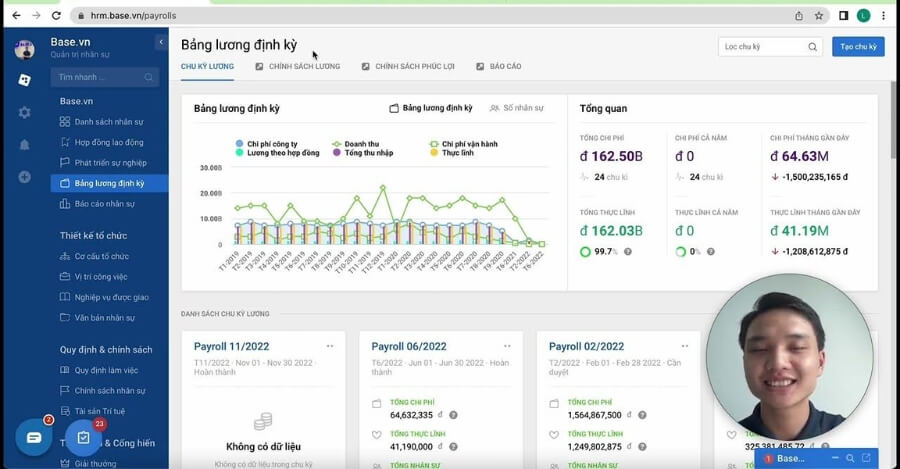
Outstanding features of the HRM software for the e-commerce industry – Base HRM+:
- Centralized personnel information management: Store profiles, contracts, and employee data by branch, sales department, or campaign.
- Flexible timekeeping & payroll: Integrates GPS, Wifi, and automatically calculates salary by shift, KPI, or order volume – suitable for the 24/7 working environment of the e-commerce industry.
- Campaign-based performance evaluation: Supports tracking KPIs and OKRs for each marketing project, sales event, or specific operations team.
- Real-time reporting: Provides an intuitive dashboard to help managers quickly grasp personnel fluctuations, work shifts, and overall system performance.
Pros and Cons of Base HRM+ HRM software
| Pros | Cons |
|
|
Base HRM+ HRM software pricing for the e-commerce industry
- Starter Package: From 450,000 VND/month for 30 accounts.
- Expansion Package: Flexible pricing based on the number of employees, branches, and management modules.
- 14-day free trial: Businesses can experience all HRM features before official implementation.
1.1.4. Fast HR Software
Fast HRM Online is an HR management software developed by Fast Joint Stock Company, chosen by many e-commerce businesses for its flexible management and high integration capabilities. This solution is suitable for e-commerce platforms and businesses operating with multiple departments and flexible work shifts.
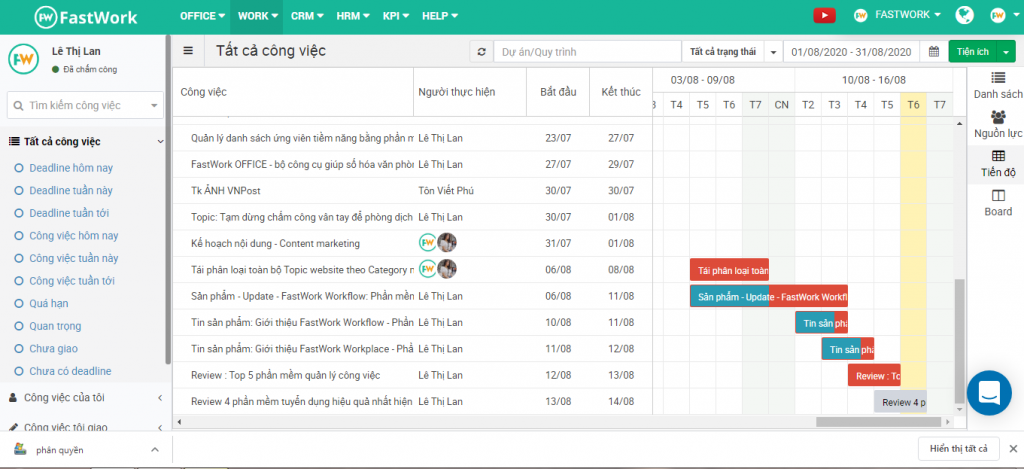
Key features of Fast HRM Online – HRM software for the e-commerce industry:
- Multi-channel HR management: Track employee profiles, shifts, contracts, and performance in warehouses, operation centers, or customer care departments.
- Flexible timekeeping: Connects with multiple devices (time clocks, GPS, QR, mobile app) to synchronize HR data in real-time.
- Employee self-service: Employees can view payslips, request leave, or update personal information online – suitable for fast-paced, distributed work environments.
- Flexible customization: Easily adjust forms, approval workflows, or integrate with sales, CRM, and accounting systems specific to e-commerce businesses.
Pros and cons of Fast HRM software for the e-commerce industry:
| Advantages | Disadvantages |
|
|
Fast HRM Online software usage costs:
- License fee: 10,000 USD.
- Additional user fee: 200 USD/user.
- Businesses can register for a free consultation and demo to get a detailed introduction to features and implementation packages suitable for the e-commerce industry’s human resource model.
1.1.5. Tanca HR Software
Tanca is a cloud-based human resource management software developed by Green Mobile Application Joint Stock Company, aimed at businesses that require flexible operations and have a distributed workforce – especially suitable for the e-commerce industry, where many departments work in warehouses, operation centers, or remotely.
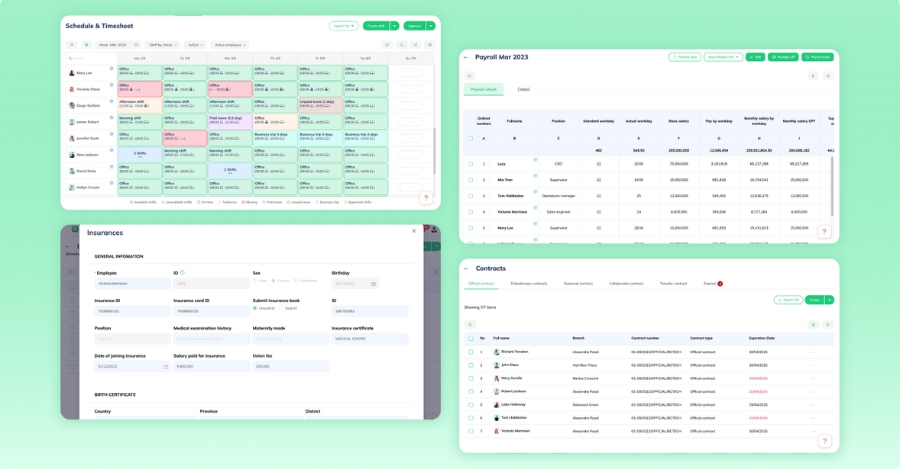
Key features of Tanca HR software for the e-commerce industry:
- Flexible timekeeping via GPS, Wi-Fi, facial recognition, or AI camera – suitable for employees working in warehouses, stores, or on delivery.
- Create and manage automated payroll, supporting salary calculation by day, shift, or KPI – suitable for the diverse human resource models in e-commerce.
- Automate the approval process for leave, overtime, business trips, and expense payments, helping to reduce manual procedures by up to 90%.
- Evaluate employee performance based on specific indicators (KPIs), directly linked to salary and bonuses to ensure transparency and fairness.
- Manage work shifts and approvals remotely, supporting real-time employee location tracking on a map.
- Real-time HR and performance reports, helping managers quickly grasp the situation and make accurate decisions.
Pros and cons of Tanca HRM software in the e-commerce industry
| Pros | Cons |
|
|
Tanca HRM software pricing
- Free for businesses with under 25 employees.
- Extended paid plans:
- Basic: 49 USD/month.
- Standard: 99 USD/month.
- Professional: 199 USD/month.
- Enterprise: 299 USD/month.
1.1.6. IHCM HR software
IHCM is an HRM software developed by Hyperlogy, operating on a cloud platform that meets ISO 27001 security standards. This solution is suitable for medium and large-sized e-commerce businesses, helping to digitize the entire HR process, optimize work efficiency, and increase transparency in managing shifts, warehouses, and order processing.
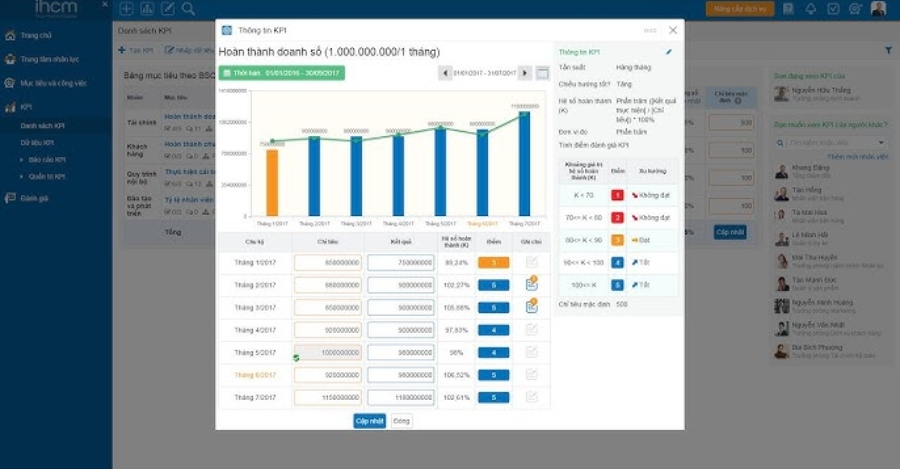
Key features of IHCM for the e-commerce industry:
- Comprehensive HR management: Store employee records, contracts, insurance, and work history centrally on a cloud platform, making it easy, accurate, and synchronized to manage personnel across multiple warehouses, sales departments, or logistics centers.
- Shift & productivity tracking: Supports flexible timekeeping by shift, department, or warehouse area; automatically calculates salary based on KPIs, order processing volume, or warehouse productivity, reducing errors and saving time.
- Visual performance reports: Provides charts and real-time data on employee performance, order processing rates, warehouse productivity, overtime status, and labor costs, helping management make faster and more accurate decisions.
Pros and cons of IHCM HR software:
| Advantages | Disadvantages |
|
|
IHCM HRM software pricing for the e-commerce industry
- Businesses with under 60 employees: 1,500,000 VND/month
- Businesses with 61 – 90 employees: 3,000,000 VND/month
- Businesses with over 90 employees: Contact Hyperlogy for a consultation and detailed quote.
- Currently, IHCM does not offer a free trial
1.1.7. Lotus Pro HR Software
Lotus Pro is an HR management software developed by Hosco Joint Stock Company, targeting medium and large-sized e-commerce businesses that need to manage diverse teams operating flexibly across multiple platforms.
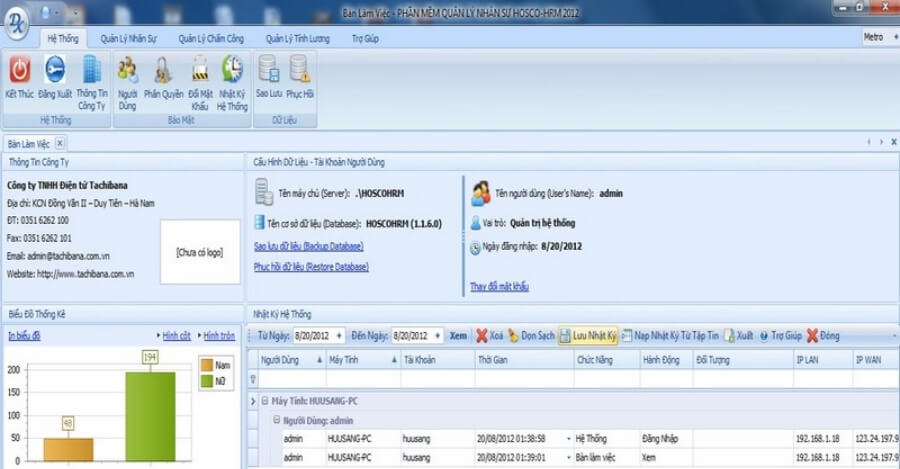
Key features of Lotus Pro HR software for the e-commerce industry:
- Centralized profile and organizational structure management: Easily track employees by department (marketing, operations, warehouse, customer service, etc.), ensuring consistent HR data.
- Flexible permission settings: Allows setting different access rights for warehouse staff, online sales staff, and senior management, ensuring information security.
- Automated timekeeping and payroll: Connects directly with time clocks, shift schedules, or sales applications to record data in real-time, reducing errors and saving time on payroll processing.
- HOSCO ecosystem integration: Synchronizes data with accounting software, ERP, or order management systems, helping e-commerce businesses operate more smoothly and cohesively
Pros and cons of Lotus Pro HRM software for the e-commerce industry:
| Pros | Cons |
|
|
HRM Lotus Pro software pricing for the e-commerce industry:
- A limited-time free trial is available.
- Pricing is customized based on the number of employees and branches or operating platforms. Businesses need to contact the provider directly for a detailed quote and consultation on a suitable solution.
1.1.8. HR-Manager Human Resource Management Software
HR-Manager, developed by Lac Viet Company, is a comprehensive human resource management software suitable for medium to large-sized e-commerce businesses. The system supports the automation of the entire HR process, from recruitment, training, and timekeeping to payroll and performance evaluation, helping to effectively manage flexible work shifts, warehouse/online sales, and order-based KPIs.
Key features for the e-commerce industry
- Centralized employee profile management: Store personnel information, contracts, insurance, rewards/disciplinary actions, and track employees by work shift, warehouse, or branch.
- Automated timekeeping & payroll: Connects directly with time clocks or online timekeeping, calculates payroll based on shifts, orders, departmental KPIs, or order processing productivity, reducing errors and saving compilation time.
- Productivity & performance evaluation: Track the effectiveness of each individual, team, or warehouse, helping to optimize workforce allocation and improve order completion rates.
- Customizable internal workflows: Flexibly adjust approval processes for overtime, leave, orders, or KPIs by sales team, suitable for the specific needs of 24/7 operations.
Pros and cons of HR-Manager software:
| Advantages | Disadvantages |
|
|
HR-Manager software costs for e-commerce businesses
- Basic package: 30,000 – 50,000 VND/person/month
- Advanced package: 50,000 – 80,000 VND/person/month
- Comprehensive package: Around 100,000 VND/person/month
- Free trial: Businesses can register for a demo to experience the features before implementation.
1.1.9. DigiiHR HR Software
DigiiHR is an HR management software developed by OCD Management Consulting Joint Stock Company (OOC) – a unit with over 20 years of experience in business management consulting in Vietnam. This solution is particularly suitable for medium and large-scale e-commerce businesses that need to handle a large volume of personnel, flexible work shifts, and a complex KPI system.
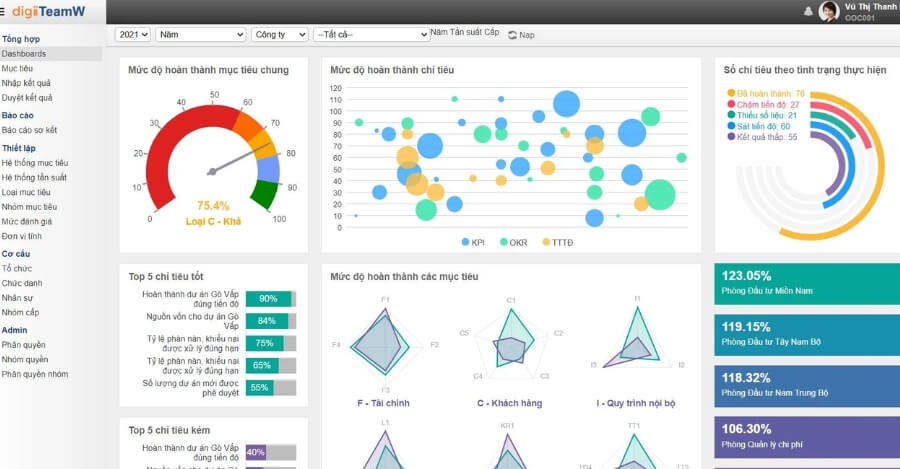
Key features of DigiiHR HRM software for the e-commerce industry:
- Centralized employee profile and contract management: Easily track employee information, contracts, promotion paths, and transfers between departments (marketing, operations, warehouse, customer care…).
- Automated timekeeping and payroll: Supports shift-based, flexible shift, or remote work timekeeping, and calculates payroll linked to KPIs and sales, suitable for the specifics of the e-commerce industry.
- Competency & performance tracking: Set up and monitor KPIs by campaign, platform, or sales team, helping managers easily measure work efficiency.
- Real-time HR reporting: Provides intuitive dashboards by department, campaign, or branch, helping managers make fast and accurate decisions.
Pros and cons of DigiiHR HRM software:
| Pros | Cons |
|
|
Pricing for DigiiHR HR management software for e-commerce businesses
- The starting price for DigiiHR software is from 3,000,000 – 5,000,000 VND/year.
- DigiiHR currently offers free demo registration, allowing businesses to experience the software firsthand before full implementation.
1.1.10. AiHR HR Software
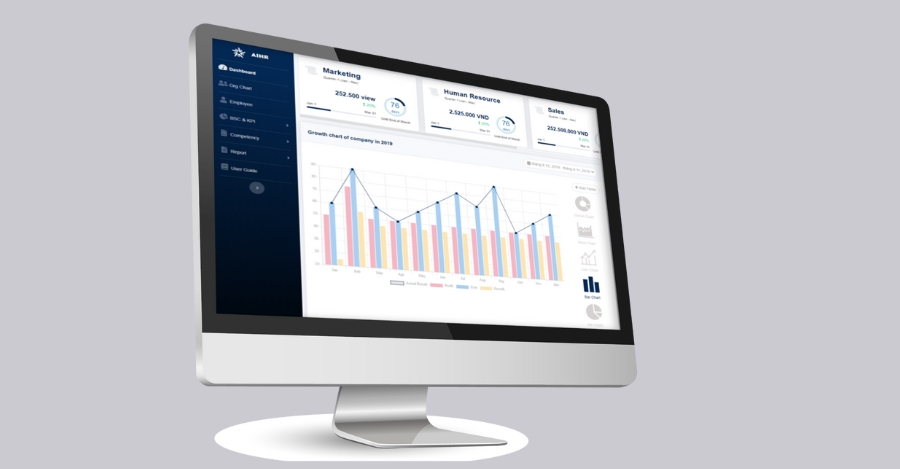
AiHR is an intelligent HR management platform developed by JobTest, applying AI and big data to automate the entire HR process. With the unique characteristics of the e-commerce industry, which has a large, constantly changing workforce working in multiple shifts and positions, AiHR helps businesses operate smoothly, control HR data centrally, and make quick decisions based on real-time data.
Pros and cons of AiHR HRM software:
| Pros | Cons |
|
|
AiHR HRM software pricing for e-commerce businesses
- Basic Package: From 48,000 VND/user/month (1 administrator, 100 users)
- Standard Package: From 58,000 VND/user/month (3 administrators, 200 users)
- Premium Package: From 68,000 VND/user/month (5 administrators, 300 users)
- Enterprise Package: Custom pricing, contact us directly for consultation and a detailed quote.
- A free trial is available to experience the software before making a final implementation decision.
1.2. Top 6+ Specialized HRM Software for the E-commerce Industry – International
1.2.1. CakeHR HR Software
CakeHR, developed by HR Bakery (UK), is a cloud-based HRM software suitable for small and medium-sized enterprises in the e-commerce, online sales, warehousing, and logistics sectors.
Key features of CakeHR:
- Automated timekeeping & payroll: Track the working hours of warehouse staff, delivery personnel, or the online sales department; automatically calculate salaries based on shifts, KPIs, order volume, or overtime, reducing errors and saving processing time.
- Centralized employee profile management: Store information on contracts, insurance, certifications, and work history, as well as profiles for part-time and seasonal staff, making it easy to manage all types of personnel.
- Performance & KPI evaluation: Track the productivity of individual employees, teams, or departments, from warehousing and logistics to customer care, helping to identify strengths and improve operational efficiency.
Pros and cons of CakeHR HRM software:
| Advantages | Disadvantages |
|
|
CakeHR HRM software pricing for the e-commerce industry
- Basic plan: From 4 USD/user/month
- Advanced plan: Around 16 USD/user/month
- A 14-day free trial is available.
1.2.2. Odoo
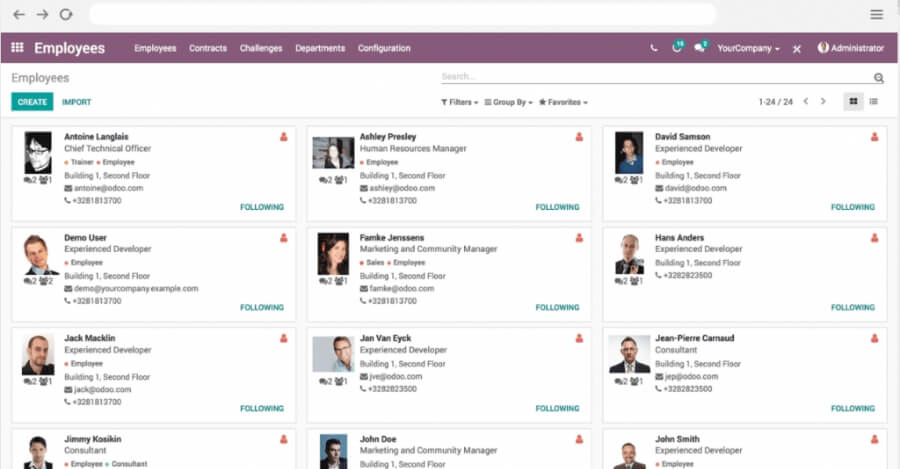
Odoo HRM, part of the Odoo ERP ecosystem (Belgium), is a comprehensive solution that helps e-commerce businesses digitize HR processes, manage flexible work shifts, and optimize the performance of warehouse, sales, and customer care teams.
Key features:
- Flexible timekeeping & shifts: Supports automatic data recording by shift, warehouse, or sales department, suitable for work environments with multiple shifts per day.
- Automated payroll & allowances: Automatically calculates salaries based on hours, output, or KPIs, integrating overtime allowances and productivity bonuses for warehouse, delivery, or customer care staff.
- Performance & KPI evaluation: Tracks individual or team work efficiency, from order processing to packing and delivery, helping managers quickly identify strengths and areas for improvement.
- Labor cost management: Allocates labor costs by warehouse, department, or order, optimizing operational costs and product prices.
- Visual reporting & analytics: Provides summary dashboards by department, shift, or sales channel, helping leaders make fast and accurate HR decisions.
Pros and cons of Odoo HRM software:
| Pros | Cons |
|
|
Odoo HRM software costs for e-commerce businesses
- Standard Plan: From 7.35 USD/user/month.
- Custom Plan: From 10.9 USD/user/month.
- One App Free Plan: Free for any one app, unlimited users.
Odoo – HRM software for the e-commerce industry
1.2.3. Sage HR
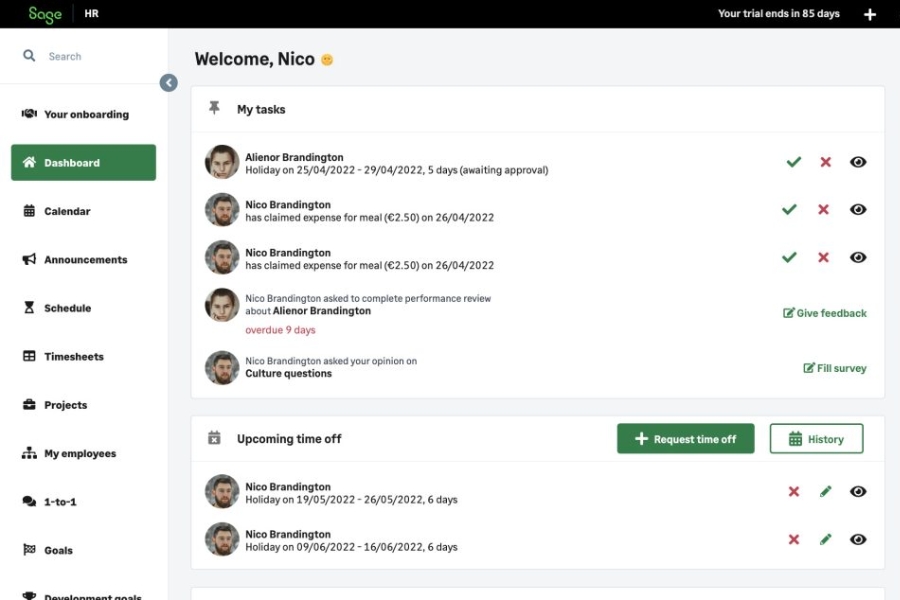
Sage HR is a cloud-based human resource management software developed by Sage Group (UK). This solution is suitable for small and medium-sized e-commerce businesses, helping to automate the entire HR process from recruitment, onboarding, timekeeping, and payroll to performance evaluation by shift, sales channel, or project.
Key features of Sage HR for the e-commerce industry
- Automatic reminders and notifications: Alerts for work schedules, shifts, orders to be processed, events, or changes in employee information, helping to reduce manual tasks and optimize the operations of sales and logistics teams.
- Performance tracking by KPI: Evaluate the productivity of employees, teams, and departments based on sales targets, order processing, customer response time, or marketing KPIs.
- HR data analysis: Provides detailed data on working hours, productivity, revenue per capita, and personnel costs by sales channel, helping leaders make fast and accurate decisions.
Pros and cons of Sage HR software:
| Pros | Cons |
|
|
Sage HR HRM software pricing for the e-commerce industry
- Basic package: From $5.5 USD/user/month.
- Add-on modules: $1-3 USD/user/month package & $150-200 USD/month package.
- Free trial: Businesses can experience a 30-day free trial to test the interface and features before official implementation.
1.2.4. HR Management with Zoho People
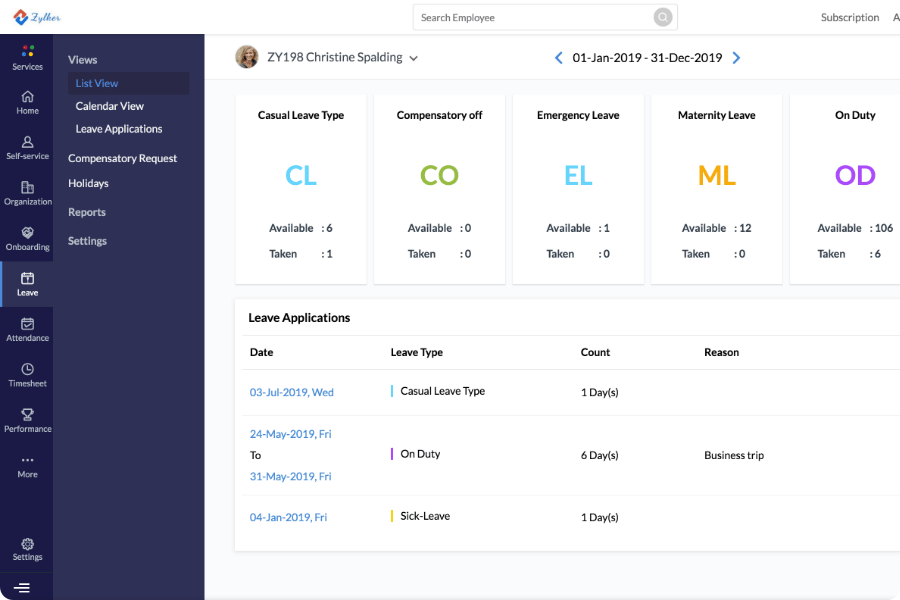
Zoho People is an HR management software from the Zoho ecosystem (India), flexibly designed for e-commerce businesses with remote teams, collaborators, or employees at warehouses, stores, and operational offices. The solution is fully cloud-based, enabling centralized HR management and easy scalability as the business grows rapidly.
Key features of Zoho People HRM software for the e-commerce industry:
- Centralized HR data management: Track profiles, contracts, work schedules, and employee transfers between operations, warehouse, and customer service departments on a single system.
- Flexible timekeeping: Supports GPS tracking, mobile time clocking, or facial recognition – suitable for shift-based or remote employees.
- Multi-dimensional performance evaluation: Measure KPIs, productivity by order, sales campaign, or customer care effectiveness.
- HR process automation: Approve leave requests, handle internal requests, and onboard new employees in just a few steps.
Pros and cons of Zoho People HRM software for the e-commerce industry:
| Pros | Cons |
|
|
Zoho People HR management software pricing for e-commerce businesses
- Free Plan: Free for the first 5 users, suitable for newly established e-commerce startups.
- Essential HR Plan: From $1/user/month, meets basic needs such as profile management, leave, and timekeeping.
- Professional Plan: From $2/user/month, adds performance tracking and HR process management features.
- Enterprise Plan: From $5/user/month, integrates advanced automation, suitable for large-scale e-commerce businesses with multiple departments operating in parallel.
1.2.5. Cloud HR Software
Cloud HR (OpenHR) is an HRM software developed by Tinh Hoa Solutions Joint Stock Company, offering an in-depth, flexible, and easily scalable HR management system. This solution is particularly suitable for medium and large e-commerce businesses with complex personnel structures, multiple branches, or teams working in a hybrid model.
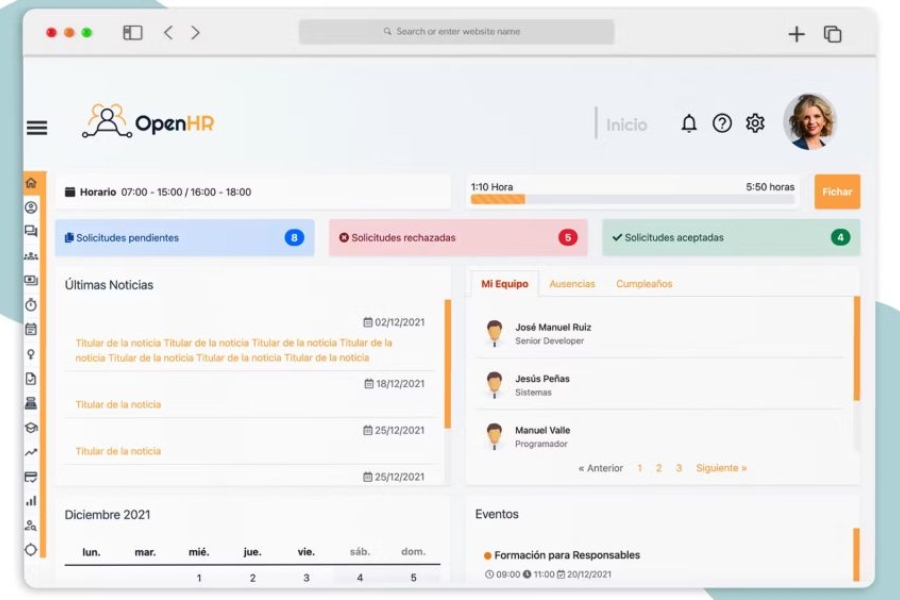
Key features of Cloud HR software for the e-commerce industry:
- Centralized employee profile management: Store and look up all employee information on a cloud-based platform, easily track personnel status across departments such as operations, customer care, or warehouse.
- Automated payroll generation: Supports flexible salary calculation by shift, KPI, or sales revenue – suitable for e-commerce environments with many part-time positions or collaborators.
- Talent development and retention: Build competency frameworks, manage performance, and create training plans to help the HR team grow sustainably with the business.
Pros and cons of OpenHR HRM Software:
| Pros | Cons |
|
|
Pricing for Cloud HR HRM Software in the E-commerce Industry
- Cloud HR has not publicly announced specific pricing. E-commerce businesses need to contact the provider directly for a consultation and a suitable quote.
- There is no official information about a free trial, but businesses can request a demo to experience the software.
1.2.6. BambooHR HRM Software
BambooHR is an HR management software from the US, trusted in over 100 countries. This solution is particularly suitable for small and medium-sized e-commerce businesses (25 – 300 employees).
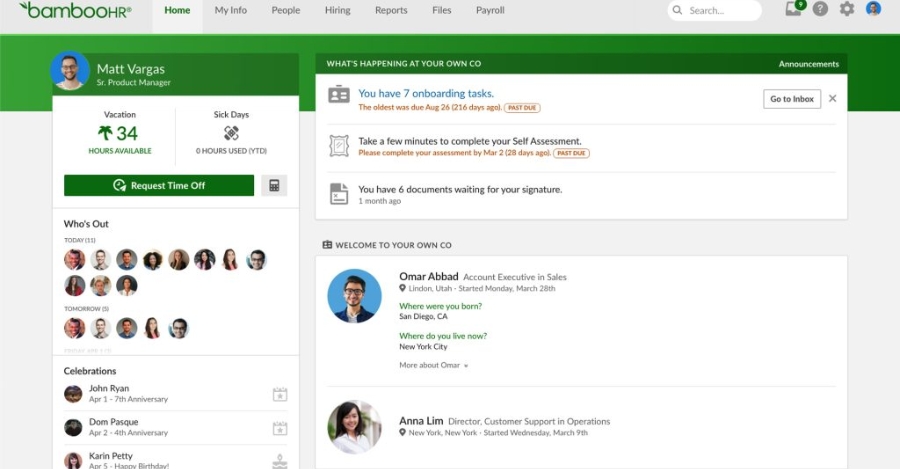
Key features of BambooHR for the e-commerce industry:
- Centralized management of employee data on a single platform – from warehouse, operations, and customer care to marketing.
- Automated Recruitment & Onboarding: Supports job posting, screening, and guiding new employees to integrate quickly, reducing training time for the online operations team.
- Flexible Timekeeping & Payroll: Supports remote time tracking for employees working in warehouses, stores, or in shifts, ensuring accuracy and transparency.
- Performance & Engagement Tracking: Helps HR evaluate individual KPIs by department (online sales, marketing, operations), thereby optimizing overall workforce efficiency.
Pros and Cons of BambooHR HRM software for the e-commerce industry:
| Pros | Cons |
|
|
BambooHR HRM software pricing for the e-commerce industry:
- Core Package: Includes basic features such as profile management, timekeeping, and leave management.
- Pro Package: Adds advanced features like performance management, engagement measurement, and HR analytics.
2. Benefits of HRM Software for the E-commerce Industry
Managing human resources with Excel or manual tools in the e-commerce industry often reveals many limitations:
- Unsynchronized HR and sales data, prone to errors when updating shifts, orders, and sales KPIs
- Difficult to track employee performance by sales channel, warehouse, or branch
- Low security for salary, sales bonus, and contract information; and no support for automating HR-related operational processes.

This costs businesses significant time, reduces management efficiency, and makes it difficult to scale when operating across multiple channels or warehouses. HRM software emerges as a comprehensive solution, helping e-commerce businesses thoroughly resolve these issues:
- Automate HR management by channel and warehouse: Supports timekeeping, shift management, order tracking, sales KPIs, and calculates productivity-based salaries, bonuses, and overtime, reducing errors and saving time.
- Secure data and detailed permissions: Ensures the security of employee information, salaries, sales bonuses, contracts, and KPIs by department or warehouse.
- Instant and visual reports: Track performance, sales, and HR costs by warehouse, shift, sales channel, or department, enabling quick decision-making and optimizing workforce and operations.
- Flexible integration with e-commerce systems: Synchronizes data with ERP, CRM, warehouse management software, shipping, and online sales platforms, enabling seamless management from warehouse to customer.
- Enhance employee experience: Allows employees to look up salaries, bonuses, KPIs, request leave, adjust shifts, or update personal profiles online.
- Compliance with laws and internal policies: The system continuously updates regulations on labor, tax, insurance, and sales bonuses, ensuring compliant and transparent operations.
Thanks to HRM software, e-commerce businesses can optimize their workforce, increase productivity, manage multiple channels and warehouses effectively, and standardize operational processes—from recruitment, timekeeping, and payroll to KPI evaluation and sales bonuses.
3. Criteria for Choosing HR Management Software for the E-commerce Industry

Below are the key criteria to help e-commerce businesses choose HRM software that aligns with warehouse operations, logistics, online sales, and multi-channel HR management:
- Shift and operational staff performance management: The system needs to track timekeeping for warehouse, fulfillment, delivery, and customer care staff by shift, rota, or overtime. It should also record performance metrics like orders processed, pick-pack volume, and packing or return times to calculate salaries, bonuses, and evaluate job effectiveness.
- Calculate salary and bonuses based on KPIs & output: The HRM should automatically calculate salaries based on completed orders, sales revenue, and individual or team KPIs, combined with productivity bonuses or peak-season bonuses, ensuring transparency and motivating performance.
- Track online and offline personnel: The software should support timekeeping via mobile app, QR code, GPS, or time clocks at the warehouse, ensuring accurate monitoring of working hours for warehouse staff, shippers, or remote employees, reducing the risk of fraud and data errors.
- Training management & process compliance: The system should track onboarding programs, operational certifications, warehouse safety, and training courses for sales and customer care skills, helping employees enhance their capabilities and adhere to internal regulations.
- Real-time operational data reporting and analysis: The HRM needs to integrate with ERP, CRM, WMS, or POS systems to provide visual reports on employee productivity, orders processed, packing time, and HR cost per order, helping leaders make fast and accurate decisions.
- Multi-warehouse, multi-channel management and flexible scalability: The software must synchronize HR data in real-time across multiple warehouses, fulfillment centers, or branches, with clear permissions, and be easily scalable as the business adds new sales channels or logistics centers.
4. Frequently Asked Questions about HRM Software for the E-commerce Industry
Question 1: Is HR management software for the e-commerce industry expensive?
The cost of HRM software for e-commerce businesses is quite flexible, depending on warehouse size, number of employees, and the features required (timekeeping, productivity-based payroll, sales KPIs, warehouse management, fulfillment). Basic packages for startups or small businesses typically range from a few hundred thousand to a few million VND per month. Meanwhile, for large enterprises with multiple warehouses or diverse sales channels, the investment may be higher but is still considered reasonable compared to the benefits of effective management, workforce optimization, and increased operational productivity.
Question 2: Is employee data secure when using HRM software for the e-commerce industry?
Employee data is strictly secured through encryption, role-based access control, user authentication, and system activity monitoring. Additionally, standard HRM software complies with legal regulations, helping to protect sensitive information such as salaries, bonuses, KPIs, work schedules, and employment contracts. This reduces the risk of data leakage while enhancing the trust of both employees and management.
Question 3: What are the differences between HRIS, HRMS, HCM, and Cloud HR?
Below are the fundamental differences between various types of HR management software, helping businesses easily understand the scope and functionality of each solution.
- HRIS: Manages basic data such as employee profiles, recruitment, timekeeping, and performance reviews.
- HRMS: Expands on HRIS with process automation, including payroll, benefits, KPIs, and training.
- HCM: Encompasses both HRIS and HRMS, focusing on strategic workforce development, talent management, and enhancing employee value.
- Cloud HR: Operates on a cloud platform, allowing access anytime, anywhere, saving on infrastructure costs, offering easy upgrades, and providing high security.
Question 4: Which businesses should use Cloud HR?
Cloud HR is suitable for medium and large e-commerce businesses looking to digitize and automate their HR management processes. It is an ideal solution for companies with multiple warehouses, sales channels, or a flexible workforce, as it helps centralize the management of profiles, timekeeping, payroll, KPIs, and performance reviews, while also saving on hardware costs and enhancing data security.
Question 5: What are the benefits of AI-integrated HRM software for an e-commerce company?
AI-integrated HRM offers numerous benefits:
- Automates recruitment, timekeeping, and productivity- or KPI-based payroll, reducing errors and saving time.
- Analyzes employee performance, forecasts staffing needs based on sales seasons, optimizes KPI bonuses, and detects risks or fraud.
- Improves the employee experience, provides strategic data for leadership, and helps optimize warehouse operations, fulfillment, and overall business efficiency.
Question 6: How do I choose the right HRM software for the e-commerce industry?
To choose an HRM software, businesses should:
- Clearly define HR needs, prioritizing software with features specific to e-commerce (warehouse management, order management, sales KPIs, fulfillment).
- Evaluate its integration capabilities with ERP, POS, warehouse, accounting, and CRM systems.
- Check for a user-friendly interface, data security, provider reputation, scalability, and request a demo before making a decision.
Question 7: What are the popular HRM software options for the e-commerce industry in Vietnam today?
Some popular HRM software includes: 1Office, DigiiHR, Zoho People, Odoo HRM, HRM AiHR… These platforms support HR management, timekeeping, payroll, KPIs, and recruitment, and they integrate with ERP, warehouse, and sales systems, making them suitable for the scale and operational model of e-commerce businesses.
















