


 10/05/2026
  145 views
NPS is an index that helps businesses measure customer satisfaction and their willingness to recommend products and services to others. Correctly understanding what NPS is and how to calculate this index will help businesses identify loyal customer groups, dissatisfied groups, and find ways to improve the customer experience more effectively.
Mục lục
- I. What is NPS? How important is the NPS score for businesses?
- II. Formula for calculating the customer loyalty index (NPS)
- III. 3 Steps to Measure the NPS Score and Key Considerations for Practical Business Application
- IV. 3 Ways to Improve Your NPS Score – Triple Your Business Efficiency
- V. Real-world examples of businesses successfully improving their NPS
- VI. Pros and cons of using NPS to evaluate customer experience
I. What is NPS? How important is the NPS score for businesses?
1. What is NPS?
NPS – Net Promoter Score – is an index that measures customer loyalty to the quality of a business’s products/services, as well as the likelihood of that customer recommending the product to friends or acquaintances.
In other words, the NPS score is considered a standard for business organizations/enterprises to evaluate the loyalty of their customer base.
Previously, if the concept of customer loyalty was only assessed relatively, now, thanks to the NPS score, businesses can specifically measure the level of customer loyalty, thereby developing strategies for customer retention and enhancing their competitive ability in the market.
2. What is the role of the NPS score for businesses
The index for assessing customer satisfaction and loyalty always plays an important role in the business operations and marketing campaigns of every enterprise. Specifically:
- Helps businesses measure customer loyalty
The NPS score helps businesses determine how customers feel about their products/services, the likelihood they will recommend their experiences to friends/relatives, and can even inform the business about the possibility of customers abandoning their product for another. From this, the business’s strategy team can outline a suitable direction to optimize the sales process.
- Is a tool to help businesses improve their business strategy
Measuring the NPS score is an opportunity for businesses to listen to customer feedback objectively to plan improvement strategies that are as close and practical as possible. Because when surveying customer opinions to measure the NPS score, the business will receive countless different opinions and evaluations, along with the reasons why they gave such scores. This allows the business to accurately identify areas for improvement to operate more effectively in the future.
- Helps businesses clearly identify “quality customers”
From the perspective of measuring the net promoter score, “quality customers” are understood as those who are likely to promote your products/services due to positive reviews and satisfaction. By compiling NPS scores, businesses can identify who the quality promoters (Promoters) are, and then plan to cleverly encourage them to recommend to friends and relatives. Because in reality, word-of-mouth referrals are often very effective in promotion.
- Is an effective interaction channel between the business and customers
Through surveys conducted to gather feedback and scores from customers, the business gains an additional interaction channel to absorb new development ideas and better understand customer needs.
II. Formula for calculating the customer loyalty index (NPS)
After clearly understanding what NPS is and the importance of determining the NPS score, businesses need to know how to calculate NPS most accurately.
When starting to survey customer opinions to determine the net promoter score, the business will use the question: “Are you willing to recommend our product to everyone?” and provide a scale from 0 (Never) – 10 (Very willing) for customers to choose from. Then, customers who participate in the survey will be divided into groups:
- Promoters – Customers who give a good rating with a score of 9-10 and have a high probability of repurchasing the product/service.
- Detractors – Dissatisfied customers who give a rating from 0-5. These customers may be unhappy with your product/service and are not willing to promote it to those around them; they may even risk damaging your brand.
- Passive – The group of neutral customers with a rating score of 6-8
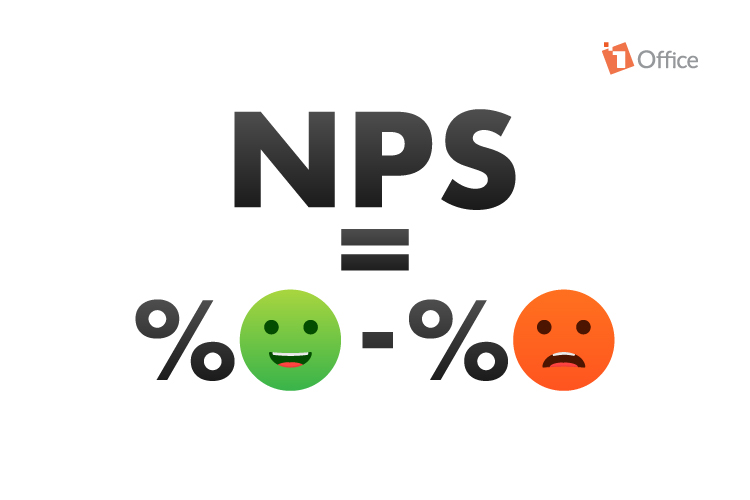
Accordingly, the NPS score is calculated using the formula:
| NPS = % Promoters – % Detractors |
The NPS score is then evaluated as follows:
| -100 – 0 | Customers give a low rating, had a very poor experience purchasing or using the product/service |
| 0 – 50 | The customer experience is average, not very satisfied |
| 50 – 70 | Customers rate the product/service as good, willing to promote it to others |
| 70 – 100 | Customers are very satisfied with the business’s product/service |
For example:
If a business gets survey results with 60% Promoters and 20% Detractors, its NPS score is: 60% – 20% = 40%.
In this case, an NPS of 40% falls within the 0 – 50 range, which is considered average. This means customers are not overly satisfied with your product/service, and your business needs to make improvements to achieve better business results.
See more:
III. 3 Steps to Measure the NPS Score and Key Considerations for Practical Business Application
1. 3 steps to measure the customer loyalty index
Measuring the Net Promoter Score should be carried out in 3 main steps:
| Step | Details | Note |
| 1 | Select the evaluation questions you want to ask customers | The questions should be focused and tap into the customer’s psychology to receive the most objective feedback |
| 2 | Design the survey, choose a rating scale from 0 – 10, and present it in your own style | Present the survey clearly, making it easy to read and use, to avoid customers feeling discouraged and unwilling to provide feedback |
| 3 | Share and send the survey to customers, and also expand the survey on social media platforms. | Avoid sending the survey to customers too many times to prevent bothering them. |
2. Considerations for Measuring the Net Promoter Score
To ensure the most effective measurement and application of this customer loyalty metric, businesses should consider the following points:
- Accurately define the purpose of the measurement
Clarifying why you want to survey customer opinions is the first thing to consider before measuring the NPS score. After understanding what NPS is, if you don’t clearly define your objectives, you might create a series of “junk” surveys that are unimportant and serve no purpose. This not only annoys customers but also worsens their experience with your business.
- Don’t focus too much on the score
Once you clearly understand the concept of NPS, you’ll know that the NPS score is the final result of the survey, but you shouldn’t place too much emphasis on it. Instead, focus on customer feedback to understand the issues and find ways to improve for the future.
- Proactively seek reasons for customer dissatisfaction
These reasons are the core points for the business to identify the main problems in product/service quality or customer experience. From there, you can devise appropriate improvement strategies.
IV. 3 Ways to Improve Your NPS Score – Triple Your Business Efficiency
The ultimate goal of measuring the customer loyalty score is to find the best ways to improve. If you have a clear understanding of what NPS is, have calculated your Net Promoter Score, and need to improve it, refer to the methods below to raise your NPS score even higher.
1. Improve the Quality of Customer Care
The quality of care goes hand in hand with customer satisfaction. When customers receive dedicated care, they will feel more comfortable, and the likelihood of them returning to use your product/service will be higher.
At the same time, by providing thoughtful customer care, businesses will have the opportunity to understand purchasing psychology and get closer to customer needs through conversations. This allows you to find ways to improve product/service quality, increase customer satisfaction, encourage their advocacy, and raise your NPS score.
Methods to increase the effectiveness of customer care:
- Provide complete and clear information about products/services to customers
- Train the customer care team to always maintain a professional attitude and prioritize customer care
- Respond to and answer customer inquiries quickly and thoroughly
- Listen to understand and proactively show respect for customers
- Know how to create opportunities for customers to self-serve
Especially in customer care activities, the care teams of many businesses sometimes forget the basic steps of the post-sale care process. This inadvertently creates a bad impression on customers and reduces the likelihood of them continuing to choose your business’s products/services.
To improve the effectiveness of post-sale customer care, refer to: 8+ Most Popular Customer Survey Forms by Purpose and Field
2. Enhance the Customer Experience in Different Stages
When approaching a business with a clear need, your customers will go through 3 main stages: Pre-purchase, purchase, and post-purchase. In each stage, if you know how to enhance the experience and increase customer satisfaction, the NPS score will certainly improve as a result.
Methods to enhance the customer experience in each stage:
| Before purchase | Research solutions that best meet the customer’s purchasing needs;
Consult and address all customer inquiries with a receptive and respectful attitude |
| During purchase | Focus on the quality of the product/service;
Enhance the customer experience in every transaction, demonstrating the company’s professionalism and credibility |
| After purchase | Send a thank-you letter to the customer;
Tactfully gather customer feedback on product/service quality as well as their satisfaction with the experience |
3. Build a systematic and effective customer care process
An effective customer care process acts as a lever for businesses to enhance customer satisfaction, leading to a significant improvement in their NPS score. It also helps build a professional brand image, enabling the company to advance further in the market.
Methods to optimize the customer care process:
- Accurately identify the business’s target customers
- Segment the customer base to tailor the approach to their needs
- Assess the quality of customer care and identify areas for improvement
| For further reading: Building a Standard and Professional Customer Care Process |
V. Real-world examples of businesses successfully improving their NPS
Measuring and improving the Net Promoter Score (NPS) is not just about tracking customer satisfaction; it also reflects brand health and a company’s long-term growth potential. Below are some real-world examples of how major global companies have successfully applied this model:
Apple – Building loyalty through product experience
Apple is one of the brands with the highest NPS in the world, typically maintaining a score of 70–75, far exceeding the tech industry average (~30–40).
Apple’s secret to success lies in continuously improving the comprehensive user experience – from product design, interface, and ecosystem to after-sales service.
-
Apple regularly conducts NPS surveys after every purchase or device repair, collecting detailed feedback to improve its services.
-
Negative feedback (from Detractors) is forwarded directly to the customer service department within 24 hours for resolution.
-
NPS data is connected to the CRM, giving sales and customer care teams instant information about each customer’s satisfaction level.
Result: A high NPS helps Apple maintain a repeat purchase rate of over 90% and become the brand with the most loyal user community in the world. This is arguably the clearest example of a business that understands what NPS is and seeks to improve this metric.
Amazon – Optimizing the customer journey with NPS data
Amazon achieves an average NPS of around 62, among the highest in the global e-commerce sector.
What sets Amazon apart is how it uses NPS feedback data to make product and service decisions.
-
All NPS ratings are systemized into an internal dashboard, categorized by customer groups (Prime, Non-Prime).
-
Amazon continuously runs A/B tests to verify how changes in the experience (delivery speed, return policy, app interface) affect NPS.
-
Groups with low NPS are prioritized by the operations team for process improvements within 1–2 weeks.
Result: The rate of customers recommending Amazon to others exceeds 80%, and revenue growth from loyal customers accounts for nearly 50% of total annual revenue.
Netflix – Personalizing the experience to increase NPS
Netflix once had an NPS of only 52, but after implementing a personalized content recommendation algorithm, this score increased to 68 in just two years.
-
Netflix analyzes user behavior data (watch time, favorite genres, login frequency) to optimize movie recommendations for better suitability.
-
The company frequently sends NPS surveys after a user finishes a season of a show or cancels their subscription to identify the reasons for their dissatisfaction.
-
Feedback is analyzed by topic clusters to suggest new features or adjust communication campaigns.
Result: Netflix reduced its subscription cancellation rate by 25% and maintains the largest loyal user base in the OTT industry.
VI. Pros and cons of using NPS to evaluate customer experience
As mentioned above, the metric for assessing customer loyalty and advocacy plays a crucial role and is widely used by countless businesses today. However, applying this metric to evaluate customer experience has both advantages and limitations that businesses need to be aware of.
| Advantages | Disadvantages |
|
|
Thus, through the information shared above, 1Office has provided you with the most basic understanding of what NPS is, how to calculate it, and methods to improve the NPS score to help businesses enhance their business efficiency. We hope that the information above will help businesses find an effective direction for their NPS improvement strategy and promote business growth.
Today, with the explosive development of digital technology, applying digital software to customer care activities is the top choice for businesses. Among them, the 1Office customer care tool is a powerful assistant that helps the care and sales teams of over 5,000 businesses optimize the customer experience, increase satisfaction levels and the ability to promote products/services, thereby effectively improving the NPS score.
Get a free consultation & software demo
To learn more about 1Office, please contact us:
- Hotline: 083 483 8888
- 1Office Fanpage: https://www.facebook.com/1officevn
- Youtube Channel: https://www.youtube.com/c/1OfficeNềntảngquảnlýtổngthểDoanhNghiệp
















