


 11/05/2026
  535 views
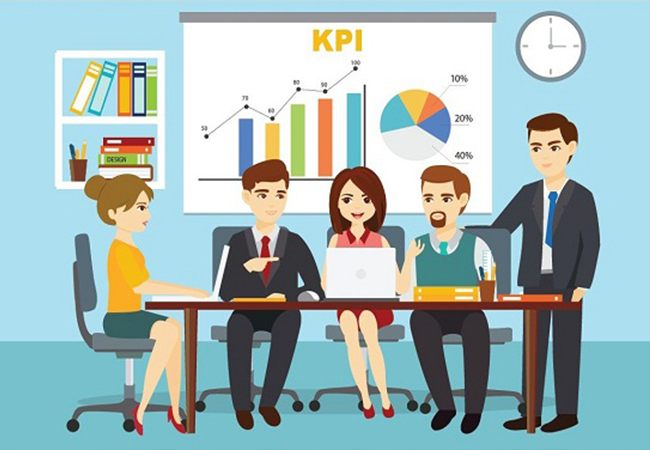
KPI (Key Performance Indicator) is a tool for measuring work performance, helping businesses evaluate the extent to which individuals and departments achieve their goals. This article will help you understand what a KPI is, its importance, and how to set up appropriate KPIs for each position in the business. Building an effective KPI system not only supports performance management but also promotes the sustainable development of the organization.
-

What is a KPI?
Mục lục
- I. What is a KPI?
- II. What important factors do talented individuals expect from KPIs?
- III. What are the three main reasons why businesses fail to successfully operate a KPI system?
- IV. Identifying Key KPI Objectives with KRAs
- V. What is the Method for Measuring KPI Completion?
- VI. What is the relationship between PMS – Process Management Systems and KPI?
- VII. How to build effective KPIs in a business
I. What is a KPI?
KPI stands for Key Performance Indicator, which is an index for measuring work efficiency, used to evaluate the degree of goal completion for an individual, team, or organization, thereby improving performance and achieving desired results.
KPIs are considered a modern tool that helps managers turn strategies into manageable objectives for each department and division across various fields such as human resources, finance, business, etc., and for managing each individual.
For example: if a company wants customers to know about its products and services, the simplest and most cost-effective way is to SEO keywords related to those products and services. Therefore, keyword ranking is a part of the KPI evaluation criteria for the Marketing department in general and the SEO staff in particular.
=> See more: TOP 12 Best Employee KPI Evaluation Software Today

Organizations and businesses often use KPIs at many different levels. The purpose is to evaluate the work performance of each department, position, and professional role:
- High-level KPIs (KPIs for leadership and senior management positions): Focus on the overall performance of the business, such as: revenue growth, team development, effective business operations, product improvement research, or launching new products, etc. Sometimes there are more demanding tasks like: building a new team, conquering a new potential market.
- Mid-level KPIs (KPIs for department and division head positions): Optimize processes, save costs.
- Low-level KPIs (KPIs for employees): Execute plans set by the management and leadership team.
See more: How to build KPIs for the Digital Marketing department

II. What important factors do talented individuals expect from KPIs?
Typically, each position has a job description or a monthly work plan. Based on this, managers will apply KPIs in the business to evaluate work performance results. Based on each employee’s KPI level, managers can determine:
1. Salary Policy
According to a 2019 survey conducted by the HR company Talentnet and Mercer on nearly 120 Vietnamese businesses, the rate of employees quitting due to not being rewarded appropriately reached up to 47%. This figure shows that income is the biggest concern for employees when accepting a job.
Based on work performance quantified and measured by KPIs, leaders and managers need to review and adjust salary policies to be commensurate with employee capabilities.
Currently, many companies apply a policy of reviewing salary increases for employees every 6 months. Applying KPIs in the business will create motivation for employees to strive and increase work efficiency.
2. Competency Development Training
Many candidates/employees, if they perceive the opportunity to enhance their capabilities when joining your company, are willing to accept a lower-than-market salary while dedicating their full effort. Currently, competency development training is one of the top concerns for employees.
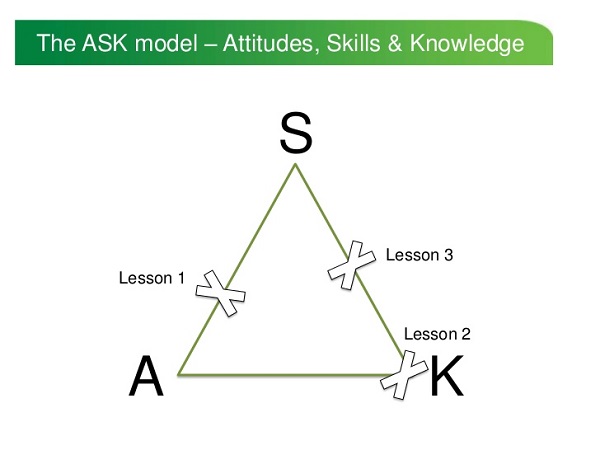
The criteria for evaluating a company’s competency development training capabilities are quantified and measured through the ASK model. This is known as the most widely used professional standards model in the world. The model supports a comprehensive assessment of personnel competency.
- A – Attitude: The company’s recognition and compensation policies for employees. For example: opportunities to participate in training courses to improve knowledge, company culture.
- S – Skills: The skills and ability to turn acquired knowledge into specific actions and practical behaviors that employees learn through their work at the company. For example: risk management skills, presentation skills, etc.
- K – Knowledge: The thinking and understanding that an individual gains after going through the work process. For example: professional knowledge, etc.
3. Career Path
In today’s hyper-competitive job market, a clear career path is a crucial factor in retaining employees long-term, especially for talented individuals. In companies without a career path, employees risk becoming stagnant. They fail to meet KPIs and start looking for other opportunities. As a result, the employee turnover rate can increase rapidly.
Investing in recruitment and internal training is a solid way to build a more diverse and dynamic leadership team. Applying KPIs in the business not only helps the company but also gives employees a vision for their career development, making them more likely to stay.
See more: A guide to effective time management for managers (part I)
III. What are the three main reasons why businesses fail to successfully operate a KPI system?
1. KPIs are not linked to short-term, mid-term, and long-term business strategies
Applying KPIs in a business requires flexibility to adapt to real changes and fluctuations. However, KPIs must still be linked to the business strategy from a time perspective. KPIs can be divided into two types:
- Strategic KPIs (linked to long-term business strategy): Strategic KPIs must be closely tied to revenue, profit, market share, and team building. These are factors that directly impact the survival and growth of the business.
- Tactical KPIs (linked to short-term and mid-term business strategy): Tactics are smaller activities that help the company move closer to its strategic goals. For example, to achieve a revenue target of 10 billion in a year, the Board of Directors will create a business plan and set tactical KPIs for each quarter.

2. KPIs are not aligned with the company’s direction, functions, and tasks
Depending on each stage of the company’s development, KPIs must be suitable for the company’s positioning, performing the correct functions and tasks. We cannot set a fixed target for all stages because at each point in time, the company has different development directions.
For example, in the initial (Introduction) stage of a product, the profit KPI will not be as high as in the growth (Growth) stage because when a new product is launched, revenue is still very low and a lot has to be spent on marketing and R&D.
When the product becomes widely known to consumers, revenue increases and costs decrease due to leveraging economies of scale. Therefore, setting a KPI that is too high or too low compared to the situation can lead to regrettable losses for the business.
See more: Comprehensive work management software helps businesses ‘break through’
3. KPIs are not closely linked to the job descriptions of each position
Ensuring Employee Goals Follow the SMARTER Criteria
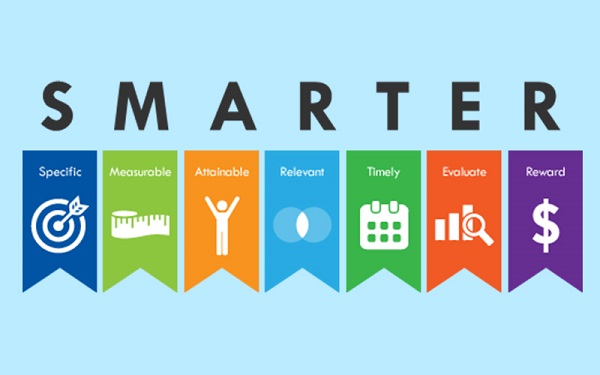
When building a KPI system for performance evaluation, managers need to ensure that tasks are assigned to employees according to the SMARTER criteria:
- S – Specific: Specific goal
- M – Measurable: Measurable goal
- A – Attainable: Attainable goal
- R – Relevant: Relevant goal
- T – Time-bound: Goal with a specific deadline
- E – Extending of Capabilities: Goal that develops capabilities
- R – Rewarding: Rewarding goal
For example: KPIs in sales are different from KPIs in human resources. Employees need to apply specific metrics such as: monthly revenue growth, average profit margin, number of monthly orders, target revenue, number of monthly calls, closing rate, average order value, etc.
Consequences of building KPIs that do not meet SMARTER criteria
If KPIs are not closely linked to the job description of each position, it not only negatively affects performance evaluation specifically but also has negative consequences for the overall organizational management system.
- If KPIs do not meet the specific criteria (Specific), employees will not clearly understand the job requirements and objectives.
- Metrics that are not measurable (Measurable) will lead to unguaranteed work quality.
- If KPI metrics are not achievable (Achievable) or realistic (Realistic), the set goals will be too far-fetched, and employees will lose motivation.
- KPI metrics without a specific deadline (Time-bound) cause the company’s resources to be unoptimized, wasting time and opportunities.
- If the objectives do not meet the ASK model, employees will not maximize and expand their capabilities (Extending of Capabilities). They will not be fully dedicated and may consider looking for another job, even with a lower salary, that offers them more learning opportunities.
- After completing their work, employees must be recognized (Rewarding) in proportion to the effort they put in. If they are not satisfied, they will handle their work with an increasingly perfunctory attitude and look to “job hop” to another place with what they consider a more satisfactory salary.
Read more: Free project management tools – Should you use them?
IV. Identifying Key KPI Objectives with KRAs
If KPIs are quantitative indicators used to evaluate performance, then KRAs are the evaluation weights within those indicators. Simply put, with KPIs, we can manage the volume of work, while with KRAs, we can manage the quality of that work.
KRA, short for Key Result Area, refers to the tasks that must be done to fulfill the primary responsibilities of a specific position.
Typically, a KPI set for a position will have 3-5 KRAs. These key results account for 80% of the job role within departments. The remaining part of the role is usually associated with general responsibilities, such as: work ethic and attitude, team spirit, helping team members, participating in activities for the benefit of the organization, etc.

The allocation of KRAs will differ depending on the specifics of each position. For example, here are some KPI metrics for a sales employee:
- Sales Target.
- Customer Satisfaction Index.
- Recovery Of Loans.
- Regulatory Compliance.
- Work Ethic.
Among these, the Key Result Areas (KRAs) of the KPI will include: Sales Target, Customer Satisfaction Index, and Recovery Of Loans.
Read more: Digital Transformation in the Design Industry – Should You or Shouldn’t You?
V. What is the Method for Measuring KPI Completion?
If you are trying to measure everything but not from a strategic perspective, you are wasting time and effort on a mess. After solving the KPI quality problem with KRAs, use the BSC model to allocate weight to each metric.
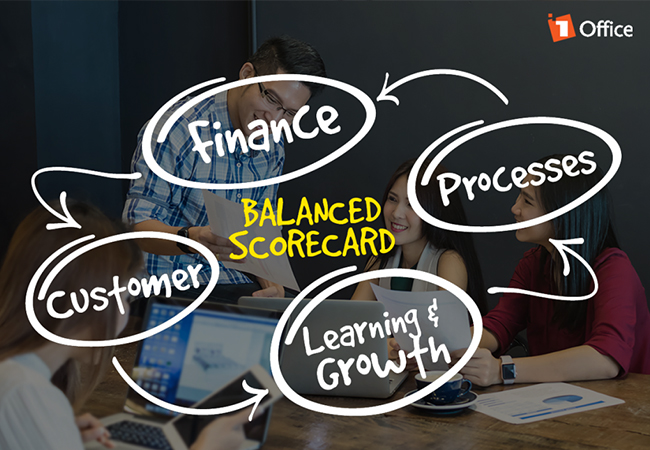
BSC (Balanced Scorecard) is a strategic management model at its most basic level, guiding the business throughout the process of establishing, implementing, monitoring, and measuring the results of the set strategy. Besides the financial aspect, BSC focuses on 3 other non-financial metrics that affect the company’s operational efficiency: customers, internal business processes, and learning & growth.
-

What is the relationship between BSC and KPI?
The “balanced” aspect of the model is reflected in the balance between short-term and long-term goals, financial and non-financial factors, input and output indicators of results, and external-facing and internal-facing activities.
Based on the established KRAs, managers will assign weights to each criterion, thereby prioritizing them by percentage to evaluate the completion level and work efficiency of employees.
VI. What is the relationship between PMS – Process Management Systems and KPI?
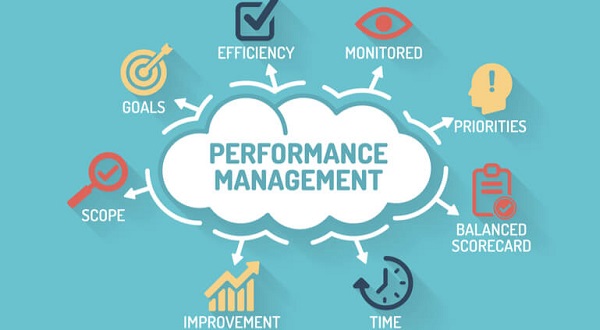
 PMS can be roughly translated as “Performance Management System”. This is a system that combines various approaches and technical tools for building and managing work with a focus on results, including:
-
Management by Objectives (MBO)
-
Results-Based Management (RBM)
-
Managing for Development Results (MfDR)
-
Outcome-Oriented Budgeting (OOB)
-
Performance Management
See more: Tips for more effective work management
KPIs need to be closely linked with PMS because:
- PMS provides the basis for establishing purposes, objectives, and result indicators in policy and plan development.
- PMS helps track and evaluate progress against the set KPIs.
- PMS helps align and mobilize the organization’s strengths and human resources to achieve KPIs.
- PMS supports the detection of shortcomings and allows for timely corrective and improvement measures in policy implementation.
- PMS enables the implementation of activities to enhance the quality of work performance for the organization and its employees.
VII. How to build effective KPIs in a business
Building, operating, and evaluating KPIs is an extremely challenging task for businesses. KPIs need to be appropriately designed, operated synchronously, implemented seriously, and monitored closely.
To address this challenge, 1Office provides businesses with an optimal method for managing personnel with KPIs, helping to save resources and time, and to scientize and standardize processes. 1Office can establish evaluation criteria and easily digitize all information, managing and storing it clearly and in detail on the software.
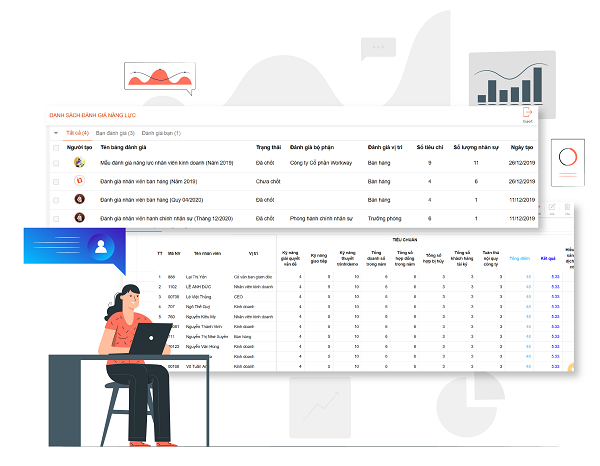
Additionally, the software can create evaluation forms on any day of the month to assess employee KPIs, and the evaluation results will be automatically forwarded to higher management levels for further review.
Managers can easily and visually track the evaluation results for each criterion of every individual, department, or division, making KPI-based personnel management much more scientific and time-efficient.
If you are struggling with defining what a KPI is or how to build KPIs for personnel evaluation, sign up for a trial to receive a consultation. 1Office will help you resolve these challenges quickly!
See more:
















