


 11/05/2026
  263 views
What is a corporate culture model, and which one is right for your business? This is a question many businesses are asking. Corporate culture is likened to the soul, brain, and heart of an entire organization. Therefore, for a business to grow towards the goal of leading its industry, building a corporate culture is essential. However, each business has its own method and model for developing its culture. Let’s find the answer with 1Office in the article below!
Mục lục
1. What is a corporate culture model?
Corporate culture can be understood as all the core values built throughout the existence and development of that business. And Organizational Culture Models act as frameworks, systems designed to identify the necessary elements to form or influence a company’s culture. In other words, a corporate culture model is like a mold for defining cultural elements, thereby more clearly identifying actionable steps that can help correct, optimize, or even change the direction of the company’s culture.

The topic of corporate culture and its models is always a focus of lively discussion. In reality, when a corporate culture is being built, it is very vulnerable. The smallest changes can create a ripple effect. For example, a change in personnel or a change in work policies.
Because of this initial fragile nature, a business needs a complete corporate culture model to act as a framework for providing specific direction and helping to define the cultural foundation. At the same time, it also helps to spread the concept of “corporate culture” within the company in a less abstract and more concrete way.
2. 4 common corporate culture models today
2.1 Dynamic and Creative Culture (Adhocracy Culture)

The dynamic and creative culture is one of the special corporate culture models. In businesses that operate under this model, innovation and creativity are not just encouraged but are essential for survival.
With this type of corporate culture model, the business and its personnel must constantly strive to create unique ideas. Flexibility is considered key, helping businesses with this culture model to constantly change and adapt quickly to the market. As a result, the business not only grows rapidly but also maintains a leading position in a volatile business environment. Furthermore, in businesses that build their corporate culture on innovation, every individual is empowered to speak up and freely share creative ideas, regardless of their position or experience. The work environment always encourages innovation, challenges stereotypes, and aims for creative breakthroughs.
The Adhocracy model is like a breath of fresh air, invigorating technology companies, startups, and industries that demand constant creativity, such as design, advertising, or media. In these businesses, innovation is not just a competitive advantage but also the key to survival and growth. The dynamic and creative culture of Adhocracy brings countless benefits to a business:
- Flexible adaptation to all changes: Adhocracy helps businesses quickly keep pace with market and technology fluctuations.
- Promotes creativity and innovation: Each individual is encouraged to speak up, propose new ideas, and experiment with bold methods.
- Dynamic and inspiring work environment: It sparks passion and encourages employees to maximize their potential in an open and creative atmosphere.
Adhocracy is the ideal culture model for organizations that aspire to seize opportunities and break through in the competitive and volatile business environment of the 21st century.
2.2 Collaborative and Supportive Culture (Clan Culture)

“Clan Culture,” also known as a collaborative and supportive culture, is a work environment that emphasizes teamwork, where each individual is connected and mutually supported. This culture model focuses on building a cohesive community where every member feels a sense of belonging, connection, and support from those around them. Everyone works together, creating a cohesive and mutually supportive team to grow together.
In a “Clan Culture,” collaboration and interaction among individuals are not only highly valued but are also the key to success. Here, a spirit of mutual support and care spreads, creating a warm working atmosphere where each member feels connected and an indispensable part of the team. As a result, employee loyalty and commitment to the business are strengthened. A business that builds its culture with the Clan Culture model will gain several benefits, such as:
- Increased employee engagement and loyalty: A friendly, family-like work environment helps employees feel valued, connected, and mutually supported.
- Improved operational efficiency and productivity: Close collaboration and interaction among members help solve problems effectively, share knowledge and experience, thereby accelerating work progress and increasing overall productivity.
- Builds a positive brand image: The business is highly regarded for its friendly and humane work environment, thereby enhancing its reputation and brand value.
A people-oriented and supportive culture is a corporate culture model of great importance, especially in an era where relationships and support play a key role in the work environment. This model not only creates a friendly workspace but also encourages collaboration and innovation, contributing to the long-term and sustainable development of the business.
2.3 Market Culture

A market culture is a corporate culture model that emphasizes achieving business goals and work performance. This model focuses on producing concrete, effective, and rapid results, reflecting a management style specifically aimed at market success.
In a results-oriented business environment, every decision and action is measured through the lens of results. The business operates under the principle of “results above all,” with every strategy and activity aimed at optimizing efficiency and profit. Competition and the ability to adapt quickly to the market are the core foundations of this model.
The pressure to achieve high results is ever-present in a “Market Culture” environment. Employees are encouraged to continuously surpass set metrics and goals. The work environment primarily focuses on completing specific objectives, often evaluated through clear business indicators.
A market culture is often found in large companies and businesses operating in competitive market environments. This model is suitable for organizations where achieving specific business goals and profit growth are top priorities. Businesses in finance, retail, or any industry where competition and efficiency are decisive factors for success often adopt this model. Here are some benefits of implementing this model in your business:
- Increased operational efficiency and productivity: The business achieves goals quickly, effectively, and cost-efficiently.
- Enhanced competitiveness: The business can quickly adapt to the market and seize new development opportunities.
- Increased profits: The business achieves high business performance, thereby increasing profits.
2.4 Hierarchy Culture

A hierarchy culture is a corporate culture model that reflects a tight organizational structure where rules and procedures play a central role. This model is designed to ensure stability, efficiency, and predictability in all organizational activities.
The work environment in a Hierarchy culture is often compared to a machine that runs smoothly according to regulations. Employees follow specific work processes and are supervised and guided by their superiors. As a result, discipline and order are highly valued, and each individual clearly understands their position and role within the organization.
A Hierarchy culture is particularly suitable for traditional organizations such as government agencies, banks, or large corporations. In these environments, maintaining order and efficiency through a hierarchical structure and rules plays a key role, ensuring stability and predictability in business operations. The benefits of this business model include:
- Ensures stability and efficiency: The system of rules and procedures helps ensure stability, consistency, and efficiency in the company’s operations.
- Easy management and control: The hierarchical structure and system of rules make it easier to manage and control employees.
- Increased predictability: The business can predict employee behavior and work outcomes thanks to a clear system of rules and procedures.
- Risk mitigation: Adherence to rules and procedures helps minimize the risk of errors and accidents in the workplace.
Overall, “Hierarchy Culture” is a corporate culture model that ensures stability, efficiency, and predictability. However, businesses need to be flexible in applying this model to encourage creativity, innovation, and create a work environment suitable for the rapid changes in today’s market.
3. How to determine the right corporate culture model?
3.1 Define core values
Core values are the guiding compass for all business activities, the foundation for sustainable development, and what creates a unique identity. A business needs to clearly define the core values, ethical principles, and beliefs that the organization always strives for.
Core values should be expressed concisely, be easy to remember, and easy to understand so they can be effectively communicated to all members of the organization. These values must reflect the unique identity of the business, creating differentiation from competitors. Defining core values is the first and most crucial step in building an effective corporate culture. With this solid foundation, the business can easily guide all activities, inspire employees, and build trust with customers.
3.2 Set realistic goals for the business
When setting goals for building a corporate culture model, the corporate culture goals need to be specific, measurable, achievable, relevant to reality, and aligned with the company’s development strategy. The goals should aim for diversity, inclusion, respect, and leveraging collective strength. For example, corporate culture goals could be “Creating a friendly, cohesive work environment that promotes creativity and collaboration,” or “Enhancing employees’ sense of responsibility and commitment,”…
3.3 Encourage employee participation in the building process
Corporate culture is the shared responsibility of all members of the organization. Businesses need to involve employees in the process of building and developing corporate culture. Collect employee feedback through channels such as surveys, suggestions, group discussions, etc. Ensure an open and respectful environment for exchange so that employees feel comfortable sharing their opinions.
4. Tips for improving your corporate culture
To improve your corporate culture, businesses first need to define the corporate culture model they are aiming for, whether the company’s aspirations are compatible with this model, and whether it aligns with their vision. Special attention should be paid to the core values, mission, and vision that the company wants to project externally and instill internally. You can refer to some examples of corporate culture from large companies for reference and learning.
5. Building corporate culture with 1Office
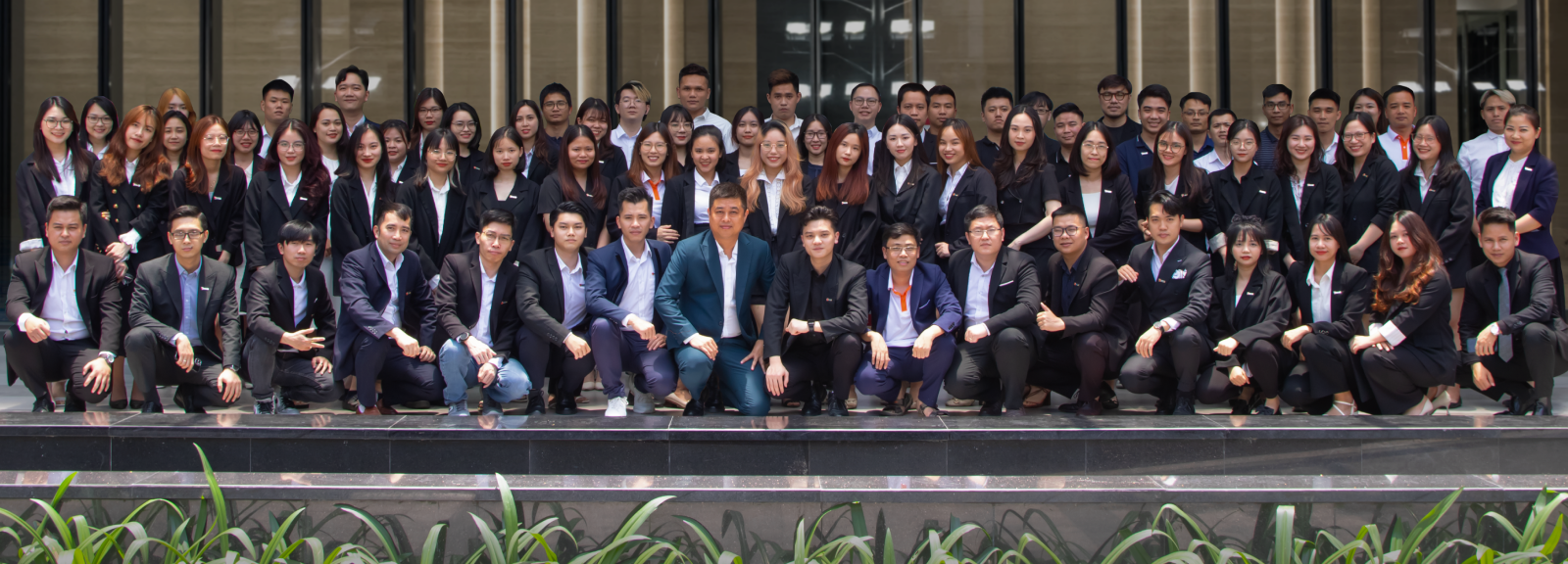
1Office provides the leading business management solution in Vietnam, helping you connect and exchange information with colleagues and partners conveniently. Trusted by many businesses, large and small, 1Office is constantly evolving with the desire to accompany businesses on their journey to the future. With the 1Work ecosystem, businesses will experience the best internal communication platform.
- Easy internal communication environment: With 1Office, businesses can clearly delegate communication management permissions. With an attractive interface, the person in charge can easily draft various internal topics with diverse post types such as announcements, polls, event creation, etc. Additionally, internal communication with 1Work emphasizes interactivity, allowing every individual to comment and share their feelings on posts.
- Build independent communication channels right on the software: Helps create and categorize chat groups by individual, department, and team.
- Embody the spirit that “Every employee is a crucial nucleus of the organization”: Through 1Office, each individual and their direct manager can track that person’s career progression, creating motivation for striving and recognition. Furthermore, the business can monitor work processes at the company in real-time. This allows for the implementation of appropriate reward and penalty policies for employees.
In this article, 1Office has shared with you 4 common corporate culture models today. We hope readers can gain a more comprehensive view of corporate culture models and find the right direction for their business. From there, you can apply these insights to help build a corporate culture that suits your company, aiming for sustainable development.
1Office is always ready to accompany you on the journey of building an effective corporate culture. Please contact us for the best consultation and support. We wish you success!
For all contact information:
Hotline: 083 483 8888
Zalo: https://zalo.me/nentang1office
Facebook: https://www.facebook.com/1officevn/
















