


 12/05/2026
  210 views
The boom in demand for cross-border transactions, coupled with the rise of electronic transactions, is encouraging many managers to use public digital signatures instead of traditional handwritten ones. Especially as digitalization and technology increasingly dominate every aspect of life, public digital signatures have become a crucial and necessary part of a business’s electronic signing activities. So, what is a public digital signature? Is it recognized by the state? What is the registration procedure? 1Office will help you answer all these questions in the article below.
Mục lục
What is a public digital signature?
According to Decree No. 26/2007/ND-CP, Article 3, Clause 8, the definition of a public digital signature is clearly stated: “A public digital signature is a digital signature created by a subscriber using a digital certificate issued to the subscriber by a public digital signature certification service provider.”
Simply put, a public digital signature is a type of digital signature that uses a USB token provided by a digital certification service provider for an individual to prove the authenticity of an electronic message or document.
A public digital signature is created and distributed through a digital signature management system, which uses a key pair, consisting of a private key and a public key. The private key is kept secret and used only for signing and decrypting, while the public key is made publicly available to verify the signature. When a document is signed with the private key, the recipient can use the public key to verify the authenticity of that signature, ensuring that the message has not been altered during transmission.
Legal validity of public digital signatures
Public digital signatures licensed by the Ministry of Information and Communications are legally guaranteed and protected by law. By using encryption technology that ensures a high level of security, this digital signature represents the individual and has the same validity as their handwritten signature.
A public digital signature certificate issued by a service provider licensed by the Ministry of Information and Communications allows users to apply them in signing various transactions and different types of contracts, such as labor contracts, commercial contracts, service contracts, etc. In the event of a dispute, the digital signature user’s rights will be protected by the legal system, provided they comply with legal regulations when conducting the transaction.
Why should businesses use public digital signatures?
Amid the trend of digitizing administrative procedures, businesses need to quickly adopt new technologies to optimize operational efficiency by streamlining traditional paperwork. Besides convenience and time savings, digital signatures also play an important role in:
Supporting online tax declaration activities
Most tax declaration and payment procedures can now be conveniently performed online. However, to carry out these transactions, businesses need to use a digital signature registered with the tax authorities. By using a digital signature, all tax-related transactions become simpler and more secure.
Simplifying the contract signing process
When signing electronic contracts, all parties involved need to confirm the agreement with a digital signature. Businesses using digital signatures can easily sign a large number of contracts, helping to save costs and shorten the process time.
Saving budget, time, and money
Businesses no longer need to invest heavily in personnel when integrating public digital signatures into their contract signing and tax transaction processes. Printing costs are significantly reduced, and implementation time is also shortened.
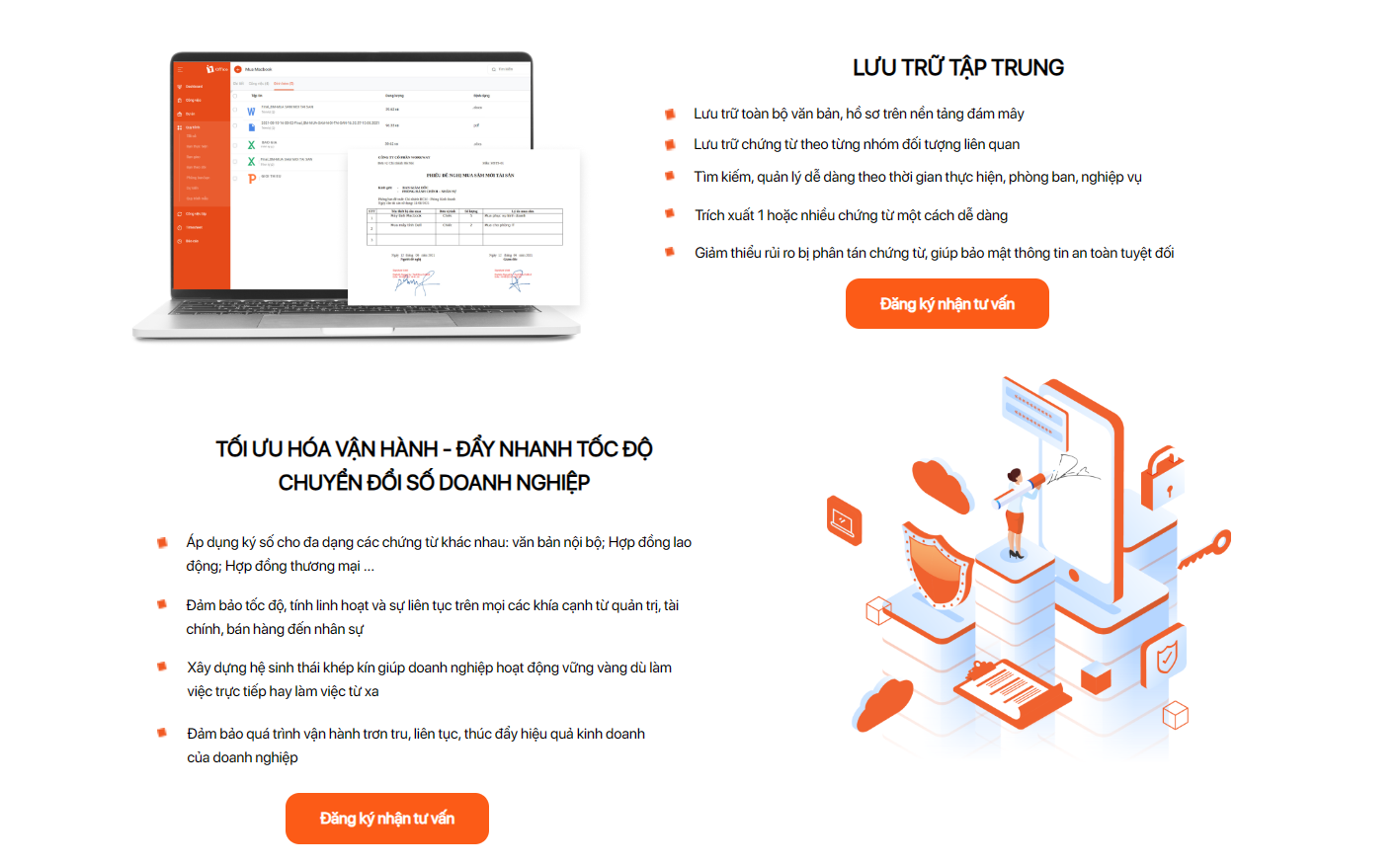
Experience the 1Office digital signature feature for free
Ensuring legal validity
A public digital signature is considered to have a value equivalent to a handwritten signature and the company’s seal. Signing electronic documents with this type of signature not only ensures legal validity but also helps protect the rights of all parties involved.
Data security
The security of a digital signature is significantly higher because it can ensure a closed data information system, helping to secure all transactions and documents. A digital signature helps prevent fraud and signature forgery, and it can also serve as evidence in case of a dispute between two parties.
Aligning with international integration trends
In the context of global economic integration and the digitalization of all business aspects, the public digital signature is an important and useful tool that helps businesses adapt to this trend. Using digital signatures to sign contracts remotely will help businesses be more flexible in their business cooperation processes and have more opportunities for development with foreign partners.
Applications of public digital signatures in business
Public digital signatures play a crucial role in business operations by providing high security and authenticating electronic transactions. Here are some important applications of public digital signatures in business:
- Document Authentication and Integrity: Digital signatures help ensure that electronic documents are not modified without authorization.
- Public digital signatures help authenticate the origin of documents, ensuring information integrity.
- Secure Electronic Transactions: Allows businesses to conduct online transactions safely and securely, preventing information and transaction forgery.
- Signing Decisions and Contracts: Helps businesses sign and confirm important decisions, contracts, and agreements without needing wet-ink signatures. Additionally, digital signatures also save time and costs associated with mailing envelopes and storing physical documents.
- Document and Data Management: Digital signatures help businesses maintain secure and efficient management of electronic documents. Enhances access control and user permission capabilities.
- Online Registration: Used to verify identity when registering online for services and applications. Protects personal information and builds trust with users.
- Authentication and Information Verification: Use digital signatures to verify user identity in online transactions and access to critical systems.
- Email and Message Security: Use digital signatures to protect the integrity of email messages and ensure recipients can identify the email’s origin.
- Legal and Standard Compliance: Helps businesses comply with legal regulations and industry standards regarding information authentication and security.
1CA – The superior digital signature solution for optimizing business management
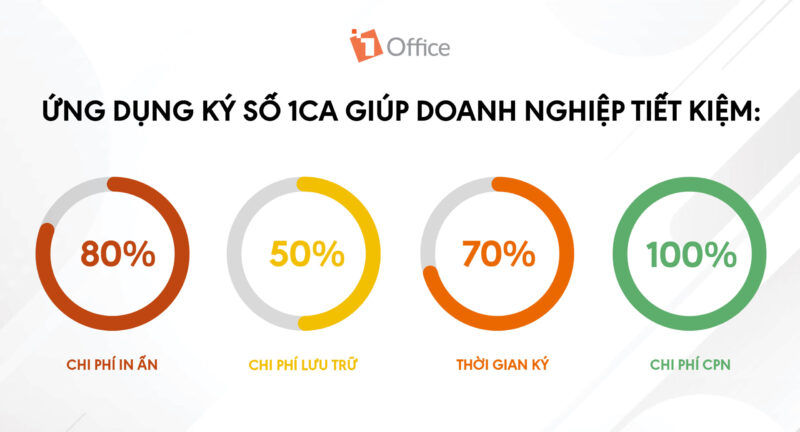
1Office is an all-in-one business management platform that provides comprehensive technology solutions for businesses. Among them, 1Office’s personal digital signature service is highly regarded for the following advantages:
- Is a digital signature certification service provider licensed by the Ministry of Information and Communications.
- Provides high-quality personal digital signatures that meet standards for security and information integrity.
- The pricing for 1Office’s personal digital signature service is competitive, suitable for the needs and budgets of various customer groups.
- A professional customer support team is ready to answer questions and assist businesses when needed.
If you are looking for a reputable, high-quality, easy-to-use, and highly secure personal digital signature solution, then 1Office’s personal digital signature service is a suitable choice for you.
Experience 1Office’s digital signature feature for free
—————————-
We hope this article has provided you with useful information about what a public digital signature is and why businesses should use digital signatures instead of traditional ones. If you feel that the benefits and applications of public digital signatures can be applied to your business, do not hesitate to contact 1Office’s team of expert consultants to experience the digital signature feature on the 1Office software for free
















