What are KPIs? The process of building KPIs to measure effectiveness


Currently, KPIs are considered an effective measure for evaluating the work performance of employees and individual departments/divisions within a company through quantitative data and indicators. Therefore, performance evaluation using KPI indicators will be carried out for different purposes depending on the scale and structure of each business. So, what is a KPI? What is the KPI building process to measure effectiveness? Let’s find out with 1Office in the content below.
Mục lục
1. General Overview of KPIs
1.1 What is a KPI?
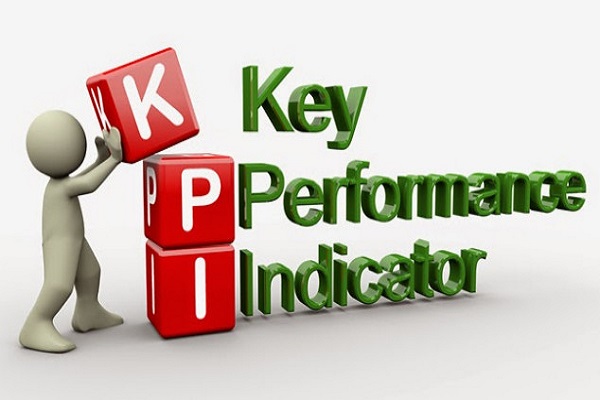
KPI (an acronym for Key Performance Indicator) is a performance measurement index, also known as a success measurement index. Organizations and businesses will rely on KPI indicators, developed based on job descriptions or monthly work plans, to evaluate the work performance of each position and department/division in the company. From there, businesses will have appropriate reward and penalty policies for each employee.
1.2 Why is a KPI building process necessary?
Currently, KPIs play a very important role for businesses, helping to strongly promote work process development. Through KPIs, we can easily assess the company’s development level and employee work performance. Specifically, applying KPIs to work brings many great benefits:
The KPI building process helps measure operational goals
KPI is a method that helps measure indicators and goals effectively, allowing managers to know the progress and quality of work at any stage. By building a KPI scale, businesses can take precise and correct actions to achieve their goals faster.
Creates an excellent learning environment
It can be seen that KPIs are a measurement tool that helps create an excellent learning environment. When you see an unfavorable point in the KPIs, you have an opportunity to talk with everyone. This helps shorten the distance between managers and employees as you exchange and discuss with them to find the best way to carry out the work.
Receiving important information
KPIs can paint a direct overall picture of a company’s general performance. When you are in a highly competitive market, that information can play a crucial role in your efforts. If you are in a fiercely competitive environment, this information encourages everyone to work harder to beat the competition.
The KPI building process motivates employees to work
Besides measuring effectiveness, KPIs also play a role in motivating employees. Whether the work process is effective or not is reflected in the KPIs. Employee motivation and job satisfaction are extremely important for improving performance and company culture. Therefore, to boost employee performance, managers should offer valuable rewards to employees with excellent KPIs and good results.
2. A highly effective KPI building process for businesses
Depending on the scale of each business, there will be a different process for building a KPI system. Building a KPI system according to a process will help activities run smoothly and achieve better results. Below are 6 steps in the process that you can refer to:

2.1 Identify the person responsible for building KPIs
The person building the KPI process needs to clearly understand the project’s tasks and have high expertise. On the other hand, they also need to know the nature of KPIs and get additional input from other departments. This person is usually the head of departments, managers, divisions, etc.). To ensure consistency and effectiveness, it is also necessary to receive input from relevant departments and individuals within the organization.
2.2 Determine the job titles for each department and division
In the process of building a KPI system, it is necessary to clearly define the functions and tasks of each department, division, project… or individual. Because each department will have separate functions and tasks, the KPI indicators will also be different, and you need to adhere closely to the nature of their work. You can refer to the KPI template for the sales department for accurate and effective measurement.
2.3 Determine the functions and tasks of each department
A KPI system cannot be complete without the essential functions and tasks of each department, project, and individual.
2.4 Determine Performance Indicators for the KPI Building Process
For this step, determining the key performance indicators of KPIs will be divided according to the following criteria:
- Individual indicators: Must be built according to SMART criteria;
- Departmental/group indicators: Built based on the functions and tasks of each group;
- Establish evaluation periods for each specific indicator.
2.5 Measure, Adjust, and Summarize
Based on the steps above, managers will summarize the score framework that employees have achieved. From there, they can provide feedback, draw conclusions, and adjust KPIs to fit the actual situation. Depending on the different departments and job titles within the company, managers will flexibly adjust KPIs accordingly.
3. Pros and Cons of KPIs
Although KPIs help businesses achieve comprehensive development results, if not built correctly, they can be counterproductive. Below are some pros and cons in the KPI building process that businesses need to pay attention to.

Some pros and cons in the KPI building process
3.1 Advantages of the KPI Building Process
- Helps businesses continuously measure employee performance, thereby creating faster growth for the business compared to the overall goal;
- Clearly understanding the performance of each individual and department will help you manage more effectively;
- High accuracy in performance results (KPI indicators can be quantified);
- Increases solidarity and connection between individuals and groups within the business while working.
3.2 Disadvantages of the KPI Building Process
- The person building the KPIs must be highly specialized and clearly understand the stages of KPI creation. If they do not understand the strategy and objectives of the plan, it is very easy to make mistakes, leading to inefficient employee performance;
- KPIs will not be effective if applied for too long. Therefore, you must always update the indicators for measurement;
- KPIs will be counterproductive if you do not meet reasonable requirements.
4. An Effective KPI Building Solution with 1Office’s KPI Evaluation Software
Building KPIs is a crucial task for businesses that want to improve employee performance. However, many businesses face difficulties in the process of building and applying KPIs for their company.
Understanding the challenges businesses face during the digital transformation era, 1Office offers an effective KPI building solution with its KPI evaluation software, helping businesses improve work efficiency and save time, costs, and other resources.

Separated by 1Office into its own module due to its importance, the KPI evaluation software allows businesses to manage a library of criteria, targets, and employee KPI results for the month. This KPI table can be linked to the payroll table to perform other salary calculations.
With many smart, automated features, the software helps you perform many managerial tasks in an effective KPI building process, such as:
- KPI Setup: Administrators can set up the company’s KPI catalog. KPIs are divided into two types: single KPIs and multi-KPIs. When creating evaluation forms, the KPI criteria will be drawn from here
- Create Evaluation Sheets: Allows users to create different evaluation sheets for each position, department, or job title. A special advantage here is that the system allows users to write KPI score calculation formulas in Excel format.
- Quick Evaluation: 1Office allows for both manager and self-assessment. When performing an evaluation, the evaluator can refer to results through a series of automated reports to ensure the assessment is accurate and objective. After the evaluation, the system automatically aggregates the scores into a general summary table.
- Finalize Evaluation: This feature allows administrators to finalize a KPI evaluation sheet. After finalization, no further evaluation actions can be performed
- KPI Summary Table: In a business, there can be many different KPIs each month, and an employee might even be on multiple different KPI evaluation sheets. The software will automatically compile everything into a general KPI summary table.
With 1Office, you can set up KPI evaluation targets as desired by managers. Additionally, you can easily digitize all evaluation criteria, managing and storing them clearly and in detail on the software. Setting up a KPI building process with the KPI evaluation software helps to assign and manage employees’ daily tasks easily and conveniently, saving time for managers and improving employee performance. Furthermore, you can learn more about our personnel records management software to help you easily optimize the human resource management process within your business.
If you are interested in and learning about building KPIs for your employees, sign up to experience the 1Office software now to better understand our KPI evaluation solution for task management!
For more detailed information, please find us at:
Fanpage: https://www.facebook.com/1officevn/
Youtube: https://www.youtube.com/channel/UCeTIRNqxaTwk0_kcTw6SxmA