13/05/2026
  361 views
This 5-step guide to managing construction industry processes will help investors save time, manage with peace of mind, and significantly improve personnel productivity in the fiercely competitive 4.0 era.
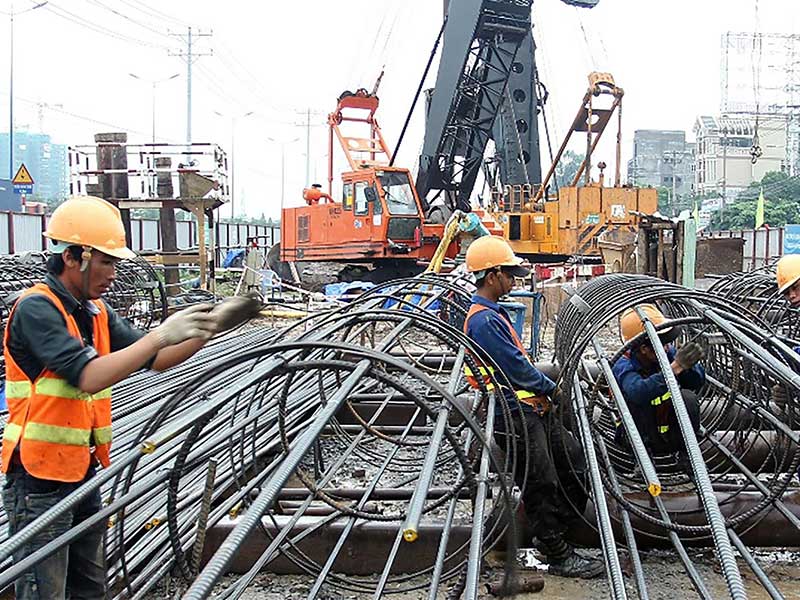
Currently, 70% of construction businesses operate manually, leading to increasingly cumbersome operating systems and a noticeable decline in work efficiency. COVID-19 is the “push” for business digital transformation, allowing investors to update with new changes and improve their own construction systems. Don’t hesitate to apply the 5 steps to managing construction industry processes below to build a solid foundation for future growth and achieve strong breakthroughs.
Mục lục
- 1. Overview of the Construction Industry
- 2. Why is process management necessary for construction projects
- 3. 5 effective steps for process management in the construction industry
1. Overview of the Construction Industry
- General Information:
As Vietnam continues to develop, the construction industry plays a crucial role in meeting infrastructure demands. The construction industry (in English, “Industry Construction”) is an industry closely related to design and execution systems to create structures and infrastructure for various purposes. The combination of engineering, technology, art, and science is what distinguishes construction from other industries.
- Key Activities:
The work of professionals in the construction industry focuses on areas such as consulting – design, construction – supervision, and acceptance for specific projects (civil, building, industrial) to meet infrastructure needs in daily life, such as: supermarkets, factories, hospitals, high-rise buildings, offices, schools, etc.

- Basic Personnel Structure:
- Project management unit responsible for overall management
- Construction contractor
- Consulting design engineer
- Construction engineer
- Architect
- Supervision consulting technician
| Reference: An A-Z Guide to Effective Construction Investment Project Management |
2. Why is process management necessary for construction projects
Construction industry process management (management by process) is a management method based on classifying activities according to processes. For this process to be effective, many closely related activities must be identified and managed.
In reality, construction businesses today tend to operate based on habit. The majority lack specific processes, leading to overlapping work. Worse, tasks are forgotten, and internal information is even distorted. The absence of a work process for construction projects causes delays in progress and a lack of performance evaluation metrics against the construction project management plan and set timeline.
There are many different processes for investors to manage: work processes, payment processes, warehouse-logistics management processes, construction processes, customer management processes, etc. Most businesses assume this is unimportant or follow old, manual paper-based methods, which fail to ensure transparency and control over information transmission.
A clear construction industry process management system will help:
- Manage warehouses and assets:
The system helps control the status of assets, materials, and construction equipment. It also controls updates, proposals for import/export, and expenditures related to supplies, equipment, and labor safety gear.

- Track progress:
This involves managing tasks and the project completion progress of the contractor to provide a basis for a general assessment of the project’s quality. Regular reviews will help control any issues that arise during project implementation.
- Evaluate human resources:
Instead of evaluating and inspecting based on disconnected, non-standardized forms, a process allows the investor to check the quality of the signed architectural design consulting contract. It also helps in selecting suitable, high-quality contractors based on specific criteria.
- Control risks:
The process provides consultation and investment in the best project document control system. When the investor understands the work items and the actual implementation, it will actively help in resolving risks during the construction process.
See more: Construction project management software, the most effective construction progress management today
3. 5 effective steps for process management in the construction industry
To ensure the quality and progress of the project, there must be clear and specific steps for construction industry process management. Without process management, many complications will arise, leading to the construction plan not being completed as originally intended.
-
Step 1: Concept Design
Concept design is the initial stage where members contribute ideas and feedback to start the project based on specific goals and feasibility. To create a realistic concept, three steps are needed: Brainstorming – Illustrative Design – Cost Estimation for the concept.
-
Brainstorming:
The idea must originate from the needs and intended use of the building: for warehousing, business, or personal residence. The scope and scale should be defined: length and width, number of rooms, elevators, floors, etc.
-
Illustrative Design:
All ideas are useless without a visual, concise, and easy-to-understand illustration. The design in a construction project includes the overall site plan and the accompanying architectural style. This information must align with the investor’s preferences and needs, as well as be approved by the relevant professional authorities. The designer will present their ideas on the model type, technical specifications, feasibility, etc.
- Cost Estimation:
Cost is the amount of money paid for various activities in the construction and execution of the project. For a construction project, it is necessary to consider the following cost streams:
- Direct costs
- Costs for tools, equipment, and materials
- Costs for the project management team
- Consulting costs
- Other incurred costs
Step 2: Apply for investment policy approval
Construction projects are under state management, so to begin construction, you must apply for policy approval from the relevant authorities.
-
Types of permits
- Construction permit: a legal document issued for construction, repair, or renovation, with no time limit
- Temporary construction permit: a temporary permit issued for the construction of structures or houses for a specific period
-
When is it appropriate to apply for a construction permit?
- Constructing, renovating, or building new private residences in rural or urban areas.
- Changing the structure, scale, or function of a building, or repairing a residence
-
Steps to apply for a permit
- Prepare the application file
- Submit to the licensing authority
- The responsible agency reviews the file
- The responsible agency approves the drawings and issues the permit
- The project owner sends a notice to the local authorities 7 days before construction begins
Step 3: Prepare resources
Resources are a crucial factor for implementing and managing the construction industry process. A smart human resource management strategy will help improve work productivity and accelerate completion time. In addition to human factors, resources such as equipment, materials, and drawings, which the construction unit will prepare to discuss with the main contractor, are also essential.

Resources are prepared in the following stages:
- The investor prepares and plans the project
- Complete the technical design and construction drawings
- Open bidding to select a suitable construction unit
Step 4: Implementation and execution
-
Start with groundbreaking and construction
-
Implement construction in phases
- Site preparation: surveying, dismantling, clearing debris
- Structural work: foundation excavation, ground treatment, reinforced concrete, etc.
- Finishing: tiling, installing electrical and plumbing systems, equipment, materials, etc.
-
Proceed with equipment installation
- Ceiling installation
- Door installation
- Electrical and plumbing installation
- Interior installation
- Manage the construction project in terms of progress, quality, occupational safety, and environmental hygiene
-
Finalize construction costs and contracts
Step 5: Acceptance and handover
When the project is completed, the construction unit will hand it over for use. Then, payment, quality acceptance, and completion confirmation between the two parties will be carried out. This process requires comparison and cross-checking between the technical drawings and the actual implementation for the best evaluation. After the evaluation is complete, the project will be finalized for practical use.
In summary, at each stage of a construction project, the manager, contractor, or investor needs to monitor, supervise, and flexibly adjust tasks, personnel, and objectives to achieve the best results.
1Office – The all-in-one business management platform is confident in solving all the difficulties of construction business owners, optimizing and digitizing the construction industry process management on the most effective online platform. Contact the 1Office Fanpage today for consultation and support in process management and achieving outstanding growth for your construction business.
See more: Introducing the BPM – Business Process Management and Materials Management features in project tasks