09/05/2026
  167 views
A vehicle handover report is an important document used to record the delivery and receipt of a vehicle between parties in cases of sale, lease, internal handover, or delivery with a deposit. Creating a standard report not only helps clarify the vehicle’s condition at the time of handover but also serves as a crucial legal basis for determining liability in case of disputes. In this article, we have compiled 6+ of the most common vehicle handover report templates for cars and motorcycles, complete with free Word file downloads, along with detailed instructions on how to use them and essential legal considerations.
Mục lục
- 1. What Is a Vehicle Handover Report? Why Is It Necessary?
- 2. Common Cases Requiring a Vehicle Handover Report
- Selling or Buying a Car or Motorcycle
- Handing Over a Vehicle to an Employee for Use
- Renting a Vehicle (Self-Drive Car, Motorcycle)
- Internal Vehicle Handover within an Organization or Business
- Handing Over a Vehicle After Mortgage or Pledge
- Information of the Parties Involved in the Handover
- Legal Basis for the Vehicle Handover
- Detailed Information about the Handed-Over Vehicle
- Vehicle Condition at Handover (Detailed Inspection)
- Equipment and Accessories Included with the Vehicle
- Vehicle Records and Related Documents
- Commitments of the Parties
- Signatures and Confirmation
- 4. Detailed Guide on How to Create an Effective Vehicle Handover Report
- 5. Common Vehicle Handover Report Templates (Free Download)
- 6. Important Notes When Creating and Using a Vehicle Handover Form
- Carefully check the vehicle’s identification information
- Describe the vehicle’s condition in detail at the time of handover
- Read the commitments and terms in the record carefully
- Check the legal status of the vehicle before handover
- Clearly distinguish between a handover record and a contract
- Number of copies and legal validity of the record
- 7. Frequently Asked Questions (FAQs)
1. What Is a Vehicle Handover Report? Why Is It Necessary?
A vehicle handover report is a document created to record the transfer of management, usage, or ownership rights of a vehicle from the delivering party to the receiving party at a specific time. This report is commonly used in cases of vehicle sales, internal company handovers, assigning vehicles to employees, vehicle rentals, or handing over a vehicle after repairs or maintenance.
In essence, a vehicle handover report is not just a document confirming “delivered – received,” but also a basis for binding the responsibilities of the parties regarding the vehicle’s condition, accompanying documents, and the obligation to maintain and use the vehicle after the handover.
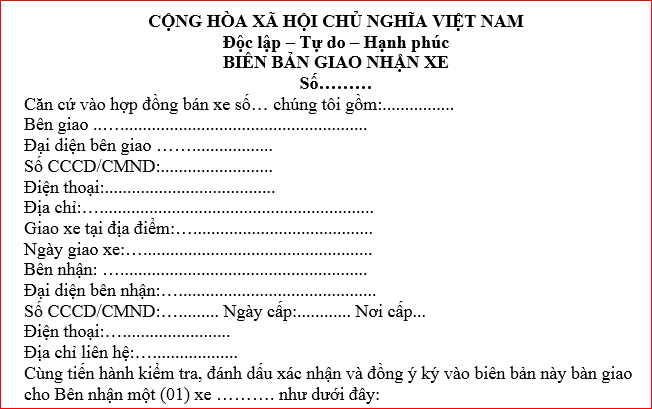
Legal Value of a Vehicle Handover Report
In many vehicle-related disputes, issues often arise from the failure to clearly define the handover time, the vehicle’s condition, and each party’s responsibilities. A vehicle handover report plays a crucial role in mitigating this risk, as it is a document that reflects the agreement and commitment of the parties at the time of delivery and receipt.
A vehicle handover report has the following value:
-
Serves as evidence that the vehicle delivery and receipt actually occurred
-
Establishes the legal responsibility of the receiving party from the moment of handover
-
Acts as a basis for resolving disputes if damage, loss, traffic violations, or financial obligations arise
In many cases, the vehicle handover report is also used in conjunction with a sales contract, rental agreement, or internal vehicle assignment decision to complete the legal documentation.
Practical Role of a Vehicle Handover Report
Creating a vehicle handover report offers many practical benefits, not only legally but also in actual management and operations. When properly and completely drafted, the report helps ensure transparency in the transaction and minimizes future disputes.
Specifically, a vehicle handover report helps to:
-
Clearly record the vehicle’s condition at the time of handover (exterior, interior, accessories)
-
Clearly define the responsibility for managing and using the vehicle after handover
-
Protect the rights of both the delivering and receiving parties
-
Serve as a basis for handling incidents, damages, or violations that arise
-
Support the completion of administrative, accounting, or internal corporate procedures
2. Common Cases Requiring a Vehicle Handover Report
In practice, a vehicle handover report is not only used for vehicle sales but also in various other situations to clearly define responsibilities, the vehicle’s condition, and the time of transfer of management or usage rights. Creating a report in the appropriate circumstances helps to limit disputes and protect the interests of all parties involved.
Selling or Buying a Car or Motorcycle
For vehicle sales transactions, a handover report is typically created after the parties have signed the sales contract and either before or at the time of the actual vehicle delivery. It serves as the basis for confirming that the buyer has received the vehicle and is responsible for its management and use from the moment of handover, even if the title transfer process is not yet complete.
When handing over a vehicle for a sale, pay special attention to:
-
Checking all original vehicle documents (registration, sales records)
-
Recording the detailed condition of the vehicle at the time of handover
-
Clearly listing all accompanying accessories, keys, and documents
Handing Over a Vehicle to an Employee for Use
In a business, handing over a vehicle to an employee requires a report to clearly define responsibility for asset management. This report helps the company control vehicle usage and serves as a basis for handling damage, violations, or loss.
When creating a vehicle handover report for an employee, you should note:
-
The purpose of vehicle use (work, business trips, regular use)
-
The obligation to maintain, service, and use the vehicle according to regulations
-
The commitment of responsibility by the person receiving the vehicle
Renting a Vehicle (Self-Drive Car, Motorcycle)
In vehicle rental operations, a handover report is an almost mandatory document to record the vehicle’s condition upon delivery and return. It is a crucial basis for avoiding disputes related to damage, loss, or traffic violations that occur during the rental period.
Key points to pay special attention to when handing over a rental vehicle include:
-
Recording the detailed current condition of the vehicle (scratches, damage, accessories)
-
Noting the odometer reading and fuel level at the time of delivery
-
Clearly agreeing on which documents are retained and the security deposit (if any)
Internal Vehicle Handover within an Organization or Business
An internal vehicle handover report is often used during job rotations, changes in vehicle managers, or periodic asset inventories. Creating this report helps the business accurately track the asset’s condition, prevent loss, and ensure transparency in management.
When conducting an internal vehicle handover, be sure to note:
-
The basis of the internal decision or work assignment
-
The list of assets and accessories accompanying the vehicle
-
The time of handover and the next person responsible
Handing Over a Vehicle After Mortgage or Pledge
In vehicle mortgage or pledge transactions, a handover report is created to record the vehicle’s condition at the time of delivery for custody and serves as a basis for clearly defining the maintenance responsibilities between the parties.
When creating a
This information helps avoid disputes about when liability arises if an incident occurs after the handover.
Information of the Parties Involved in the Handover
The report must fully state the information of the vehicle provider and the recipient to clearly identify the legally responsible parties.
Depending on the case, the required information includes:
-
For individuals: full name, Citizen ID/ID card, address, phone number
-
For organizations/businesses: company name, head office address, tax code, representative, position, personal identification documents
This information must match the related contract or legal documents.
Legal Basis for the Vehicle Handover
The vehicle handover report needs to clearly state the basis for its creation to clarify the origin and purpose of the handover. This section helps link the report to other legal documents.
The basis usually includes:
-
Vehicle purchase and sale contract
-
Vehicle rental contract
-
Employment contract or vehicle assignment decision
-
Agreement documents, internal decisions
Detailed Information about the Handed-Over Vehicle
This section helps to accurately identify the vehicle being handed over, avoiding confusion or future disputes. The vehicle information must be recorded clearly, completely, and consistently with the vehicle’s documents.
The required contents include:
-
Vehicle type (car, motorcycle), brand, model, year of manufacture
-
License plate number, frame number, engine number, paint color, number of seats
-
Odometer (kilometers driven), fuel level at the time of handover
Vehicle Condition at Handover (Detailed Inspection)
This is the most important part of the vehicle handover report, helping to record the vehicle’s condition at the time of delivery and receipt. The more detailed the description, the lower the likelihood of disputes.
During the inspection, it is necessary to record:
-
Vehicle exterior: body, paint, scratches, dents, glass, mirrors, lighting system, tires, and rims
-
Vehicle interior: seats, dashboard, air conditioning, sound system, electronic functions
-
Engine and operation: starting capability, unusual noises, braking and steering systems
At the end of this section, there should be a summary of the overall condition, clearly stating whether the vehicle is in normal condition or has specific damage or scratches.
Equipment and Accessories Included with the Vehicle
The report needs to list all accompanying equipment and accessories to avoid loss or disputes upon vehicle return.
This usually includes:
-
Spare tire, tool kit, jack, tow hook
-
Keys, remote controls (specific quantity)
-
User manual, warranty booklet
-
Additional accessories (floor mats, dash cam, GPS device, etc.)
This section helps to clearly identify the documents handed over with the vehicle, avoiding confusion or complaints later.
Documents usually include:
-
Vehicle registration (original or notarized copy)
-
Certificate of inspection (for cars)
-
Civil liability insurance
-
Other documents such as tax receipts, factory release forms
Commitments of the Parties
The vehicle handover report needs a commitment clause to bind legal responsibility after the handover. This is an important basis when damage, loss, or violations occur.
Commitments usually include:
-
The provider commits that the vehicle is under their legal ownership or right of use
-
The recipient commits to using the vehicle for its intended purpose, maintaining it, and being responsible for any arising risks
Signatures and Confirmation
At the end of the report, the signatures and full names of the provider and the recipient are mandatory. In some cases, the signature of a witness or a company representative can be added to increase legal validity.
The report is only valid when all parties have read, understood, and fully signed for confirmation.
4. Detailed Guide on How to Create an Effective Vehicle Handover Report
Creating a vehicle handover report is truly valuable when done correctly and at the right time. In practice, many risks arise not from a lack of templates, but from an incomplete inspection and information recording process. Below are the key steps to help you create a thorough, clear vehicle handover report and minimize disputes.
Step 1: Prepare All Necessary Information and Documents
Before proceeding with the vehicle handover, all parties should prepare all relevant information and documents to ensure the report creation process is fast, accurate, and complete. This is a foundational step that helps the report have a clear basis and be easy to reference later.
The documents that usually need to be prepared include:
-
Purchase and sale contract, rental contract, or vehicle assignment decision
-
Vehicle registration, insurance, inspection certificate (for cars)
-
Personal or legal entity information of the provider and the recipient
-
List of accessories and equipment included with the vehicle
Step 2: Thoroughly Inspect the Vehicle’s Condition
Inspecting the vehicle’s condition is the most critical step in the handover process. The inspection should be conducted in person, in detail, and objectively to accurately record the vehicle’s condition at the time of delivery and receipt.
During the inspection, you should:
-
Observe the entire exterior, interior, and operational parts
-
Check the odometer, fuel level, and included accessories
-
Take photos or videos of the vehicle’s condition as evidence for records
Saving photos and videos helps increase transparency and serves as important evidence if disputes arise later.
Step 3: Fill in All Information Completely and Accurately in the Report
After agreeing on the vehicle’s condition, the parties must fill in all the information in the vehicle handover report. The recorded content must be clear, specific, and easy to understand, avoiding vague descriptions.
When filling out the report, pay attention to:
-
The parties’ information must match the legal documents
-
Describe the vehicle’s condition in detail, do not leave important sections blank
-
Clearly note any damage, scratches, or existing issues (if any)
Step 4: Review, Confirm, and Sign the Report
Before signing, all parties should reread the entire report to ensure all information is recorded accurately and as agreed. Signing the report signifies the parties’ consent and commitment to their responsibilities.
At this step, please note:
-
The signatory must be an authorized person or have valid authorization
-
A witness can be invited to sign for confirmation in necessary cases
-
Affix the company seal (if applicable) to increase legal validity
Step 5: Store the Report Properly
After signing, the vehicle handover report should be made in at least two copies of equal legal value, with each party keeping one copy for reference when needed.
You should:
-
Keep the paper copy with the original signature
-
Scan or save a soft copy for backup and quick reference
-
Store the report with the vehicle’s records or related contracts
5. Common Vehicle Handover Report Templates (Free Download)
Depending on the purpose of use and specific situations, a vehicle handover form should be designed with appropriate content to accurately record the nature of the transaction and clearly define legal responsibilities. Using the correct template saves drafting time and reduces risks from missing or incomplete information.
Below are the 6 most common vehicle handover form templates used today, with standardized content, easy to edit, and ready for practical use.
Template 1: Car Handover Form for Purchase/Sale
-

Car Handover Form for Purchase/Sale
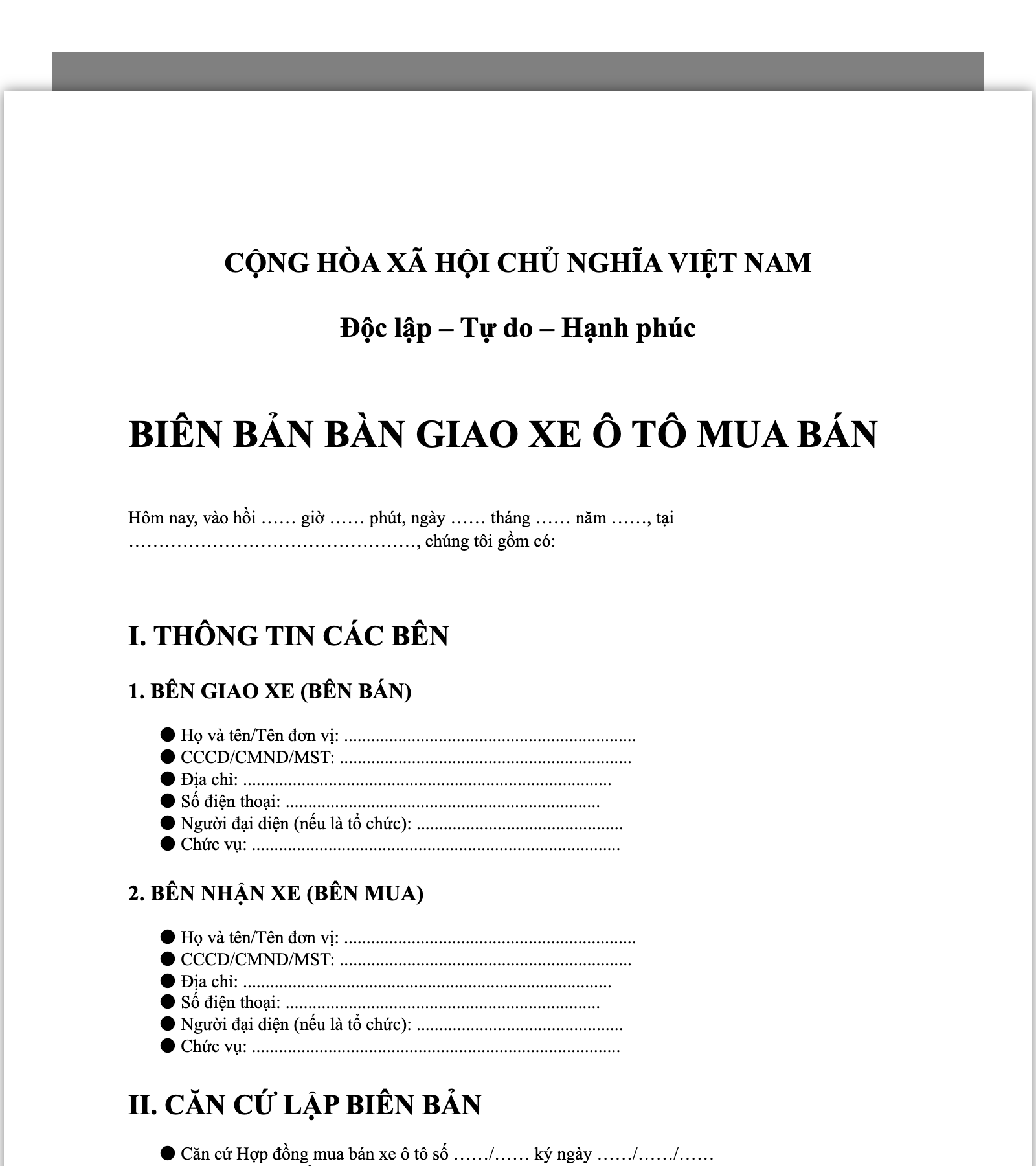
This form is used in car purchase and sale transactions to record the physical handover of the vehicle between the seller and the buyer. The form serves to define the moment when responsibility for managing and using the car is transferred, which is especially important during the period while waiting for the title transfer procedures to be completed.
The template typically includes:
-
Information of the buyer and seller
-
Detailed vehicle information and accompanying documents
-
Vehicle condition at the time of handover
Template 2: Car Handover Form for Employees
-
Car Handover Form for Employees
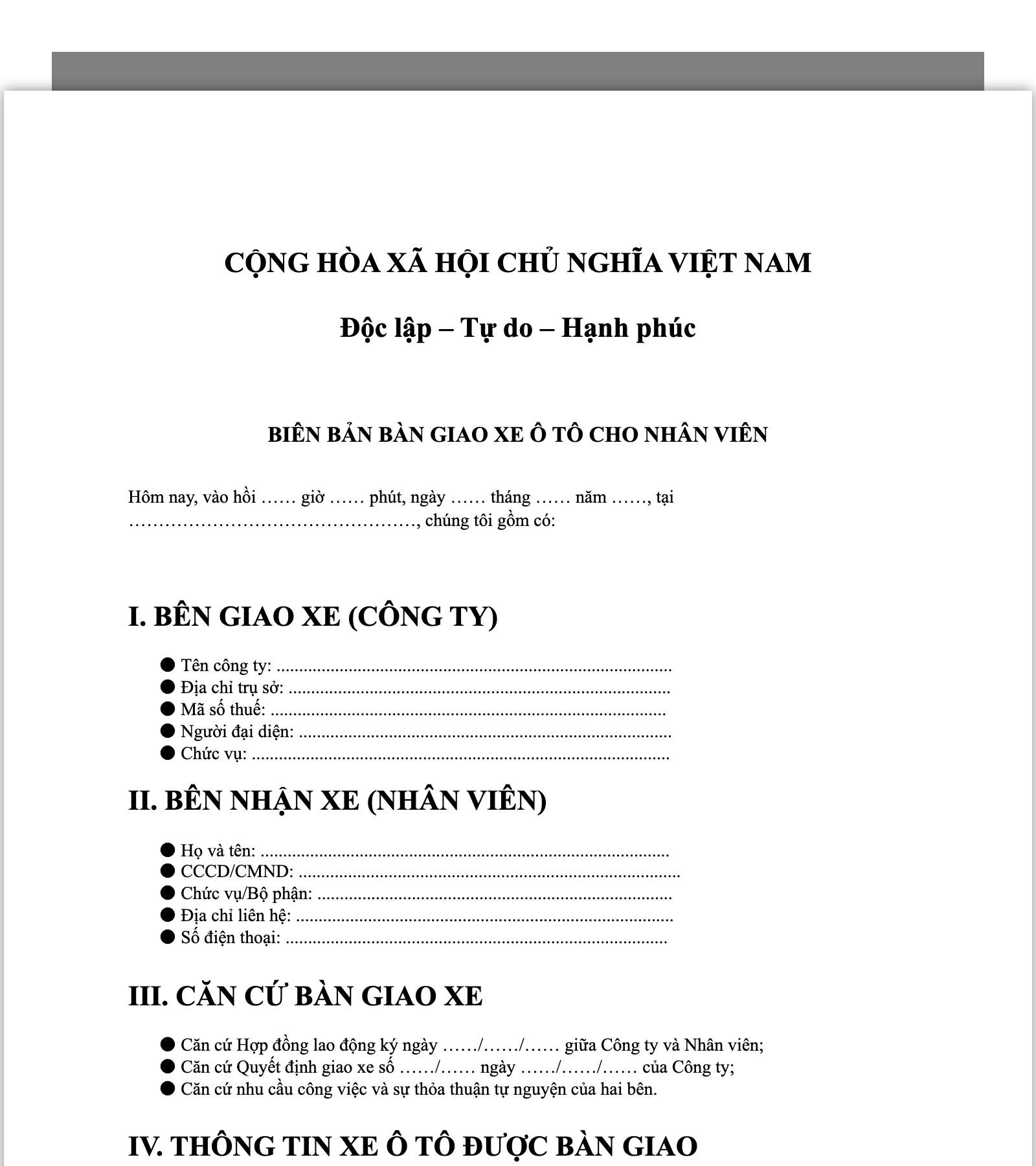
This template is used when a company assigns a car to an employee for work purposes. The content of the form focuses on defining responsibilities for vehicle maintenance, use, and return, helping the company manage its assets more transparently.
The template usually shows:
-
Basis for handover (employment contract, internal decision)
-
Vehicle condition upon handover
-
Commitment of responsibility by the receiving employee
Template 3: Car Handover Form for Self-Drive Rental
-
Car Handover Form for Self-Drive Rental
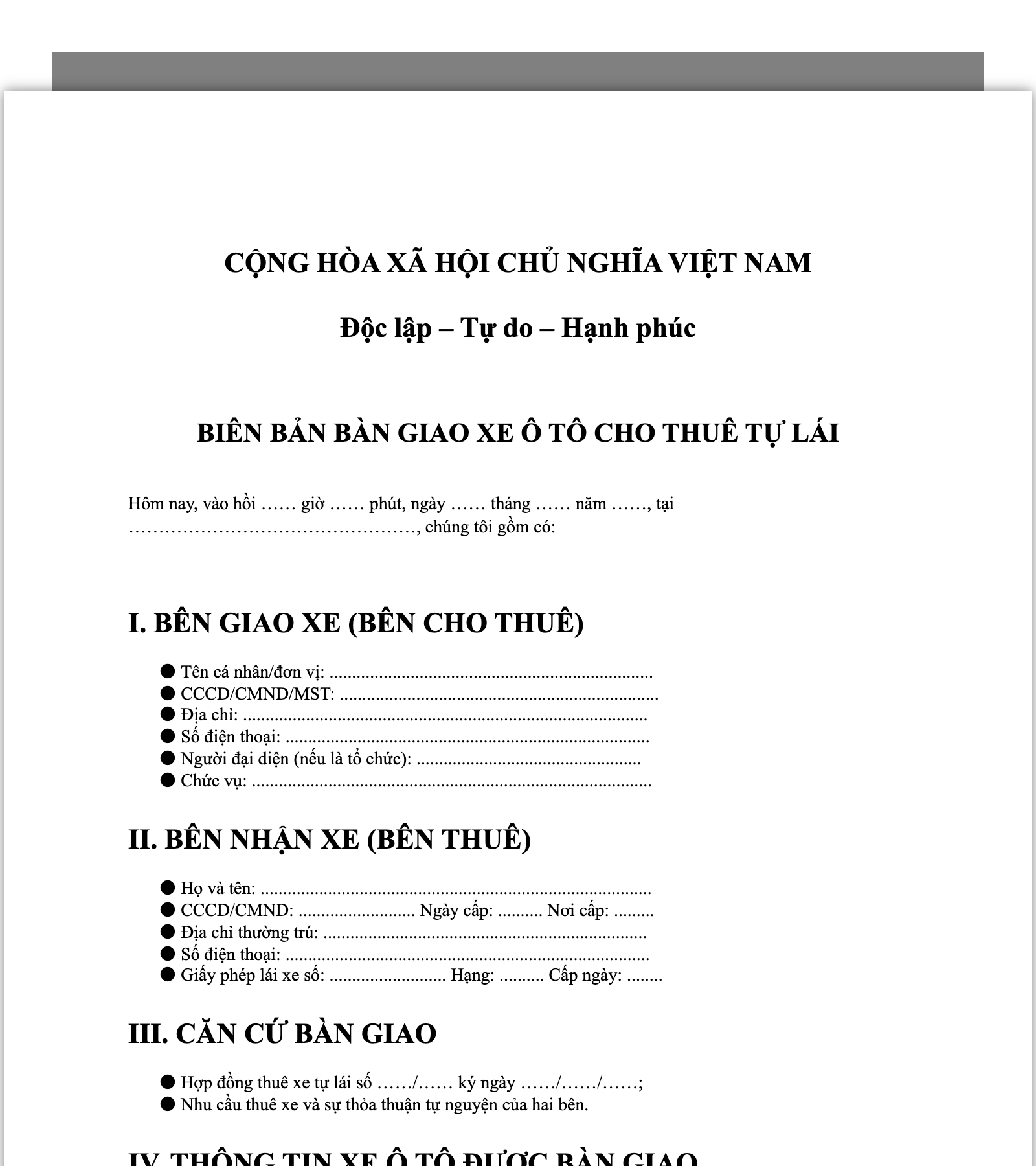
This is a very common form in the self-drive car rental business. The form is completed upon vehicle delivery and return to record the car’s condition, odometer reading, fuel level, and accessories, thereby minimizing potential disputes.
This template usually has:
-
Detailed vehicle condition checklist
-
Record of fuel level and mileage
-
Confirmation section for vehicle return
Template 4: Motorcycle Handover Form for Purchase/Sale
-
Motorcycle Handover Form for Purchase/Sale
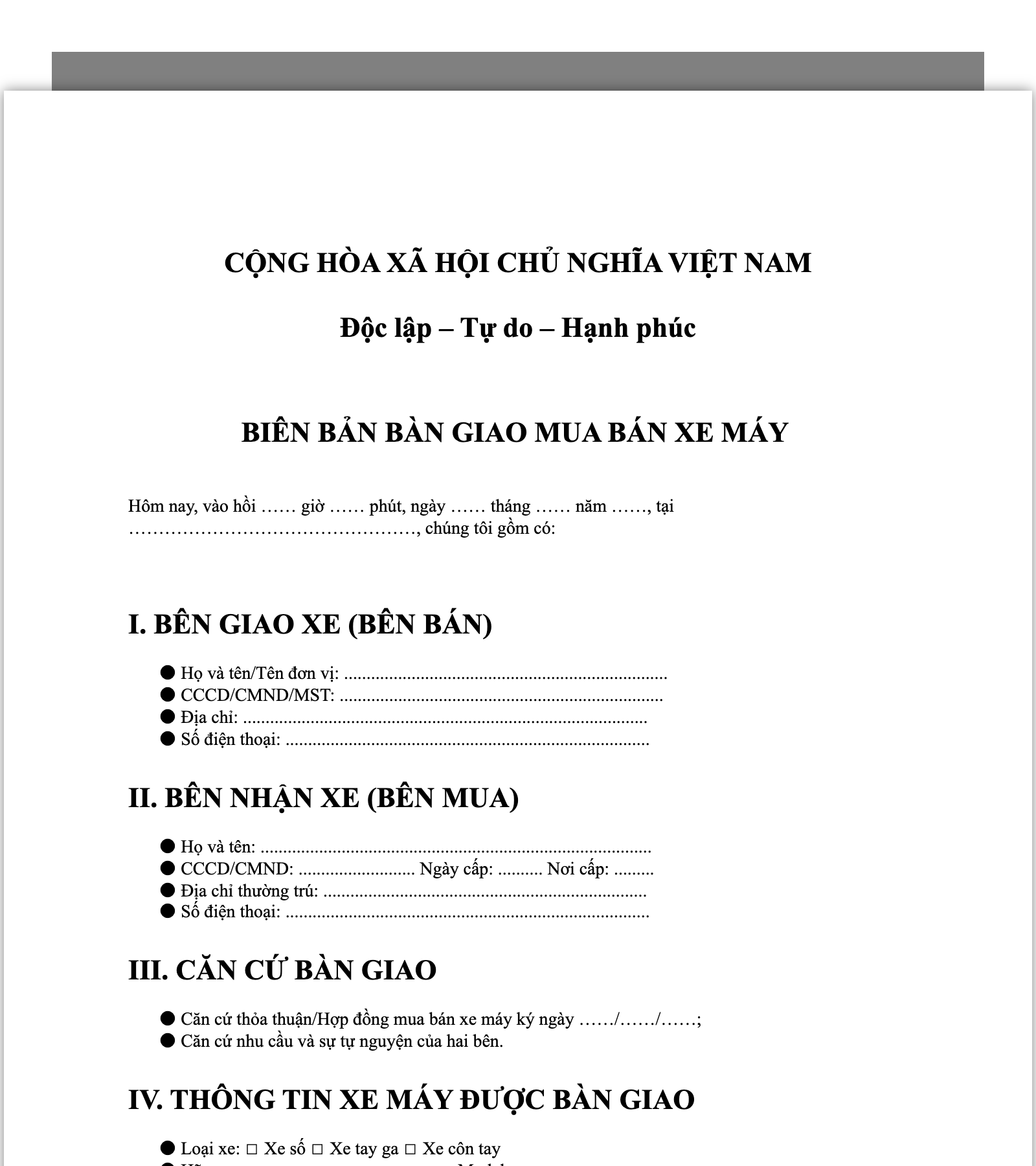
This form is used for motorcycle purchase and sale transactions between individuals or between a company and an individual. The form helps confirm the handover of the motorcycle, its documents, and accompanying accessories, serving as clear evidence if disputes arise after the transaction.
The main content includes:
-
Information of the seller and buyer
-
Motorcycle information, vehicle condition
-
Accompanying documents and accessories
Template 5: Motorcycle Handover Form for Rental
-
Motorcycle Handover Form for Rental
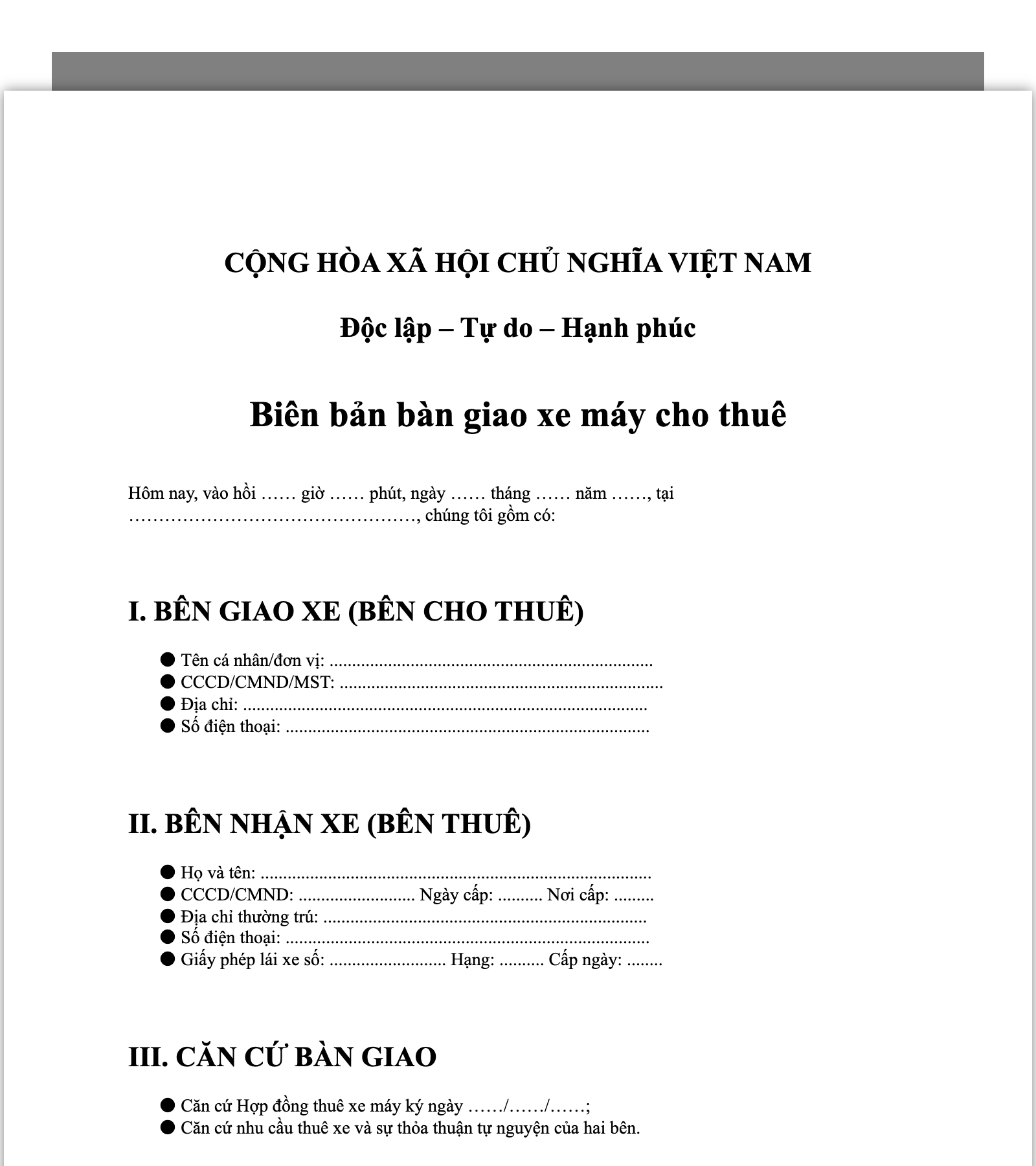
For motorcycle rental operations, the handover form is a crucial document for recording the condition of the motorcycle and accompanying items at the time of delivery and return, preventing conflicts when the vehicle is returned.
The template typically includes:
-
Condition of the motorcycle upon handover
-
Accompanying accessories (helmet, raincoat, etc.)
-
Commitment of responsibility by the renter
Template 6: Vehicle Handover Form with Deposit Record
-
Vehicle Handover Form with Deposit Record
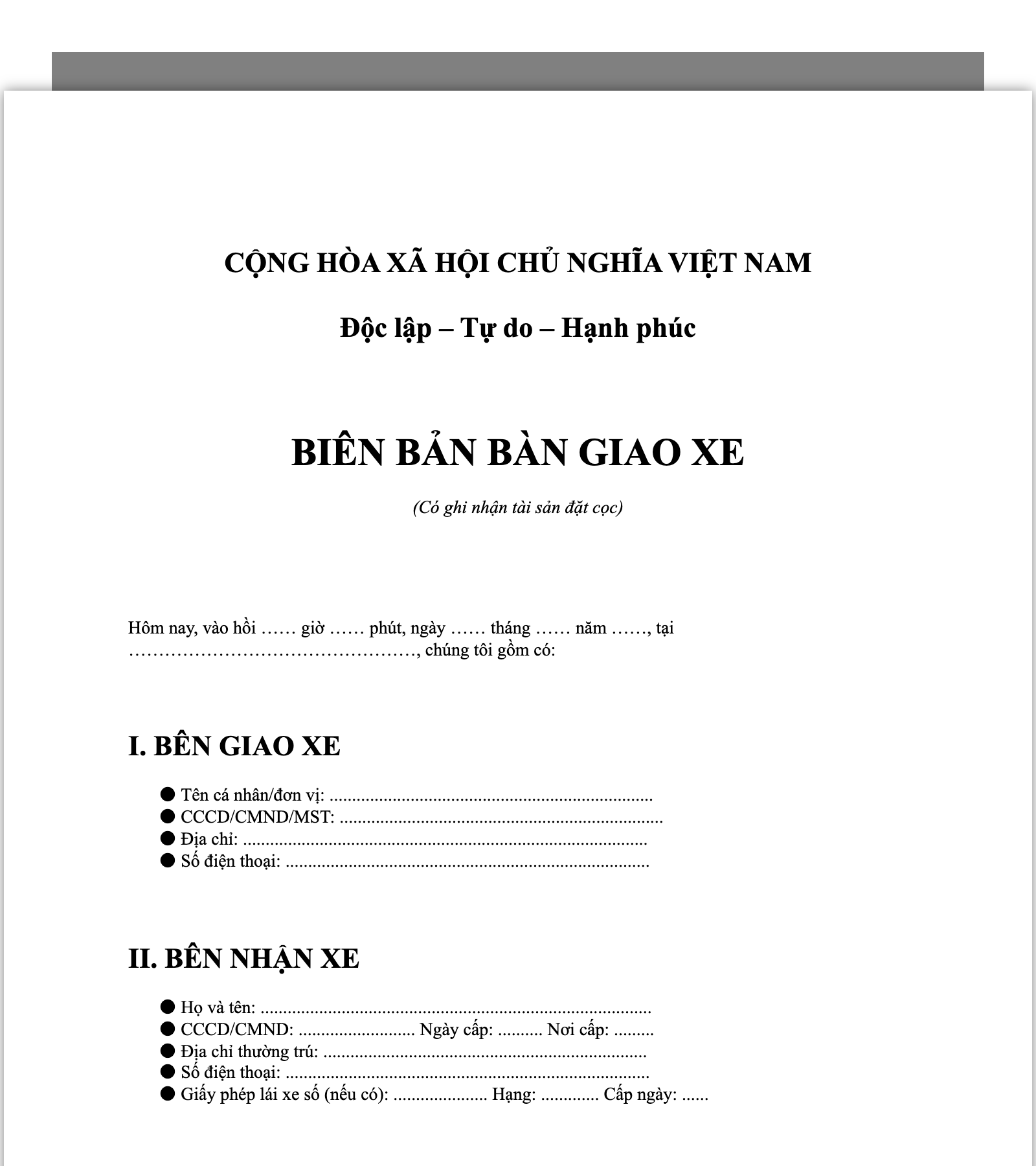
This template is used when the vehicle handover involves a deposit asset such as a national ID card, family registration book, cash, or other assets. Clearly recording the deposit asset helps protect the rights of the party handing over the vehicle and ensures transparency regarding the obligation to return it.
The form usually has:
-
Detailed list of deposit assets
-
Value and condition of the assets
-
Commitment to return the assets after the transaction is complete
6. Important Notes When Creating and Using a Vehicle Handover Form
A vehicle handover form is only truly effective when it is created correctly, at the right time, and reflects the true nature of the transaction. In practice, many disputes arise not from the absence of a form, but from a poorly prepared one with inaccurate information or without specific evidence. Therefore, when creating and using a vehicle handover form, all parties should pay close attention to the following issues.
Carefully check the vehicle’s identification information
Identification information is the most critical factor in correctly identifying the vehicle being handed over. Even a minor error in the chassis number, engine number, or license plate can render the form invalid for verification.
When checking, ensure that:
-
The chassis and engine numbers are recorded correctly and match the vehicle registration certificate
-
The license plate number, paint color, and vehicle model match the actual vehicle
-
The vehicle information is consistent across the handover form and legal documents
Describe the vehicle’s condition in detail at the time of handover
The vehicle’s condition is the most likely source of dispute if not described clearly. Vague descriptions like “normal condition” or “good condition” are often insufficient in the event of damage or a complaint.
When describing the vehicle’s condition, you should:
-
Clearly note the location of any scratches, dents, or damage
-
Take a short video to record the exterior and interior condition of the vehicle
-
Store it with the handover record for easy comparison later
<li data-start="153
Read the commitments and terms in the record carefully
Many people have the habit of signing records without carefully reading the commitments, leading to misunderstandings or overlooking their obligations. A vehicle handover record often includes commitments regarding the responsibility for use, maintenance, and compensation, so it should be reviewed carefully.
Before signing, you should:
-
Carefully read the commitment section for both the delivering and receiving parties
-
Clarify obligations related to damage, loss, and traffic violations
-
Request edits for any unclear content (if any)
Check the legal status of the vehicle before handover
A vehicle handover record cannot replace a legal check of the vehicle. If the vehicle is involved in a dispute, has been pledged, mortgaged, or has financial obligations, risks may arise for the receiving party.
Note:
-
Check the vehicle registration, insurance, and inspection certificates
-
Verify that the vehicle is not in a dispute and is not blocked from transactions
-
Compare the legal information with the actual vehicle
Clearly distinguish between a handover record and a contract
A common mistake is confusing a vehicle handover record with a contract. In reality, the record only documents the handover at a specific time, while the contract is the document that establishes the main agreement between the parties.
Therefore:
-
Do not use the record as a substitute for a sales or rental contract
-
The record should reference the contract as its basis
-
The content of the record must not contradict the signed contract
Number of copies and legal validity of the record
To protect the rights of all parties, the vehicle handover record should be made in at least two original copies with equal legal validity, with each party keeping one copy.
You should:
-
Sign directly on each copy of the record
-
Do not use photocopies in place of the original
-
Store the record with the vehicle’s documents or related contracts
7. Frequently Asked Questions (FAQs)
During the process of creating and using a vehicle handover record, many people still have questions about its legal validity, post-handover responsibilities, and the relationship between the record and the contract. Below are the most frequently asked questions with detailed, easy-to-understand answers.
Does a vehicle handover record need to be notarized?
According to current law, a vehicle handover record is not required to be notarized or authenticated to be valid. The record is legally valid when it is properly formatted, has clear content, and is signed by the relevant parties.
However, in some special cases (high-value vehicles, complex transactions), the parties may agree to notarize it to increase legal security, although this is not a mandatory requirement.
Authorizing someone to sign the vehicle handover record is permitted, provided that the person signing has a valid power of attorney. The power of attorney must clearly state the scope of authorization and be valid at the time of signing.
When authorizing, note the following:
-
The power of attorney must clearly state the authority to sign the vehicle handover record
-
The authorized person must sign with their full name and title as stated in the power of attorney
-
A copy of the power of attorney should be attached to the record for filing
If the vehicle is damaged after the handover, who is responsible?
The general principle is that responsibility falls on the receiving party from the moment of handover, provided the record has clearly documented the vehicle’s condition and the time of transfer. However, specific liability also depends on the commitments in the record and the related contract.
Consider the following:
-
Whether the damage was caused by a fault that arose after the handover or a pre-existing one
-
Whether the record noted any pre-existing damage
-
The warranty and compensation clauses in the contract
The more detailed the vehicle handover record, the clearer the determination of responsibility.
Can a vehicle handover record replace a sales contract?
A vehicle handover record cannot replace a sales contract. These two types of documents have different natures and purposes.
Specifically:
-
Sales contract: establishes the main agreement on rights, obligations, and price
-
Handover record: documents the delivery and receipt of the vehicle at a specific time
In practice, the handover record is usually created alongside the contract and references the contract as its legal basis.
How long should a vehicle handover record be kept?
A vehicle handover record should be kept for the entire duration of the vehicle’s use and at least until there is no longer a possibility of related disputes arising. For businesses, the record is also an asset management document and should be stored according to internal regulations and accounting laws.
Recommendations:
-
Store the paper copy with the original signature
-
Keep a scanned or soft copy as a backup
-
Do not destroy the record until the vehicle has been fully transferred or liquidated