


 10/05/2026
  13106 views
The Human Resources and Administration Department is the department directly responsible for activities and issues related to personnel and human resource management. In the article below, 1Office will share with you everything about the HR department, such as: organizational structure, organizational chart, functions, work processes, and more. Find out now!
Mục lục
- 1. What is the Human Resources and Administration Department?
- 2. Functions and Responsibilities of the Human Resources and Administration Department
- 3. Organizational structure of the Human Resources and Administration Department
- 4. The Role of the Human Resources Administration Department
- 5. Common challenges in HR administration
- 6. Solutions to improve the efficiency of the HR Administration department
1. What is the Human Resources and Administration Department?
The Human Resources and Administration Department, or HR department, is known in English as the Human Resources and Administration Department. This is the department responsible for managing and developing the human resources of the entire enterprise or organization. At the same time, this department will directly handle administrative office issues such as records management, reception duties, payroll, etc.

2. Functions and Responsibilities of the Human Resources and Administration Department
As one of the core departments, the Human Resources and Administration Department manages all activities and information related to the entire company’s personnel. The specific functions and responsibilities of the Human Resources and Administration Department are as follows:
2.1. Records and Document Management
The Human Resources and Administration Department is responsible for receiving and managing records and documents in the following 2 forms:
- Personnel-related records and documents: personnel information, labor contracts, timesheets and payroll, leave requests (absence requests, resignation letters, etc.), etc.
- Other records and documents: official correspondence, request forms, documents from other parties sent to the company.
In the process of managing records and documents, the HR department needs to perform the following activities:
- Collect and process complete and accurate records: Including personal information, qualifications, identification documents, labor contracts, and other necessary documents.
- Store records and documents safely and systematically: Develop a records management process and ensure information confidentiality.
- Information Security: The HR department must ensure that records and documents are kept confidential and that information is not disclosed externally.
- Update information: When there are changes in personal information, qualifications, labor contracts, or other documents, the HR department must update and adjust the corresponding records.
- Retain and destroy personnel data and information: Based on the data retention and destruction periods stipulated by law and company regulations, the Human Resources and Administration Department will classify data to proceed with destruction or continued storage.
2.2. Reception Duties
The reception duties of the Human Resources and Administration Department mainly involve the following activities:

- Welcome new employees, job candidates, and clients: Greet and guide visitors to the office or appropriate areas.
- Provide basic information: Provide basic information about the company or organization, such as an introduction to the organization, contact information, and directions to other areas within the office.
- Support with personnel information: Provide basic information about personnel, HR policies, and internal procedures. Additionally, the HR department will answer questions about salary, benefits, working hours, and other related issues.
- Arrange and schedule appointments: Arrange and schedule appointments for interviews, meetings, or HR-related events.
- Ensure office facilities and supplies: Fully equip the office with supplies, purchase office stationery, and resolve technical issues related to office equipment.
2.3. Payroll Processing
The HR department is directly responsible for matters of employee salary and bonuses. This department will calculate and process payroll for employees. This includes activities such as:
- Calculating daily timekeeping and wages for employees.
- Tracking timesheets and payroll.
- Compiling monthly, quarterly, and annual salary and bonus lists for employees.
- Disbursing and paying salaries on time.
- Providing allowances for employees (if any).
Note: Activities must ensure compliance with legal regulations and company policies.
2.4. Maintaining databases and employee records
The Human Resources and Administration Department is responsible for maintaining HR data and records. Not only must the department ensure that all data and records are fully maintained in terms of quantity, but it must also guarantee data security. Some key tasks include:
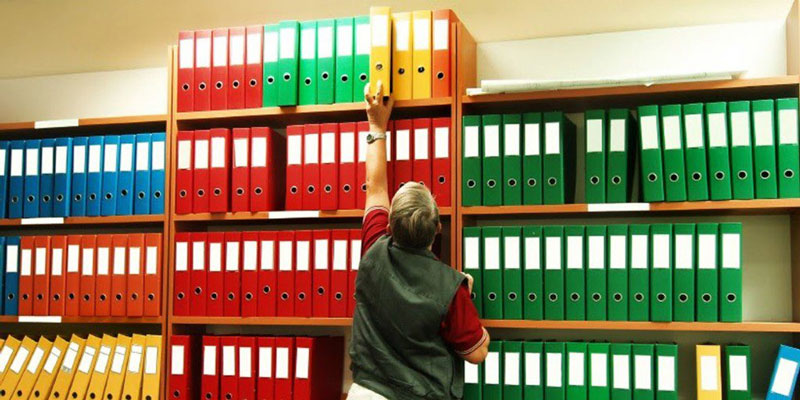
- Managing employee records: This includes personal files, labor contracts, contact information, personal identification documents, work history, training and development progress, disciplinary records, and other employee-related information.
- Regularly updating employee information: This includes personal information, changes in marital status, contact addresses, job position changes, salary changes, and other information.
- Ensuring information security: Using information security measures such as access control management, passwords, data encryption, and other protective measures.
- Facilitating easy storage: Classifying and organizing information according to the office 5S principles, such as by name, department, job position, or employment period. Using data management systems to manage and search for HR information more easily.
- Complying with security and privacy regulations: Ensuring compliance with regulations on personal data protection, access rights, and information usage as stipulated by law and company policies.
2.5. Managing assets and equipment
Managing assets and equipment is a crucial task of the Human Resources and Administration Department to organize, utilize, and protect the organization’s assets and equipment. To perform this task effectively, the department needs to carry out the following activities:
- Identifying and registering assets and equipment: This includes creating an asset list and recording relevant information such as name, quantity, value, and a detailed description of each asset or piece of equipment.
- Inventory and tracking: Conducting periodic inventories to ensure assets and equipment are in good condition, not lost, or damaged. At the same time, the HR department will track and record information about the movement, repair, maintenance, and replacement of assets and equipment.
- Maintenance and upkeep: Developing and implementing a maintenance plan, liaising with service providers, and monitoring the repair and maintenance process. This process aims to ensure that equipment operates well and to extend its lifespan.
- Managing borrowing, returning, and movement: Managing the process of employees borrowing and returning assets and equipment. This includes: information about the borrower, borrowing and return times, and checking the asset’s condition before and after borrowing
- Protecting assets and equipment: Ensuring assets and equipment are secure and safe. This includes implementing physical security measures such as locks, security monitoring, access control, etc.
3. Organizational structure of the Human Resources and Administration Department
The organizational structure of the Human Resources and Administration Department includes 4 divisions: the Recruitment division; the Compensation & Benefits (C&B) division; the Administration division; and the Learning & Development (L&D) division. 1Office will reveal detailed information about each division in the content below!
3.1. Recruitment division
The Recruitment division is responsible for tasks related to finding and recruiting talent that fits the company’s needs. Specifically:
- Identifying recruitment needs
- Posting and promoting job positions
- Screening resumes
- Conducting interviews
- Conducting background and reference checks
- Recommending candidates
– Salary ranges from 7,000,000 VND – 15,000,000 VND/month.
3.2. Compensation & Benefits (C&B) division
True to its name, the C&B department is in charge of matters related to managing salaries, bonuses, and insurance policies for all personnel in the company. Specifically:
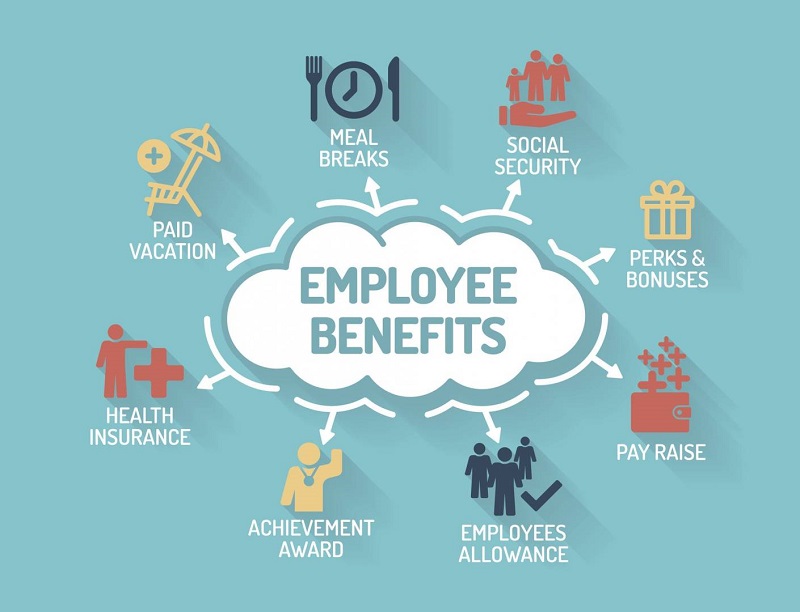
- Establishing compensation, bonus, and benefits policies
- Managing the compensation and bonus system
- Managing employee benefit schemes such as health insurance, leave, financial support, etc.
- Implementing and managing employee programs such as organizing events, bonus programs, team activities, and programs that encourage personal and professional development.
- Providing information, guidance, consultation, and answers regarding compensation and benefits to employees and relevant parties.
– Salary ranges from 8,000,000 VND – 15,000,000 VND/month.
3.3. Administration Department
The Administration Department plays a crucial role in managing and executing daily administrative and operational activities. The main tasks of this department include:

- Managing and organizing office activities such as planning, managing correspondence, phone calls, emails, document storage, etc.
- Storing and managing the company’s documents, records, and information.
- Managing and maintaining the organization’s facilities, including assets, equipment, and vehicles.
- Procuring, maintaining, and repairing necessary equipment and machinery.
- Managing and monitoring contracts and agreements with partners, suppliers, and employees.
- Organizing and coordinating events, conferences, meetings, and internal activities.
- Supporting, handling, and resolving employee issues within the company, such as leave, social insurance, documents, etc.
– The salary for a Head of Human Resources Administration ranges from 25,000,000 VND – 30,000,000 VND/month.
3.4. Learning and Development (L&D) Department
All activities in the Learning and Development (L&D) department aim to enhance the overall quality of the workforce in terms of knowledge, skills, and experience. Here are some of the main tasks of the L&D department:

- Analyzing and assessing the company’s training needs.
- Developing a human resource development strategy (Defining objectives, content, methods, and training materials, etc.)
- Organizing and implementing training programs. This includes: time, format, location, registration, participants, and methods for evaluating effectiveness.
- Providing courses, training sessions, and coaching to develop employees’ competencies and skills.
- Evaluating the effectiveness of training programs.
- Developing internal activities for sharing knowledge, experience, and skills.
– Salary ranges from 9,000,000 VND – 20,000,000 VND/month.
4. The Role of the Human Resources Administration Department
As can be seen, the Human Resources Administration department consists of 4 divisions, each with specialized tasks. These divisions coordinate smoothly with each other in the following general workflow:

4.1. Creating and Submitting Recruitment Requests for Approval
– Time of implementation: When departments within the organization need new personnel to meet work demands.
– Task: Create a recruitment request based on information about the job position, requirements, and recruitment criteria. Submit the recruitment request to the management board for an official decision.
– Responsible department: Recruitment Department.
4.2. Conduct recruitment
– Time of implementation: After the recruitment request has been approved.
– Task: Implement recruitment activities such as posting job ads, receiving candidate applications, screening resumes, interviewing, and evaluating candidates using an interview evaluation form.
– Responsible department: Recruitment Department.
4.3. Carry out probationary procedures
– Time: After a candidate is selected from the recruitment process.
– Task: Carry out probationary procedures such as drafting a probationary contract, confidentiality agreements, training, and job orientation.
– Responsible department: Administration Department.
4.4. Sign labor contract
– Time of implementation: After the candidate has passed the probationary period.
– Task: Draft and sign the official labor contract with the employee. Simultaneously, contact relevant parties to register for insurance, benefits, and allowances for the new employee.
– Responsible department: Administration Department.
4.5. Conduct employee evaluation
– Time of implementation: Conducted periodically during the employee’s employment.
– Task: Evaluate employees to assess their work performance and contributions.
– Responsible department: Learning and Development (L&D) Department.
>> See more: 11 common methods for evaluating employee performance
4.6. Handle employee benefits and policies
– Time of implementation: Throughout the employee’s employment.
– Task: Handle policies and benefits related to employees. This includes managing salary and bonuses, welfare benefits, leave policies, social insurance, and other entitlements.
– Responsible department: Compensation and Benefits (C&B) Department.
4.7. Manage employee records
– Time of implementation: Throughout the employee’s employment.
– Task: Manage and secure employee records. This includes tracking, updating, and storing information such as personal profiles, labor contracts, and work history.
– Responsible department: Administration Department.
5. Common challenges in HR administration
Human Resources Administration (HR Admin) is the “backbone” of business operations, yet it is the department that faces the most difficulties — from managing processes and people to adapting to legal changes. Some common challenges include:
-
Difficulty balancing processes and people: Many businesses focus too much on rigid processes, making employees feel constrained; conversely, if they lean towards subjectivity, errors and a lack of transparency can easily arise. Finding a balance between “operational efficiency” and “employee experience” is a major challenge for HR Admin professionals.
-
Lack of centralized management tools: Many HR departments still use Excel or manual paperwork to manage records, payroll, timekeeping, etc., leading to errors, data loss, and time-consuming consolidation.
-
Pressure from legal changes: Labor laws, social insurance regulations, and personal income tax rules are frequently updated, forcing HR admin staff to constantly “catch up” to ensure compliance. Errors can lead to legal consequences or damage the company’s reputation.
-
Lack of manpower, overloaded multitasking staff: The HR Admin department often has to handle many tasks — from recruitment and compensation to office administration — which reduces productivity and can easily lead to errors and professional burnout.

The above is all the information about the human resources and administration department. We hope this article helps you better understand the HR department and its operations. We wish you success!
















