13/05/2026
  342 views
For a business to operate effectively and maintain a strong position in the market, it needs a scientific and smoothly coordinated working system. Therefore, each individual and department must connect with each other to create a unified team. How can an effective coordination process between departments be built?

Mục lục
- The necessity of coordination between departments
- 1Office – The automation solution for inter-departmental coordination processes
The necessity of coordination between departments
Building a specific work process between departments is extremely important. It helps ensure quality, progress, and efficiency in work. Adhering to and properly implementing the work process is the foundation for moving in the right direction and achieving the business’s goals. An effective coordination process between departments in a business offers many benefits:
- Enhance performance and work efficiency within the business.
- Optimize the business’s resources, saving operational costs.
- Improve the business’s position as internal work efficiency increases.
- Minimize potential risks as the business’s work process is standardized in a clear order.
See more: The most effective work management process for businesses
Clearly define the purpose of the work
This is an indispensable step in building the coordination process between departments. It is difficult for members of a business to work together if they do not truly understand the work and its objectives.

Managers need to provide employees with an overview of the work objectives before starting a project. This also enhances unity, helping members within the department to connect and understand each other.
Define the scope of the work process
By defining the scope of the process, the business will know who is directly involved in the process. Which department will directly execute the process? Can the scope of work be carried out in different timeframes and locations to achieve the best results.
Define the main content of the work process
You need to have a good grasp of all business operations and clearly define the tasks of each department. To analyze the main content of each department’s work, the following factors need to be determined:
- Input: What factors are needed for the process input
- Output: What factors are needed for the process output
- Apply the 5W+1H and 5M methods to solve problems
Wherein 5W + 1H includes:
- What: define the content of the work
- Why: define the objectives, requirements of the work
- When: define the implementation time, start time, end time
- Where: define the location, place of implementation
- Who: Identify the personnel performing the work, support staff, and supervisor
- How: Determine the method of performing the work
The 5M method (determining resources):
- Manpower: Do the personnel performing the work have sufficient qualifications, skills, experience, and qualities?…
- Money: What is the budget for these tasks? How many times will it be disbursed?
- Material (supply system/raw materials): What are the standards for becoming a supplier? What are the standards for raw materials?
- Machine (machinery/technology): What are the standards for the machinery? What technologies will be applied to perform the work?
- Method (working method): What method will be used to work?
Control and inspect the workflow
While building a workflow, to ensure progress, accurately assess quality, and devise optimal methods to guarantee business operations, managers need methods to inspect the entire workflow. Some tools that can help control work include:
- Work measurement units
- Measurement methods
- What points to measure
Factors to consider in the inspection method:
- How many steps require inspection
- Frequency of inspections
- Person in charge of inspection
- Points that need to be inspected
Describe the work steps
To help your employees apply the process effectively in their actual work, you need to have clear steps for task execution:
- Describe the workflow specifically and clearly
- How to describe the steps in the work
- Provide documentation for overly complex processes
Create a comfortable working environment

Psychology greatly affects employees’ creativity and work performance. Therefore, to build an effective inter-departmental coordination process, the working environment is very important.
Organize extracurricular and teambuilding activities
Typically, when your employees are at work, they only communicate extensively with each other during large projects. Gradually, this can distance the relationships between departments. Managers need to take measures to foster emotional connections among employees. The company can organize quarterly team-building activities and volunteer activities to help strengthen everyone’s relationships and increase team solidarity.
1Office – The automation solution for inter-departmental coordination processes
Managers all understand the importance of coordination between departments in a company. But how to promote effective coordination is a “difficult problem” for managers. Here is 1Office – The automation solution for the process of inter-departmental coordination in the digital age that not every business knows about:
100% digitization of operational processes right on the software
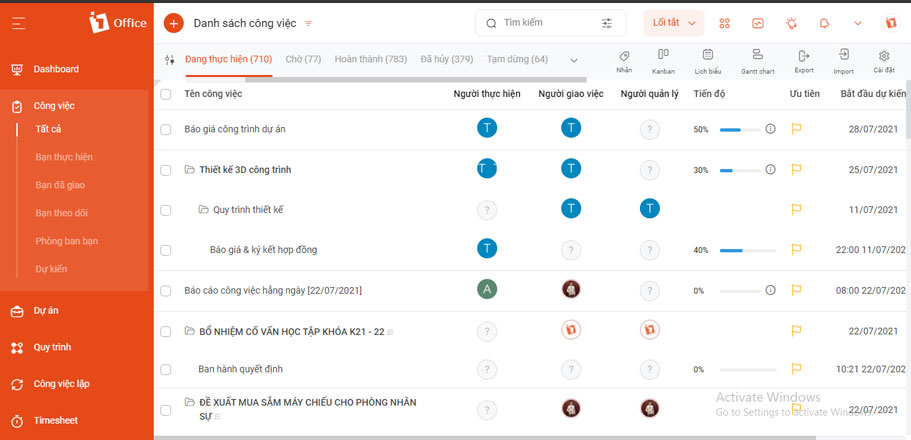
- Ongoing, pending, or completed workflows are all displayed in detail on the dashboard screen.
- Work is managed with multi-threaded, branching processes right on the system. This helps managers and employees easily track work, reducing the risk of forgotten tasks and other issues.
Tasks are clearly assigned by position and department
- Tasks are assigned transparently and specifically by position and department in a convenient manner.
- The application also automatically updates and identifies the relevant parties when there are personnel changes.
Work progress reports are visual and detailed
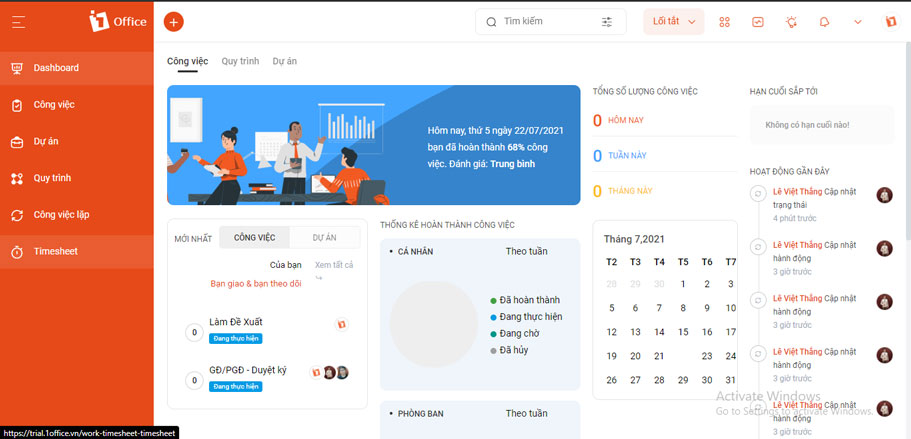
- Displays the entire process and the person responsible.
- Accurately and comprehensively evaluates work quality and the performance of each employee.
Set up automatic alerts
- When a task is completed or a new process is created, notifications are automatically sent to the relevant parties.
- Provides alerts and reminders as deadlines approach.
Effortless internal communication and discussion
- Create and share tasks directly on the software
- Comment and discuss tasks within the workflow interface
Building a cross-departmental coordination process will help your business operate more smoothly and efficiently. 1Office hopes that with the insights shared above, your business can build a smoothly operating cross-departmental coordination process. Alternatively, you can receive a free consultation by registering here: