


 10/05/2026
  163 views
HRM software for the manufacturing and processing industry helps businesses automate the entire HR process, from timekeeping and payroll to productivity assessment—especially effective in environments with multiple shifts and a large workforce. In this article, let’s explore with 1Office the TOP 16+ HRM software for the manufacturing and processing industry trusted by many businesses today.
Mục lục
- 1. Top 16+ Popular HRM Software for the Manufacturing and Processing Industry Today
- 1.1.1. 1Office HRM Software for the Manufacturing and Processing Industry
- 1.1.2. Base HRM+
- 1.1.3. MISA AMIS HRM
- 1.1.4.. Fast HR Software
- 1.1.5. Tanca HR Software
- 1.1.6. IHCM HR Software
- 1.1.7. Lotus Pro HR Software
- 1.1.8. HR-Manager Human Resource Management Software
- 1.1.9. DigiiHR HR software
- 1.1.10. AiHR HR Software
- 1.2. Top 6+ International HRM Software for the Manufacturing and Processing Industry
- 2. Benefits of HRM software for the manufacturing and processing industry
- 3. Criteria for selecting HR management software for the manufacturing and processing industry
- 4. Frequently Asked Questions about HRM software for the manufacturing and processing industry
- 5. Conclusion
1. Top 16+ Popular HRM Software for the Manufacturing and Processing Industry Today
1.1.1. 1Office HRM Software for the Manufacturing and Processing Industry
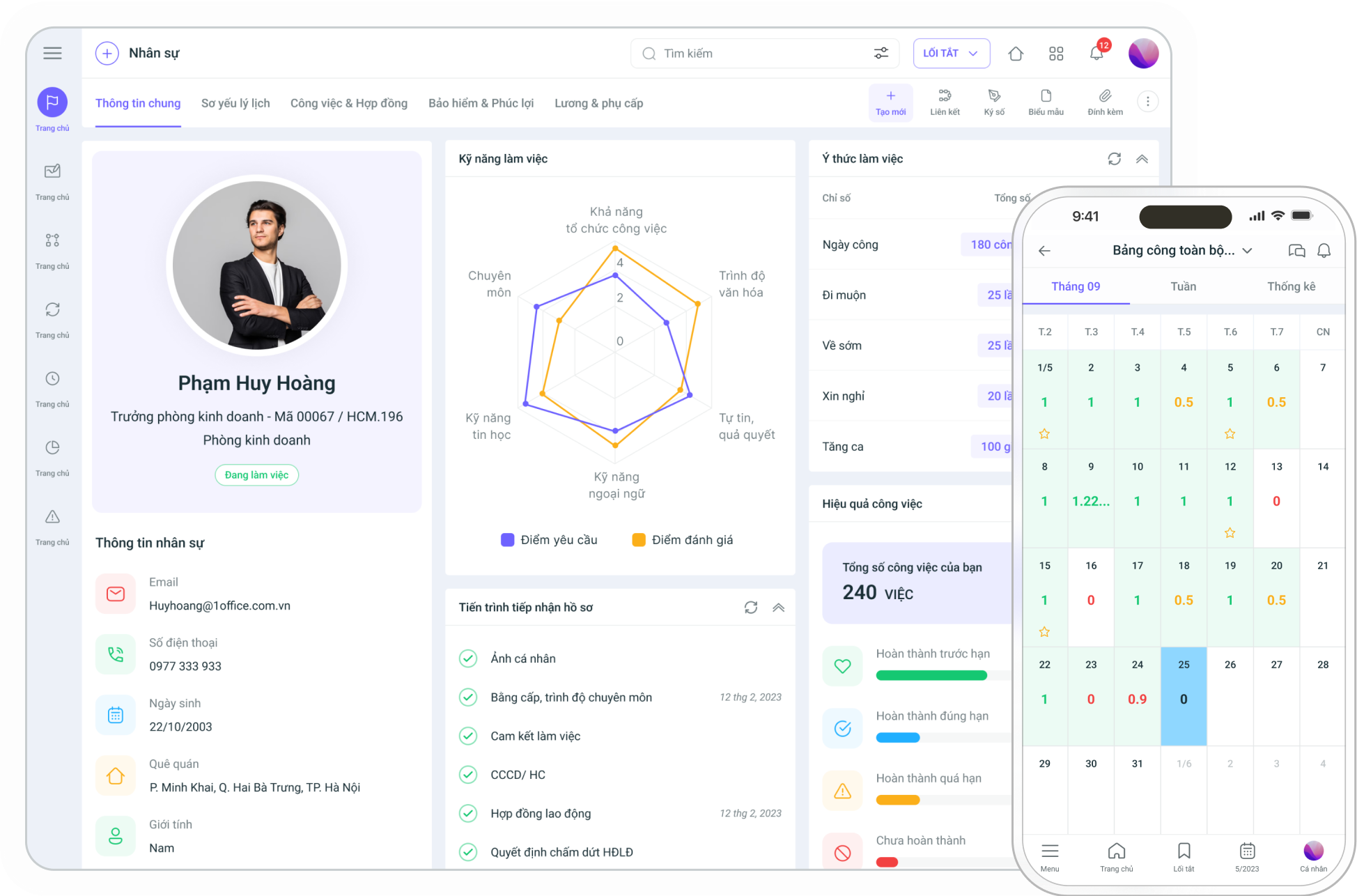
1Office HRM software is a product of 1Office Vietnam Joint Stock Company – a pioneer in developing the “Make in Vietnam” all-in-one business management platform since 2015. This solution is suitable for businesses with 10 or more employees, and is especially optimized for factories, enterprises, and manufacturing corporations with complex operational processes, multiple departments, and work shifts.
Register for a free feature Demo!
Some outstanding features of 1Office – HRM software for the manufacturing and processing industry:
- Centralized personnel management: Store all employee information, contracts, salaries, positions, insurance, and leave on a single platform. Helps factories and enterprises manage teams with multiple shifts and departments more effectively than traditional methods.
- Smart recruitment management: Automate the process from requisition to onboarding. Integrates AI to screen CVs based on professional skills (e.g., machine operation, QC, production management), combined with the ASK competency assessment framework and a recruitment effectiveness analysis dashboard. A centralized profile management system, integrated with recruitment platforms, supports interview scheduling, automatic reminders, and recruitment budget tracking.
- Automated timekeeping & payroll: Connects with over 90% of time clocks on the market or allows remote timekeeping via GPS, automatic shift scheduling, and leave/compensatory time off management. Calculates salaries based on pre-set formulas, linked to KPIs and sales figures, reducing manual payroll processing time by 85%.
- Comprehensive performance evaluation: Track KPIs, OKRs, and performance for each project/production line. Intuitive dashboards, dynamic reports, and smart filters help managers evaluate employees, adjust criteria for each department, and optimize productivity and production quality.
- Insurance and payment management: Automatically updates social insurance records, supports accurate declarations, and facilitates direct salary payments through MB Bank, saving time and reducing the risk of errors.
Pros and cons of 1Office human resource management software:
| Pros | Cons |
|
|
1Office HRM software cost for the manufacturing and processing industry: Businesses can register for a free 1Office consultation and demo HERE for detailed guidance on features and HR management solutions tailored to the manufacturing and processing sector before implementation.
| >>> Read more: 1Office Review: A Detailed Review of the 1Office Business Management Software |
1.1.2. Base HRM+
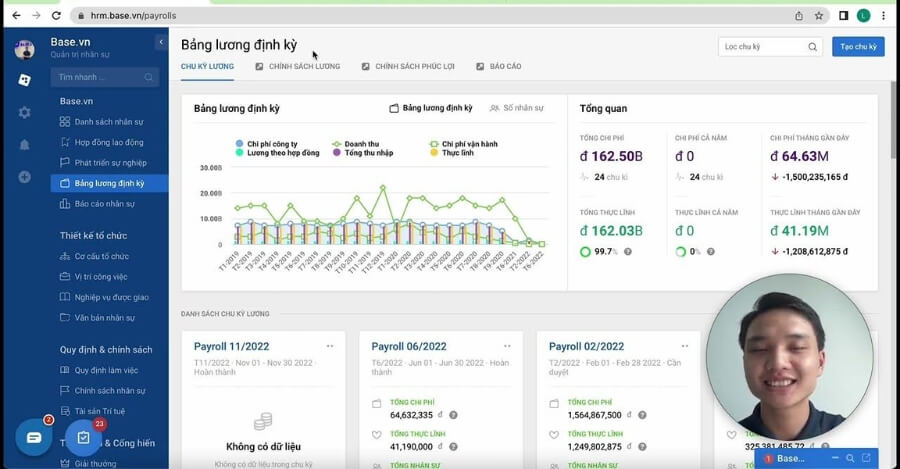
Base HRM+ is a comprehensive human resource management platform developed by Base.vn, designed to be flexible, easily scalable, and suitable for medium and large enterprises in the manufacturing and processing industry, helping to optimize HR processes and improve operational efficiency.
Key features of Base HRM+ for the manufacturing and processing industry:
- HR information management: Store employee profiles, departments, positions, contracts, and work history on a single platform, helping to manage large production teams more effectively.
- Timekeeping & payroll: Integrates with GPS, Wifi, and time clocks, automatically synchronizing data with the payroll system, reducing errors and saving processing time.
- Performance management: Evaluate KPIs, OKRs, and track work progress by shift, production line, or project, helping to identify key personnel and improve performance.
- Real-time HR reporting: Provides visual data and detailed productivity analysis, helping managers make quick and accurate decisions.
Pros and Cons of the Base HRM+ HR software
| Pros | Cons |
|
|
Base HRM+ HR software pricing for the manufacturing and processing industry
- Starter Package: From 450,000 VND/month for 30 accounts, suitable for small & medium-sized workshops and production departments.
- Expansion Package: Flexible pricing based on the number of employees and modules used, meeting the management needs of multiple departments, production lines, and processing projects.
- 14-day free trial: Businesses can experience HR management, timekeeping, payroll, and performance tracking features before deciding to implement.
1.1.3. MISA AMIS HRM
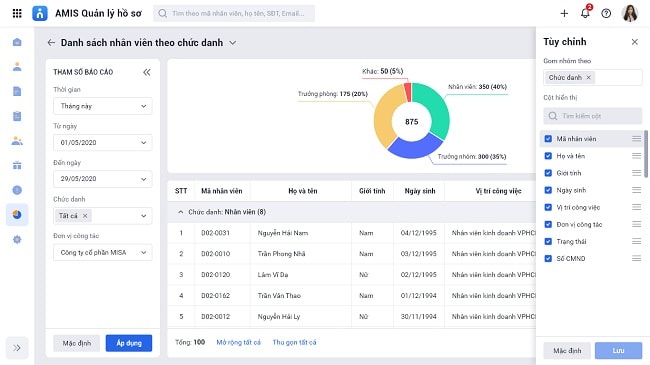
MISA AMIS HRM is an HRM software for the manufacturing and processing industry developed by MISA Joint Stock Company – a Vietnamese technology company with over 30 years of experience. The solution is suitable for businesses of all sizes, from small workshops to large processing corporations, helping to optimize HR management and automate operational processes.
Key features of MISA AMIS HRM for the manufacturing and processing industry:
- Full employee lifecycle management: Includes recruitment, training, evaluation, competency development, and offboarding, suitable for production departments, assembly lines, and shift management.
- Smart timekeeping: Supports fingerprint, GPS, facial recognition, QR code, and connects with existing devices, making it easy to manage employees working in the factory or off-site.
- Performance & KPI evaluation: Set goals and track progress in real-time, for example: production output, production line plan completion, shift performance.
- AMIS ecosystem integration: Synchronizes data with Accounting, Tasks, and CRM, helping to manage personnel, materials, production costs, and overall reports on a single platform.
Pros and cons of MISA AMIS HRM software
| Advantages | Disadvantages |
|
|
Implementation cost of MISA AMIS HRM software for the manufacturing and processing industry
- Basic package: From 5,100,000 VND/year for about 30 users, suitable for medium-sized workshops and factories.
- Extended package: Flexible pricing based on the number of employees, modules for shift management, timekeeping, payroll, and production KPIs.
- Free trial: 15-30 days, allowing businesses to experience the features before official implementation.
1.1.4.. Fast HR Software
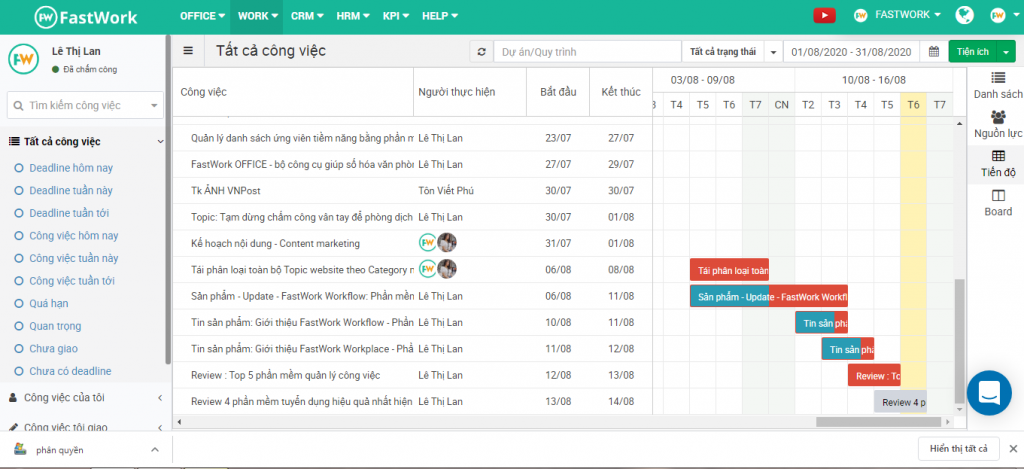
Fast HRM Online is an HRM software for the manufacturing and processing industry developed by Fast Joint Stock Company. The software provides a comprehensive web-based solution suitable for medium and large manufacturing and processing enterprises.
Key features of Fast HRM Online for the manufacturing and processing industry:
- Comprehensive HR management: Profiles, recruitment, timekeeping, payroll, insurance, and personal income tax, with support for tracking shifts, output, and specific KPIs for each production line.
- Connects with various timekeeping devices: GPS, fingerprint, QR code…, ensuring accurate and real-time data updates.
- Employee self-service: View payslips, check time records, and apply for leave online, suitable for factory workers and operational staff.
- Customizable to business specifics: Supports data import from Excel, sends approvals via email/SMS, flexible for different production and HR management processes.
Pros and cons of Fast HRM software for the manufacturing and processing industry
| Advantages | Disadvantages |
|
|
Fast HRM Online software pricing for the manufacturing and processing industry
- Software license: 10,000 USD, plus 200 USD/user.
- Supports free demo registration and consultation for businesses to experience features before implementation.
1.1.5. Tanca HR Software
Tanca is a cloud-based HRM software for the manufacturing and processing industry, developed by Green Mobile Application Joint Stock Company. With an intuitive interface and a convenient mobile app, Tanca is suitable for manufacturing and processing businesses looking to manage human resources flexibly, optimize operations, and reduce paperwork.
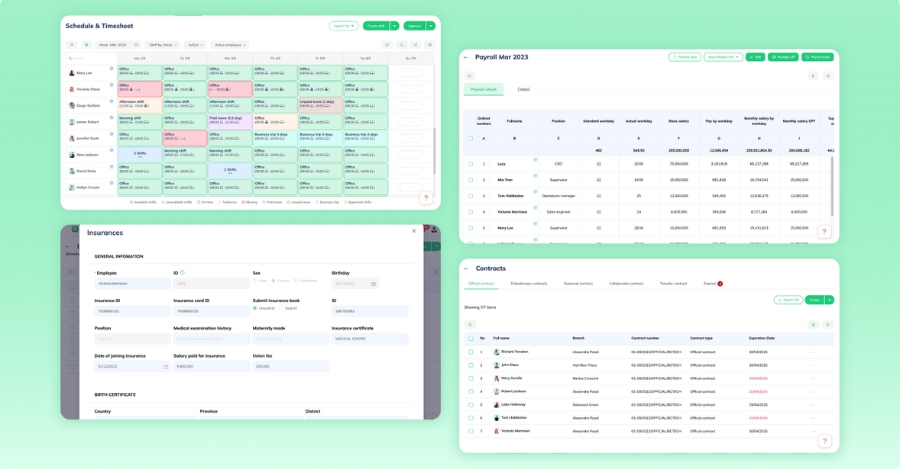
Key features of Tanca HR software for the manufacturing and processing industry:
- Smart timekeeping: Supports GPS, Wi-Fi, facial recognition, and AI cameras; tracks shifts and employee locations at the factory or on the production line.
- Payroll & benefits management: Create flexible payrolls, calculate daily wages, and view payslips directly on your phone.
- Automated request processing: Approve leave, business trips, payments, etc., helping to reduce paperwork by up to 90%.
- Performance evaluation: Track KPIs/OKRs linked to salary and bonuses, supporting productivity management for each production department.
- Shift & progress management: Approve shifts remotely, track personnel progress by production line or work shift.
- Real-time reporting: Export detailed reports for managers to make quick decisions and optimize operational efficiency.
Pros and cons of Tanca HRM software
| Pros | Cons |
|
|
Tanca HRM software pricing for the manufacturing and processing industry
- Free for businesses with under 25 employees (some features are limited).
- Flexible paid plans based on scale and management needs:
- Basic: 49 USD/month
- Standard: 99 USD/month
- Professional: 199 USD/month
- Enterprise: 299 USD/month
1.1.6. IHCM HR Software
IHCM is an HR management (HRM) software developed by Hyperlogy, operating on a cloud platform that meets ISO 27001 security standards. This solution is suitable for medium and large-sized manufacturing and processing enterprises, helping to digitize the entire HR process, optimize labor productivity, and increase transparency in shift management.
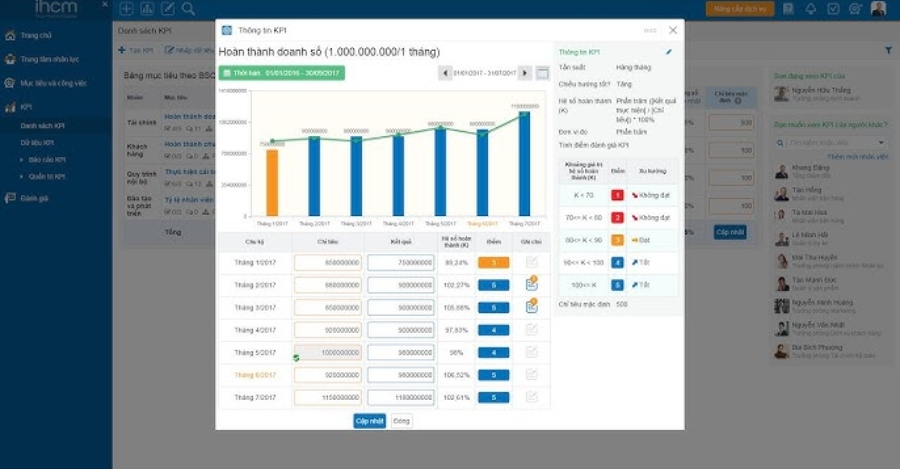
Key features of IHCM for the manufacturing and processing industry:
- Comprehensive HR management: Centralized storage of profiles, contracts, insurance, and work history on a cloud platform, making it easy, accurate, and consistent to manage personnel across multiple factories or production lines.
- Shift and productivity tracking: Supports flexible timekeeping by shift, production line, or area; automatically calculates salaries based on productivity, output, or KPIs for each department, reducing errors and saving processing time.
- Visual performance reports: Provides real-time charts and data on labor productivity, overtime status, absenteeism rates, and labor costs, helping management make faster and more accurate decisions.
Pros and cons of IHCM HR software
| Advantages | Disadvantages |
|
|
IHCM HRM software cost for the manufacturing and processing industry
- Businesses with under 60 employees: 1,500,000 VND/month
- From 61-90 employees: 3,000,000 VND/month
- Over 90 employees: Contact Hyperlogy for a consultation and a quote based on your factory’s scale.
- Currently, IHCM does not offer a free trial. Businesses can register for a demo to experience the personnel and shift management features before actual implementation.
1.1.7. Lotus Pro HR Software
Lotus Pro is an HR management software developed by Hosco Joint Stock Company, suitable for medium, large enterprises, or corporations in the manufacturing and processing industry. This solution provides comprehensive and modern human resource management, data synchronization, and is easily customizable to specific production characteristics.
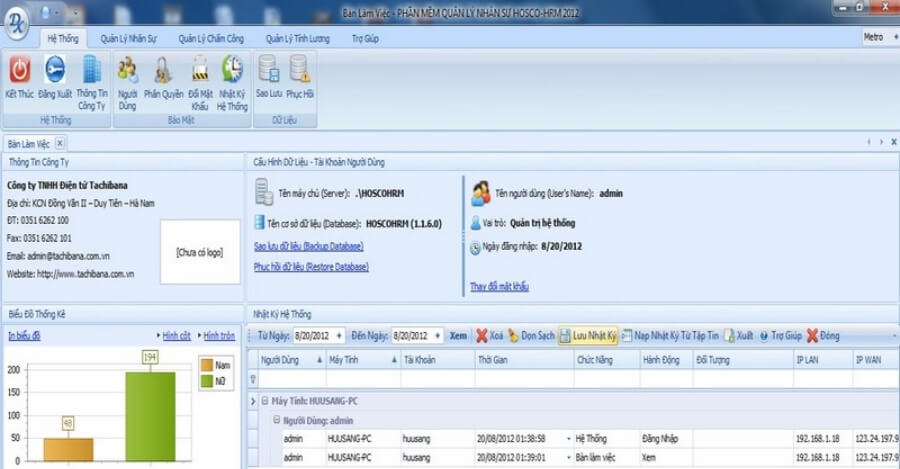
Key features of Lotus Pro HR Software
- Personnel & organizational profile management: Systematically stores all employee information, departments, work shifts, and work history for easy retrieval.
- Flexible hierarchy & permission settings: Allows customization by production line, shift, or individual workshop, enabling tight management of all departments.
- Integrated automatic payroll calculation: Easily connects with time clocks, ERP, and other software in the HOSCO ecosystem to accurately calculate salaries based on output, work shifts, or individual employee KPIs.
Pros and cons of Lotus Pro HRM Software for the manufacturing and processing industry
| Pros | Cons |
|
|
HRM Lotus Pro software pricing:
- Businesses can try it for free for a limited time
- For a detailed quote, please contact the provider directly.
1.1.8. HR-Manager Human Resource Management Software
HR-Manager, developed by Lac Viet Company, is a comprehensive human resource management solution suitable for medium to large-sized manufacturing and processing enterprises. The system supports automation from recruitment, training, and timekeeping to payroll and performance evaluation, helping to manage shifts, production lines, and labor productivity more effectively.
Key features of HR-Manager for the manufacturing and processing industry
- Centralized employee profile management: Store all personnel information, contracts, insurance, rewards, and disciplinary records, making it convenient to track labor across multiple workshops, shifts, or branches.
- Automated timekeeping & payroll: Connects directly with time clocks, calculates payroll based on shifts, output, or departmental KPIs, reducing errors and saving time on data consolidation.
- Productivity & performance evaluation: Track the productivity of individuals, production lines, or teams, helping businesses optimize their workforce and improve production efficiency.
- Customizable internal workflows: Flexibly adjust processes such as overtime approval, leave requests, or productivity assessments, to suit the specific nature of shift-based operations.
Pros and cons of HR-Manager software:
| Pros | Cons |
|
|
HR-Manager software cost for manufacturing – processing businesses
- Basic package: 30,000 – 50,000 VND/user/month
- Advanced package: 50,000 – 80,000 VND/user/month
- Comprehensive package: Around 100,000 VND/user/month
1.1.9. DigiiHR HR software
DigiiHR is an HR management solution developed by OCD Management Consulting Joint Stock Company (OOC), with over 20 years of experience in Vietnam. The software is suitable for medium and large enterprises in the manufacturing and processing industry that need in-depth personnel management, optimized timekeeping, payroll calculation, performance evaluation, and workforce planning on a flexible cloud platform.
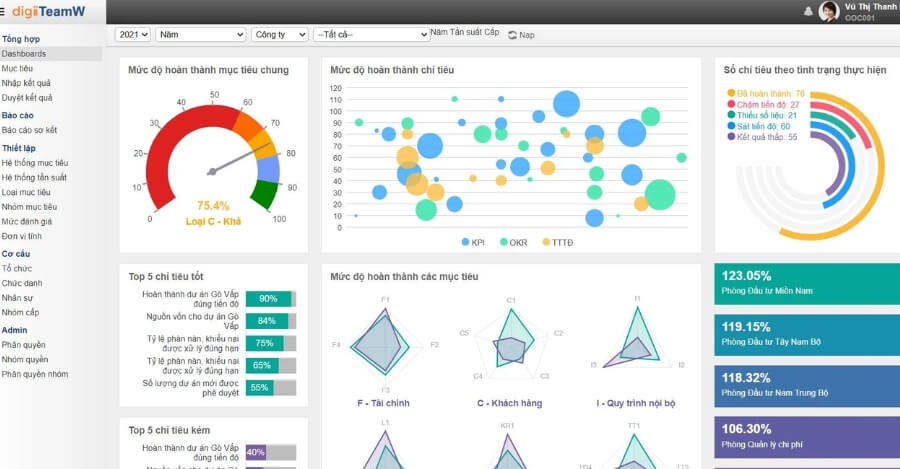
Outstanding features of DigiiHR in manufacturing and processing
- Personnel records and contract management: Centralized storage of employee information, work history, and labor contracts for easy lookup.
- Automated timekeeping & payroll: Synchronize data from time clocks, calculate salaries based on shifts, output, KPI bonuses, and accurately manage leave and insurance.
- KPI & competency evaluation: Track the performance of each employee by department, production line, or project, supporting periodic reviews and human resource development.
- Visual reporting: Provide dashboards and reports by shift, department, and work period to help managers make fast and accurate decisions.
Pros and cons of DigiiHR HRM software:
| Pros | Cons |
|
|
DigiiHR HRM Software Pricing
- Basic package: From 3,000,000 – 5,000,000 VND/year, depending on the number of employees, modules used, and the scale of the factory or production workshop.
- Businesses can register for a free demo and contact them directly for a detailed quote tailored to their needs for managing production personnel, shifts, and work performance.
1.1.10. AiHR HR Software
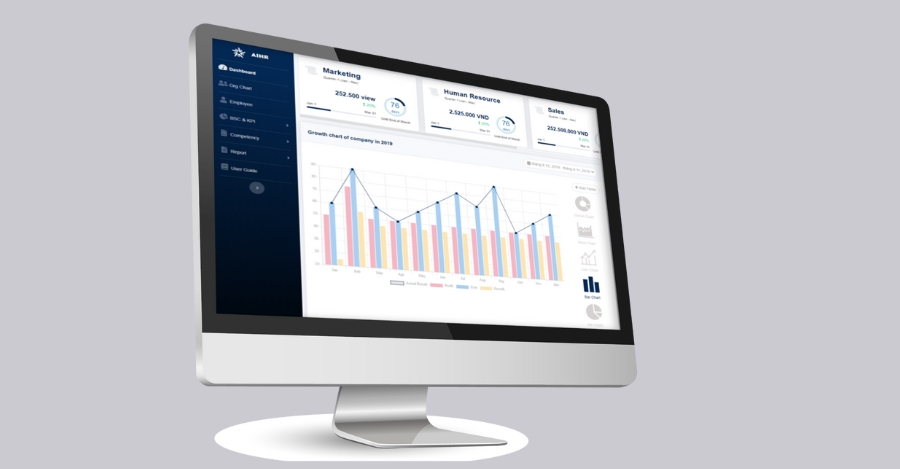
AiHR is an intelligent HR management solution developed by JobTest that uses AI to automate recruitment, timekeeping, payroll, training, and performance evaluation tasks. This software is suitable for medium to large-sized factories and processing plants undergoing digital transformation.
Key features of AiHR for the manufacturing and processing industry:
- Intelligent reporting: Automatically generates reports and provides data filters to quickly track personnel and performance.
- KPI, OKR, BSC management: Measures employee performance based on production targets, shifts, or specific projects.
- Organizational structure management & competency assessment: Tracks work progress and the efficiency of each department and individual.
- Smart recruitment: AI analyzes resumes, assesses skills, and suggests suitable candidates for production positions.
- Resource planning: Forecasts personnel, shifts, and recruitment needs based on actual data from the factory or processing plant.
Pros and cons of AiHR HRM software
| Pros | Cons |
|
|
Pricing for AiHR HRM software for the manufacturing and processing industry
- Basic Package: From 48,000 VND/user/month (1 administrator, 100 employees).
- Standard Package: From 58,000 VND/user/month (3 administrators, 200 employees).
- Premium Package: From 68,000 VND/user/month (5 administrators, 300 employees).
- Enterprise Package: Custom pricing, contact the provider for detailed consultation and a quote.
- A free trial is available to experience the features before implementation.
1.2. Top 6+ International HRM Software for the Manufacturing and Processing Industry
1.2.1. Sage HR
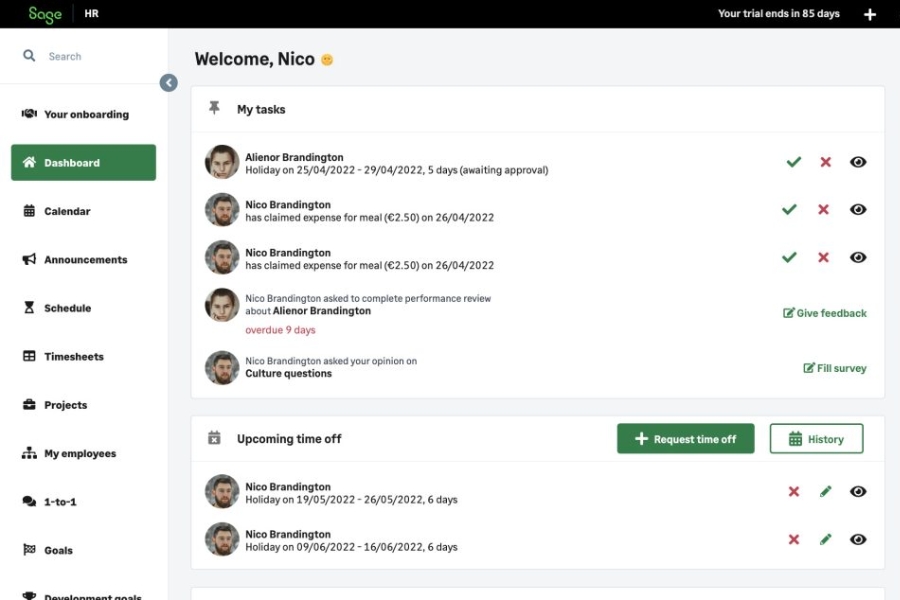
Sage HR is a cloud-based human resource management software developed by the Sage Group (UK). This solution is suitable for small and medium-sized manufacturing enterprises, helping to automate HR processes from recruitment and onboarding to employee performance tracking and managing production shifts.
Key features of Sage HR HRM software for the manufacturing and processing industry
- Automated reminders and notifications: Sends alerts for work schedules, shifts, events, and changes in employee information, helping to reduce manual tasks in the factory.
- Production performance tracking: Evaluates individual, team, and department KPIs based on production progress, machine productivity, and labor costs.
- HR data analysis: Provides detailed data on working hours, productivity, and personnel costs, supporting leaders in making fast and accurate decisions.
Pros and cons of Sage HR software
| Advantages | Disadvantages |
|
|
Sage HR HRM Software Cost
- Sage HR starts at $5.5/user/month for the basic package, suitable for manufacturing businesses that need streamlined HR management.
- Add-on modules like timekeeping, leave management, and performance reviews cost from $1–$3/user/month, while the recruitment module ranges from $150-$200/month depending on scale.
- Businesses can get a 30-day free trial to experience the interface and features before official implementation.
1.2.2. BambooHR HRM Software
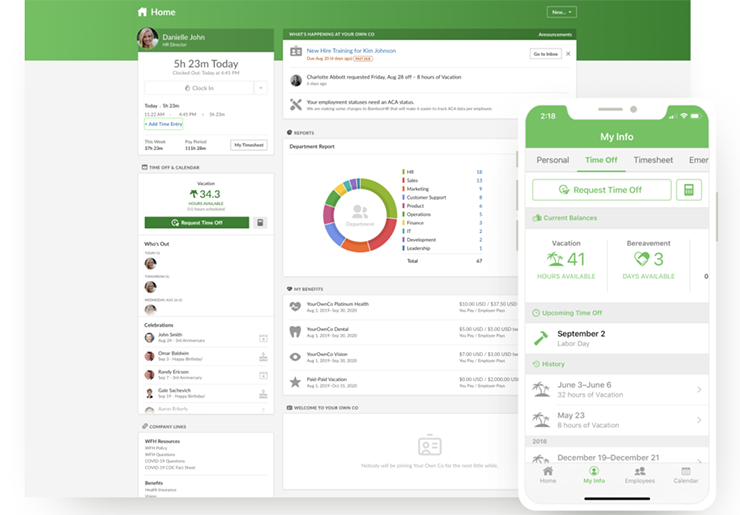
BambooHR is an American HR management software launched in 2008, suitable for small and medium-sized manufacturing and processing enterprises (25-300 employees). This solution helps automate recruitment, timekeeping, payroll, and performance review processes, optimizing workforce management in workshops and factories.
Key features of BambooHR HRM software for the manufacturing and processing industry:
- Centralized HR data management: Store profiles, contracts, work history, and analyze data on a single, easily searchable platform.
- Recruitment & onboarding: Helps select the right people for operational and production line positions and helps new employees integrate quickly.
- Automated timekeeping & payroll: Synchronizes timekeeping data from fingerprint scanners, card readers, or GPS, ensuring accuracy and saving time.
- Performance & engagement tracking: Evaluate KPIs, shift completion rates, labor productivity, and employee satisfaction to support the development of effective HR strategies.
Pros and Cons of BambooHR HRM software for the manufacturing and processing industry
| Pros | Cons |
|
|
BambooHR Implementation Costs
- There are two main packages: Core (basic features) and Pro (adds performance management, employee community).
- Businesses with fewer than 25 employees are charged a monthly fee, while those with over 25 employees are charged per person per month. Specific pricing is provided upon requesting a direct quote from BambooHR.
- A free trial is available to experience the software before implementation.
1.2.3. Cloud HR Software
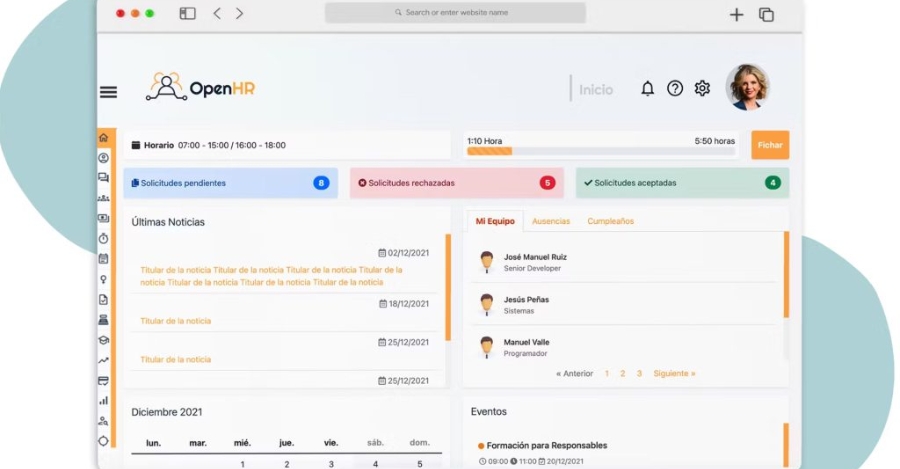
Cloud HR (OpenHR) is an HR solution developed by Tinh Hoa Solutions JSC, suitable for medium and large enterprises, especially manufacturing and processing units with multiple workshops, production lines, and departments that require centralized management. The system supports multi-platform operation, detailed permission delegation, and in-depth personnel management.
Key features of Cloud HR software:
- Personnel record management: Store and access employee information anytime, anywhere on the cloud platform, suitable for factories and processing plants with multiple shifts.
- Automated payroll generation: Fully manage the timekeeping and payroll calculation process, ensure tax compliance, and reduce errors for manufacturing businesses.
- Personnel development: Supports designing competency development frameworks, managing training, and fostering employee growth for each production line and department.
Pros and cons of Cloud HR HRM software:
| Pros | Cons |
|
|
CloudHR HRM Software Pricing
- Cloud HR has not published specific pricing; businesses need to contact them directly for consultation and a detailed quote.
- The free trial has limited features.
1.2.4. Human Resource Management with Zoho People
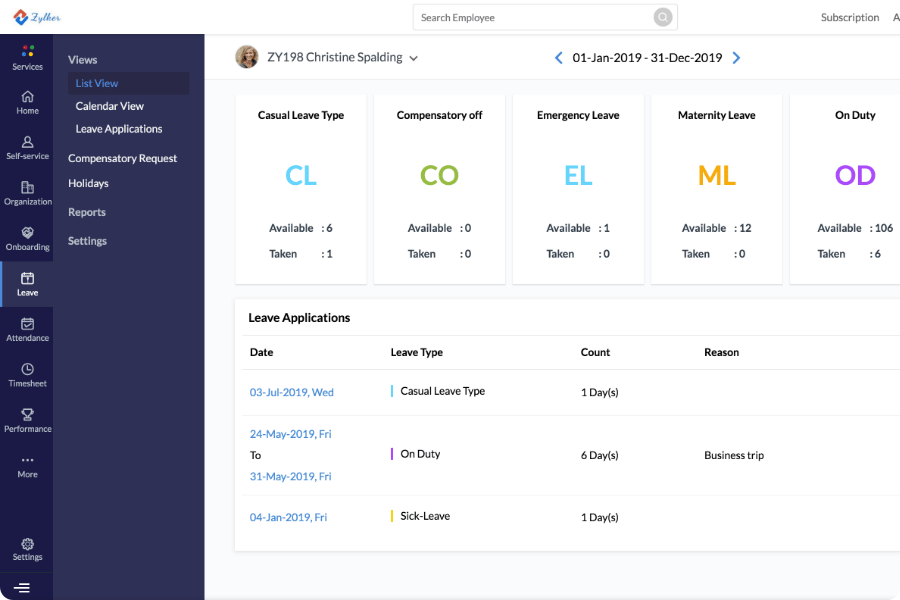
Zoho People is a cloud-based human resource management solution from the Zoho ecosystem (India), suitable for manufacturing businesses with multiple workshops, flexible work shifts, or remote teams.
Key features of Zoho People HRM software
- Centralized personnel management: Store employee records, work shifts, leave, training, and job transfers on a single platform, making it easy to track large production teams.
- Smart timekeeping: Supports time tracking via phone, GPS, or facial recognition, suitable for production lines with multiple shifts.
- Performance evaluation: Track KPIs, goals, and work progress for each department/workshop, helping to effectively manage labor productivity.
- HR process automation: Quickly approve leave requests, onboard new hires, and manage personnel transfers, reducing paperwork and increasing operational efficiency.
Pros and cons of Zoho People HRM software for the manufacturing and processing industry
| Pros | Cons |
|
|
Zoho People Pricing for Manufacturing Businesses
- Free Plan: Free for the first 5 users.
- Essential HR Plan: From $1/user/month.
- Professional Plan: From $2/user/month.
- Enterprise Plan: From $5/user/month.
- A 15-day free trial with full features is available, allowing businesses to experience the software before implementing it on the production line.
1.2.5. CakeHR HR Software
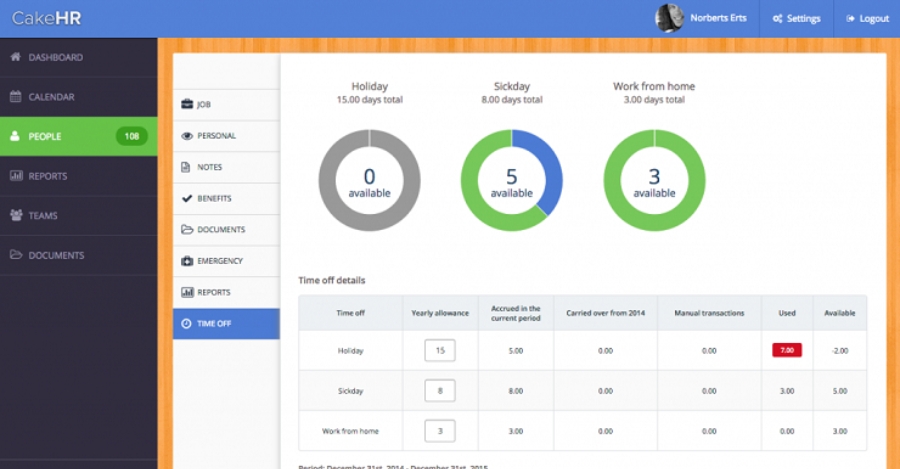
CakeHR, developed by HR Bakery (UK), is a cloud-based HRM software. This solution is suitable for small and medium-sized enterprises in the food production, agricultural and seafood processing, or garment industries.
Key Features of CakeHR
- Automated Timekeeping & Payroll: Records working time by shift, production line, or department; automatically calculates salary based on product, productivity, or overtime, helping to reduce errors and save processing time.
- Centralized Employee Profile Management: Stores information on contracts, insurance, and occupational safety certificates; tracks contract expiration dates or seasonal employee records.
- Performance & KPI Evaluation: Tracks work productivity by shift, production line, or individual stage, helping managers easily identify high-performing individuals or teams.
Pros and Cons of CakeHR HRM Software
| Pros | Cons |
|
|
CakeHR Software Pricing
- Basic plan: From 4 USD/user/month.
- Advanced plan: Around 16 USD/user/month.
- 14-day free trial, allowing businesses to experience the software before full implementation.
1.2.6. Odoo
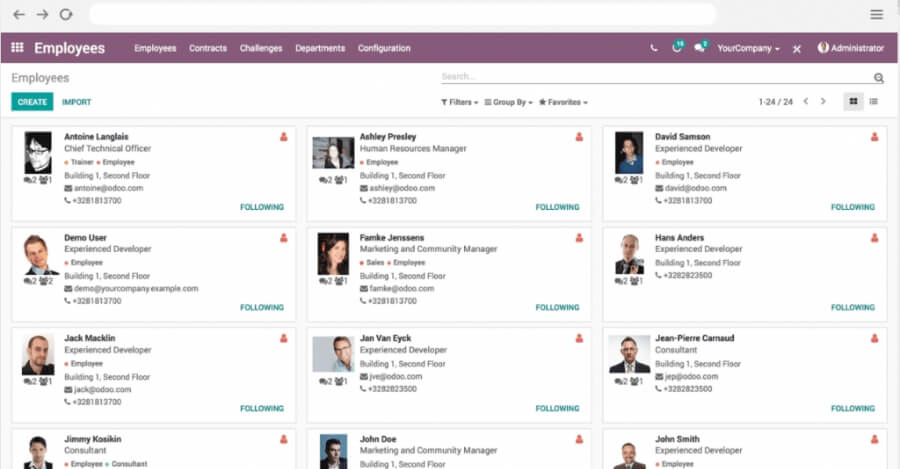
Odoo HRM is a human resource management software within the Odoo ERP ecosystem (Belgium). It is a suitable solution for factories and manufacturing plants looking to digitize HR processes, manage productivity, and ensure operational transparency.
Key features of Odoo HRM:
- Flexible timekeeping & shift tracking: Automatically records timekeeping data by production line or area, supports 2-3 shift/day work models, ensuring accuracy and transparency.
- Automated payroll & allowance calculation: Automatically calculates salaries based on time, output, KPIs, or shifts, incorporating overtime allowances and productivity bonuses.
- Productivity & performance evaluation: Tracks KPIs, output completion rates, and product quality by individual or team, helping managers identify strengths and areas for improvement.
- Labor cost management: Tracks and allocates labor costs for each production line, stage, or order, helping to optimize production costs.
- Visual reporting and analysis: Provides comprehensive reports by department, workshop, or shift, helping leadership easily make decisions on personnel allocation and improve operational efficiency.
Pros and cons of Odoo HRM software
| Advantages | Disadvantages |
|
|
Odoo HRM software costs for manufacturing and processing businesses
- Standard Package: From 7.35 USD/user/month
- Custom Package: From 10.9 USD/user/month
- One App Free Package: Free for any single app, unlimited users.
2. Benefits of HRM software for the manufacturing and processing industry
Here are the key benefits that HRM software brings to manufacturing and processing businesses, helping to optimize human resources and improve operational productivity:
- Automate shift-based personnel management: The software helps automate timekeeping for workers on various shifts, including night shifts or overtime, while also monitoring the real-time status of personnel on each production line, workshop, or department. This reduces manual errors and allows managers to easily coordinate manpower in a timely manner.
- Calculate payroll based on product and productivity: HRM automatically calculates piece-rate wages, productivity bonuses, or production KPI completion, ensuring transparency and accuracy. The system also displays production progress for each stage, for example, “Material Preparation – 90%,” “Packaging – 60%,” “Quality Check – Awaiting Approval,” helping to accurately assess the capabilities of each employee.
- Track and evaluate employee performance: The software supports KPI evaluation based on the number of completed products, product quality, and time taken per shift. Productivity reports can be analyzed by employee, team, production line, or workshop, helping leadership make timely and appropriate adjustments.
- Visual reports and real-time data: HRM provides consolidated data on output, productivity, labor costs, and shifts on a daily, weekly, or monthly basis. These visual reports support quick decision-making regarding workforce allocation, overtime, or production line adjustments to optimize operational efficiency.
3. Criteria for selecting HR management software for the manufacturing and processing industry

Below are important criteria to help businesses evaluate and choose HRM software for the manufacturing and processing industry that aligns with their scale, processes, and development goals:
- Shift and production line productivity management: The system needs to support flexible timekeeping by shift, crew, or production team, while also recording the productivity of each stage and individual to facilitate payroll, bonuses, and actual performance evaluation.
- Payroll calculation based on output and quotas: The software should support payroll calculation based on completed products, work hours, or KPIs for each production line, helping to accurately reflect productivity and motivate workers.
- On-site personnel tracking: The system should support timekeeping via fingerprint scanners, card readers, or GPS in the production area to accurately monitor working hours, overtime, and prevent time theft.
- Safety management and internal training: The software should integrate tracking for safety certifications, occupational health, and technical training, helping the business comply with regulations and ensure workshop safety.
- Overall productivity reporting and analysis: The software should be able to connect HR data with production systems (MES, ERP) to analyze overall productivity (e.g., active worker ratio, average productivity per shift, labor consumption per product).
- Support for multi-factory, multi-location operations: The HRM software needs to synchronize HR data in real-time and provide clear access permissions for each location, ensuring accurate management and preventing data duplication or discrepancies.
4. Frequently Asked Questions about HRM software for the manufacturing and processing industry
Question 1: Is HR management software for the manufacturing and processing industry expensive?
The cost of HR management software in the manufacturing and processing industry varies depending on the business size, number of employees, and the features implemented, such as shift-based timekeeping, productivity-based payroll, or piece-rate management.
Small businesses can start with a basic package, while larger factories or production chains typically invest more to meet complex management needs. Compared to the long-term benefits of optimizing personnel, increasing productivity, and efficient operations, this cost is considered reasonable.
Question 2: Is HR data secure when using HRM software for the manufacturing and processing industry?
HR data is strictly secured when using HRM software for the manufacturing and processing industry through data encryption, detailed access permissions, user authentication, and system activity monitoring. Information about workers, productivity, piece-rate products, work shifts, or timekeeping is managed centrally and securely, reducing the risk of data leaks and enhancing trust among both workers and factory management.
Question 3: What is the difference between HRIS, HRMS, HCM, and Cloud HR?
HRIS, HRMS, HCM, and Cloud HR are all human resource management software, but they differ in scope and functionality within the manufacturing and processing environment:
- HRIS: Manages basic employee and worker data, including profiles, shifts, timekeeping, recruitment, and productivity assessment.
- HRMS: Expands on HRIS with automation of processes such as shift-based/piece-rate payroll, benefits, KPIs, training, and worker skill development.
- HCM: Encompasses both HRIS and HRMS, focusing on strategic human resource development, talent management, and enhancing the efficiency and value of the production team.
- Cloud HR: Operates on a cloud platform, allowing access anytime, anywhere, saving on infrastructure costs, easy to upgrade, and securing data on shifts, productivity, and piece-rate work.
Question 4: Which businesses should use Cloud HR?
Cloud HR is ideal for factories and processing businesses with multiple workshops, facilities, or branches that need to access and manage HR data remotely. The solution also integrates easily with production, warehouse, ERP, or productivity management systems, helping to increase flexibility, data security, and information synchronization throughout the entire operational chain.
Question 5: What are the benefits of AI-integrated HRM software for companies in the manufacturing and processing sector?
AI-integrated HRM software offers many benefits for manufacturing and processing businesses:
- Automates production-related HR processes: recruitment, shift timekeeping, product-based or productivity-based payroll, and leave and insurance management.
- Analyzes performance and plans workforce: tracks task completion progress, individual worker/shift productivity, forecasts personnel needs based on seasonality or production plans, and promptly detects operational risks.
- Supports management and decision-making: provides visual reports on HR effectiveness, labor costs, and production line productivity, helping management optimize workforce allocation and improve product quality.
Question 6: How to choose the right HRM software for the manufacturing and processing industry?
To choose the right HRM software for the manufacturing and processing industry, businesses need to focus on specific features such as shift management, timekeeping, productivity-based payroll, and production KPI tracking. The software should integrate flexibly with ERP, warehouse, and accounting systems to synchronize data and optimize operations.
A user-friendly interface, web and mobile support, and robust security are crucial factors for a large workforce. Businesses should also evaluate the provider’s reputation, scalability, and take advantage of a demo before making an investment decision.
Question 7: What are the popular HRM software for the manufacturing and processing industry in Vietnam today?
Currently in Vietnam, some popular HRM software for the manufacturing and processing industry include 1Office, DigiiHR, AMIS HRM, HRPro7, Bravo HRM, etc. These solutions help businesses manage shift timekeeping, calculate product-based or productivity-based payroll, track occupational safety training, and handle recruitment and production line performance evaluation. Additionally, they can flexibly integrate with ERP, accounting, or production management software, helping to synchronize data and improve the operational efficiency of the entire factory.
5. Conclusion
Choosing the right HRM software not only helps businesses save costs but also enhances productivity and transparency in human resource management. If your business is looking for an HRM software solution for the manufacturing and processing industry, please leave your contact information HERE. The team of expert consultants at 1Office will promptly connect with you and provide detailed advice.
















