11/05/2026
  319 views
What is 5S? How does the 5S method help optimize productivity and work efficiency, leading many businesses to adopt it today? This method is notable for its popularity, flexibility, and high applicability, not only helping to maintain a clean and tidy work environment but also enhancing production performance and efficiency. In the article below, let’s explore with 1Office what 5S is and the process of implementing it in a business.
Mục lục
- 1. What is the 5S Method?
- 2. The Standards of the 5S Process
- 3. What are the benefits for businesses applying the 5S method?
- 4. The implementation process for Japan’s 5S method
- 5. What is the difference between Kaizen and 5S?
- 6. Frequently Asked Questions about the Effectiveness of the 5S Process
- 7. A Tool to Support 5S Implementation for Businesses – Check out 1Office!
- 8. Conclusion
1. What is the 5S Method?
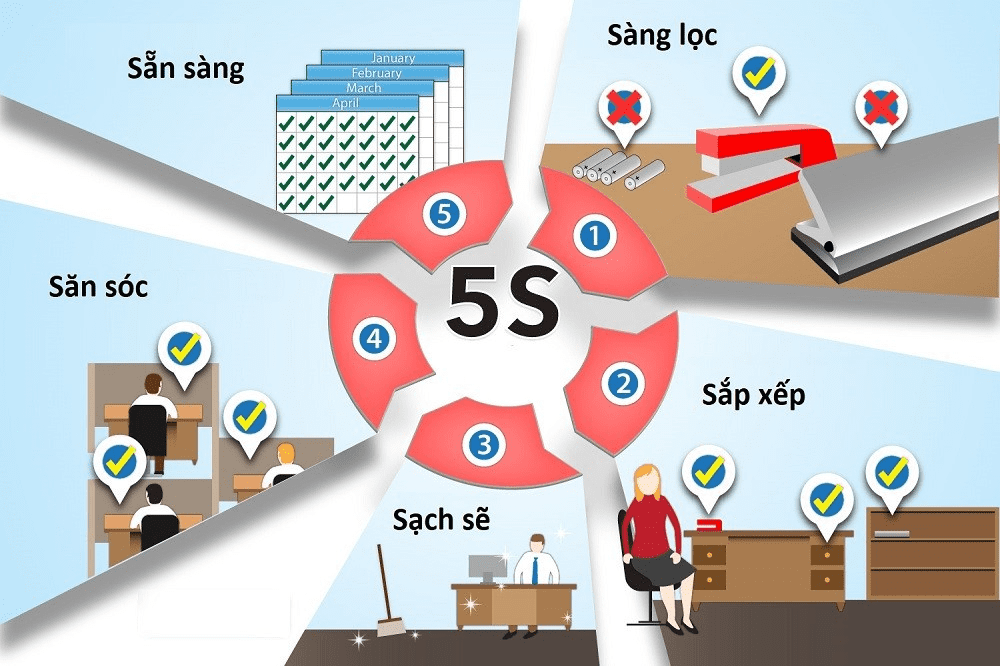
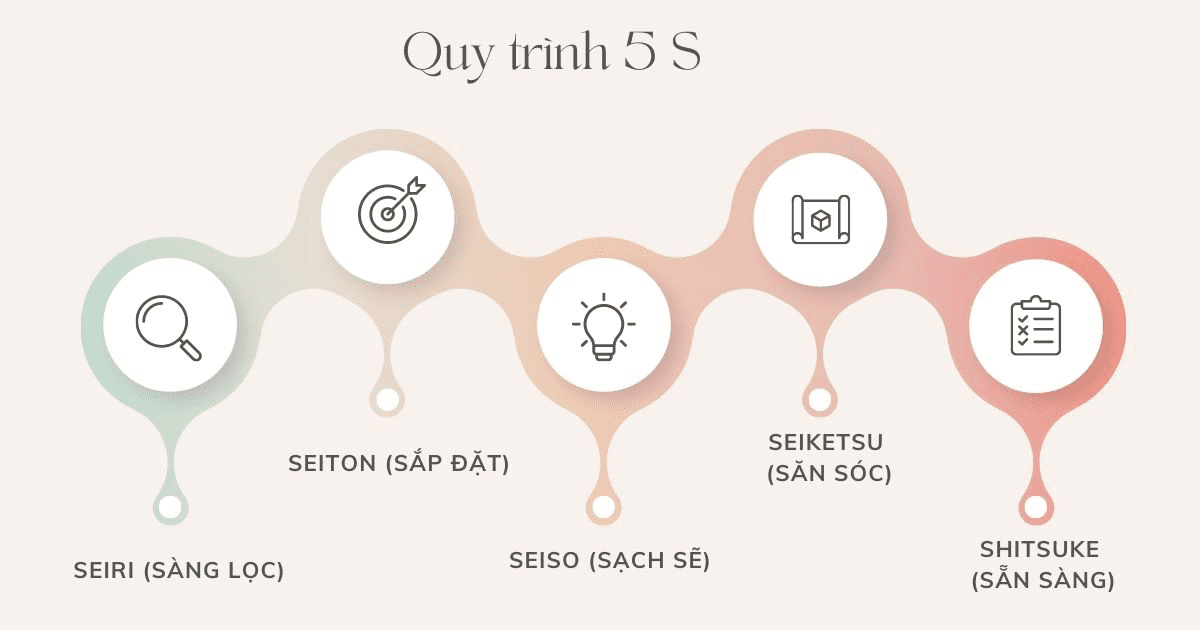
5S is an effective workplace management method that originated in Japan and has been widely adopted globally, especially in manufacturing businesses. 5S is an acronym for five Japanese words: Seiri (Sort), Seiton (Set in Order), Seiso (Shine), Seiketsu (Standardize), and Shitsuke (Sustain).
This method focuses on organizing, maintaining, and improving the workspace to ensure all activities are carried out most efficiently, thereby increasing labor productivity, reducing waste, and improving product quality.
The 5S method not only helps optimize the workspace but also plays a crucial role in boosting employee morale and work efficiency. Since its inception, the 5S model has been widely applied across various industries, from manufacturing to services, and has become an indispensable standard in modern quality management systems.
The 5S method originated in Japan in the mid-20th century and was first implemented by the car manufacturer Toyota. In an effort to enhance product quality and minimize waste, Toyota developed a production system that combined multiple methods, including Just-In-Time (JIT), Jidoka, and concepts of a visual work environment.
Among these, 5S stood out for creating a tidy and orderly work environment, which helped increase production efficiency, reduce waste, and enhance employee safety. Consequently, 5S became a crucial part of the “Toyota Production System” and has been widely adopted globally.
2. The Standards of the 5S Process
The 5S process consists of 5 basic steps, each with its own role and significance in organizing and managing the workplace.
2.1 Seiri – Sort
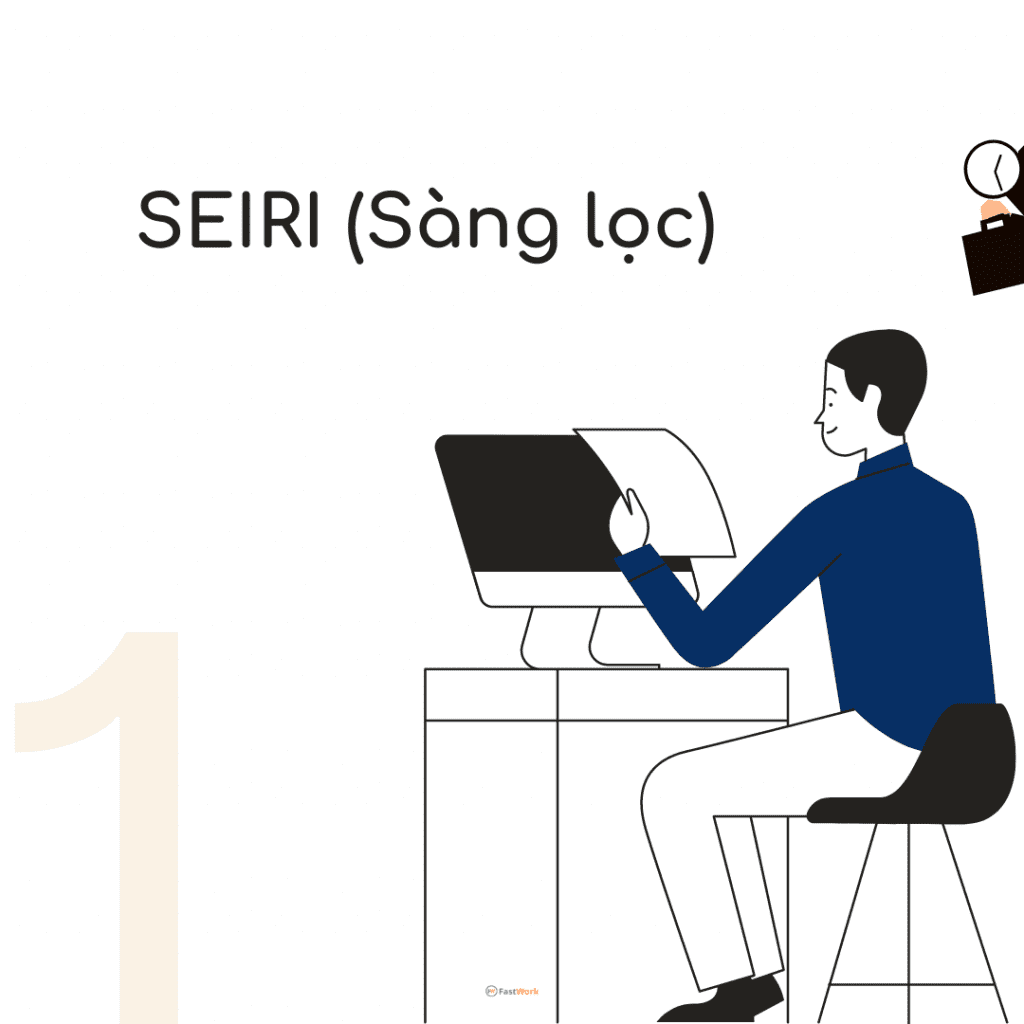
Seiri is the first step in the 5S process, focusing on sorting and removing unnecessary items and documents from the workplace. This helps create a tidy, uncluttered workspace and reduces the time wasted searching for necessary items.
In practice, sorting goes beyond just removing unnecessary items; it also helps businesses identify tools and equipment that need to be upgraded, maintained, or replaced. This process also contributes to minimizing risks in the production process and improving workplace safety.
2.2 Seiton – Set in Order
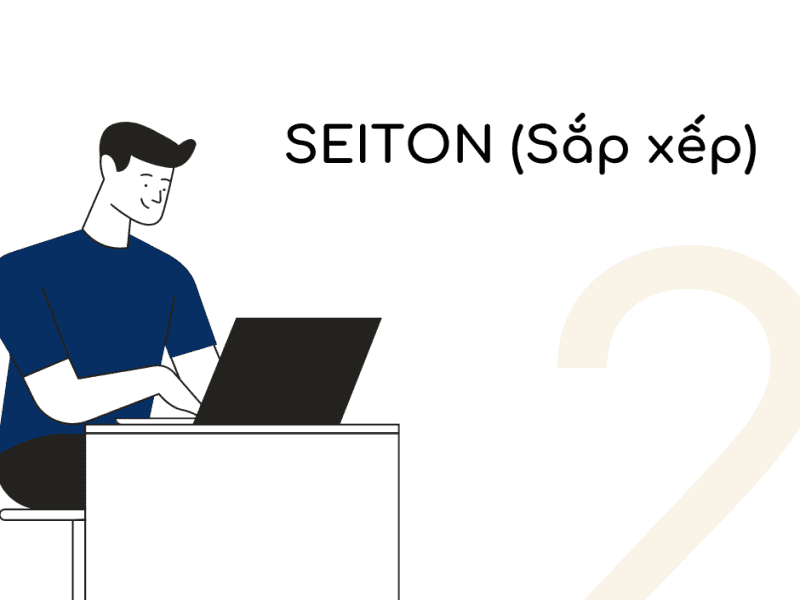
The Seiton standard focuses on arranging and organizing items, equipment, and documents in the most logical and convenient way for work. The goal of Seiton is to create an orderly workspace, save time, minimize searching, and prevent the loss of assets. Items are organized based on four criteria: easy to find, easy to see, easy to take, and easy to return. This helps increase usage efficiency and build a professional work environment.
After arranging, it is necessary to create a list and a diagram of the items’ locations, with specific notes so that everyone, including new employees, can easily find everything.
2.3 Seiso – Shine
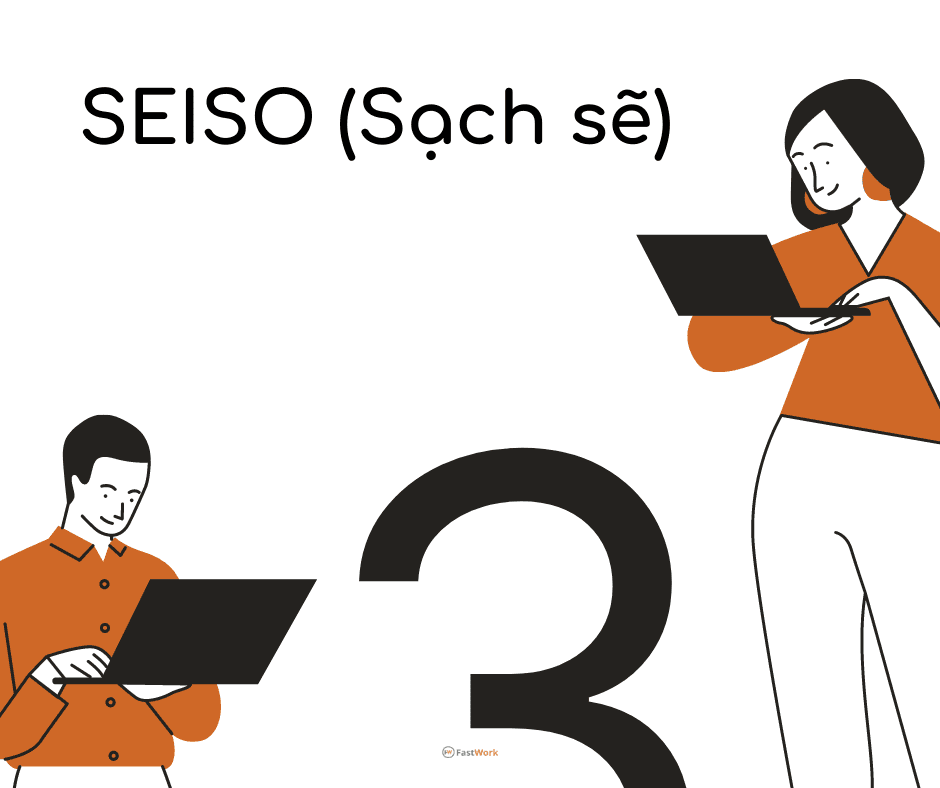
Seiso, the third step in the 5S process, focuses on maintaining a clean and tidy work environment. The goal of Seiso is to ensure the workspace is always clean and orderly, creating a comfortable and professional atmosphere for employees and making a good impression on candidates, customers, and partners.
This task needs to be performed daily to avoid disrupting the work process. Seiso includes not only cleaning but also inspecting and maintaining equipment and machinery to detect damage early and make timely repairs. The self-discipline and responsibility of each individual in maintaining a clean environment are key elements of Seiso.
2.4 Seiketsu – Standardize
Maintaining and implementing the first 3S (Seiri, Seiton, Seiso) over time can be challenging without continuous monitoring and upkeep. Gaps in the process can cause the business to revert to its original state.
To maintain effectiveness and systemization, it is necessary to establish evaluation standards and specific targets. This helps employees carry out the process accurately and consistently. Each individual needs to be clear about their scope of responsibility, methods, and frequency of implementing the steps. This step also helps train and demonstrate the collective responsibility and compliance of staff.
2.5 Shitsuke – Sustain
Shitsuke is the final step in the 5S process, focusing on forming habits and building self-discipline among employees to maintain and adhere to the 5S principles. This step also ensures that 5S is not just a short-term project but becomes a part of the corporate culture, fostering continuous and sustainable improvement.
To apply Shitsuke in production, businesses need to implement training and communication programs to help employees understand and comply with 5S standards. At the same time, support and supervision from managers are necessary to ensure that standards are continuously maintained and improved.
3. What are the benefits for businesses applying the 5S method?
The 5S model is increasingly being widely applied in manufacturing businesses, bringing many significant benefits.
3.1 Benefits for the business
- Increased productivity: 5S helps optimize work processes, minimizing search and movement time, thereby improving work efficiency.
- Reduced costs: By eliminating unnecessary items and maintaining a clean work environment, 5S helps reduce waste of materials and time, thereby lowering production costs.
- Ensured workplace safety: Seiso and Seiketsu help maintain a safe working environment, minimizing the risk of occupational accidents.
- Improved product quality: The 5S process helps minimize production errors, thereby enhancing the quality of products and services.
- Increased competitiveness: A professional and efficient work environment helps businesses differentiate themselves from competitors.
- Creates a professional image for customers: A clean and tidy work environment not only improves employee morale but also makes a good impression on customers and partners.
3.2 Benefits for employees
- Increased self-discipline: Shitsuke helps employees form habits and a sense of self-discipline in maintaining work standards.
- Reduced stress: A clean and tidy work environment helps minimize stress and fatigue for employees.
- Enhanced skills: Participating in the 5S process helps employees improve their organizational and work management skills.
- Ensured safety: The work environment becomes safer by adhering to 5S principles, helping to minimize the risk of occupational accidents.
- Fosters consensus: When all employees participate in the improvement process, consensus and cooperation within the organization are enhanced.
3.3 Benefits of 5S for customers
- Builds trust: A business that applies 5S demonstrates professionalism and a commitment to quality, building trust with customers.
- Provides high-quality products: Minimizing production errors and maintaining efficient work processes help the business deliver higher quality products and services.
- Better service: When work processes are optimized, order processing and service delivery times for customers also become faster and more efficient.
4. The implementation process for Japan’s 5S method
To successfully implement 5S, businesses need to follow a systematic process with the following specific steps:
Step 1: Develop a plan and action roadmap
The 5S implementation process begins with developing a specific plan and action roadmap. The management team needs to hold meetings to discuss and establish the goals, scope, and implementation steps for the 5S process. This includes clearly identifying the areas where 5S will be applied, allocating resources and responsibilities to each department, and creating a detailed plan for each implementation phase.
The plan must be clear, detailed, and highly feasible, ensuring that every member of the organization understands their role and responsibilities. This is a crucial foundational step to ensure the success of the 5S process.
Step 2: Train and guide implementation
Employees need to be trained on what the 5S standards are and the benefits of applying them in production. Additionally, communication activities should be organized to help employees understand and agree with the 5S process.
It is important to foster a spirit of improvement and collaboratively solve problems as they arise during the 5S implementation. Superiors should not assign blame or give orders but should instead create a positive work environment that encourages support among members and departments within the company. This will help increase the effectiveness of the 5S program.
Step 3: Proceed with implementing the 5S process
When everything is ready, the business will proceed to implement the 5S process according to the established plan. This step includes carrying out Seiri, Seiton, and Seiso activities in the designated work areas. Employees need to coordinate closely to ensure the process runs smoothly and achieves the set goals.
The implementation of 5S needs to be closely monitored to promptly detect and resolve any issues that arise, ensuring the process is carried out according to plan and yields the highest efficiency.
Step 4: Evaluate and Improve
After the 5S process has been implemented, the business needs to evaluate the results achieved from the 5S improvements and compare them with the initial goals. Based on the evaluation results, the business can identify areas for improvement, adjust the process, or add necessary measures to ensure the long-term effectiveness of 5S.
Step 5: Sustain the 5S Process
Sustaining the practice of 5S is the final but crucial step in the implementation process. For 5S to become a habit and part of the corporate culture, it is necessary to recognize good achievements and use them as motivation to maintain the practice.
Ensure that the 5S steps are performed correctly and completely by comparing expected results with actual outcomes. Sustaining the 5S practice needs to be done voluntarily, becoming an essential part of the company’s production and business operations.
Further reading:
5. What is the difference between Kaizen and 5S?
Both 5S and Kaizen are famous Japanese management methods; however, they have certain differences and similarities.
| Criteria | 5S | Kaizen |
| Concept | A method focused on organizing and arranging the workplace for maximum efficiency | A method of continuous improvement, focusing on small but frequent changes in work and production processes, which gradually lead to major improvements |
| Purpose | To create a clean, productive, and safe work environment | To optimize work processes to enhance performance |
| Standard | Reduce waste, increase productivity, enhance safety, and lower costs | Standardize processes, resolve emerging issues, and find the most effective ways of working |
| Implementation Time | Periodically, according to a specific plan | Implemented continuously and not tied to a specific schedule |
| Implementation Method | Follows specific steps such as sorting, setting in order, shining, etc. | Uses teamwork, data analysis, and feedback to propose and implement improvements. |
| Scope | Is a part of Kaizen | Has a broader scope, encompassing 5S and other improvements. |
6. Frequently Asked Questions about the Effectiveness of the 5S Process
6.1 Which businesses should apply the 5S process?
Every business, regardless of size, can and should apply the 5S process. 5S is not only suitable for manufacturing companies but can also be effectively applied in other sectors such as services, retail, healthcare, and education. Implementing 5S helps improve work processes, enhance productivity, and minimize waste in any industry.

6.2 Who participates in the 5S process?
Every member of the organization can and should participate in the 5S process, from leadership to employees. For 5S to be successful, the commitment and active participation of the entire organization are necessary. The role of leadership is particularly important, as they not only guide but also must be pioneers in implementing and sustaining 5S.
6.3 What are the visual management tools that support the implementation of the 5S process?
- Supporting materials: Tape, labels, containers, shelves, cabinets, and racks… to systematically mark and store items and equipment.
- Cleaning supplies: Includes detergents, cloths, brushes, and vacuum cleaners… to clean up dirt and dust.
- Instructional materials: Includes 5S implementation documents, materials explaining what 5S is, its benefits, and templates for performance evaluation and reports…
- Measurement equipment: Includes tools such as rulers, scales, and timers, used to measure and monitor parameters related to the 5S process.
- Performance evaluation tools: Includes tools like checklists, scorecards, and survey forms, used to assess and measure the effectiveness of the 5S process.
7. A Tool to Support 5S Implementation for Businesses – Check out 1Office!
To implement 5S effectively and sustainably, businesses need a powerful support tool for managing processes, storing data, and tracking progress. The 1HRM suite by 1Office is a comprehensive business management solution that provides all-in-one software solutions, helping businesses manage and monitor the 5S implementation process closely and effectively. From planning, training, and execution to monitoring and sustaining, 1HRM helps businesses easily implement and maintain the 5S process, optimize resources, and achieve business goals.
Here are the useful features of 1HRM for enhancing efficiency and consensus among employees:
- 1HRM provides a comprehensive platform for information exchange, document sharing, and discussions among company members. This application allows businesses to effectively launch communication campaigns about 5S, including guidelines, implementation announcements, and initiative messages. With just a few clicks, employees can easily grasp information and participate in the 5S implementation process.
- To train employees on what 5S is and its applications, businesses can use features like Onboard and Test. Onboard helps quickly introduce 5S regulations and culture to new employees, helping them quickly familiarize themselves with the rules and necessary documents. Test provides a platform to check and assess employees’ 5S knowledge, ensuring they understand it clearly and are ready to apply it in their work.
- 1HRM also helps identify, analyze, and manage violations. This application allows businesses to monitor the status of violations, assess their severity, and implement timely corrective measures. This helps prevent violations and maintain the effectiveness of the 5S process.
- To motivate and encourage employees to actively participate in the 5S process, 1HRM supports businesses in rewarding individuals or teams with outstanding achievements. This tool helps create motivation and strengthen employee commitment to implementing 5S.
8. Conclusion
The 5S method is the foundation for building a disciplined and effective work culture. To successfully implement 5S, businesses need to follow a systematic process, from planning and employee training to continuous maintenance and improvement.
We hope this article has provided you with a clear understanding of what the 5S method is and the process for implementing it in a business. If you have any questions or need further assistance, do not hesitate to contact 1Office via the hotline 083 483 8888 for a more detailed consultation.