


 11/05/2026
  148 views
A distribution channel is a crucial link that helps products reach the right customers and directly affects the business’s growth rate. But what is a distribution channel, and which one is suitable for your business? This article will help you gain a clearer understanding, from the concept to its management.
Mục lục
- 1. What is a Distribution Channel?
- 2. The Role of Distribution Channels
- 3. Types of Distribution Channels in Marketing
- 4. Examples of Distribution Channels in Business
- 5. Effective Ways to Manage Distribution Channels
- 6. Criteria for Choosing the Right Distribution Channel for Your Business
- 7. Challenges in Distribution Channel Management
- 8. The Best Distribution Channel Management Solution Today
1. What is a Distribution Channel?

A distribution channel is a system of organizations and individuals outside the business that participate in the process of moving a product from the manufacturer to the final consumer. It is considered a bridge for the business to achieve its business goals and helps products reach consumers quickly.
A distribution channel is a crucial element in a Marketing strategy. There are many different distribution channels in the market. The choice of which channel to use will depend on the product type and the business’s target market. Choosing an effective distribution channel will help the business achieve its business objectives.
| >> Read more: Market research: Purpose, process & methods |
2. The Role of Distribution Channels
Distribution channels play a crucial role for businesses:
- Increases customer reach by delivering the business’s products/services to the right people, at the right time, and in the right place.
- Executes product marketing and advertising, helping businesses save costs and enhance the effectiveness of Marketing activities.
- Minimizes costs for product distribution activities by leveraging the resources of channel members.
- Fosters customer relationships through customer care activities, after-sales services, etc.
- Helps bring products to more points of sale for consumers, thereby facilitating contact, promoting products, and effectively achieving market coverage.
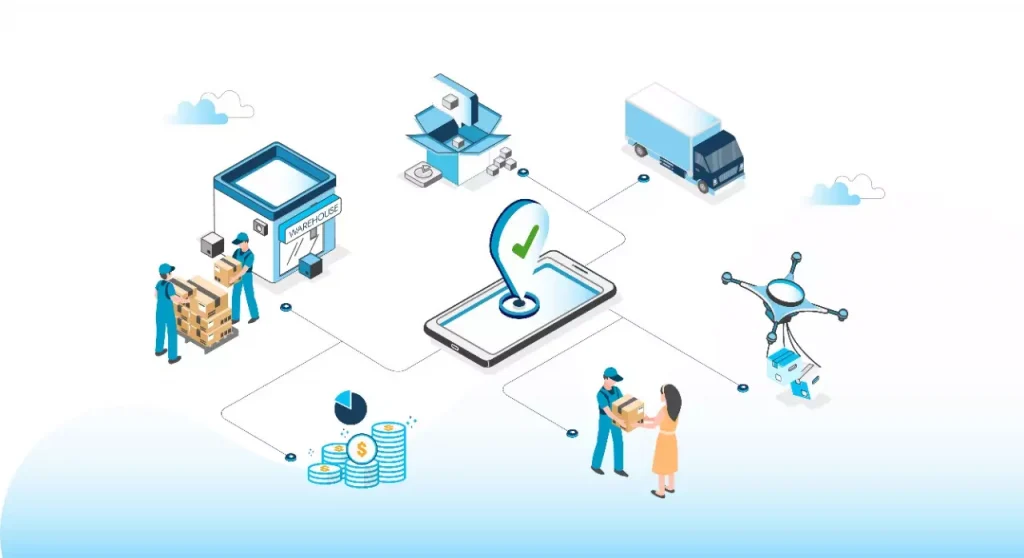
Distribution channels play a crucial role for consumers:
- Consumers can access products/services quickly and conveniently without having to go to the production site, saving time and effort.
- Provides a variety of choices and complete product information, helping consumers make informed purchasing decisions.
- Enhances customer satisfaction as distributors act as support and intermediaries to handle warranty issues and provide after-sales services.
3. Types of Distribution Channels in Marketing
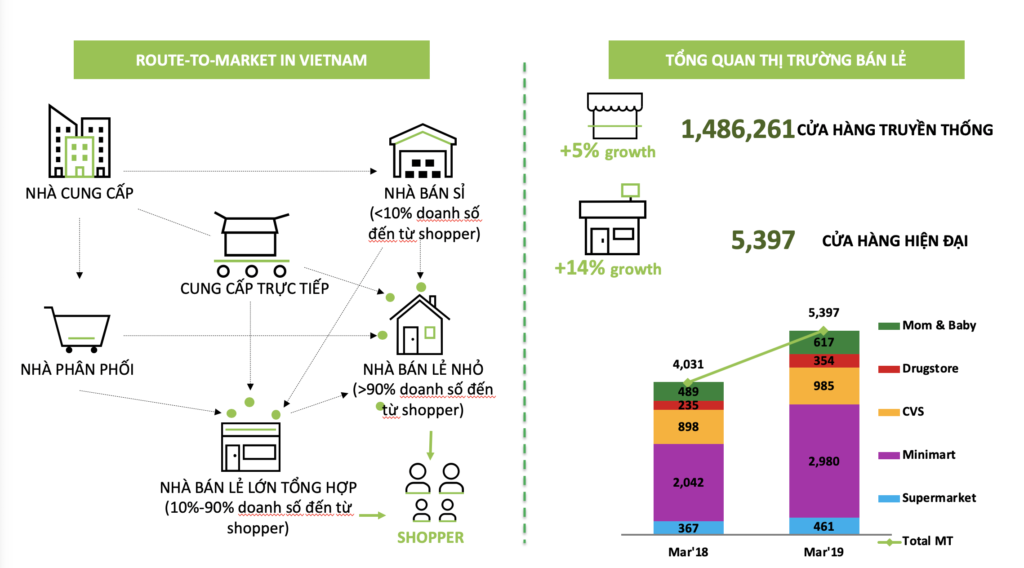
3.1. Direct Distribution Channel
A direct distribution channel is where products are sold directly from the manufacturer to the consumer, without intermediaries. Direct distribution channels can be implemented in various ways, including:
- Direct distribution via the Internet: This is the most popular form of direct selling today. Manufacturers sell products directly to consumers through websites, social media, or e-commerce applications.
- Distribution through direct sales staff: The manufacturer has a team of sales staff who go directly to customers’ homes to introduce and sell products.
- Distribution through company-owned retail stores: The manufacturer owns and operates retail stores to sell products directly to consumers.
Advantages and disadvantages of the direct distribution channel:
| Advantages | Disadvantages |
| – Strengthen customer relationships through sales, care, and after-sales activities. – Strictly control product quality with direct sales, thereby enhancing brand reputation. – Reduce distribution costs by not having to pay commissions to intermediaries. |
– Requires significant capital investment to build an online sales system, train direct sales staff, or open affiliated retail stores. – Difficult to reach a large market; manufacturers may not have sufficient resources to build a widespread sales system. |
Therefore, the direct distribution model is often suitable for high-value or highly personalized products such as electronics, medical equipment, apparel, etc., allowing manufacturers to strictly control product quality and best meet the needs of each individual customer.
3.2. Indirect Distribution Channel
Indirect distribution channels are channels where products are sold through one or more intermediaries before reaching the end consumer. Indirect distribution channels can be divided into the following three levels:
- One-level channel (one intermediary): Manufacturer – Retailer – Consumer
- Two-level channel (two intermediaries): Manufacturer – Wholesaler – Retailer – Consumer
- Three-level channel (three intermediaries): Manufacturer – Agent/Broker – Wholesaler – Retailer – Consumer.
Advantages and disadvantages of indirect distribution channels:
| Pros | Cons |
| – Increased market reach thanks to the extensive distribution network of intermediaries. – Reduced investment costs for the manufacturer, specifically for some sales, customer care, and after-sales service activities. |
– Difficulty in controlling product and service quality when selling through indirect distribution channels. – High distribution costs as the manufacturer has to pay commissions to intermediaries. |
Currently, the indirect distribution channel is the most widely and popularly used type of distribution among businesses. This is an effective distribution channel that helps manufacturers increase their reach to a larger market and reduce investment costs.
3.3. Multi-level distribution channel
A multi-level distribution channel is an indirect channel where channel members are both retailers and distributors. Channel members earn commissions from selling products to consumers and from recruiting new members.
Multi-level distribution channels can be classified into the following types:
- Traditional multi-level distribution channel: This is the most common form of multi-level distribution, where channel members are recruited and trained by the manufacturer or high-level agents.
- Online multi-level distribution channel: This is a form of multi-level distribution that uses the Internet to market and sell products.
| Advantages | Disadvantages |
| – Increases access to a larger market thanks to the extensive distribution network of channel members. – Maximizes cost savings for system operation. |
– Prone to fraud or exploiting customer trust for personal gain. – Causes market disruption when channel members compete with each other to sell products. |
3.4. Affiliate Marketing Distribution Channel
The affiliate marketing distribution channel is an indirect channel where members earn commissions for referring customers to purchase products.
In an affiliate marketing distribution channel, members are called affiliate distributors. Affiliate distributors can be individuals, organizations, businesses, or even consumers themselves.
Currently, there are many affiliate marketing platforms on the market, including both free and paid platforms. Manufacturers should choose a reputable platform to ensure their own interests and those of the channel members.
4. Examples of Distribution Channels in Business
Vinamilk is a prime example of using various distribution channels to meet market demand.
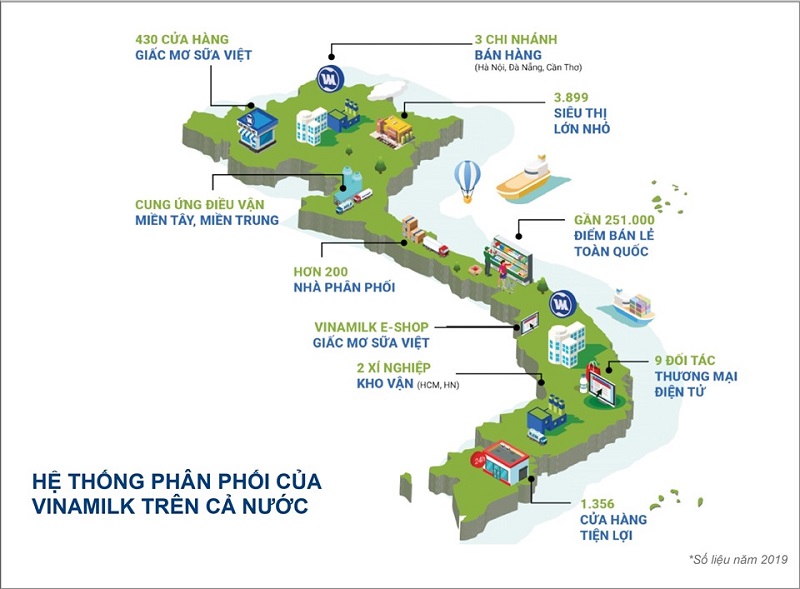
Vietnam Dairy Products Joint Stock Company (Vinamilk) is one of the largest dairy producers in Vietnam. Vinamilk uses various distribution channels to bring its products to consumers.
- Direct Distribution Channel: The brand has a system of its own retail stores in major cities across the country and an online sales channel through its website and the Vinamilk app. This store system helps Vinamilk strictly control product and service quality while building good relationships with customers.
- Indirect Distribution Channel: Vinamilk also uses an indirect distribution channel through distributors, wholesalers, and retailers. This channel helps Vinamilk reach a broader market.
- Multi-level Distribution Channel: Through direct sales agents, this helps the dairy brand reach customers in rural and remote areas.
- Affiliate Marketing Distribution Channel: Vinamilk uses an affiliate marketing distribution channel through collaborators, advertising partners, and KOLs, creating opportunities for Vinamilk to reach younger customers.
5. Effective Ways to Manage Distribution Channels
Distribution channel management is the process of planning, organizing, leading, and controlling the activities of the distribution channel to ensure the flow of goods from production to the consumer aligns with the company’s set objectives.
So how can you manage a distribution channel effectively? This is a difficult problem for many businesses, especially manufacturing companies.

Below are some ways to manage distribution channels that help businesses promote growth and enhance their position in both domestic and international markets.
- The ultimate goal of a distribution channel is to meet customer needs; businesses must focus on the customer to ensure the channel operates effectively.
- Channel members need to have good cooperative relationships to ensure the distribution channel operates effectively. Therefore, businesses should create programs and activities to promote collaboration among members.
- Build a distribution channel structure that clearly defines the division of responsibilities and authority among channel members while ensuring the channel’s operational efficiency.
- The market is always changing, so businesses need to be flexible in adjusting their distribution channels to ensure they operate effectively.
- Establish clear and specific processes, policies, and procedures for the distribution channel to ensure its effective operation.
- Regularly monitor and evaluate the effectiveness of the distribution channel to make timely adjustments.
- Apply software to distribution channel management to automate processes from order management, inventory management, and sales management to financial management, etc. This helps save time and effort for employees and improves the company’s operational efficiency.
6. Criteria for Choosing the Right Distribution Channel for Your Business
Choosing a distribution channel is like choosing the “path” for your product to reach the customer. If you choose the right path, your business will save costs and sell more products.
Product Characteristics: Perishable products like fresh food and medicine need to be delivered directly to customers to control quality. Conversely, fast-moving consumer goods (confectionery, soft drinks) usually go through supermarkets and agents for broad coverage.
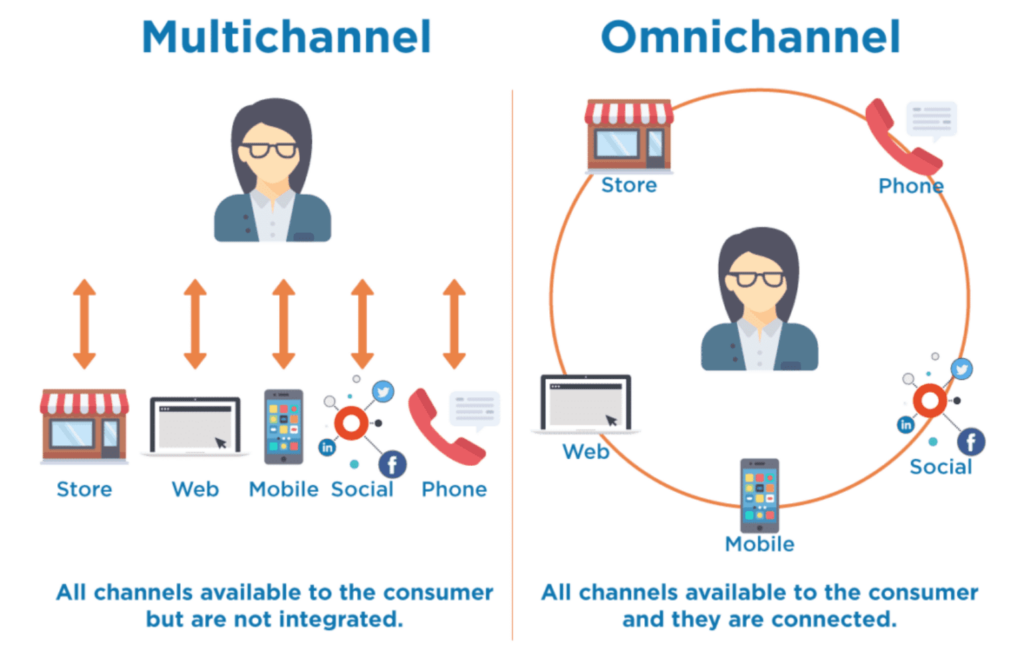
Target Customers: If your customers are businesses (B2B), they often want to meet in person for consultations. If they are individual consumers (B2C), they are used to buying through stores, e-commerce platforms, or social media. A Harvard study shows that “omnichannel” customers spend more and return more frequently than single-channel customers.
Financial Resources: A direct channel (own stores, showrooms) helps retain higher profits but has heavy operating costs. An indirect channel (through agents, wholesalers) helps expand the market faster, but the profit per product is lower.
Management Capability: If your team is small, managing multiple channels at once can lead to losses. In this case, choosing fewer channels but managing them well will be more effective.
7. Challenges in Distribution Channel Management
After selecting a channel, the next difficult task is management. If not managed well, a distribution channel can become a burden.
Channel Conflict: When a business sells both online and through agents, it’s easy for them to “step on each other’s toes.” Agents will complain if they see lower prices online. A BCG report shows that many companies have to sacrifice revenue just to maintain relationships with distributors.
Difficulty in Synchronizing Customer Experience: One customer buying from store A receives good service, while another buying from store B is treated with indifference. Even if it’s the agent’s fault, the customer will blame the brand.
Risk of Fraud and Counterfeit Goods: When products pass through multiple intermediaries, the risk of counterfeit and fake goods entering the market increases. For example, in the cosmetics industry, many brands have had their reputations damaged because counterfeit products were mixed in through gray market distribution channels.
Rapid Market Changes: With the rise of e-commerce and social media, many businesses accustomed to traditional sales methods have failed to adapt quickly, leading to customer loss.
8. The Best Distribution Channel Management Solution Today
In today’s era of technological development, applying software to distribution channel management is an inevitable trend for all businesses. 1Office CRM is a comprehensive sales management software that fully integrates distribution channel management features, helping businesses optimize and increase work efficiency.
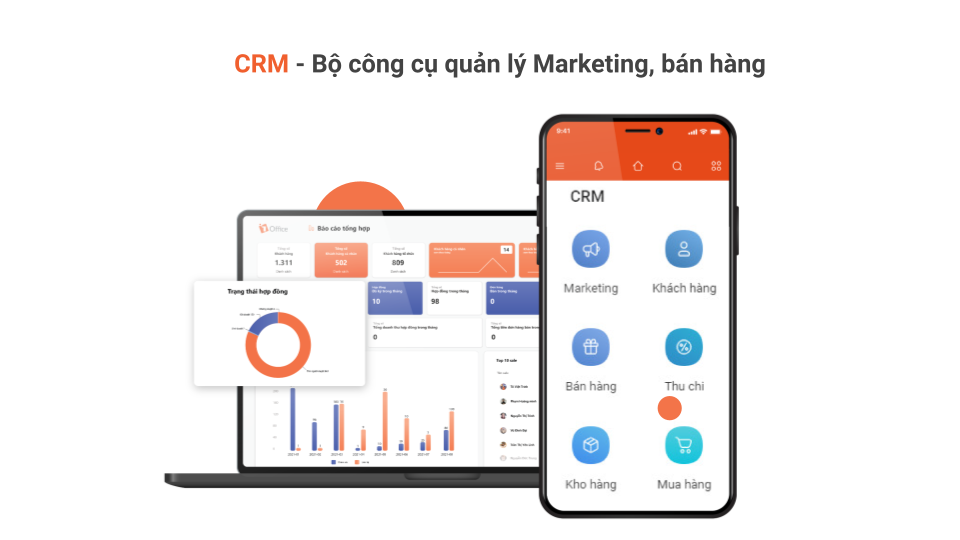
- Automate all distribution channel management processes, from order management, inventory management, sales management to financial management, etc.
- Manage customer relationships from storing customer information, tracking purchase history, to customer care, etc.
- Manage orders and inventory from order creation, confirmation, tracking, and processing to warehouse entry and exit…
- Digitize all contract and order information, automatically calculate commissions and sales, and simultaneously track revenue reports in real-time.
- Provide alert tools related to accounts receivable, contract expiration dates, follow-up care dates, etc.
- Provide detailed reports on distribution channel activities, making it easy to monitor and analyze performance, thereby enabling timely decisions for improvement.
1Office CRM is a wise choice for businesses looking to optimize and increase work efficiency in distribution channel management.
——————————
Above is all the information about distribution channels that 1Office wants to share with you. We hope that through this article, your business has gained a more specific understanding of how to manage distribution channels to develop suitable business strategies for growth and higher profits. If you need further consultation on the 1Office CRM sales management software, please contact us via:
- Hotline: 083 483 8888
- Facebook: https://www.facebook.com/1officevn/
- Youtube: https://www.youtube.com/@1office-chuyendoisodn
















