12/05/2026
  489 views
Customer Insight is a deep understanding of customers’ needs, behaviors, motivations, and pain points, helping businesses build more suitable messages, products, and marketing campaigns. By analyzing insights correctly, businesses can understand what customers truly need, why they make purchases, and what factors influence their choices. This article will help you understand what Customer Insight is, how to analyze customer insights, and the common support tools used.
Mục lục
General Overview of Customer Insight
1. What is Customer Insight?
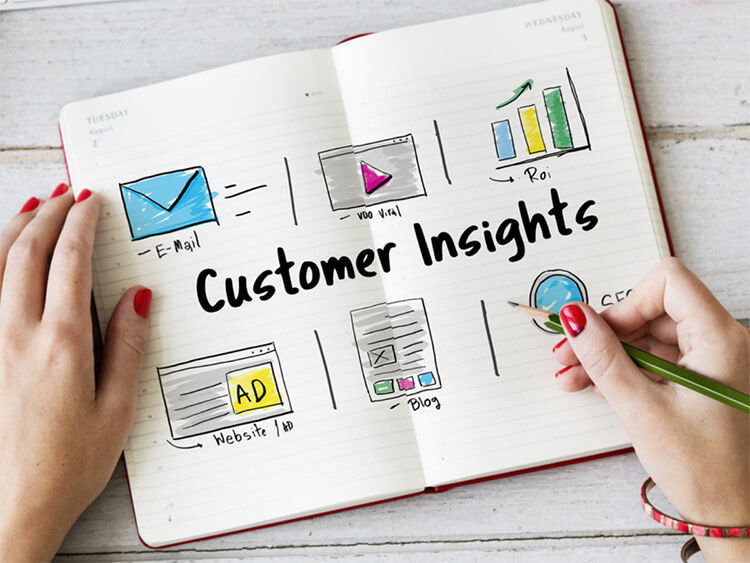
Customer insight, or consumer understanding, represents the knowledge of customer behavior used to form a brand story, improve product development, and enhance customer support. These detailed insights are the motivation to act on customers’ wants and needs to expand features and develop products and services, thereby creating benefits for the customer.
2. Pros and Cons of Researching Customer Insight
2.1 Pros
Create a competitive advantage
The more detailed the customer information research, the better a business can predict future customer trends and gain an earlier advantage. To win customer market share, businesses need to prepare the necessary tools in advance to serve customers better and create a competitive advantage.
Increase sales profit
Understanding the target customer persona is one of the key factors in driving user purchasing behavior. When customers’ needs are met, they will be willing to buy, which helps to increase sales profit quickly. Additionally, the company will have more opportunities to explore new products and services in the market or improve upon those of competitors, helping to increase the product’s market share.
Adapt strategies over time
Every field needs to change with market trends, and business is no exception. Because the market is constantly changing, businesses need to continuously update to new trends to match customer needs.
Without change, a company or its products will fall behind competitors. Therefore, as times change and customers change, companies must keep up by changing themselves to retain them.
For example, when the first iPhone was launched in 2007, Steve Jobs was quoted as saying, “Who wants a stylus?” but in 2016, Apple reintroduced the stylus with the iPad Pro.
2.2 Cons
- Although customer insights provide statistical data, there are still other factors that no data can explain. This is one reason why, while data from customer information is meaningful in many ways, we cannot rely on it entirely.
- Customers tend to change their psychology and preferences very quickly, making it difficult for companies to keep up. Therefore, phasing out old products and replacing them with new ones can be very costly, not to mention that the long-term return on investment may not be feasible.
- Customer insight is not a useful solution to apply to every type of customer. It only serves a specific category or segment of people based on detailed customer information. From these deep insights, businesses can improve certain products.
But in reality, a number of customers will not be satisfied with those changes, so it is very difficult to satisfy all customer needs.
>>> Read more: 5 steps to strategic planning – Things to note when creating a strategic plan
3. The Role of Customer Insight in Marketing
A good insight can generate many advertising ideas and help a business get closer to its potential customers. So, what is the role of customer insight in marketing activities? Let’s explore in the content below.
Sales Management
When a business understands customer insights, it helps companies be best equipped with products and services for the present and the future. This will help the business make appropriate changes to serve customers in the best way possible.
For example: during holidays like International Women’s Day, user demand tends to increase, so companies can launch special offers for women when they make a purchase.
Create a competitive advantage over rivals
Understanding Customer insight helps businesses make the best business decisions. By analyzing insights to clarify customer pain points, a business can modify its products according to the actual needs of customers, creating a competitive advantage over rivals to lead the market.
The results from the analysis and research above will help you effectively tap into niche markets. To create a competitive advantage and lead over competitors, you should target niche markets to provide special products and services that meet user needs and trends, which will generate significant appeal and competitiveness.

Increase product and service quality
An important role of Customer Insight is to help organizations effectively increase the quality of their products and services. By receiving customer feedback related to the product and asking customers about their future needs and desires, the company can invest in products that are certain to sell in the market.
It can be affirmed that researching market segmentation will help businesses know detailed information about customers, from their needs, preferences, behaviors, etc. This will narrow the gap between the customer and the business and provide a more comprehensive and in-depth view of the customer.
|
For businesses looking to enhance the customer experience and effectively leverage customer pain points, learn more about: What are Pain Points? 5 Tips to Effectively Leverage Pain Points in Marketing |
4. Characteristics of Customer Insight
Now that we understand the role and the pros and cons of customer insight, let’s explore its basic characteristics.
Customer Insight is an indirect analysis of behavior
The first characteristic of customer insight to mention is that it is an underlying truth, not an obvious fact about customers. When analyzing customer insight, businesses need to collect data and survey customers to analyze customer insights most accurately. You need to monitor your customers to find the reasons and motivations driving their purchasing behavior.
For example: according to a customer survey in the technology industry, the number of smartphone users is increasing. From this, we can infer that the customer insight is that customers are increasingly focusing on and investing in technology for work and entertainment.
Insight doesn’t just come from data
In reality, marketers can now collect a lot of detailed customer data. However, this does not mean that this data source will generate a good insight. The marketer’s job at this point is to make the collected customer data more essential and to know how to exploit and analyze the data to achieve that goal. Therefore, businesses should think about analyzing data in the most intuitive and diverse way possible.

Insights should lead to specific actions
If a business only proposes a theory without practical application, it cannot be considered a Customer Insight. Let’s look at the example below to identify an insight:
Your business has two types of customer segments: B2B (business customers) and B2C (individual customers). Currently, B2B customers are dominant, but revenue from B2C customers is trending downward.
After researching the B2C group, you hypothesize that this customer group tends to recommend the service to friends and family. Therefore, you should set up a referral system for close relations to help grow the customer base.
However, when it comes to practical application, it cannot be implemented due to many related factors such as: human resources (personnel to manage the system), costs (investment to build the system), and the time required to complete a usable system. Therefore, this system cannot be converted from a plan into reality, so it cannot be called a Customer Insight.
| Read more: The Most Effective Ways for Businesses to Approach Potential Customers |
Simple ways to analyze customer insights
According to research by Hubspot – a leading global company in Marketing and Customer Care, there are 6 ways for businesses to accurately research their customers:
- Based on customer feedback: Collecting buyer feedback on products and services is the easiest way for a business to determine what customers think about its products.
- Measure customer reviews: This is a form of general assessment of the level of acceptance of a product or service. Businesses can ask customers to rate on a 10-point or 5-star scale on social media pages and sales platforms.
- Research data from third-party providers: Businesses can collaborate with a market research agency to obtain relevant customer data.
- Direct interviews: Interviewing customers directly can deeply explore their perspectives on products and services.
- Analyze online behavior flows: Based on websites, social networks, e-commerce channels, measurement tools, etc., businesses can identify customer habits, preferences, and behaviors.
- AI research models: Customer research models using intelligent algorithms help businesses establish a basis for making the right decisions.
In summary: there are many ways to research customers. Depending on business goals and customer segments, businesses can combine multiple research methods to arrive at the most accurate conclusions.
Read more: Types of Marketing Strategies for Businesses – Reaching the right people at the right time
Effective steps to build customer insights
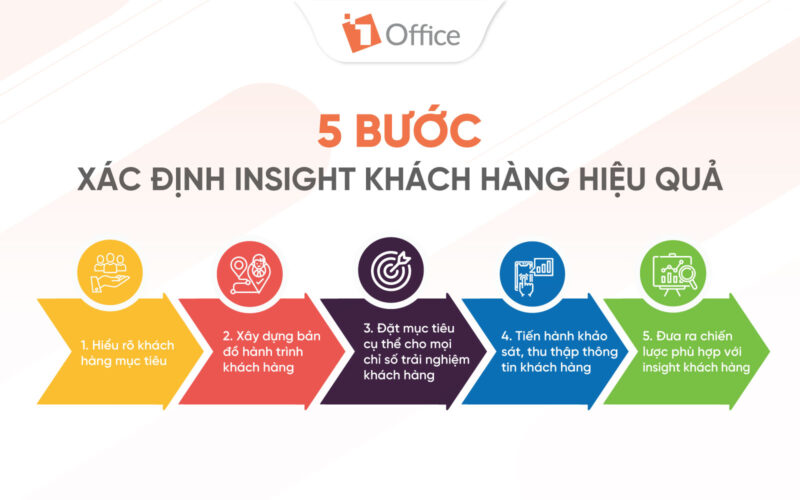
How to build effective customer insights is a problem many businesses face while researching and understanding customer behavior. Below are 5 basic steps to help you analyze customer insight effectively.
Step 1: Clearly understand the target customer
First, you need to determine which customer group your product is aimed at and what the specific customer segment is. Because each customer will have different expectations and experiences, you need to separate each customer group. Correctly identifying the target customer group will help you target the desired audience and facilitate effective sales growth.
Step 2: Build a customer journey map
Once you have your group and specific target customers, it’s time to start creating a customer journey map. Building a customer journey map will help you organize your actions to achieve the goals you have set.
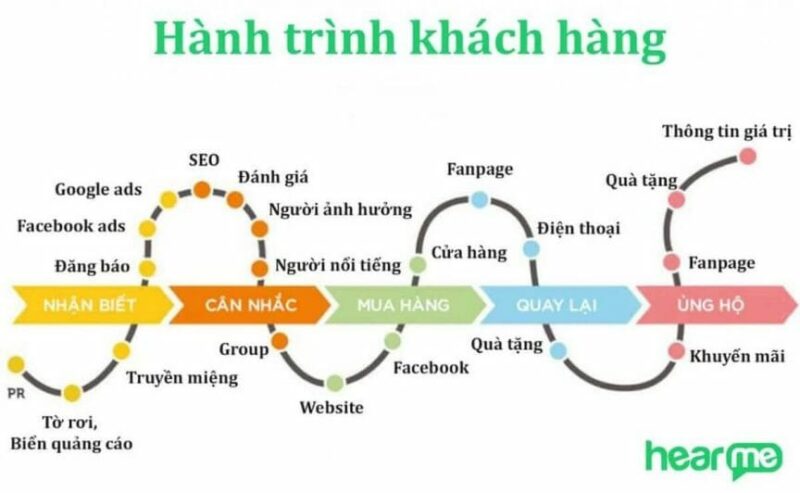
Here are some questions you can ask yourself while researching the customer journey:
- What are the ways customers begin their journey?
- What does their first impression look like?
- What touchpoints will they encounter in the first few days, weeks, months, etc.?
- What is the final touchpoint of the journey and where do they end up?
- Do you have one or require multiple customer journeys?
From these questions, you can measure the difference between the beginning and end of the journey to fill the gaps in your customer understanding strategy. Once you understand the next steps for the customer, you can quickly find commonalities to devise a strategy and obtain the information you want.
Step 3: Set specific goals for customer experience metrics
Don’t just track customers, measure the customer experience. This is one of the activities that businesses need to focus on to bring the highest business value. To track the customer experience journey, you need to map out their lifecycle, which will yield the highest ROI.
Additionally, setting specific goals for customer experience metrics will help businesses prevent potential problems to resolve them promptly, providing customers with the best experience.
Step 4: Conduct surveys, collect customer information
Once you have set goals for the customer experience, this step is where you should start surveying specific parts of that journey to better understand your target customer group.
You can use one of the two survey methods below or a combination of both:

- Questionnaires: include a list of questions that respondents can answer individually.
- Interviews: involve asking respondents a series of questions, followed by additional questions based on their answers.
For example, if you want to conduct research through interviews, focus groups, or by tracking online feedback collections via in-app and on-site surveys.
If you believe your product plays a significant role in your customers’ lives and affects them daily, you should use personal interview methods like a focus group with a long questionnaire.
By applying survey methods, you will understand what customers think about your products and services and which stage is most suitable for them. This will help you generate new ideas and promptly address any issues that arise to give customers what they want.
Step 5: Develop a strategy that aligns with customer insights
Finally, once you have obtained customer insights through surveys and data analysis, the business can use this information to develop strategies aligned with customer insight to achieve business goals. This is a crucial step for the business to take action and implement strategies that are appropriate for customer insights.
| Reference: How to build a successful business strategy with the BSC model |
What are customer insight research tools?
1. Google Analytics
Google Analytics is considered an excellent tool for all businesses, especially for Marketers who use GA to track and measure website metrics. It allows you to know the exact traffic and demographic segmentation of your customers to display customer status and bounce rates by day, month, year, etc.
In particular, Google Analytics also tracks customers through the purchasing process, which is very useful for retail websites and marketers. You can set up a list of URLs that customers click through when they make a purchase or complete a goal, and the Goal Funnel will track the number of customers who have clicked.
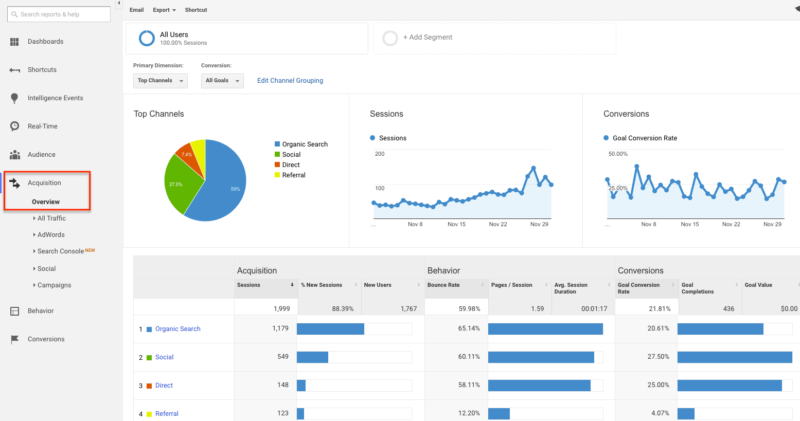
Additionally, GA tells you how many people abandoned their purchase at a specific stage, so you know what needs to be modified or improved in your process and strategy to prevent customers from leaving your page.
2. Google Trends
As its name suggests, Google Trends displays the trends people are most interested in, as well as the highest search volumes from users. When a keyword is searched by many people, Google Trends will track those keywords to provide metrics, such as the trend of search volume for that keyword by week, month, year, etc.From this, you can build a keyword set for your business, understand what potential customers are interested in, and use it to create a competitive advantage.
3. YouTube Analytics
YouTube is another popular marketing platform that most companies use to promote their work culture, products, services, and infotainment content. By simply creating an account and uploading content related to your business’s products, you can gather detailed information about your target customer group.
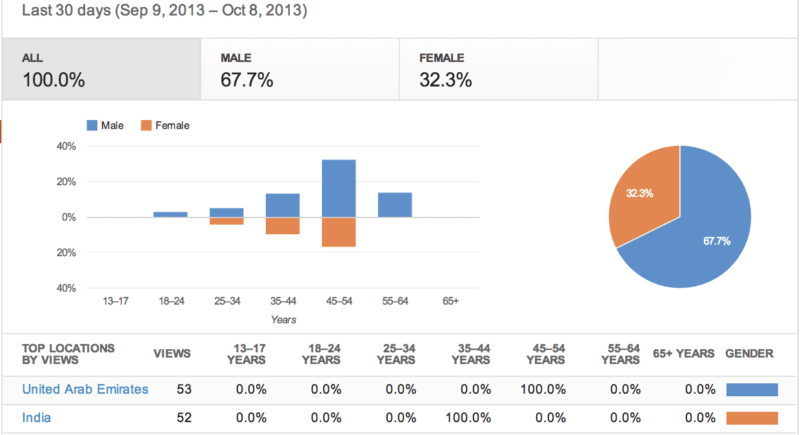
YouTube Analytics is an excellent tool that tells you everything about your audience, from demographics, watch time, popular videos, and more. From these insights, you can evaluate and classify your customer groups to adjust your strategy to be as suitable as possible.
4. Facebook Audience Insights
Facebook is one of the largest social media platforms with a huge source of information that businesses can use to effectively analyze customer insights. In Vietnam, there are currently over 90,000,000 Facebook users, and this number is expected to grow strongly in the future.
Thanks to this platform, marketers and salespeople can learn details about any audience you search for, such as demographics like age, gender, lifestyle, occupation, and track likes and engagement levels on the platform.
This information makes it easier to implement strategies and understand customers. It helps businesses accurately grasp customer insights to serve effective communication programs and business strategies.
5. 1Office CRM Software
1Office CRM is an effective and professional customer management software trusted by over 450,000 users and 5,000 businesses. With many smart features, the software helps businesses store all potential customer information centrally on one system.
CRM software from 1Office helps businesses thoroughly solve the problem of managing, caring for, and storing customer information. This helps minimize the loss of potential customers during the consultation process, allowing businesses to capture the entire customer status and identify customer insights most effectively.
<iframe title="
In addition, the software helps businesses manage and store all customer information centrally on a completely secure platform. Important information here includes: personal information, transaction history, contact history, care process, etc.From this CRM data, businesses will save maximum time and effort in analyzing customer insights and developing Marketing and business strategies that suit customer needs.
Frequently Asked Questions about Customer Insight
How do you define customer insight?
Customer insight is data about customers, such as behavioral patterns, personal information, preferences, purchase history, etc. Any data collected through customer feedback or analysis is referred to as customer insight.
What is the most important element of customer insight?
Setting goals is one of the most crucial elements of customer insight. Once that’s done, you need to determine where the data comes from, how you will collect and analyze it, and the quality of that data.
How do you use customer insight?
Businesses worldwide use customer insights for various purposes. For example, Netflix uses customer insights to create personalized pricing, marketing, and content recommendations. You can use customer insight data to improve processes, increase customer satisfaction, solve customer problems to reduce bounce and churn rates, create customer-specific products/solutions, and more.
What are the elements of Customer Insight?
- There are four key elements of customer insight:
- Consumer research
- Database Marketing Analytics Team
- Data quality
- Want insights to improve experience and conversions?
- Capture customer feedback to improve customer experience and increase conversions.
Thus, the article above has introduced users to what customer insight is, as well as its role and importance for businesses. We hope this article provides users with useful knowledge to build effective marketing strategies, create a competitive advantage, and promote comprehensive business development. Using 1Office CRM software is an effective and professional solution that helps businesses manage customer data and marketing campaigns to quickly optimize sales revenue.
For more details, please contact:
- Hotline: 083 483 8888
- 1Office Fanpage: https://www.facebook.com/1officevn
- Youtube: https://www.youtube.com/c/1OfficeNềntảngquảnlýtổngthểDoanhNghiệp