


 10/05/2026
  146 views
Marketing has been and continues to be an essential field in today’s open economy with ever-increasing competition among businesses. Marketing Automation is currently a trend in the Digital Marketing industry. But do you understand exactly what Marketing Automation is and how it can help you grow your business? Let’s find out with 1Office in the following article!
Mục lục
- I. What is Marketing Automation?
- II. Why should businesses use a Marketing Automation strategy?
- III. Marketing Automation in B2B and B2C
- VI. The Marketing Automation Process in Digital Marketing
- V. Considerations for businesses when choosing to use Marketing Automation
- VI. Strategic Benefits of Applying Marketing Automation
- VII. Conclusion
I. What is Marketing Automation?
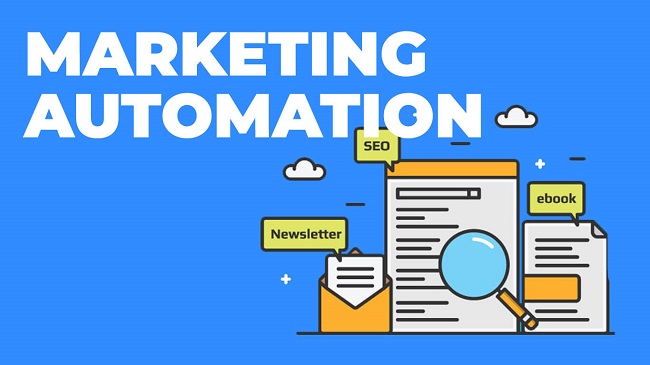
Marketing Automation is the use of software to automate marketing processes such as customer segmentation, customer data integration, nurturing customers according to pre-set scenarios, and scaling, while also improving brand engagement, conversion rates, and conversion value.
It includes the ability to measure effectiveness for continuous improvement (better planning, execution, measurement, and evaluation) of marketing campaigns.
II. Why should businesses use a Marketing Automation strategy?
1. Better reach and nurture potential customers
Using marketing automation software makes maintaining and nurturing potential customers easier as it eliminates the need to spend time connecting with each customer individually. Use marketing automation to focus your time on social media, talking to the right people who are genuinely interested.
These platforms help you reach potential customers from the very beginning of their interaction with your business. All customer information such as full name, phone number, email, number of visits, etc., is stored in the data system to serve for better customer interaction.
When customers automatically message the business through the website or fan page, they will receive automated messages and then be transferred to a chat window to interact with a consultant.
Read more: Effective Digital Marketing Planning Process for Businesses
2. Build relationships with customers
Relationship marketing is about understanding the needs of and regularly updating individual customers with information about products/services.

By using marketing automation platforms, businesses can personalize relationships with each customer through care programs and campaigns tailored to individual customer needs to maintain long-term relationships.
Marketing Automation not only helps sales staff understand customer psychology and preferences but also helps them build rapport and get acquainted with them early on through automated content and emails. Instead of making calls and talking to them with a pre-written script that may not be effective, a data-driven marketing campaign will capture the customer’s attention much more.
3. Increase profits for the business
The cost of investing in Marketing Automation is not small. However, when used effectively, the benefits it brings are completely outstanding.

Let’s look at some statistics on the use of Marketing Automation platforms:
- According to a report surveyed by B2B marketers: Lead nurturing programs through marketing automation help increase sales opportunities for businesses by 20%.
- Investment in Marketing Automation accounted for 33% of the marketing budget – according to Gartner’s CMO Spend Survey.
- 78% of Marketers recognize Marketing Automation software as one of the core keys to increasing business profits.
- By 2020, 85% of customer relationships with businesses will be managed without human interaction, according to the Gartner Customer 360 Summit.
Read more: Steps to build a Marketing process applicable to all industries
4. Marketing automation tells you where to focus
Marketing Automation software will tell you who needs to be converted and when they are likely to convert. There are 2 places to discover this important information.
Knowing where visitors are on their buyer’s journey and which calls to action compel them to act the most is the formula for success. Place the most compelling call to action on the page that attracts the most viewers, and you will achieve a high conversion rate from potential prospects.
5. Shorten the sales cycle and save costs for the business
The next benefit of Marketing Automation is saving time and costs for the business.
According to a 2016 report on Marketing Automation by SoftwareAdvice, businesses that use Marketing Automation platforms for customer care can increase their truly potential customers by up to 451%.

Additionally, the system saves customer information and interaction history, helping the sales team filter and focus on customers who are certain to convert.
Marketing Automation is extremely beneficial for businesses as it helps track customers from their very first interaction with your company. This makes it easier for businesses to monitor and segment customers based on their potential.
Read more: The most accurate KPI template for a Marketing Manager position
6. ROI Reporting
Not only does it help expand revenue opportunities, but Marketing Automation also serves as a right-hand tool for reporting on marketing execution effectiveness.
A Marketing Automation platform can help users check the status and effectiveness of marketing channels in a specific and detailed manner. Campaign performance reports are also provided quickly and systematically by Marketing Automation. This helps you make predictions and decisions to reasonably improve marketing effectiveness.
III. Marketing Automation in B2B and B2C
Businesses of all sizes can benefit from Marketing Automation. However, how they use it will depend on whether they are a B2B or B2C company.
Although both types of businesses aim to improve conversions and revenue, there are differences in how they achieve that goal. The comparison table below shows the differences in how B2B and B2C companies approach Marketing Automation.
| B2C | B2B | |
| Objective | Brand building |
|
| Strategy |
|
|
| Result | Profit | Profit |
For B2B businesses that want to establish their identity as a reputable expert in their industry, providing premium information and expert knowledge is a great way to do so.
Conversely, for B2C businesses, the focus is often on brand building. Additionally, it’s about giving customers a reason to return, and their messages often include things like:
- Abandoned cart reminders
- Personalized product recommendations
- Offers tailored to specific customer types.
VI. The Marketing Automation Process in Digital Marketing
A marketing process using Marketing Automation tools is carried out through the following steps:
Step 1: Plan the marketing strategy
In this step, you need to perform tasks such as selecting target customers, researching user behavior, identifying the product to be marketed, developing a pricing policy, etc.
Step 2: Select automated marketing tools
Currently, there are many forms of marketing that help you directly reach your target customer group. Depending on the campaign’s objectives and user habits, you can choose suitable automated marketing tools.
Step 3: Content planning
A marketing campaign cannot be without content. For automated marketing campaigns to achieve the best results, you need to create engaging and attractive content for customers.
Step 4: Implementation
Research keywords, update content, and run marketing campaigns on social channels.
Step 5: Lead generation
When a customer clicks on your link, the tool will automatically collect that customer’s contact information and convert them into a lead.
Step 6: Lead nurturing
Based on the customer’s needs and habits, send appropriate nurturing content.
Step 7: Closing the deal
Quality leads will be transferred to the sales team to close the deal.
See more: The 4Ps of Marketing and effective marketing strategies for businesses
V. Considerations for businesses when choosing to use Marketing Automation
1. Customer support policy
The level of support provided by your marketing automation platform provider is crucial, especially when it comes to timely troubleshooting. Due to the complexity of the algorithms, technical issues with Marketing Automation require resolution by highly skilled specialists.
When researching and selecting a Marketing Automation platform, you need to understand the provider’s incident resolution support methods and policies across various channels like ebooks, webinars, forums, etc. Alternatively, you can look for reviews of their support team. A good support team will acknowledge your request and respond within 8 hours.

2. Free trial
Most Marketing Automation providers allow customers to experience the service for a period of 7, 14, 30, or even 60 days. When trying the product, you should pay attention to your experience with the software. Do you find it easy to use, and is the software suitable for your business’s requirements and capabilities? From there, you can make your choice.
3. Pay attention to costs
In some cases, platforms may have “hidden costs” (e.g., additional fees for certain activities or support). Ideally, you should choose a platform without any of these hidden costs, although if you do choose one that may charge extra, it’s important to be aware of those fees (and what triggers them) beforehand.

The reason this is important is that providers often charge based on the number of contacts in your database or the number of emails you send per month. So, if you have a large database but don’t plan on sending daily emails, you might want to pay per message.
Conversely, if you have a small database but want to send three or four emails per day (not recommended), you might want to pay based on database size.
4. Limitations
Some Marketing Automation platforms impose limits on the number of emails you can send or the number of users you can have in the system (or charge extra if those limits are exceeded). Similar to considering costs, you should look for a platform that offers unlimited sends and users so you can easily scale your customer base when needed.
5. Ease of use
When choosing a Marketing Automation platform, you need to evaluate the user-friendliness of the interface and the simplicity of its operations. Research video demos beforehand or request a trial to get the most authentic experience and evaluation.
6. Reporting and analytics features
Find out what metrics the Marketing Automation software uses to analyze data. How often are reports generated? In what format can data be exported? Excel, CSV, or PDF? How is the data filtered? Are you satisfied with these capabilities?
The entire system must be simple and easy to manage. The more complex a tool is, the harder it is to benefit from all the features it offers. This is also one of the challenges that marketing automation tool providers are facing: how to increase the tool’s capabilities without sacrificing its ease of use.
VI. Strategic Benefits of Applying Marketing Automation
Marketing Automation is not just a technical tool, but also a strategy that helps businesses improve marketing efficiency and optimize business operations. When implemented correctly, Marketing Automation offers many strategic benefits:
Optimize marketing costs
Businesses no longer need to waste manpower on repetitive tasks like sending mass emails, reminding customers, or managing lead lists. Marketing Automation helps automate these tasks, saving time and reducing operational costs, while allowing resources to be focused on more creative and strategic campaigns.
Personalize the customer experience
Customers increasingly expect to receive messages tailored to their needs and behaviors. A Marketing Automation system can segment customers and send automated messages based on behavior, purchase history, or their stage in the customer journey. This creates a sense of being valued, increases satisfaction levels, and boosts conversion rates.
Increase the effectiveness of marketing and sales coordination
Marketing Automation helps synchronize customer information between departments, from marketing to sales. Sales staff can immediately see a customer’s behavior and needs, allowing them to develop more precise care scripts. This coordination helps reduce lost opportunities, enhance sales performance, and improve deal-closing rates.
Improve the speed of data-driven decision-making
The system automatically collects and analyzes data on customers, campaigns, email open rates, click-through rates, and website behavior. This provides businesses with accurate and timely insights to make strategic decisions, optimize budgets, adjust content or customer care strategies, and enhance ROI and overall effectiveness.
VII. Conclusion
In this article, we have explained what marketing automation is. With the benefits that Marketing Automation offers, it will surely become a powerful trend and be used even more widely in the future.
One of the common misconceptions about Marketing Automation is that it is mainly for B2B businesses, and is basically just an email system that sends pre-scheduled messages (or even spam).
While it’s undeniable that most B2B businesses benefit from marketing automation, this very success suggests that B2C businesses can also successfully apply marketing automation to their operations. This is the tool that helps increase efficiency and further boost business profits.
You need to remember that before using Marketing Automation, you must ensure you have the time and resources to dedicate to software training. 1Office hopes that through this article, you have gained more information about this powerful tool that can help you solve your business’s marketing challenges. We wish you success!
Additionally, if you are facing difficulties in business management, sign up for a trial to receive a consultation, and 1Office will help you resolve your challenges quickly!
















