13/05/2026
  410 views
Customer Retention Rate is one of the most important factors for any business. It is a key factor that strongly influences revenue, profit, customer experience, and more. In this article, let’s explore what Retention Rate is and methods to improve it to help businesses operate more effectively.
Mục lục
I. What is Retention Rate?
To answer the question “What is Retention Rate?” in the next section, let’s explore its concept and benefits when businesses use it as a formula to calculate the performance of the products they provide.
1. Concept
Retention rate can be understood as the customer retention rate. In marketing and product management, the retention rate can affect the percentage of customers who are willing to continue spending money on a specific product/service over a certain period.
2. Why is customer retention rate important for businesses?
For retail businesses, having a high customer retention rate is an extremely important factor. In this section, let’s explore the reasons why the Retention rate is so important for an organization:
-
Helps significantly increase profits:
Research has shown that a 5% increase in customer retention can lead to a 25% increase in profit. This result is achieved because: Customers who continue to use a product for a long time are more likely to trust and value the products your business provides. From there, this customer segment can become potential customers for new products as well as loyal customers of the organization.
-
Highlights product issues that the business needs to address
It can be seen that when an organization’s retention rate decreases, it indicates that the product provided by the business no longer has enough features to satisfy consumers or is no longer in line with public tastes. Therefore, researching and calculating the Customer Retention Rate will help the organization understand the problems it is facing.
-
Saves costs compared to acquiring new customers
According to research, maintaining a loyal customer base can help businesses increase profits by 25 to 95%. In addition, having a loyal customer base allows the organization to save on various marketing and advertising costs.
See more: What is Customer Service? Things you should know about Customer Service
II. How to calculate the customer retention rate
1. Types of retention rate
After understanding what Retention Rate is and its importance, in the next section, let’s explore the main types of Customer Retention Rate that are widely used by businesses:
-
User-based retention rate
How it works: Measures the percentage of a business’s subscribers or paying users who continue to use the product. Focusing on this segment prioritizes the needs of users who pay for your product, and their retention rate will directly impact the organization’s profit.
Note: Focusing on this type of rate helps your business keep all users satisfied but may not help you generate profit. Additionally, user retention rate is a suitable metric for you if your business relies on advertising instead of a subscription model.
-
Time-based retention rate
N-Day Retention: Measures the number of users retained on a specific day after they sign up. N-Day retention is valuable if you expect people to use your product every day, like a mobile game.
Unbounded Retention: The number of users who returned on a specific day or any day after. This retention rate is meaningful when you don’t expect people to use your product every day.
2. Formula for calculating Retention Rate
To calculate the customer retention rate for a specific period, a manager will need to have 3 factors ready:
- The number of customers you have at the beginning of the measurement period.
- The number of new customers who signed up for your product during the measurement period.
- The number of customers you have at the end of the measurement period.
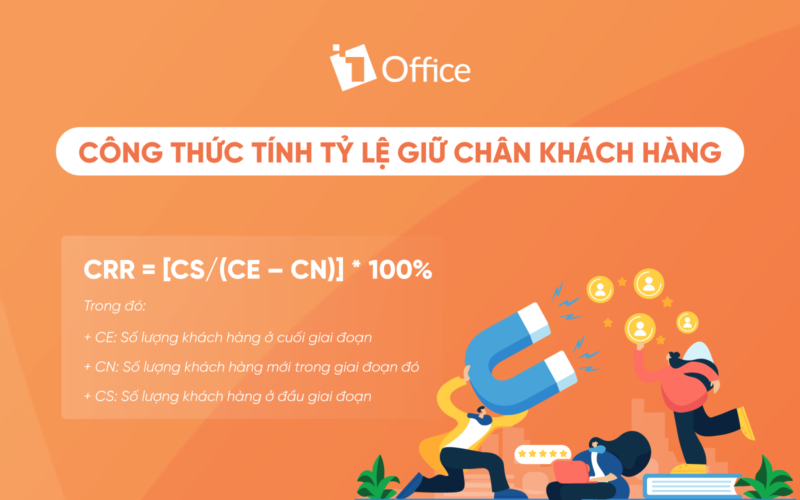
Example:
Imagine you have been selling a SaaS software product, billed monthly, for a few years. You want to determine your customer retention rate for the previous calendar year. After reviewing the customer data, you find:
- You had 521 existing customers as of January 1.
- You acquired 66 new customers between January 1 and December 31.
- As of December 31, you had 490 customers.
Applying the formula, we get:
490 – 66/521 = 81.3%
=> Your customer retention rate is 81%, which most industries agree is a good rate.
3. Factors Affecting a Business’s Customer Retention Rate
Poor Service Experience:
A study has shown that 32% of customers leave a brand they love after just one bad experience.
Furthermore, only 1 in 26 dissatisfied consumers will voice their feedback. The other 25 customers simply remain unhappy and may even use it as a justification to terminate the service when the time comes.
Lack of Focus on Consumer Behavior Analysis:
Product updates are a necessary and sufficient factor that organizations must implement to maintain customer retention rates. Therefore, consumer behavior analysis must be conducted periodically.
Product Value is a Key Factor in Customer Retention:
Research shows that:
64% – Customers identify value for money as an important factor in brand loyalty
50% – Agree that if a brand offers the best quality products and services, they will purchase again
If customers are not satisfied with their purchase, they are unlikely to return. But in reality, product value builds customer loyalty.
Read now: What is Customer Relationship Management? Steps to Build an Effective Customer Management Process
III. 4 Strategies to Improve a Business’s Retention Rate
1. Personalize Products to Improve the Customer Experience
Personalizing the user’s product/service experience has been a recent trend among businesses. Research has shown that:
- 54% of brands want to personalize loyalty rewards based on past purchases.
- 44% of customers say they will reuse a product when the shopping experience is personalized.
- 71% of consumers feel frustrated when a business does not personalize its products
Some ways to personalize products include: email marketing, programs with included gifts, vouchers, etc.
| Learn more: Types of marketing strategies for businesses |
2. A well-structured, professional product onboarding process
The first impression of a product is always one of the key factors that helps consumers form a favorable view of what your business offers. Research shows that most customers will recall the first experience they had with your brand.
A good product onboarding process can help your business succeed. It should be personalized (as much as possible).
3. Always update and promote your product
When you understand customer psychology and know what they like/dislike, you can customize your business’s approach and better meet the needs of potential customers.
To evaluate customer experience and needs, businesses can use the NPS (Net Promoter Score) method. NPS is often considered the gold standard for measuring customer experience.
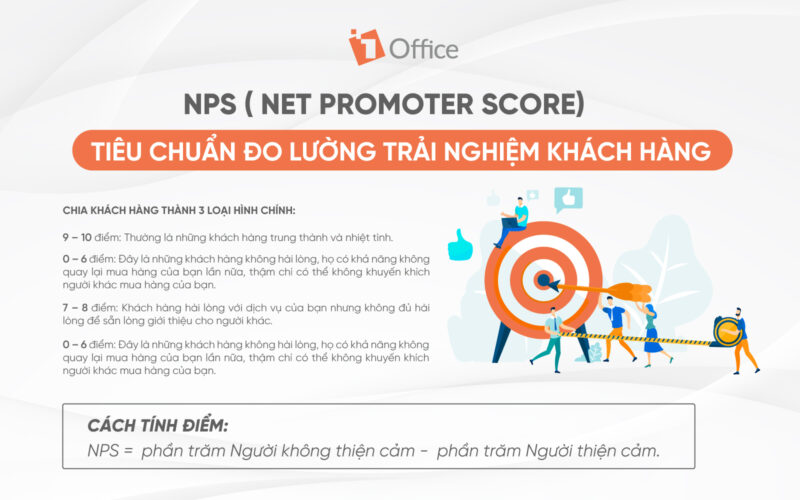
For example: If 10% of respondents are Detractors, 20% are Passives, and 70% are Promoters, then your NPS score would be 70 – 10 = 60.
- Detractors (score 0–6): are dissatisfied customers who can damage your brand and impede growth through negative word-of-mouth.
- Passives (score 7-8): are satisfied but unenthusiastic customers who are vulnerable to competitive offerings.
- Promoters (score 9-10): are loyal enthusiasts who will keep buying and fuel sales growth by referring others.
4. Build promotional and customer appreciation programs
Creating marketing programs such as promotions, product discounts, and customer appreciation gifts will help your business increase its product/service repurchase rate. In addition, having a standard customer care process with such promotional programs and campaigns also helps increase the organization’s retention rate. If you measure loyalty by the length of time a customer has been with you, you can consider sending reward gifts at important intervals, such as six months and one year.
Alternatively, say thank you and encourage promoters to refer their friends by incorporating a direct reward in your survey response.
| Read more: What is Customer Insight? The most effective and accurate way to identify customer insights |
IV. Case Study on ELF’s Retention Rate – A Leading US Cosmetics Brand
To better understand what retention rate is and its practical application in business, we will discuss the retention rate of ELF – one of the leading cosmetics brands in the US.
1. Using Email Marketing to Introduce Products and Retain Customers
Understanding that the first purchase is the foundation for subsequent transactions, the company encouraged collecting consumers’ personal information, typically the customer’s personal email.
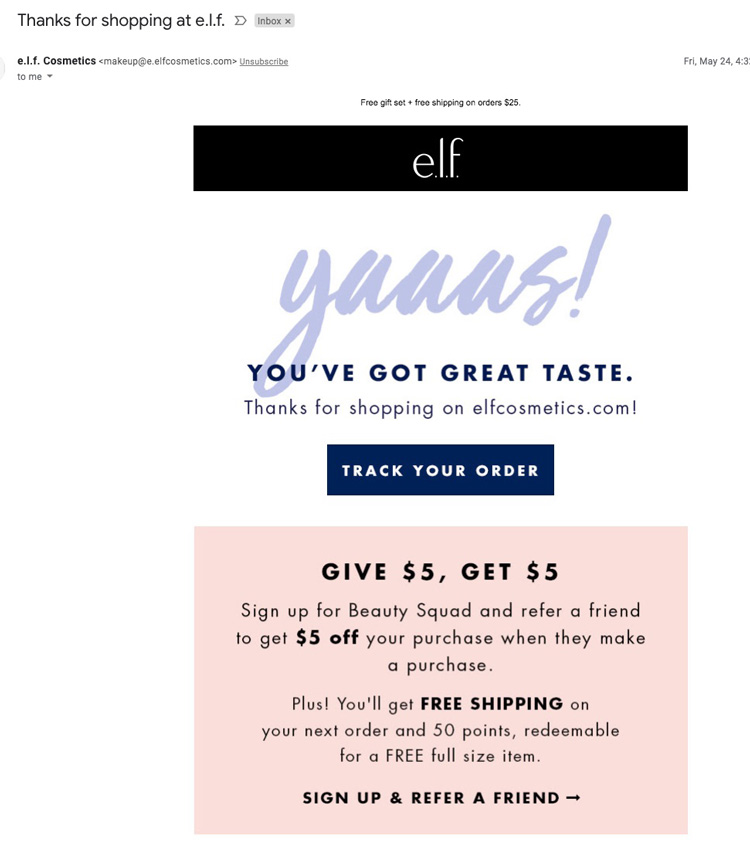
Using email marketing helps the company enhance product personalization. Additionally, they also create various types of incentives. For example: You get a $5 discount. You get free shipping. 50 points are added to your account, etc.
2. Enhancing Customer Experience with Incentive Programs
You can see the email below from ELF when they had a shipping delay:
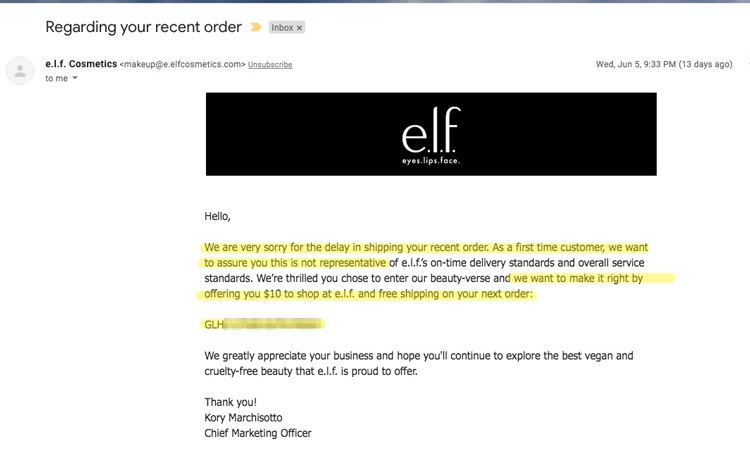
As you can see, when an issue occurred with an order, the company offered a $10 discount coupon AND free shipping on the next purchase. All these solutions were implemented without waiting for a customer complaint, thereby increasing positive sentiment towards the company’s service.
3. Creating a Tiered Loyalty Program to Deliver Long-Term Value
ELF’s strategy is as follows:
- Account status – Each level is labeled and awarded different rewards such as: Discount codes, free shipping codes, etc.
- ELF creates various types of rewards to maximize customer retention – from early access to sales, free beauty kits, and full-sized products.
- The program is divided into three different tiers to reward long-time customers and give new customers something to strive for.
- Focus on lifetime value – Less loyal customers are rewarded with only 2 points per dollar, while top-tier members are rewarded 3 times as much.
V. Improve Customer Experience with 1Office Software – CRM Feature
As a module of the 1Office all-in-one business management software, with a customer base of over 5,000+ businesses and more than 400,000 users. When using the customer relationship management software CRM of 1Office, you will receive the following benefits:
- Manage customer information on the software, making customer lookups easy and convenient.
- Update the person in charge to quickly manage the status of the business’s customers.
- Create order and contract information directly on the system.
- Integrate with smart features such as: sending emails, making calls or texting customers, and conveniently signing and approving quotes and contracts right on the software. You can use digital signature software to sign documents and contracts anytime, anywhere, quickly and easily.
In this article, we have answered the question What is retention rate? and discussed effective methods to increase customer retention. We hope that the information provided by 1Office will be useful for your business.
Contact and reference information at:
1Office Fanpage: https://www.facebook.com/1officevn
Youtube: https://www.youtube.com/c/1OfficeNềntảngquảnlýtổngthểDoanhNghiệp