11/05/2026
  816 views
Project planning is the starting point of the project management process and a critical factor that determines a project’s success or failure. Therefore, the project planning process must be carried out meticulously and systematically to guide the project in the right direction and meet customer requirements. The following article will help project managers better understand project implementation planning and guide them on how to build a systematic project plan from A to Z.
Mục lục
- 1. What is project planning? The purpose and role of project planning
- 2. Types of project plans by specialization
- 3. How is the project planning process implemented?
- Step 1: Define the project objectives
- Step 2: Develop a risk management strategy
- Step 3: Define project activities
- Step 4: Identify project beneficiaries
- Step 5: Identify the project implementers
- Step 6: Determine the project timeline and location
- Step 7: Establish the project implementation budget
- Step 8: Determine how to measure project results
- 4. What criteria are used to evaluate an effective project plan?
- 5. Common Mistakes in Project Planning
- 6. Challenges in Project Plan Implementation and How to Handle Them
- 7. 1Office – The Superior Project Management Solution to Triple Your Efficiency
- 8. Frequently Asked Questions
1. What is project planning? The purpose and role of project planning
Project planning is the process of planning and organizing the activities, resources, and time required to complete a project.
The main purpose of project implementation planning is to establish a set of detailed instructions to guide the project team precisely on what they must do, when to do it, and what resources to use to successfully deliver the project’s outcomes.

The role of project planning
Project planning provides an overall picture for the project team and stakeholders and is a solid foundation for the project management process. Specifically:
- The project plan helps define the specific objectives of the project, while also outlining action strategies to achieve those objectives and considering potential risks.
- Project planning helps identify the tasks that need to be performed in the project and assign them to team members. This ensures that each person has clear responsibilities and contributes to the project’s success.
- The project plan serves as a reference framework for managers to effectively control project time and resources, ensuring that tasks are completed on time and meet the project schedule.
- Project planning helps devise solutions to manage risks in the project, minimize negative impacts, and ensure the project is completed on time and with the best quality.
Plan projects and build effective work schedules with:
>> Top 10 Project Management Software for Effective Project Planning and Progress Monitoring Today
2. Types of project plans by specialization
Strategic Plan
- A strategic plan is the overall plan of an organization or business to achieve long-term goals. This plan is usually developed over a long period and focuses on developing strategies to compete and grow in its business sector.
- The objectives of a strategic plan often include revenue growth, strengthening market position, increasing profits, and setting the future direction for the organization.
Action Plan
- An action plan is a detailed plan to achieve short-term goals or solve a specific project issue. This plan focuses on the specific actions to be taken, completion deadlines, necessary resources, and the person in charge.
- Action plans are often used to address temporary or urgent issues, but can also be used to achieve short-term or medium-term goals.
Operational Plan
- An operational plan is a detailed plan for carrying out activities within a specific scope (organizational units) and timeframe (year, quarter, month, day, etc.). Operational plans are typically created for a shorter period than strategic and action plans and are updated frequently to meet actual needs.
- This plan focuses on the activities needed to achieve the strategic objectives set for the project, including departmental tasks, processes, and resource management. The goal of an operational plan is to ensure the project execution process runs efficiently and achieves high performance, while also meeting the needs of customers and stakeholders.
>> Plan projects with Excel simply and easily:
12+ Professional Project Management Templates in Excel for all project types
3. How is the project planning process implemented?
Step 1: Define the project objectives
The first step in the project planning process is to determine the project’s “destination.” This process includes:
- Identify the problem or need: First, the manager needs to identify the problem or need that the project will address. This is a crucial basis for setting project objectives. Once the need is clarified, all project efforts will focus on meeting the requirements of the customer and project stakeholders.
- Set SMART goals: The established goals must adhere to the SMART principle – meaning they must be Specific, Measurable, Achievable, Relevant, and Time-bound.
- Focus on the end result: Ensure that the set goals focus on the final outcome the project aims to achieve. These are developmental results with specific meaning and value that the project’s intervention will bring.
Step 2: Develop a risk management strategy
Achieving project objectives is always influenced by factors beyond the direct control of the project manager. Therefore, it is important to monitor these factors to validate the assumptions made during project design. Thus, in the project planning steps, risk assessment is the most critical factor ensuring the feasibility of the entire project.
The risk analysis process can be carried out in the following steps:
- List each project outcome/objective and its related activities.
- Name and describe the risk.
- Describe the adverse impact of this risk on the activity/outcome.
- Determine the risk level: Low to medium risk or high risk.
- Outline a risk response strategy: Note that if the risk is high, consider changing the project structure to prevent potential damage.
>> Read more: 6 steps to build a risk management process for businesses
Step 3: Define project activities
- Project activities are the specific tasks that need to be performed to complete the project’s objectives and deliverables.
- Defining project activities will be based on the objectives and outcomes established in the first step. These activities are often divided into phases and carried out according to a specific schedule throughout the project’s execution.
Step 4: Identify project beneficiaries
A description of the beneficiaries is a mandatory part of any project plan, and it helps the project team clearly understand the project’s most important audience. Information describing the beneficiaries (target group / end beneficiaries) includes:
- Who are they?
- How will they participate in the project?
- How will they benefit from the project’s results?
- How many beneficiaries will benefit from the project?
Step 5: Identify the project implementers
During the project planning process, the project team is the primary resource needed for project execution. In addition to the core project team, the project may involve partner organizations or external suppliers.
The following information should be described specifically and in detail in the project plan:
- Who are the members of the project team?
- What positions will be on the project team?
- How many staff members will work in each position?
- What are the responsibilities of each position on the project team?
- Experience of key personnel, describe the experience of the key individuals who will be part of the project team.
| >> Read more: 4 Steps to Effectively Plan Project Human Resources and Triple Management Efficiency |
Step 6: Determine the project timeline and location
(1) List the main activities of the project and, if necessary, break them down into manageable tasks. The main activities are identified in a summary of what the project must do to achieve its set outcomes, forming the basis for establishing the project schedule.
(2) Clarify the sequence and dependencies of the activities. Link these activities together to determine:
- Their sequence – that is: in what order the project activities need to be performed.
- Their dependencies – that is: which activities depend on the completion or start of another activity.
- In complex projects, you can write your activities on flashcards and move them around until they are arranged in a suitable sequence that reflects their interdependencies.
(3) Estimate the start time, duration, and end time for each activity. To determine the specific time for each activity, you need to make a realistic estimate of the duration of each task. Then, combine these parameters to form the activities. This way, you can determine the potential start and completion dates for each activity.
(4) Identify milestones and summarize the schedule. Milestones are key events or achievements that provide a measure of the project’s progress and help provide a target for the project team to aim for. For example: publishing a research paper, finalizing a construction design, completing construction, conducting training, or even just a key meeting.
| >> Read more: 3 optimal project time management methods to ensure on-time completion |
Step 7: Establish the project implementation budget
A good budget estimate is as important as a good project plan. Ultimately, the project’s costs and the ability to secure the necessary funding will determine whether the project is implemented.
Budgeting should be done in a group that includes experts in the field of operation and accountants or others with financial knowledge. To prepare the budget, the project should use the potential sponsor’s draft budget template.
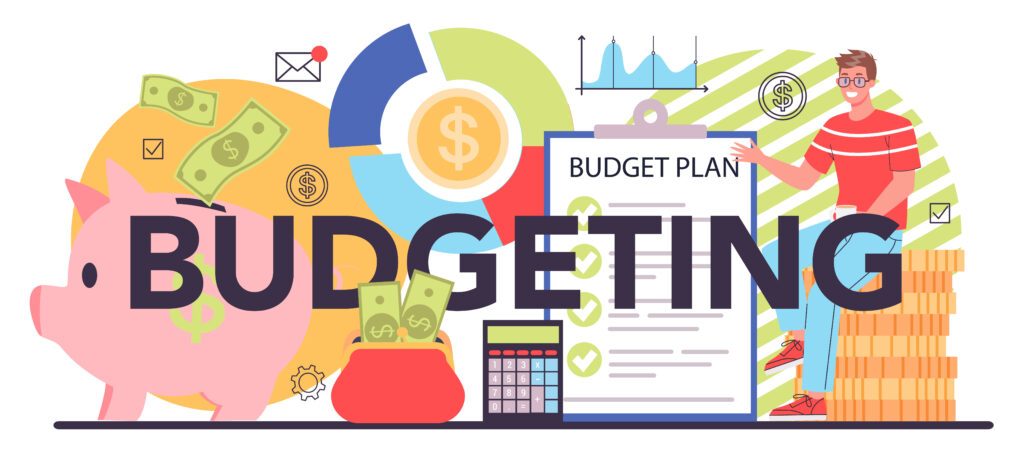
Budget preparation can be summarized in the following 5 steps:
(1) List all activities, detailed activities, and fixed costs. Start by listing all activities and breaking them down into individual inputs (materials, human resources, etc.). List all fixed costs such as office rent and operating expenses, telecommunications, and travel costs. Finally, list all human resources (e.g., project manager, finance staff, research staff).
(2) Decide on the unit of measurement to be applied to each budget line. The most common units include:
- Salary / month – to calculate personnel costs (can include not only salary but all other personnel costs such as taxes and employer deductions, insurance, etc.)
- Unit – used for equipment, materials
- Lump sum – the total amount spent on a job outsourced to a subcontractor (e.g., graphic design, construction design)
(3) Estimate the required quantity for each item. List all activities and their specific inputs to determine the quantity.
(4) Find the unit costs for each budget line.
(5) Specify the funding source. If the project needs to seek external funding, it is necessary to identify which budget lines will need to be covered by external sources and which can be covered by the project’s annual budget.
Step 8: Determine how to measure project results
The step of measuring results is closely linked to establishing project outcomes in step 1. The criteria used to measure and evaluate project results include:
- Measuring work quality: This indicator requires both volume and technical aspects. The measurement tools differ for each project. For example, with media projects, the metrics to be measured would be views, likes, shares, etc.
- Measuring completion time: Did the project complete the work on schedule?
- Measuring the budget: Was the project executed within the initially planned budget?
4. What criteria are used to evaluate an effective project plan?
A project plan is not just a document for presentation, but a “guiding star” that determines the success or failure of the project. Therefore, having specific evaluation criteria will help the business clearly see if its plan is on the right track or off-course. A good plan will reflect feasibility, management capability, and practical implementation capacity.
Key evaluation criteria:
- Clear and measurable objectives
- Purpose: Without clear objectives, a project can easily fall into a state of just going through the motions, with no clear sense of completion.
- Benefit: Helps to shape the direction and provides a basis for evaluating results.
- Good status: Objectives follow the SMART principle (Specific – Measurable – Achievable – Relevant – Time-bound).
- Poor status: Vague objectives like “make it better” or “improve efficiency” without any measurement indicators.
- Reasonable resource allocation
- Purpose: No matter how good a plan is, it will surely fail if the wrong people, money, or time are allocated.
- Benefit: Optimizes personnel, costs, and mitigates the risk of shortages.
- Good status: There is a clear allocation matrix, and each member knows their role and the duration of their work.
- Poor status: Overlapping task assignments, vaguely estimated budget, no contingency.
- Risk contingency capability
- Purpose: No project goes 100% “smoothly.” Without a contingency plan, even a small incident can derail the schedule.
- Benefit: Helps the business to be proactive and reduce damages when incidents occur.
- Good status: There is a list of potential risks with specific response plans.
- Poor status: The plan is only drawn in a “straight line” without considering worst-case scenarios.
- Feasible schedule
- Purpose: Plans often fail because the schedule is too “unrealistic” or too spread out.
- Benefit: Helps to balance implementation speed and output quality.
- Tình trạng tốt: Tiến độ được chia thành các mốc nhỏ, có deadline rõ ràng, có kiểm tra định kỳ.
- Poor status: The schedule is too rushed, causing overload, or is too prolonged, causing the project to lose momentum.
- Transparency and traceability
-
- Purpose: The more transparent the plan, the easier it is to control and adjust in a timely manner.
- Benefits: Enhances coordination among parties, minimizing errors and fraud.
- Good status: There is a periodic reporting system, and management software clearly displays work status.
- Poor status: Everything depends on verbal reports, lacks evidence, and is difficult to control.
In 2019, Airbus launched a multi-billion dollar project to develop the A350 XWB aircraft series. To avoid repeating the schedule delays of the previous A380 project, the company created an extremely detailed project plan with specific evaluation criteria: clear objectives, rational resource allocation, risk contingency, and a transparent monitoring mechanism.
As a result, Airbus reduced production time by 20%, lowered aircraft lifecycle maintenance costs by 15%, and delivered on time to major airlines like Qatar Airways and Singapore Airlines. According to Airbus’s 2020 annual report, adhering to a precise project plan helped the company secure over 900 orders for the A350 series, strengthening its competitive position directly against Boeing.
This success demonstrates that an effective project plan not only helps businesses avoid failure but also becomes a lever for creating an advantage in the global market.
5. Common Mistakes in Project Planning
In reality, many projects fail right from the initial stage simply due to careless planning. According to the PMI (Project Management Institute), up to 37% of projects fail due to errors in the planning phase. The cause is not a lack of ideas, but rather seemingly minor mistakes that lead to serious consequences: schedule delays, cost overruns, or even the complete failure of the project.
Common mistakes include:
- Setting vague, non-specific goals
- Explanation: Many plans vaguely state “improve efficiency” without any measurable metrics.
- Consequence: The implementation team doesn’t know the final goal, leading to a loss of direction.
- Solution: Apply the SMART goal principle to set specific, measurable objectives.
- Overlooking risk analysis and management
- Explanation: Some businesses focus too much on the schedule and forget to plan for unexpected situations.
- Consequence: When incidents occur (lack of funds, employee turnover, market fluctuations), the plan falls apart.
- Solution: Establish a risk list and response scenarios from the very beginning.
- Improper resource allocation
- Explanation: Tasks are assigned with overlaps or lack a responsible person.
- Consequence: Staff are overloaded, the budget is wasted, and the schedule is affected.
- Solution: Build a resource allocation matrix with a monitoring and adjustment mechanism.
- Lack of stakeholder involvement
- Explanation: The plan is created by a small group without consulting relevant stakeholders.
- Consequence: The plan lacks practicality and is likely to face opposition during implementation.
- Solution: Organize stakeholder workshops/meetings from the very beginning.
- Failing to update and adjust the plan based on reality
-
- Explanation: Many projects are planned once and then “set in stone,” with no review process.
- Consequence: When the context changes, the plan becomes outdated, and the project can easily go off track.
- Solution: Schedule regular reviews (by sprint or milestone) for flexible adjustments.
6. Challenges in Project Plan Implementation and How to Handle Them
Even with a detailed project plan, actual implementation is never easy. Because the plan is just a “map,” while the journey is always fraught with obstacles. From human factors and resources to market fluctuations, anything can cause the plan to deviate. Correctly identifying challenges and preparing solutions is the only way to keep the project on track.
Common challenges and how to handle them:
- Lack of coordination between departments
- Explanation: Departments work in silos and do not share information in a timely manner.
- Solution: Establish a regular meeting schedule, define clear responsibilities, and use a common project management software for everyone to stay updated.
- Sudden changes in resources
- Explanation: Employee turnover, budget cuts, or a shortened implementation timeline.
- Solution: Prepare a contingency fund and a Plan B for personnel; use management tools to reallocate resources quickly.
- Volatile market and business context
- Explanation: Market trends change, and customer needs are no longer the same.
- Solution: Flexibly update the plan, and re-evaluate project goals and scope after each phase.
- Lack of suitable management tools
- Explanation: The project is complex but is still managed using Excel or manual paperwork.
- Solution: Use specialized software like 1Office, Jira, or Trello to track progress, allocate resources, and report transparently.
- Difficulty in continuous risk control
-
- Explanation: The initial plan has contingencies, but new risks are not tracked in time.
- Solution: Establish a monitoring and early warning system; organize periodic reviews to update new risks.
7. 1Office – The Superior Project Management Solution to Triple Your Efficiency
Applying technology in project management has become a trend that helps businesses achieve outstanding performance. Among them, 1Office is one of the most popular and effective project management solutions on the market. The 1Office business management software helps companies thoroughly solve “painful” problems related to project planning and management, such as schedule delays, employees blaming each other, fragmented management, and more.
- Helps users create detailed project plans so that participants and departments understand their tasks.
- Simplifies the process of assigning and allocating tasks to specific individuals or groups based on job positions and departments.
- Provides intuitive and flexible management and tracking with both Kanban and Gantt chart views for projects.
- Offers reports in the form of intuitive dashboards that are updated automatically in real-time. With just one click, managers can easily identify project hotspots and make quick decisions.
8. Frequently Asked Questions
You should start with the objectives, scope of work, and desired outcomes. When these three parts are clear, it becomes easier for the business to divide tasks, schedule time, and allocate resources more accurately.
Who should be responsible for project planning?
Usually, it’s the project manager or the person in charge, in coordination with relevant departments. The planner needs to understand the overall objectives and the team’s actual capabilities to create a feasible plan.
What are the essential components of a good project plan?
It typically needs to include objectives, scope, tasks, responsible persons, a timeline, resources, a budget, and a method for tracking progress. The clearer these components are, the easier the project is to implement.
Does the project plan need to be linked to the budget?
Yes, especially for projects with significant resources or a direct impact on costs. If not linked to a budget, a plan might look good on paper but be difficult to execute in reality.
When should a business use software to create and track a project plan?
A business should use software when a project has many tasks, involves multiple people, or requires frequent progress tracking. You can consider the 1Office task management software, which helps assign tasks, update progress, and control projects more clearly than manual tracking.
In the article above, 1Office has introduced readers to the entire process of creating a methodical and professional project plan, while also providing a technology solution to help manage projects and triple productivity. For a consultation and a trial of the market-leading project management software, please contact us using the information below:
- Hotline: 083 483 8888
- Fanpage 1Office: https://www.facebook.com/1officevn
- YouTube Channel: https://www.youtube.com/c/1OfficeNềntảngquảnlýtổngthểDoanhNghiệp