


 11/05/2026
  665 views
A debt reconciliation statement is a crucial document for any business. In the course of business operations, companies will inevitably incur debts that cannot be paid immediately. These debts are often called “term debts” and are typically settled in the future, perhaps next month or even next year. To manage term debts, a debt reconciliation statement is commonly used.
So, what is a debt reconciliation statement? What are the principles and processes for debt reconciliation? Let’s find the detailed answers with 1Office in the article below!
Mục lục
- What is a debt reconciliation statement?
- The latest standard debt reconciliation statement templates
- Vietnamese debt reconciliation statement template
- English debt reconciliation statement template
- Debt confirmation statement template (for specific loans)
- Debt handover statement template (typically used internally when handing over debt management responsibilities)
- Latest debt reconciliation statement templates by year
- Detailed guide to creating a debt reconciliation statement
- Principles of Debt Reconciliation
- Purpose of Creating a Debt Reconciliation Report
- What are the requirements for a Debt Reconciliation Statement?
- Debt Reconciliation Process
- What to Note When Creating Debt Reconciliation Reports for Specific Industries
- Comparing Debt Reconciliation Reports and Financial Management Solutions:
- Some common mistakes when creating debt reconciliation reports
What is a debt reconciliation statement?
A debt reconciliation statement is a document that records the process by which a business compares the debt figures in its accounting records with the information in the contract. Importantly, it is accompanied by evidence validated by both parties involved, proving the accuracy of the figures in the books.
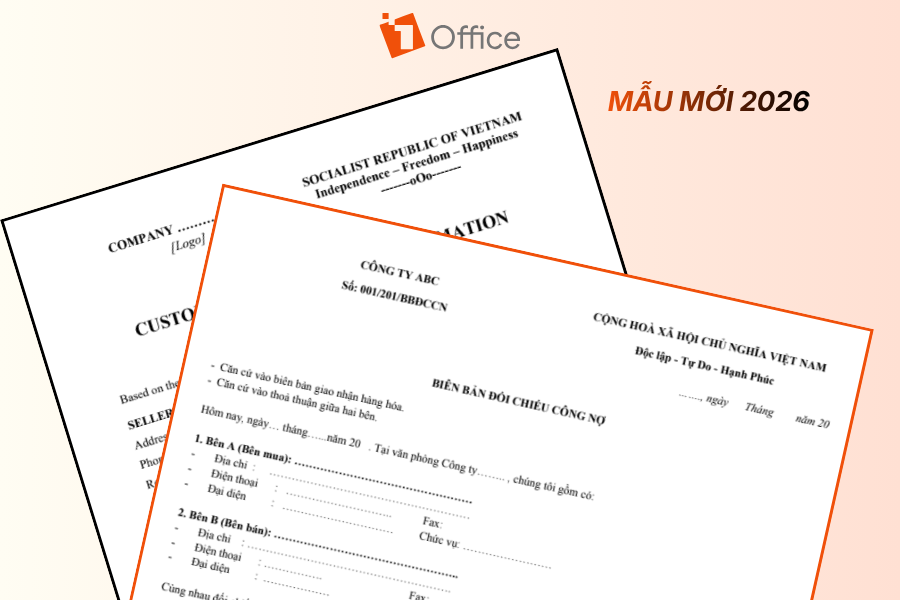
Debt reconciliation statements play a very important role; they are the basis for verifying and checking the debt payment process between the involved parties.
The latest standard debt reconciliation statement templates
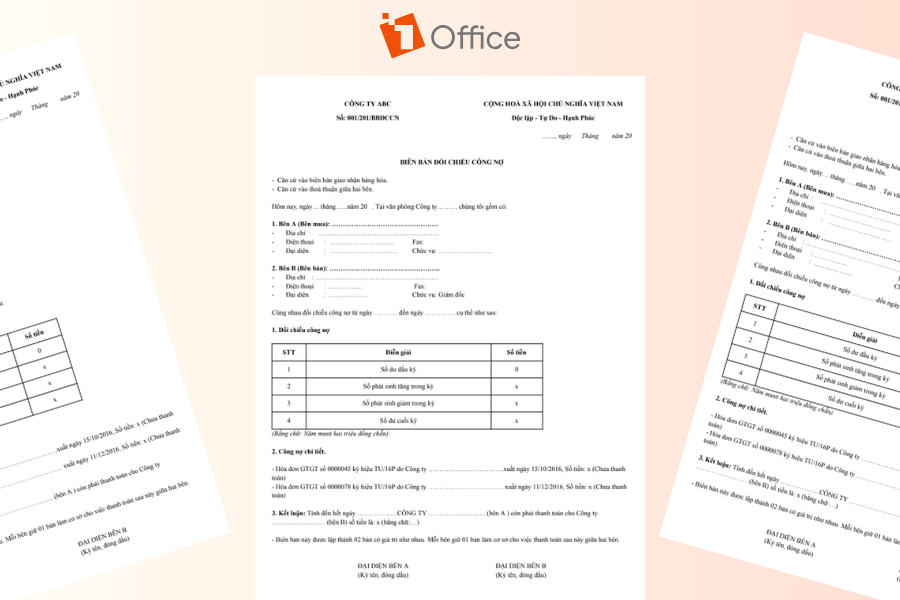
Vietnamese debt reconciliation statement template
Download the Vietnamese template HERE
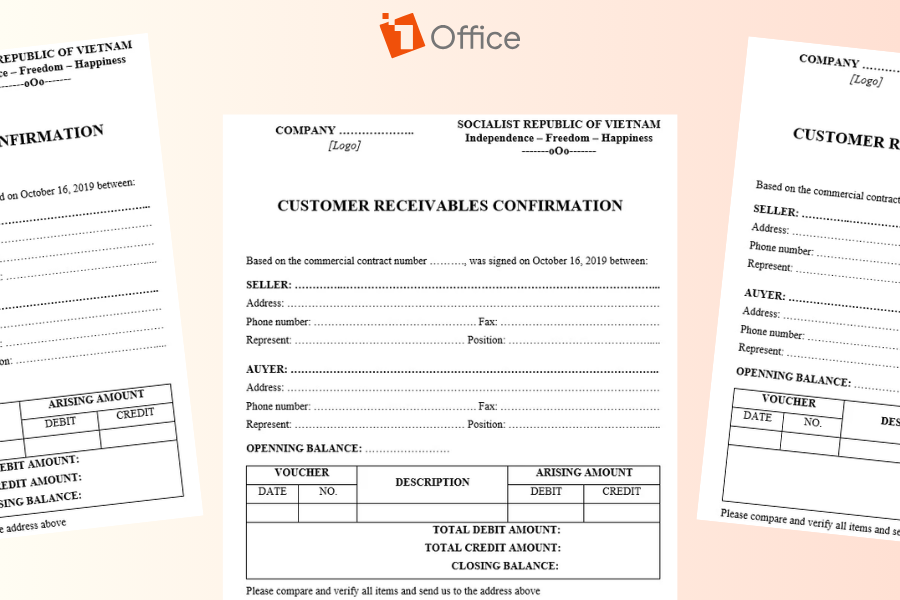
English debt reconciliation statement template
Download the English template HERE
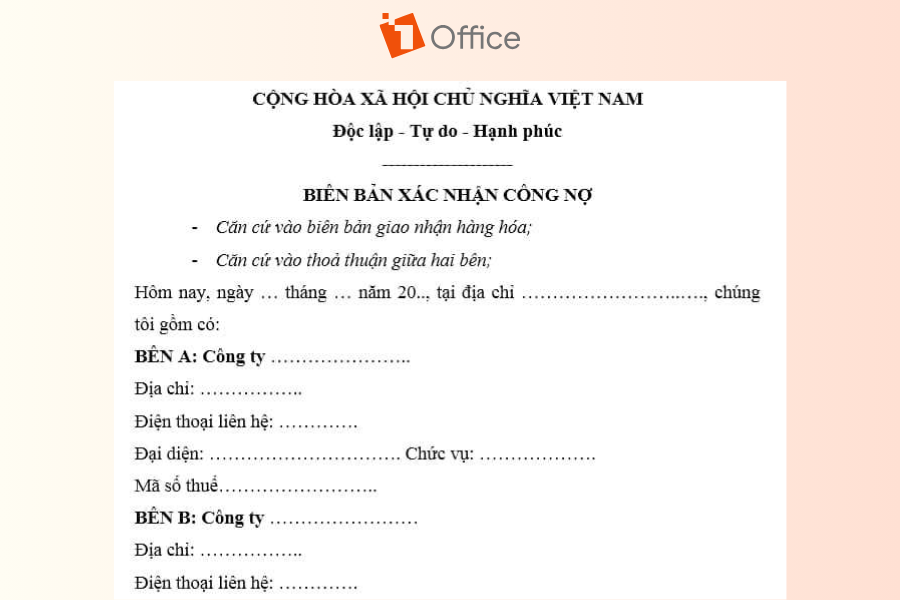
Debt confirmation statement template (for specific loans)
Debt confirmation statement template HERE
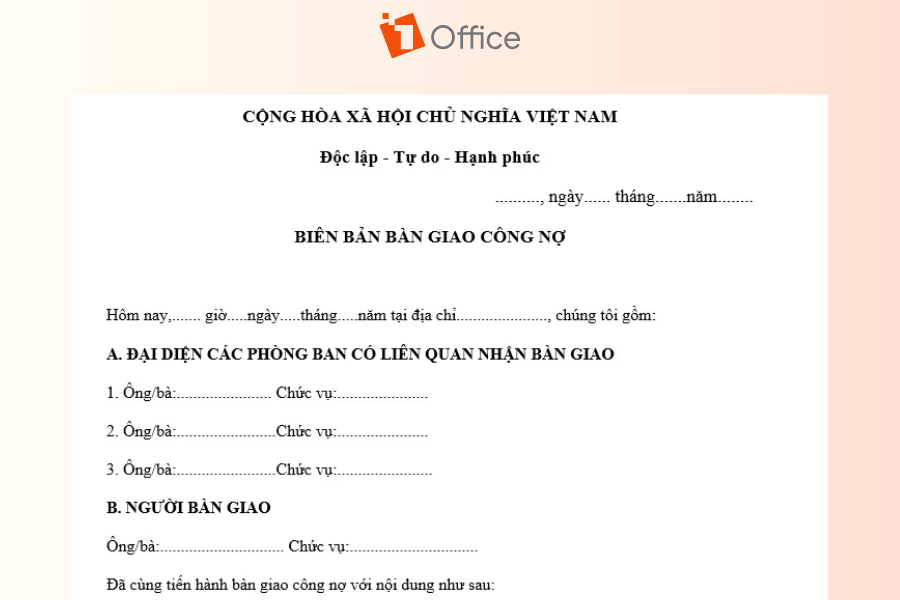
Debt handover statement template (typically used internally when handing over debt management responsibilities)
Debt handover statement template HERE
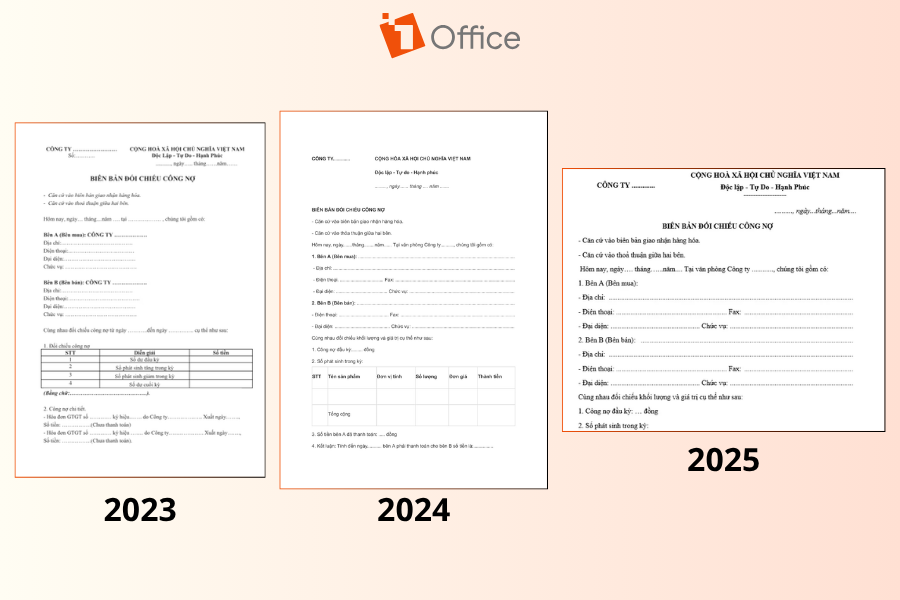
Latest debt reconciliation statement templates by year
Detailed guide to creating a debt reconciliation statement
A reconciliation statement is an important document that helps businesses manage, check, and confirm accounts receivable and payable between two parties. To create this statement, you will need to follow these steps:
Step 1: Prepare the statement template
Before creating the statement, you will need to have a debt reconciliation statement template ready. This template should include the following basic information:
- Information of both parties: Name, address, tax code, legal representative (if any), and contact information for both parties (Party A and Party B)
- List of debts: A detailed list of all debts, including the amount receivable and the amount payable for each party.
- Remaining amount: A summary of the total amount Party A must pay and the total amount Party B must receive.
- Check for discrepancies (if any): Check and record any discrepancies and how to resolve them, for example, adjusting figures or other basic information that needs to be changed.
Step 2: Identify the debts of both parties
After obtaining the template, the business needs to identify and reconcile the debts of both parties, including amounts such as:
- Amount receivable: The amount that the other party must pay to your business.
- Amount payable: The amount that your business needs to pay to the other party.
Step 3: Compare the debts of both parties
This is a particularly important step, in which the business will need to:
- Reconcile the accounting books of both parties to ensure that the debts match in terms of figures, time, and transaction details.
- Check for any errors or discrepancies between the recorded amounts.
Step 4: List any discrepancies (if any)
If errors or discrepancies are found during the debt comparison process, the business will need to clearly record these errors in the report, including:
- Details of the discrepancy: Specify clearly which debt is incorrect, the amount, or the mismatched transaction information.
- Cause of the discrepancy: Provide explanations related to the cause of the discrepancy (if known).
Step 5: Resolve the discrepancies in the report
Finally, after recording the discrepancies, both parties need to have a resolution plan. The handling steps usually include:
- Adjust the figures to be correct if there are errors due to data entry or mistakes
- Update the transaction details if information discrepancies are found
- Propose measures or agree on other handling methods, such as supplementary payments or deducting the excess/shortfall amount
Principles of Debt Reconciliation
To ensure the debt reconciliation process is accurate and follows the correct procedure, businesses must adhere to the following important principles:
- Comply with all conditions related to the parties involved in the debt reconciliation, as stipulated by current law.
- Ensure that all information related to the debt reconciliation does not violate legal regulations and does not infringe on social ethics.
- Establish the principle of debt reconciliation based on the voluntary spirit and mutual respect of the involved parties.
- Debt reconciliation must be documented in writing, through a debt reconciliation report or an equivalent form. Businesses will use this document to accurately check the status of financial obligation payments of the involved parties. In particular, this report plays a crucial role in business operations and the tax declaration process with state agencies.
Purpose of Creating a Debt Reconciliation Report
Creating a debt reconciliation report between a supplier and a customer plays an extremely important role in tax finalization. Based on the debt reconciliation report, the parties will have a sufficient basis to check the payment status of goods between the seller and the buyer. At the same time, through this report, the parties can easily track orders with value-added tax invoices of 20 million VND or more. In particular, this report allows the parties to determine whether the payment has been made according to regulations.
See more: Download the latest Accounts Receivable – Payable tracking template for 2026
Additionally, using debt reports or debt reconciliation reports also helps the company’s accountants accurately track the payment status of customer debts to the business, as well as monitor the implementation of terms in the economic contracts signed by the parties. This also helps to accurately assess the remaining debts.
What are the requirements for a Debt Reconciliation Statement?
The debt reconciliation report is also used to prepare the contract liquidation document. Without it, tracking the debt payment process becomes difficult for the business or the debtor, and there is a risk of disputes between the two parties.
Therefore, to avoid regrettable errors, the debt reconciliation report must comply with the following necessary requirements:
- Clearly state the company, business, or individual names of both parties.
- Include the business’s reconciliation report number.
- Clearly state the place and time the debt reconciliation report was created.
- Attach all relevant documents, vouchers, and the basis for the debt.
- Provide complete information about both the buyer and the seller.
- Record the debt figures in detail.
- Provide a final conclusion on the debt (if this amount is not paid on time, information about the full due date, including day and month, must be recorded).
- Include the full signatures and seals of both parties.
An important note for the person preparing the debt reconciliation report is to fill in the information accurately and comply with legal regulations to avoid errors and unwanted consequences. Remember that a debt reconciliation report, no matter how detailed and complete, will not be valid without the signatures and seals of both the buyer and the seller.
Debt Reconciliation Process
Besides adhering to the principles of debt reconciliation, following the correct debt reconciliation process also plays an extremely important role. Below are two debt reconciliation processes that businesses need to implement.
Debt Reconciliation Process for Accounts Receivable
To follow the process correctly, the business needs to prepare a series of documents to support the reconciliation and confirmation of accounts receivable. Specifically, the business needs to print out the following types of documents:
- The customer must confirm the debt and then send it back to the business.
- Debt notification or detailed accounts receivable ledger: This type of document helps the customer check and reconcile if there are any discrepancies.
- In case of information discrepancies, the customer needs to make adjustments based on actual figures and information.
- Finally, the business needs to back up the report after the customer confirms it. This document will be used for the finalization and financial reporting process.
Process for accounts payable
In the accounts payable process, the business needs to prepare some of the documents below to send to the supplier, to support the reconciliation and confirmation of accounts payable. The details are as follows:
- The supplier checks and confirms the debt. Then, they send this reconciliation report back to the business for recording.
- Detailed accounts payable ledger: The supplier checks and compares it with the information and figures in their records. If there is a discrepancy, adjustments must be made accurately based on actual figures and information.
- After an agreement is reached and the reconciliation report has been confirmed by the supplier, the business needs to store it carefully. This is to serve the settlement and financial reporting processes later on.
What to Note When Creating Debt Reconciliation Reports for Specific Industries
Not all businesses manage debt in the same way. The specifics of contracts, payment methods, and acceptance processes in each industry will directly affect how debt is recorded and reconciled. Therefore, in addition to a standard report template, businesses should customize it according to their industry’s specifics to accurately reflect the actual situation.
Construction – Real Estate Industry
-
Specifics:
- Projects are often high-value and last for several months to years.
- Payments are divided into multiple installments based on progress: advance payments, payments after acceptance of each item, and final settlement.
-
Notes on creating the report:
- Clearly list each payment installment: how much was advanced, how much has been accepted and paid, and how much remains.
- An appendix detailing each construction item (foundation, structure, finishing…) should be included to avoid disputes from lumping them together.
- Add adjustments for any changes outside the contract (increased scope of work, material changes).
-
Example: A construction company signs a 20 billion VND contract, has received a 3 billion VND advance, and completed phase 1 acceptance (worth 5 billion VND), but the client has only paid 4 billion VND. The report must clearly state that 1 billion VND is outstanding for this phase and update the progress for the next phase.
Export – Import Industry
-
Specifics:
- Often involves foreign currencies and exchange rate differences.
- Incurs many costs beyond the contract value: shipping fees, insurance, taxes, storage.
- Payments are made through specific methods like L/C, D/P, T/T, leading to delays between the shipping date and the date of receiving payment.
-
Notes on creating the report:
- Clearly state the currency used and the exchange rate, and specify the date the rate is applied (invoice date or payment date).
- Reconcile ancillary costs as well: freight charges, logistics fees, customs clearance fees…
- Attach banking and shipping documents: invoice, bill of lading, SWIFT report.
-
Example: Exporting a shipment worth 100,000 USD, with payment in VND at an exchange rate of 24,000. At the time of reconciliation, the rate has increased to 24,500. The report needs to clarify the difference due to the exchange rate to avoid disputes.
Garment – Manufacturing Outsourcing Industry
-
Specifics:
- Large order production with multiple delivery batches.
- Payment depends on delivery progress and quality inspection results.
- Often includes clauses for discounts or price reductions based on quantity or defect rates.
-
Notes on creating the report:
- Detail the quantity of products delivered, the remaining quantity, and the defect rate, if any.
- Clearly reconcile any discounts/price reductions to avoid debt discrepancies.
- Attach delivery notes, acceptance reports, and quality inspection reports.
-
Example: An order for 50,000 T-shirts, 30,000 of which have been delivered. The customer accepts them but requests a 2% price reduction due to defects. The report must be updated with this reduction amount for the debt to be accurate.
Service Industry (tourism, marketing, training…)
-
Specifics:
- The product is an intangible service, which is difficult to quantify.
- Payment is often based on progress or achieved results.
-
Notes on preparing the report:
- Specifically describe the scope of services provided (number of training sessions, number of marketing campaigns launched, number of tours organized).
- Clarify the time of revenue recognition: upon service completion or when the customer confirms the results.
- Attach performance reports and service acceptance records as a basis.
-
Example: A marketing company signs a contract to run 3 advertising campaigns, valued at 600 million. They have run 2 campaigns (400 million), but the customer has only paid 300 million. The report must clearly state the outstanding 100 million for the 2 completed campaigns, and the 200 million for the campaign not yet executed.
Comparing Debt Reconciliation Reports and Financial Management Solutions:
Debt Reconciliation Report
A debt reconciliation report is a document that records and confirms accounts receivable and payable between two partners. This is a manual method that requires both parties to directly participate in checking and reconciling debt figures, ensuring transparency and accuracy in financial transactions.
| Advantages | Disadvantages |
|
|
Financial Management Software
Financial management software is an automation tool that helps businesses manage all financial aspects, from recording income and expenses and managing cash flow to reconciling liabilities. The software often includes features like automatic data entry, real-time data updates, and detailed financial reports.
| Advantages | Disadvantages |
|
|
Secure payment methods
Secure payment methods include electronic payment systems, credit cards, e-wallets, or other digital payment solutions. These methods often integrate high-security features and provide real-time transaction tracking tools.
| Advantages | Disadvantages |
|
|
Some common mistakes when creating debt reconciliation reports
During the process of creating debt reconciliation reports, some mistakes often occur, especially when there is not enough required documentation at the end of the year. Specifically:
- The response rate from customers for debt confirmation is often low, leading to ineffective debt management and creating unnecessary loopholes.
- Discrepancies in debt information between the debt reconciliation report and the accounting ledger occur for unknown reasons.
- Some businesses currently do not perform debt reconciliation, or when they do, they encounter mismatches or even have many debts not linked to a specific entity, a pattern also seen in other businesses.
During the process of creating debt reports or debt reconciliation reports, businesses need to identify and rectify these mistakes to avoid unnecessary omissions and risks. It is crucial for businesses to provide all relevant documents or consider seeking support from professional accounting service providers to ensure the process is fully executed and to avoid errors during debt reconciliation.
So what is the easy debt reconciliation solution for businesses?
Not only supporting effective debt management software but also expanding with the 1CRM ecosystem, 1Office confidently helps manage customers, orders, and inventory synchronously and accurately. As a result, businesses can optimize operations, save costs, and build a foundation for sustainable growth.
Quick reference
Experience the comprehensive management solution with 1Office now – To discover all the features and how the system helps your business operate more effectively every day:
Is an Excel work tracking sheet suitable for large enterprises?
Excel is suitable for small businesses or simple management needs. However, as the volume of work and data increases, Excel becomes difficult to control and prone to errors. Large enterprises often need more specialized solutions to ensure synchronization and accuracy.
Should I use an Excel template or create my own work management sheet?
Using a pre-made Excel template helps save time and reduces initial setup errors. However, if you have specific needs, you can customize or build your own sheet to fit your specific workflow and work management goals.
How can I avoid errors when managing work with Excel?
To minimize errors, you should use automatic formulas, check data regularly, and standardize data entry methods. Additionally, clear file version management is necessary to avoid confusion or data loss when multiple people are using the file.
Does Excel support real-time work progress tracking?
Traditional Excel does not effectively support real-time updates when multiple people are working simultaneously. Users can use Excel Online or Google Sheets to improve this, but they are still limited compared to specialized systems capable of instant data synchronization.
Are there any alternatives to Excel for more comprehensive work management?
Besides Excel, businesses can use management platforms like 1CRM to manage customers, tasks, and business data on a single system. This helps synchronize information, reduce errors, and enhance overall operational efficiency.
















