


 11/05/2026
  300 views
The position of a CHRO is often mentioned, but not everyone fully understands this term. So, what exactly is a CHRO, and what are the necessary qualities to become a great one? A business can only thrive when it has a quality team of personnel. The person who can effectively manage all aspects of human resources and meet the company’s requirements is the CHRO. Let’s explore the answers to these questions with 1Office in the article below.
Mục lục
1. What is a CHRO?
CHRO stands for Chief Human Resources Officer, which refers to the title of Human Resources Director or Chief Recruitment Officer. The CHRO is responsible for managing and utilizing people, as well as planning and strategizing the development of the company’s human resources. Specifically, the CHRO collaborates with the board of directors to develop recruitment and selection plans, train personnel, propose compensation and benefits packages to retain talent, build corporate culture, organize employee engagement activities, and establish a code of conduct among members of the organization.

2. The responsibilities of a CHRO
Not everyone knows the specific responsibilities of a CHRO. 1Office has researched and presents the following job description for a Chief Human Resources Officer:
- Ensuring a sufficient supply of human resources to meet the company’s objectives.
- Coordinating with relevant departments to recruit for the right positions, achieve recruitment KPIs for each department, and ensure the recruitment process runs smoothly and according to regulations.
- Organizing training activities for new hires, and developing training and development plans to enhance employees’ skills and work efficiency.
- Organizing and compiling data on recruitment activities, including KPIs, competency assessments, the number of personnel needed, employee turnover rates, and reporting to upper management.
- Identifying personnel gaps or existing issues such as staff shortages, underperforming employees, poor work attitudes, or lack of discipline, and proposing solutions.
- Developing policies to attract and retain talent, ensuring employee satisfaction throughout their employment.
- Managing the human resources budget, ensuring costs are controlled and used effectively.
- Collaborating with HR specialists within the department to analyze and evaluate related tasks.
- Carrying out HR-related tasks assigned by the leadership team.
3. What is the role of a CHRO in a business organization?
The CHRO plays a pivotal role and holds extremely important responsibilities within the company. Below are the 4 main roles of a CHRO:
3.1 A communicator in search of outstanding talent
Each department within a company has different recruitment needs with unique requirements. The CHRO acts as the company’s representative when searching for and contacting candidates, responsible for communicating information about the company to applicants before, during, and after the recruitment process.
Specifically, the CHRO must accurately convey the necessary requirements and skills to candidates. Additionally, they are responsible for notifying candidates of interview times if their CVs meet the requirements, providing interview results, and sharing information about salary, bonuses, and benefits when a candidate is hired.
After identifying a potential candidate, the CHRO needs to provide them with information about company policies and culture so they can begin their probationary period. At the same time, the CHRO must also report to upper management on the personnel situation in various departments, using this information as a basis for evaluating the quality of each recruitment drive.

3.2 A pioneer in applying technology to human resource management
Beyond just finding talent, the CHRO is also responsible for managing human resource management software to scientifically track and evaluate employee performance. By applying technology in HR management, the CHRO can observe the effort and performance of each individual, identify who is developing and who is not progressing, and adjust salary scales and benefits accordingly.
By using helpful software, the CHRO can reduce the burden of managing candidate profiles, and tracking and nurturing potential candidates. Tasks such as performance measurement, communicating interview results, timekeeping, and more become easier and more time-efficient.

3.3 Building and spreading a positive corporate culture
Corporate culture is a crucial factor in a company’s development, and the person responsible for maintaining and developing it is the CHRO. Through professional talent training programs and activities, the CHRO can spread the corporate culture to employees in all departments. This helps create a fun and dynamic work environment, thereby enhancing work performance and motivation for employees.

3.4 An effective bridge to the CCO, CFO, and CPO
The CHRO is responsible for providing “high-quality” personnel for all departments, including leadership positions. However, without understanding the recruitment plans of the CCO (Chief Commercial Officer), CPO (Chief Product Officer), and especially the CFO (Chief Financial Officer), the CHRO will not only struggle to find suitable candidates but may also violate the company’s budget and permitted conditions.

4. What are the necessary qualities and skills of a Chief Human Resources Officer?
To become a human resources director, you need to possess certain experience and skills. Since the CHRO is a senior management position, the requirements are higher than those for an HR staff member, specifically:
4.1 High level of professional expertise
The CHRO is a senior human resources management position that requires a very high level of expertise and human resource management skills. A solid educational background and professional profile are also crucial, helping the CHRO build trust among employees for their HR programs and activities.

4.2 Extensive experience
Because their role involves finding talent for various positions, a CHRO must have excellent skills in assessing and evaluating people to select suitable candidates. To successfully apply for the position of human resources director, you need work experience in the HR field, especially in equivalent management roles. Diverse experience across multiple sectors will help you stand out to recruiters.
Currently, recruiters require candidates for the human resources director position to have 10-15 years of experience at the management level within an HR department, such as Head of HR Administration, Recruitment Director, or Training & Development Director.
4.3 Leadership skills
As the head of the human resources department, the CHRO needs strong leadership skills to effectively direct and manage the department’s activities, make sound decisions, and motivate and encourage employees to work more efficiently.
In addition to leadership and HR expertise, a CHRO also needs training in ethical business practices, relationship management, communication, and a broad awareness of culture and global issues.

4.4 What are the analytical and problem-solving skills of a Chief Human Resources Officer?
A CHRO primarily works with people and therefore frequently faces various issues. They must resolve conflicts between employees, manage work performance, handle issues related to salary and benefits, and settle labor disputes. Therefore, a CHRO needs strong analytical and problem-solving skills, the ability to see through issues, and make quick decisions on any HR-related matter within the company.
4.5 Other personal soft skills
To become a great CHRO, you need to possess several important soft skills, including:
- Teamwork skills to collaborate effectively with other departments.
- Presentation and public negotiation skills.
- Skills in using new software and technology for human resource management.
- A clear understanding of laws related to recruitment, timekeeping, salary, benefits, insurance, and labor safety to ensure legal compliance and avoid legal risks.
- Intellectual and emotional acuity to meet employee needs and build a positive work environment.
- Communication, listening, and information-conveying skills to resolve issues and promote employee development.
5. What is HRM software – An effective support tool for a CHRO’s work?
One of the essential skills of a Chief Human Resources Officer (CHRO) is human resource management. To enhance efficiency and streamline the management process, human resource management software (HRM) is a comprehensive solution. HRM helps the CHRO and the HR department automate tasks such as information storage, recruitment, timekeeping, payroll, insurance, taxes, as well as tracking and evaluating employee performance.
Among the leading human resource management software available today, the 1HRM solution by 1Office is highly regarded and trusted by many businesses. This software helps digitize and store all data related to employee profiles, labor contracts, insurance information, and manage leave and compensatory time off, making it easy to look up and analyze. Employee information is compiled from multiple dimensions, helping to conveniently track and understand the company’s human resources.
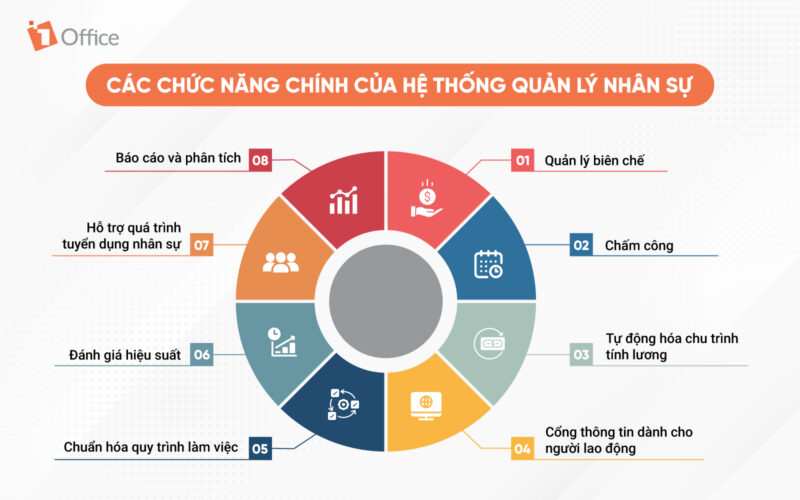
This tool not only overcomes the shortcomings of Excel but also brings significant value to the business, including: systematizing and securing HR data, minimizing errors, saving time and effort, supporting quick decision-making, as well as retaining staff and attracting recruitment candidates.
We hope this information from 1Office helps you clearly understand what a CHRO is and their related responsibilities. With this, you can assess whether your career path aligns with this senior HR role and understand the necessary requirements to perform the job well.
If you would like more information about 1Office’s human resource management software or need support during your trial, you can contact us using the information below:
- Hotline: 083 483 8888
- Fanpage: https://www.facebook.com/1officevn/
- YouTube: https://www.youtube.com/channel/UCeTIRNqxaTwk0_kcTw6SxmA
















