12/05/2026
  312 views
Digital transformation is a trend that many businesses and companies are adopting in the Industry 4.0 era. This is considered an important stepping stone that helps businesses expand their access to the digital transformation process, especially as more and more new technologies are developed. In this article, let’s join 1Office to explore what a digital transformation solution is, its role, and the various digital transformation solutions for each business objective.
Mục lục
- 1. What is a digital transformation solution?
- 2. The role of digital transformation solutions for businesses
- 3. Identifying 3 strategic directions for digital transformation to find suitable solutions
- 4. Digital transformation solutions for each business objective
- 5. All-in-One digital transformation solution for businesses and organizations
1. What is a digital transformation solution?
A digital transformation solution involves using digital technology to change operational methods and leverage all the benefits of digital transformation to impact a company’s business model.

Today, digital transformation is not just a global trend but also a method for solving problems within businesses and the community. It not only changes the way we work but also promotes innovation and creates a positive culture in the work environment. Digital transformation solutions are also the key to helping businesses achieve sustainable development in today’s competitive and volatile market.
2. The role of digital transformation solutions for businesses
So, what benefits do digital transformation solutions bring to businesses? Here are 4 roles of these solutions:
- Customer Experience: The customer experience is increasingly important in business development. Today, customers have many choices and seek the best products and services for their needs. To attract and retain customers, businesses need to apply digital transformation solutions to optimize the customer experience, making it easier for them to access and enjoy seamless experiences.
- Long-term Employee Engagement: Applying digital transformation solutions not only provides the workforce with the latest applications and devices but also creates a simpler, more modern, and more complete employee experience. Research has shown that investing in the employee experience can enhance productivity and engagement, thereby improving the customer experience. Digital transformation solutions help organizations provide not only the necessary tools but also enable instant access for everyone, anywhere, anytime.
- Process Optimization: Applying digital transformation solutions for businesses will shift the organization’s operating methods from a traditional model to an automated one. This helps processes run quickly and smoothly, while also saving time and costs.
- Product Digitization: This refers to using technology to improve products or services. Digital transformation applications not only help companies stay at the forefront of technology but also create the flexible infrastructure needed to continuously innovate and adapt to the fluctuations and growing demands of consumers.

3. Identifying 3 strategic directions for digital transformation to find suitable solutions
To find effective digital transformation solutions and applications, businesses need to define their strategic digital transformation goals. Accordingly, solutions that support business digital transformation should focus on three main directions:
- Optimizing business operations: Businesses can set goals to optimize and automate processes to enhance product competitiveness, improve efficiency, and reduce costs. At the same time, they can focus on increasing employee satisfaction and exploring new ways to boost revenue.
- Enhancing the customer experience: Businesses need to correctly identify their target customer groups, enhance their experience, and strengthen customer relationships to maintain and grow a loyal customer base.
- Transforming the business model: This objective requires businesses to build a digital platform, expand business avenues, and bring new digital products to market to meet customer needs.
After defining the strategic objectives, businesses need to build an effective digital transformation solution.
4. Digital transformation solutions for each business objective

For each strategic objective, businesses can choose a suitable technological digital transformation solution as follows:
4.1. Technology solutions to optimize business operations
Optimize operational processes: Businesses can choose digital transformation solutions to control resources and raw materials, helping managers utilize resources effectively and avoid waste. Digital transformation can also be applied to production processes to increase productivity and efficiency.
Build a digital supply chain: Digital transformation technologies such as IoT, Big Data, and Blockchain can be applied to a business’s supply chain. This helps manage the supply chain and raw materials easily and effectively.
Build a smart factory: Businesses optimize and automate factories to enhance the efficiency of production processes.
Optimize the Back Office system: Digital transformation technologies like AI and Data Analytics can be integrated into the back office system to manage information on personnel, finance, accounting, and customer data. This allows managers to easily control information, analyze data, and make appropriate decisions.
4.2. Solutions for customer experience-oriented goals
Integrate a multi-channel sales system: The benefits of digital transformation help businesses develop more sales channels, not just limited to one or two channels like traditional business. Today, businesses can easily connect with multiple channels such as offline stores, websites, hotlines, e-commerce platforms, social media pages, etc. This expands customer reach and brings more diversity to the business.
Increase the efficiency of customer relationship management (CRM): Digital transformation helps businesses manage customer data more effectively. Technologies such as AI, Big Data, Analytics, etc., help analyze and gain a deeper understanding of each customer. From there, businesses can make smart decisions, improve communication, and customize products to suit each customer segment.
>> Read more: Top 20 best multi-channel CRM customer care software
Increase customer care efficiency: Advanced technologies help enhance the time for analyzing and communicating customer data. This helps to quickly and effectively resolve customer issues and needs. This also contributes to improving customer satisfaction and strengthening the business’s brand image in their minds.
Create an impressive experience: By putting the customer at the center, businesses need to pay attention to their emotions and needs during the experience design process. The goal is to leave an impression and make customers remember the business at every stage.
Personalized experience: Use modern technologies such as data analytics, virtual reality, and artificial intelligence to personalize products and services. This helps provide an optimal and suitable experience for each customer, creating unique experiences.
360-degree customer listening: Create a continuous listening process to collect customer opinions and feedback. Analyzing this information helps identify and overcome weaknesses, while also bringing new value to customers.
Optimal customer care: Quickly resolve customer requests, feedback, and complaints to ensure satisfaction and increase brand loyalty.
Build a loyalty program: Build close relationships to retain customers, encourage them to support products and services, and become loyal customers.
Consistent interaction: Create a consistent experience across all customer touchpoints, thereby strengthening relationships and leveraging competitive advantages.
4.3 Technology solutions to support business model transformation
Build a unified digital business platform: Managers can integrate digital transformation into their business processes. The digital business system will act as a bridge between the company’s current infrastructure and new business processes, arranging them logically. This, combined with the necessary technological capabilities, will help ensure success in the digital transformation process.
Design an innovation lab: An innovation lab serves as a separate space for the digital transformation team to work and collaborate. Here, the team has the freedom to innovate and realize new ideas without any restrictions until they become successful and are integrated into business operations.
Test new ideas: Before scaling up a new idea, businesses need to implement a Digital PoC or Proof of Concept. This is a short-term project used to test and trial a new idea on a small scale. After completing the testing and trial process, the business can evaluate the impact, investment benefits, and potential of the idea.
5. All-in-One digital transformation solution for businesses and organizations
Choosing digital transformation software is becoming a popular trend among businesses today, bringing smoothness and efficiency to their operations. Below are the top 3 best applications available now.
1Office is a leading solution in the field of digital transformation, providing comprehensive management software that helps businesses optimize operations automatically and effectively. With three main modules: Workplace, HRM, and CRM, 1Office not only provides digital tools but also builds a quality and efficient digital working environment:
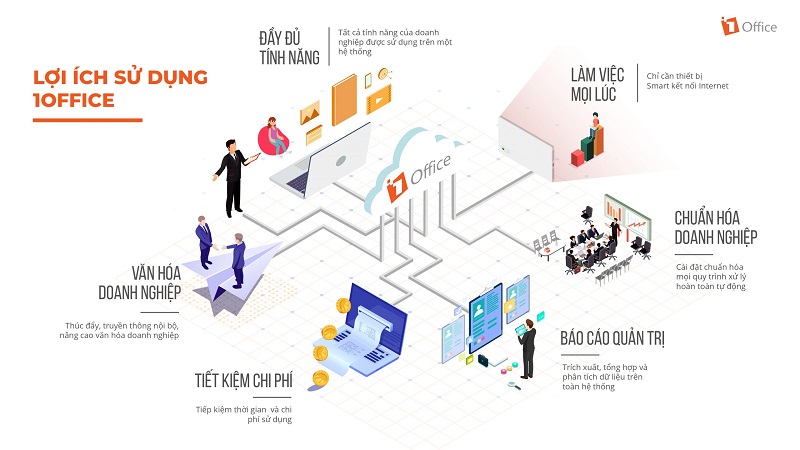
- WORKPLACE Module: Provides tools to support personnel, including: Internal network, digital signature, tasks, processes, projects, documents, and calendar.
- HRM Module: Provides tools to support human resource management activities, including: Recruitment, ASK competency assessment, personnel, timekeeping, payroll, KPI management, assets, and requests.
- CRM Module: Provides tools to support marketing, sales, and customer care management activities.
With 1Office, businesses can automate tasks, minimize errors, and enhance interaction within the organization. This platform helps businesses track and analyze data to make intelligent decisions and develop business strategies. 1Office is built to meet the need for process and operational optimization, with many outstanding features such as:
- Integrating online payment methods into the sales system.
- Effectively managing import/export processes and warehouse inventory.
- Applying AI and chatbot technology to automate customer service.
- Generating reports and data analysis for business decision-making.
- Optimizing workforce allocation and project management processes.
1Office not only helps businesses save time and resources but also enhances work efficiency, thereby improving their competitive edge in the market.
Get your free trial of the 1Office Business Management feature today for a completely free consultation and support.
The above is basic information about digital transformation solutions and the software that supports the digital transformation process for businesses. Please contact 1Office immediately via Hotline: 083 483 8888 if you would like a more detailed consultation and to experience a trial of the digital transformation solution software that suits your business.