


 13/05/2026
  311 views
Production workshop management experience helps save time and ensure the quality, progress, and process of creating goods.
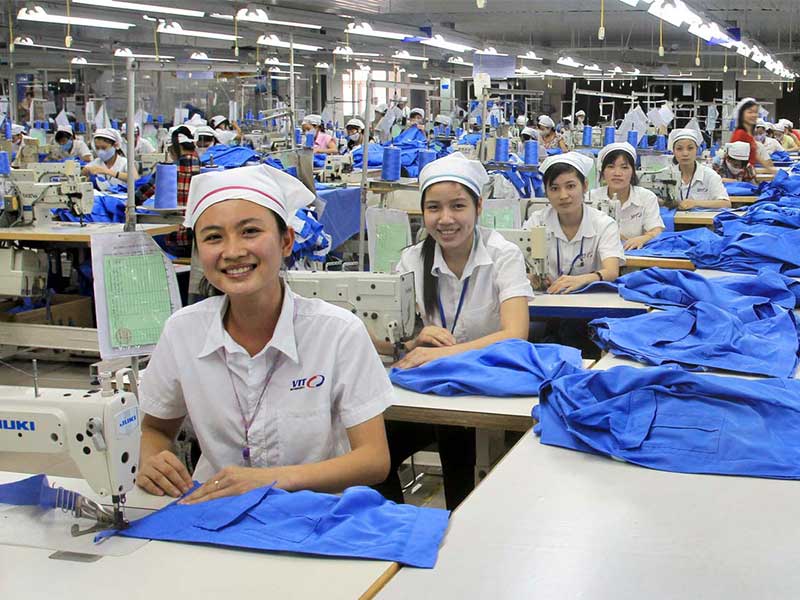
A production workshop operates to create goods and necessities for human life. Ensuring a smooth production process depends on many factors. These include: planning, production implementation, managing workers, materials, machinery, etc. Among these, production workshop management experience is a crucial factor that determines the success or failure of the workshop.
Table of Contents:
- Production Workshops and What You Need to Know
- The Production Workshop Management Process
- Crucial Experience for Production Workshop Managers
-
- Managing Material and Equipment Warehouses
- Managing the Workshop’s Operational Structure
- Managing Production Stages
- Managing Finished Products
- Managing Production Workers
- Using 1Office – A Comprehensive Production Workshop Management Platform
Mục lục
Production Workshops and What You Need to Know
A production workshop is large-scale and brings together many different resources. It houses workers, machinery, materials, etc., to produce, store, and transfer goods.
An enterprise or company will have many different workshops, each with a different production purpose. Managing the production process helps create goods and products as required. Production workshops are often categorized as:
- Basic workshop
- Auxiliary workshop
- Support workshop
- Dependent workshop
A workshop is an independent production unit of a business, depending on the business model. The management of a production workshop affects management productivity and production efficiency. This requires the foreman to be extremely meticulous, accumulate professional skills, and gain production workshop management experience to improve efficiency.
The Production Workshop Management Process
Analyzing Production Capacity
Production capacity is the maximum production level within a specific time frame. This is based on the available resources, such as: workers, supplies, raw materials, etc. Production capacity can be applied to various entities: a workshop, a production stage, or even the entire production system.
Production capacity will change if the workshop scale, workforce, materials, or production technology changes. Therefore, capacity is dynamic and flexible. The aspects that affect production capacity are:
- Human resources
- Materials and equipment
- Production system management activities
Forecasting Raw Materials
Forecasting raw materials involves determining inventory levels and estimating the required amount of raw materials to complete product manufacturing. This step ensures reasonable inventory levels, avoids waste, and meets production demands. It requires establishing a precise plan based on equipment and materials in a rigorous manner.

The purpose of forecasting raw materials in production system management is to:
- Limit unreasonable inventory levels
- Optimize production time by knowing the supply of materials and the forecasted inventory
- Reduce the risk of capital stagnation and production system delays
-
Managing Production Stages
To minimize potential risks, the manager must establish detailed production stages and monitor their implementation to ensure the production process is carried out strictly and correctly. This allows the manager to control, grasp the actual situation, and determine the next steps.
-
Controlling Product Quality
A product is like its appearance. Consumers rely on it to evaluate the quality and reputation of a business. The production workshop plays a crucial role in controlling the output quality of products. Different products will have different sets of criteria for evaluating design, size, composition, type, etc.
Production workshop management experience helps supervisors easily classify, monitor, and promptly evaluate product output.
Production workshop management experiences
-
Manage material and equipment inventory
Inventory management involves managers performing tasks to manage supplies, raw materials, and equipment for production. Proper inventory management helps maintain the production schedule. Many workshops and factories have overlapping classifications for raw material and machinery warehouses, leading to loss, damage, or reduced equipment quality. When an item is needed for production, it can’t be found, wasting time on searching.
Scientific inventory management using modern methods helps control and classify equipment and machinery in the right place and from the right source. This makes storage and transportation easier.
-
Manage the workshop’s operational structure
Each workshop has a different operational structure depending on its production purpose. Establishing a workshop’s operational structure helps managers assign tasks to workers more easily based on specialization. This allows for clear control over production progress and efficiency.
The management structure of a manufacturing enterprise is related to its scale and production functions. It can be divided into cells, teams, or groups based on specific capabilities. The manager will delegate management authority according to the structure of each group and regularly check the efficiency and productivity of each group.
-
Manage production segments
A production system consists of many different production segments. Someone with production workshop management experience will divide it into segments to manage progress, quality, personnel, etc.
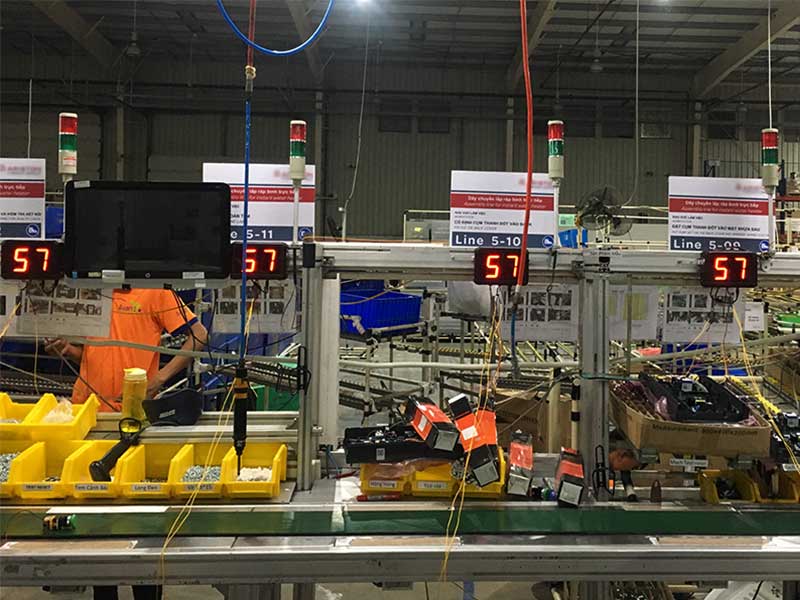
This process requires meticulousness, accuracy, and continuous updates. Timely and precise completion of the preceding segment will save time and increase efficiency for the subsequent one.
-
Manage finished products
If equipment, supplies, or machinery are the inputs of production, then goods are the final outputs. Managers need to strictly control the quantity and quality of the products created, as this will affect the user experience and the company’s brand reputation. Each product line has different requirements, so flexibility is needed in evaluating effectiveness.
-
Manage production labor
Personnel are a crucial resource in production. A manager must know who is good at what and suitable for which function to assign tasks and evaluate performance. Managing personnel in a production workshop requires a comprehensive view of all aspects of an employee. You cannot assign a worker specializing in manufacturing to manage the warehouse because they lack the necessary warehouse skills, and vice versa. Production capacity is accurately assessed when the right person is assigned to the right job.
There are various scales to evaluate a worker’s production capacity. Most managers rely on the attitude – skill – competency – quality scale. Or they base it on performance evaluations and KPIs completed according to the set schedule.
Use 1Office – A comprehensive production workshop management platform
Not everyone is born with production workshop management experience. Every manager needs time to cultivate, improve, and increase their own management effectiveness. All industries are digitizing their work processes, and the manufacturing industry is no exception. 71% of experienced workshop managers find it confusing and complicated to manage all the categories of a production workshop manually.
Optimize costs
It’s time for managers to adopt technology platforms to support optimal production workshop management. 1Office – A comprehensive production workshop management platform is a platform based on cloud computing technology to digitize data online, saving management time. The 1Office platform integrates work management, human resource management, and inventory management on a single system for less than 2,000 VND/day. All issues related to equipment or warehouse import/export can be statistically analyzed and reported promptly with just one click.
Simple timekeeping and payroll
The convenient timekeeping system for each shift, linking timesheets with payroll and a leave request system, makes it easy to manage time for hundreds of workers. No more paperwork, no more time wasted on reporting; the system helps delegate authority to personnel to approve and control work hours and performance easily.
Flexible progress control
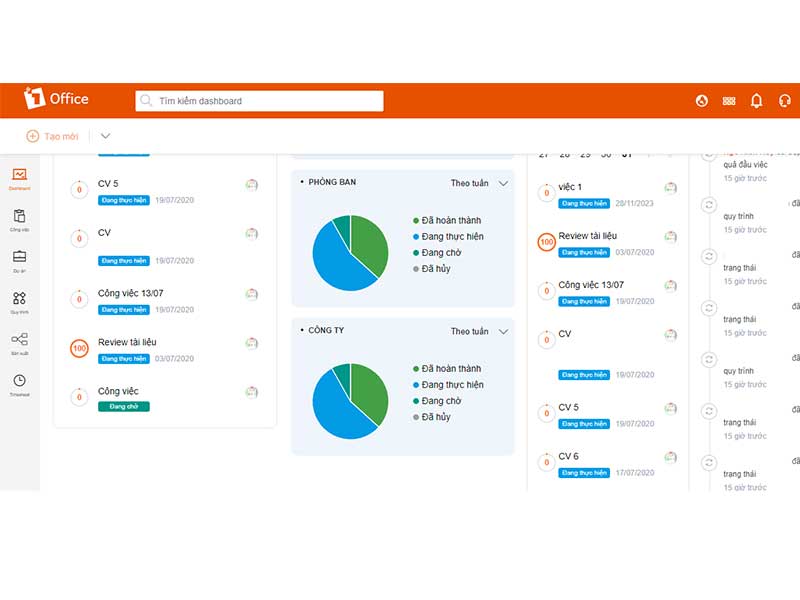
The progress of each production stage is updated daily on the project. This allows managers to always know how far the work has progressed and what adjustments are needed. From the project progress statistics, results can also be exported to conveniently evaluate employee performance.
Conclusion
Production workshop management experience is not innate but is cultivated through many experiences. Management experience helps in selecting convenient management methods to optimize the workshop’s productivity. Contact 1Office now or call 083 483 8888 for the best consultation.
Read more: An Easy-to-Understand Overview of Process Management in the Manufacturing Industry
















