5 HR Plan Templates for Companies to Optimize Management


Human resource management is always one of the most important and complex tasks for a business. To ensure sustainable development, building a well-structured human resource plan not only helps optimize work performance but also minimizes operational risks. In this article, we will explore the reasons for having a human resource plan, the principles for creating one, and review the most optimal human resource plan templates for companies.
Mục lục
1. Why is it necessary to build a human resource plan for a company?
Building a human resource plan not only helps a business operate effectively but also creates a solid foundation for long-term development. This serves as a “guiding star” to ensure alignment between business strategy and people management:
Long-term development orientation
A well-structured human resource plan helps businesses connect business goals with team development. This helps the company not only meet current needs but also prepare a workforce ready for future challenges, ensuring sustainability through all stages of growth.
Resource optimization
A human resource plan helps the company use its labor force effectively, avoiding situations of staff shortages or surpluses. By analyzing current needs and capabilities, the business can assign the right people to the right positions, ensuring optimal work performance.
Risk mitigation
The lack of a plan can lead to serious issues such as mass resignations, decreased labor productivity, or high recruitment costs. A detailed human resource plan helps forecast and prevent these risks, ensuring that business operations are not disrupted.
2. 3 Principles for creating a human resource plan template
2.1. Alignment with business strategy
The first and most important principle when creating a human resource plan template is to ensure its alignment with the company’s business strategy. An effective human resource plan must be designed based on the organization’s long-term and short-term business goals. For example, if the company aims to expand its market, the human resource plan should prioritize recruiting and training sales, marketing, or new product development teams. This helps ensure that the workforce not only meets current requirements but also supports the business in achieving its strategic objectives, while fostering close collaboration between departments.
2.2. Ensuring flexibility and adaptability
The labor market and business environment are constantly changing, so a human resource plan needs to be flexible to adapt to unexpected fluctuations. This requires the business to have contingency plans and be ready to adjust resources, personnel structure, or training strategies when necessary. For example, in the event of a market crisis, a flexible plan will help the business cut costs or restructure without significantly impacting operations. Flexibility not only helps the business respond well to risks but also allows it to seize opportunities in a competitive environment.
2.3. Putting people at the center
An effective human resource plan must be people-centric, focusing on developing and maintaining employee motivation. This includes designing benefit policies, career development opportunities, and a positive work environment. When employees feel respected and valued, they will contribute more, thereby enhancing the overall performance of the organization. For example, providing training programs or clear promotion paths not only helps improve employee skills but also fosters engagement and loyalty to the company.
3. Top 5 Common and Effective Human Resource Plan Templates for Companies
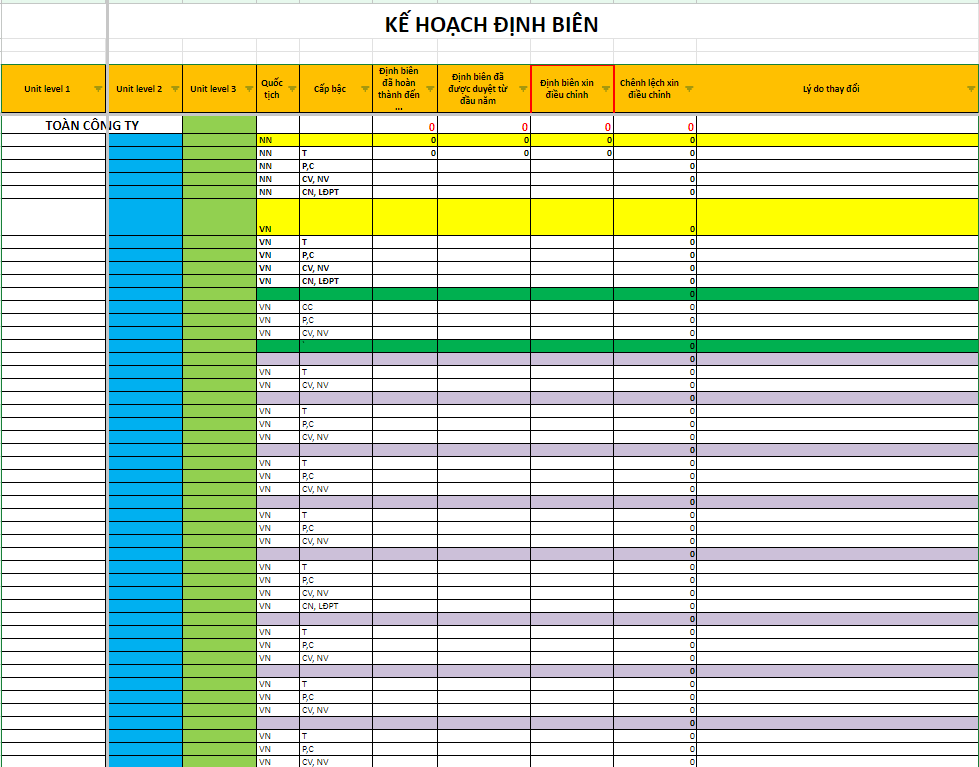
3.1. Headcount Planning Template
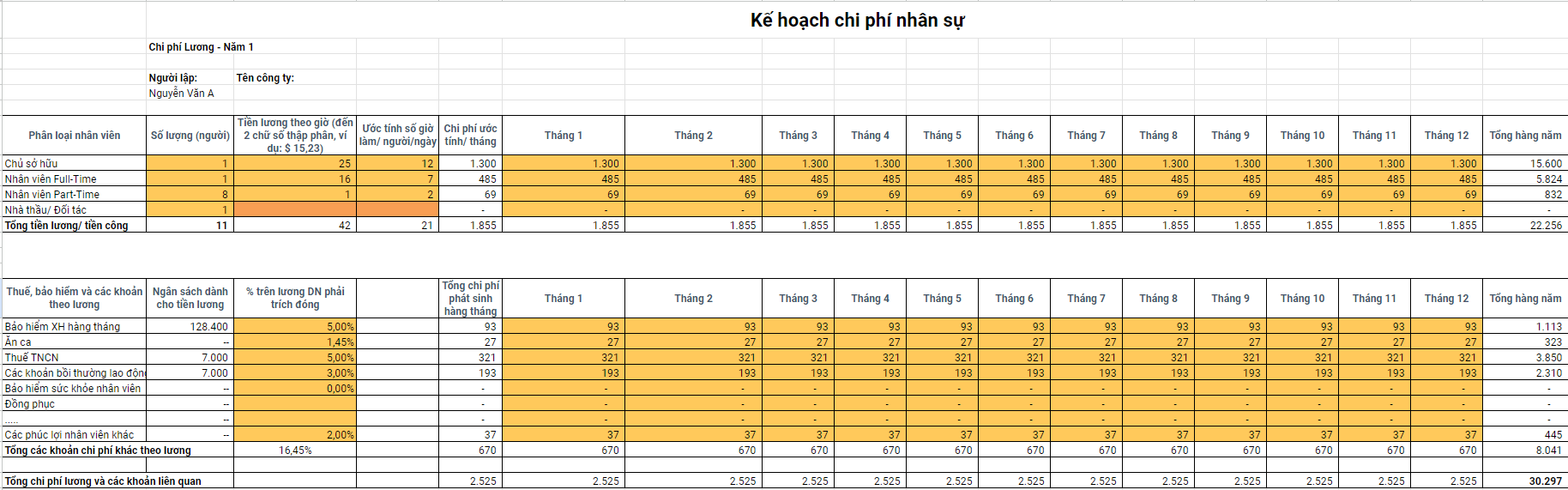
3.2. Personnel Cost Budgeting Template
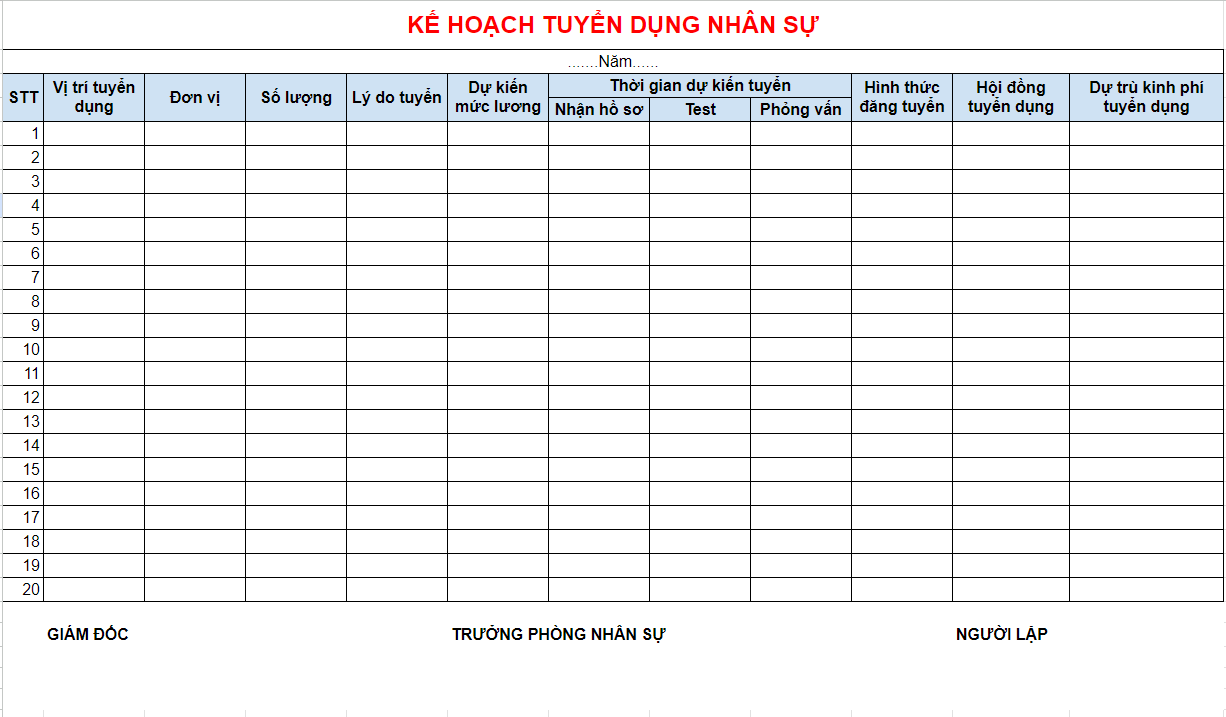
3.3. Long-Term Recruitment Plan Template
3.4. Personnel Training Plan Template
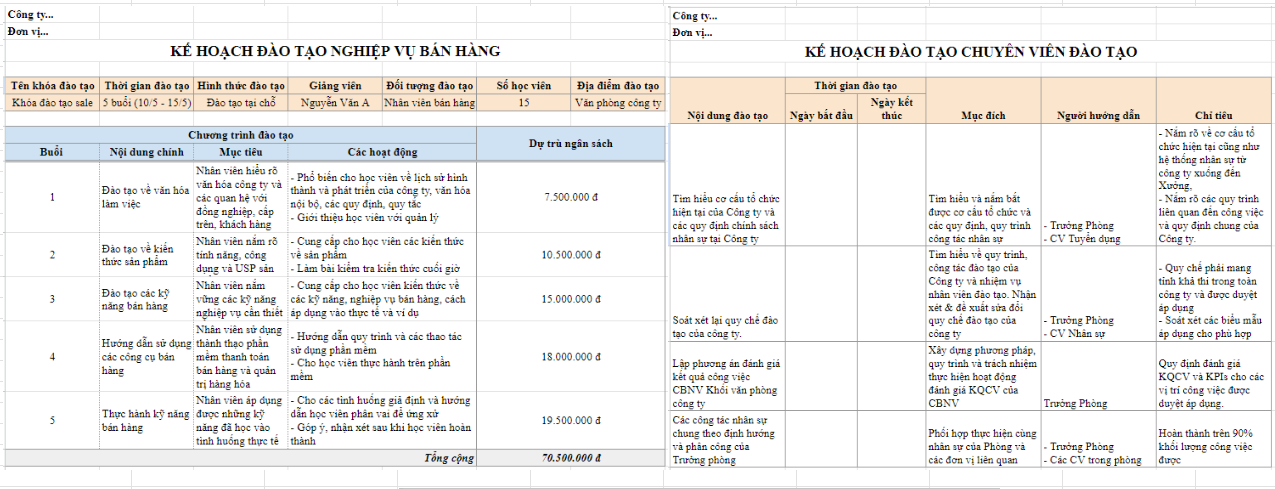
3.4. Recruitment optimization plan template
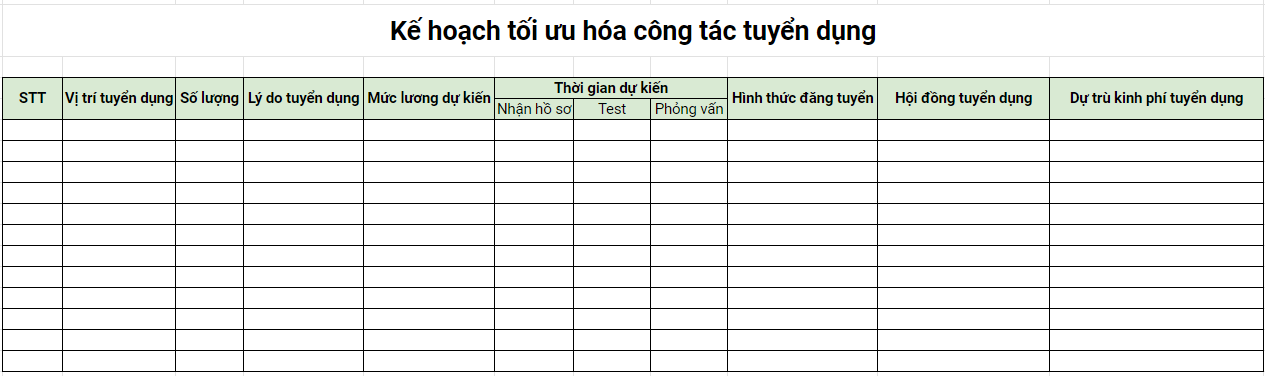
Download the free personnel recruitment optimization plan template
4. What should a company’s personnel plan include?
A complete personnel plan typically includes the following content:
- Overview and objectives: Define the specific goals of the plan (e.g., increase labor productivity by 20%, reduce turnover rate by 15%).
- Current situation analysis: Assess the current human resources in terms of quantity, quality, structure, and ability to meet job demands.
- Strategy and action plan: Includes recruitment, training, development, and personnel retention activities.
- Budget: Estimate the costs for the HR activities in the plan.
- Implementation roadmap: Define a specific timeline for each activity and the responsibilities of each department.
- Measurement tools: Specify performance evaluation indicators such as KPIs, OKRs, or other performance assessment tools.
5. Conclusion
Developing and applying personnel plan templates not only helps businesses improve management efficiency but also enhances employee engagement and satisfaction. However, to optimize effectiveness, businesses need to use modern HR management support tools.
If you are looking for a comprehensive solution, 1HRM by 1Office is the ideal choice. With features like recruitment management, performance evaluation, and HR process automation, 1HRM not only helps you save time but also improves the quality of your administration. Explore it now to take your business to the next level!