


 11/05/2026
  5033 views
When you need to request unpaid leave for personal reasons such as illness, health issues, or family matters, a standard leave request form will help you easily persuade your superiors while demonstrating professionalism and respect for your organization. In the article below, 1Office would like to provide you with 7+ of the latest standard unpaid leave request form templates, ensuring compliance with legal regulations and protecting your individual legal rights.
Mục lục
- 1. Legal regulations regarding unpaid leave requests
- 2. 7+ Free Unpaid Leave Request Form Templates to Download
- 3. Detailed Guide to Writing an Unpaid Leave Application Form
- 4. Comparison between annual leave and unpaid leave
- 5. What should you keep in mind when writing an unpaid leave request?
- 6. Frequently Asked Questions about Unpaid Leave
- 7. Manage, create, and approve requests quickly right on 1HRM
1. Legal regulations regarding unpaid leave requests
According to Article 115 of the Labor Code No. 45/2019/QH14, employees are entitled to take personal leave with full pay and must notify their employer in the following cases:
- Marriage: 3 days off
- Marriage of a biological or adopted child: 1 day off
- Death of a biological parent, adoptive parent, parent-in-law, spouse, or biological/adopted child: 3 days off.
Additionally, employees are allowed to take 1 day of unpaid leave and only need to notify their employer in the following cases:
- Death of a grandparent or biological sibling
- Marriage of a parent
- Marriage of a biological sibling
For the cases above, the employer is responsible for facilitating the employee’s unpaid leave in accordance with regulations and cannot refuse. If this is violated, the employer will be fined from 2 to 5 million VND according to Clause 1, Article 18 of Decree 12/2022/ND-CP.

- Legal regulations regarding unpaid leave requests

In addition, employees can request unpaid leave in cases such as:
- Personal reasons: illness, travel, other personal matters, etc.
- Participating in courses, seminars, workshops, etc., to enhance personal capabilities and develop skills.
- Fulfilling military-related obligations, national defense reserve training
- Experiencing health issues, seeking medical treatment or check-ups, etc.
For these reasons, employees can negotiate with their employer for unpaid leave for an unlimited number of days, provided that an agreement has been reached and approved by the employer. In this situation, the employer has the right to approve or deny the unpaid leave request without violating the law.
2. 7+ Free Unpaid Leave Request Form Templates to Download
Below are 7 detailed, standard-form unpaid leave request templates that you can reference and use in your work:
2.1. General Unpaid Leave Request Form
This is one of the most common forms, often used by employees to request unpaid leave for general reasons in any business sector. This form has a simple structure, including basic information about the applicant such as name, position, reason for leave, and expected leave duration.
Unpaid Leave Request Form Template 1

- General Unpaid Leave Request Form
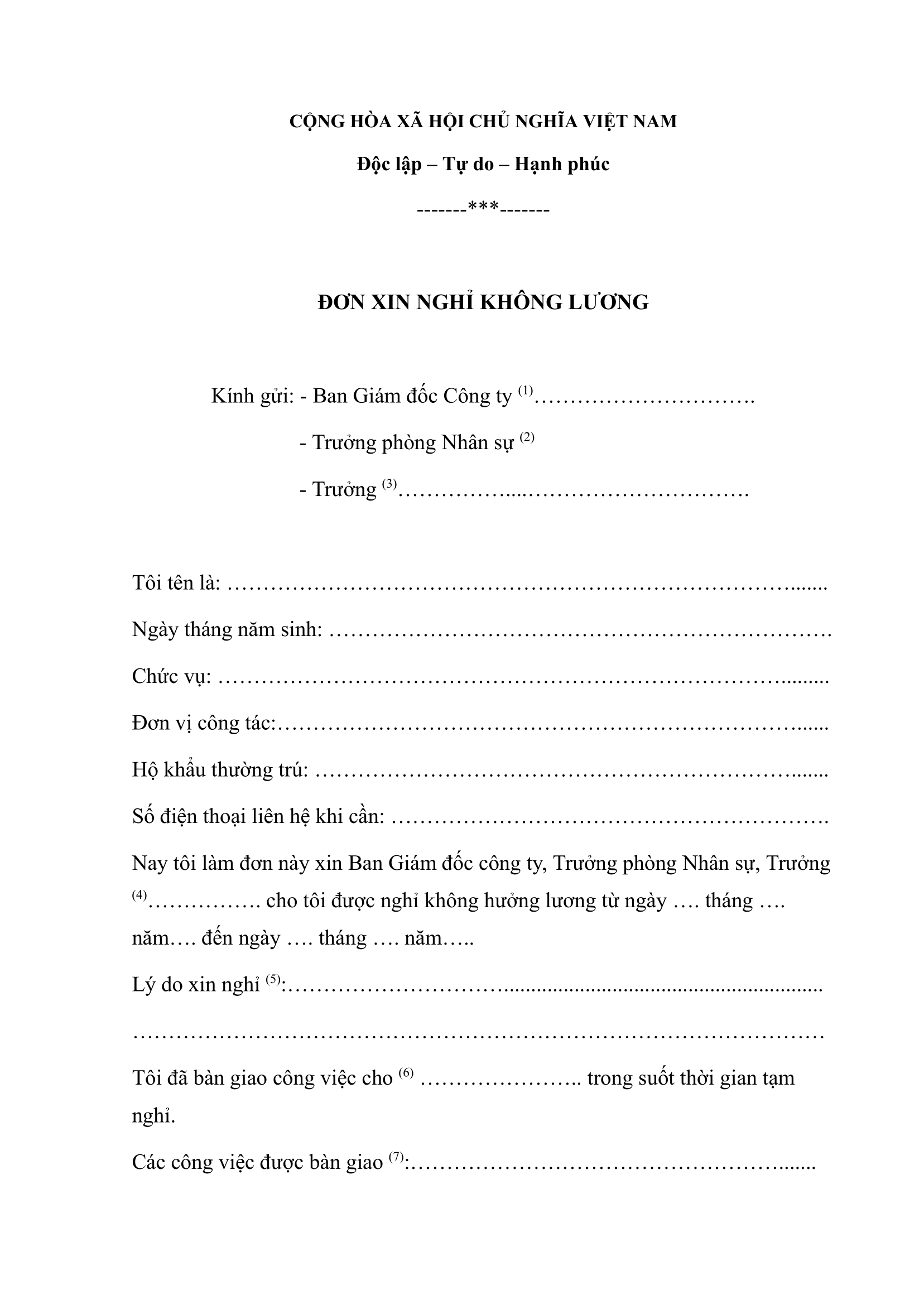
Download Unpaid Leave Request Form Template 1
Unpaid Leave Request Form Template 2

- General Unpaid Leave Request Form 2
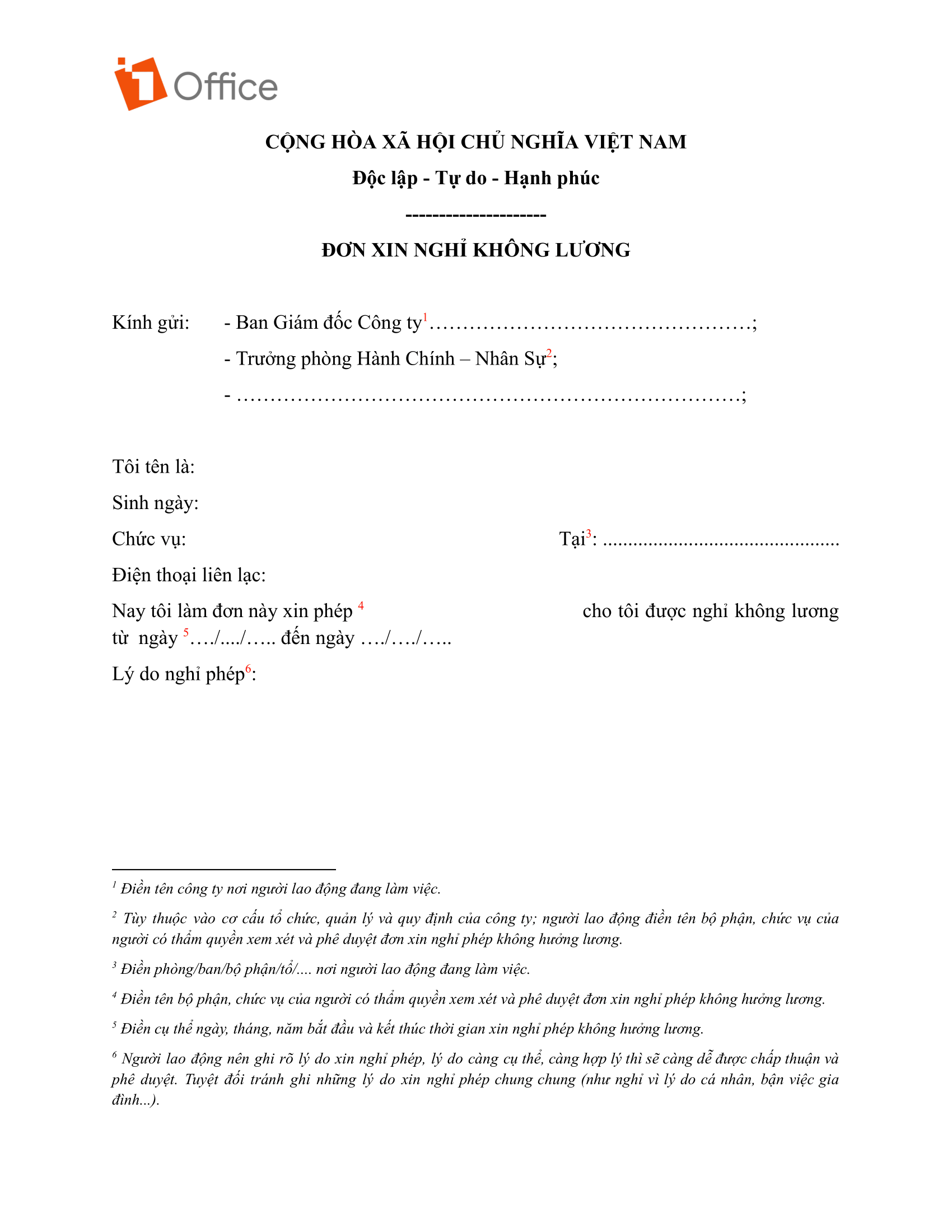
Download Unpaid Leave Request Form Template 2
2.2. Unpaid Leave Request Form for Sickness or Medical Treatment
Often used when an employee needs to request leave for illness or long-term medical treatment, this type of form typically requires an accompanying doctor’s note or hospital certificate confirming the health condition for approval.
Unpaid Leave Request Form Template 3
- Unpaid Leave Request Form for Sickness or Medical Treatment
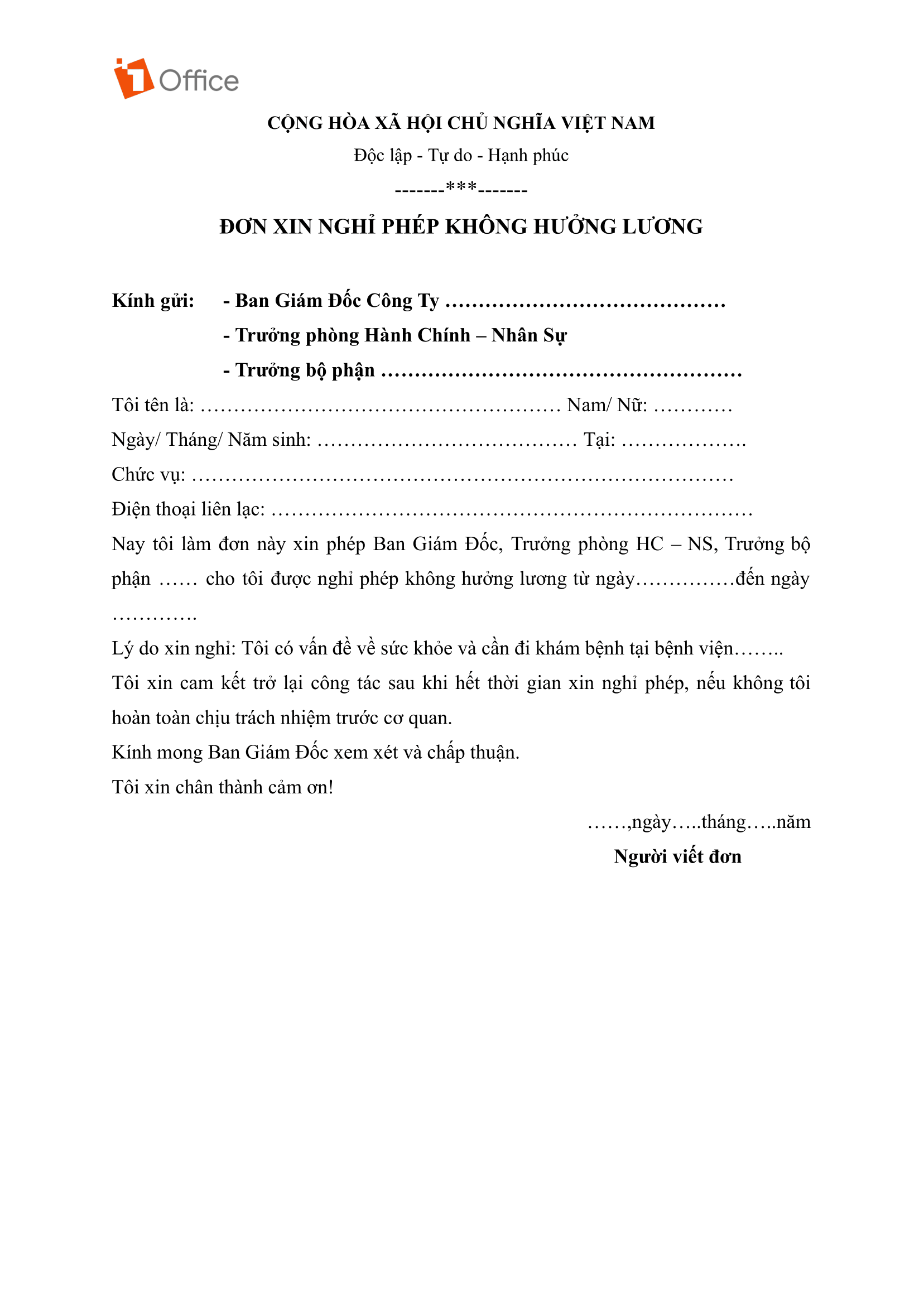
Download Unpaid Leave Request Form Template 3
2.3. Unpaid Leave Request Form for Family Reasons
When needing to request unpaid leave to handle family matters such as caring for a relative or attending important family events (weddings, funerals, family trips, etc.), an employee can submit an unpaid leave request form for family reasons, including the specific reason and the expected leave duration.
Unpaid Leave Request Form Template 4
- Unpaid Leave Request Form for Family Reasons
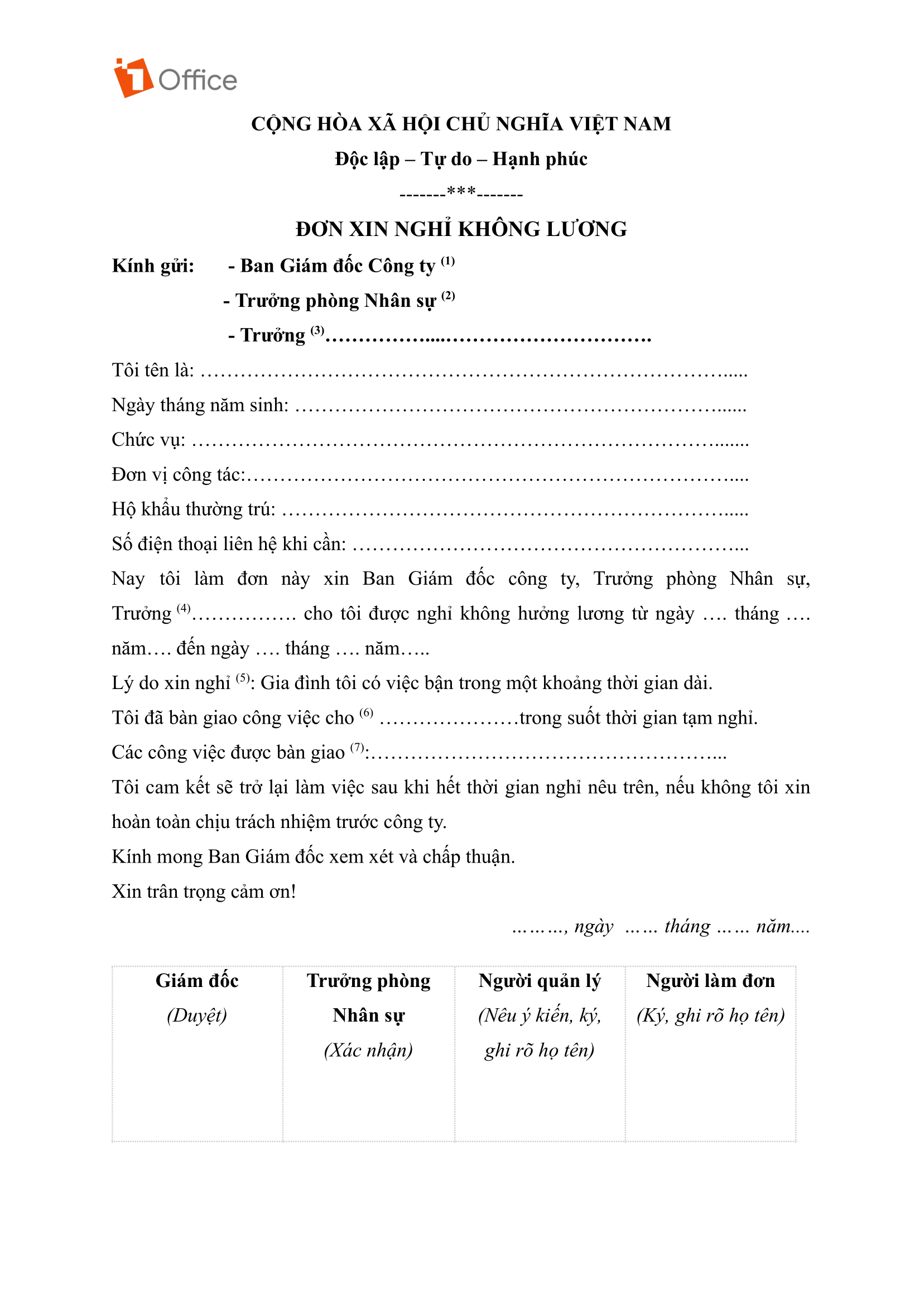
Download unpaid leave application form no. 4
2.4. Postpartum Unpaid Leave Application Form
This type of form is typically used by female employees who need additional time after childbirth to recover their health or care for their newborn. With the postpartum unpaid leave application, the employee must make a clear commitment about when they will return to work.
Leave Application Form No. 5
- Postpartum unpaid leave application form
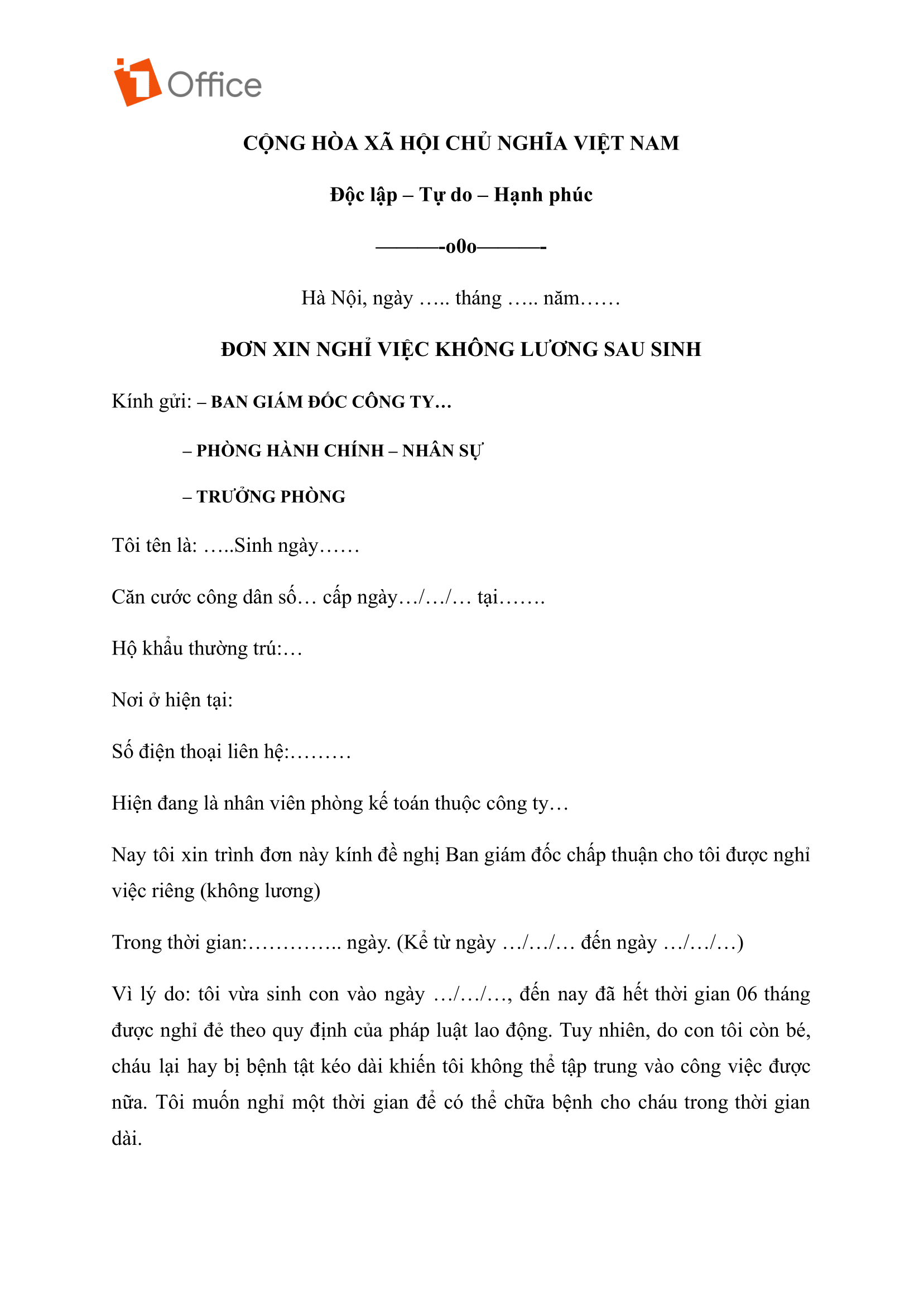
Download unpaid leave application form no. 5
2.5. Unpaid Leave Application Form for Antenatal Care
This form is specifically for female employees who wish to take unpaid leave for antenatal care. Typically, this application requires an attached medical certificate from a healthcare facility confirming the pregnant employee’s health status.
Leave Application Form No. 6
- Unpaid leave application form for antenatal care
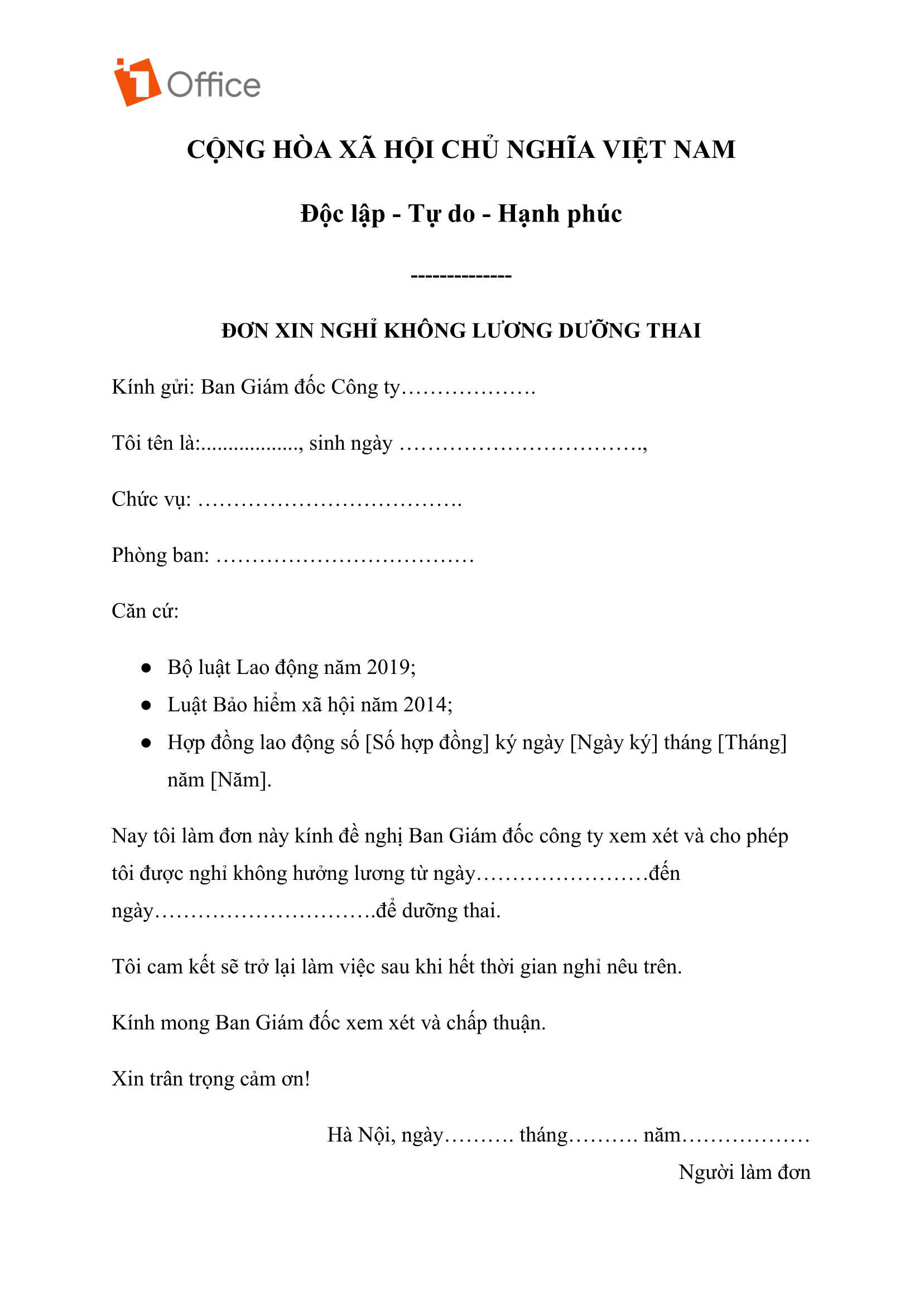
Download unpaid leave application form no. 6
2.6. Unpaid Leave Application Form for Teachers
Employees who are teachers can use this type of form to request long-term leave without affecting the teaching schedule at their workplace.
- Unpaid leave application form for teachers
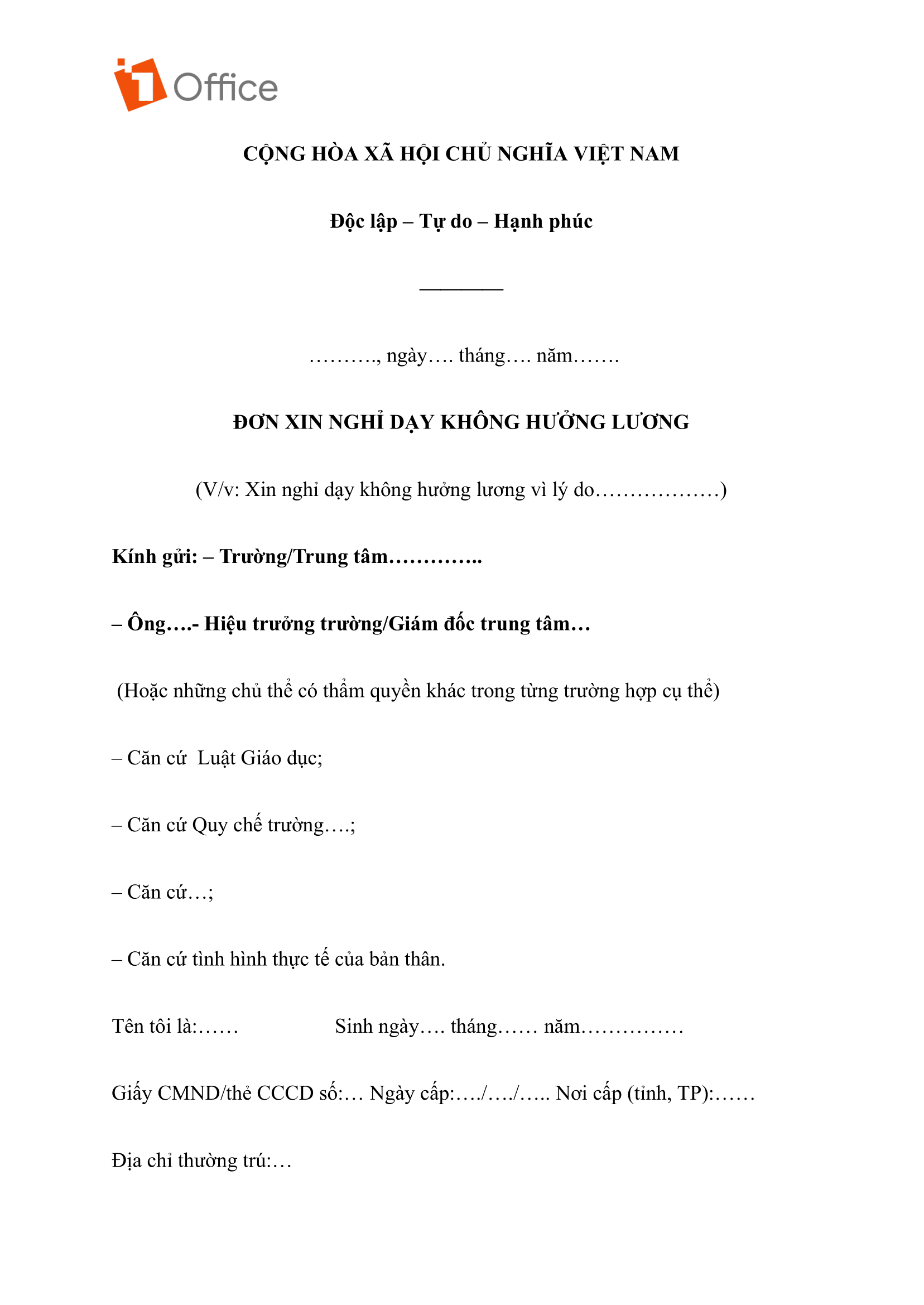
Leave Application Form No. 7
Download unpaid leave application form no. 7
[Free Download] Complete Set of 7+ Unpaid Leave Application Forms: Here
3. Detailed Guide to Writing an Unpaid Leave Application Form
When you need to write an unpaid leave application, preparing the content and format of the form to be accurate, complete, and properly formatted is extremely important. Additionally, depending on the specific nature, field, and policies of each business, there will be different regulations on how to write a leave application. Below are the basic and necessary steps and information for you to write a complete unpaid leave application.

- Detailed guide to writing an unpaid leave application form

Title, National Emblem, and Motto:
- The National Emblem and Motto, in accordance with the regulations of the State of Vietnam, should be placed at the top of the page and centered.
- Form Title: Write in all capital letters and center it. In this case, it would be “UNPAID LEAVE APPLICATION”
Recipient Section:
- In the Recipient section, you need to clearly state who the application is addressed to, which could be the Board of Directors, your direct manager, or the Human Resources department. This depends on your company’s regulations, and you must ensure it is addressed to the correct authority.
Applicant’s Information:
- In this section, you need to provide complete information including: full name, position, department, and employee ID (if any). Additionally, you should include your phone number and email so that management and superiors can easily contact you.
Reason for Leave:
- The reason for leave needs to be presented specifically, in detail, and reasonably to increase the chances of approval. You should clearly state the circumstances or personal needs that require you to take unpaid leave, such as: illness, family care, or personal plans, etc.
Leave Duration:
- You will need to clearly state the start date of the leave and the date of return to work so the company can proactively arrange work and ensure that operations are not disrupted
Work Handover:
- To demonstrate professionalism and responsibility for your work, clearly state the information of the person who will take over your duties during your leave: name, position, department, etc.
Date and Signature:
- Finally, don’t forget to clearly write the date and sign your name to complete your leave application.
See Also:
4. Comparison between annual leave and unpaid leave
Annual leave is a statutory benefit for employees (paid during the days off), while unpaid leave is a form of temporary absence from work without pay, usually based on an agreement between the employee and the employer. Below are the main differences, along with an analysis of their practical impacts.
4.1. Legal basis & basic entitlements
-
Annual leave: Stipulated in Article 113 of the 2019 Labor Code — employees who have worked for 12 full months are entitled to annual leave with full pay: typically 12 working days/year for those working under normal conditions; a higher number of days (14 or 16 days) applies to juvenile employees, those in arduous or hazardous occupations, etc. (and it increases by 1 day for every 5 years of service with the same employer).
-
Unpaid leave: Stipulated in Article 115 of the 2019 Labor Code — there are specific cases where unpaid leave is legally mandated (e.g., 1 day for the death of a relative, marriage of a parent, etc.), while most other unpaid leave periods are based on mutual agreement. The employee must notify and obtain consent from the employer.
-
Annual leave: Employees still receive their full salary for these days; the leave period is still counted towards related benefits (subject to specific regulations).
-
Unpaid leave: Employees are not paid for the duration of the leave. If the unpaid leave lasts for 14 working days or more in a month, social insurance (BHXH) contributions are not made for that month, and this period is not counted towards social insurance benefits (except for specific cases like maternity leave). This is a crucial legal point to consider when taking long-term leave.
4.3. Conditions, procedures & duration
-
Annual leave: Usually requires prior registration with a manager, can be taken consecutively (by agreement), and the company may request scheduling that aligns with production activities — but the total number of days is determined by law.
-
Unpaid leave: Must be mutually agreed upon and approved; the company has the right to refuse if it severely affects operations (except in legally specified cases). The duration of unpaid leave is typically agreed upon by both parties (1 week, 1 month, several months…), but extended periods can affect insurance and other benefits.
4.4. Impact on seniority, leave day accrual, and other benefits
-
Annual leave: Continuous working time (as defined by law) can be counted towards seniority to increase the number of leave days as stipulated (e.g., an additional day for every 5 years of service with the same employer)
-
Unpaid leave: Long or frequent periods of leave can affect seniority, social insurance (BHXH) benefits, salary reviews, bonuses, and other entitlements depending on internal policies; therefore, it should be carefully considered before requesting extended unpaid leave.
| Criteria | Annual Leave (Paid) | Unpaid Leave |
|---|---|---|
| Legal Basis | Article 113 of the 2019 Labor Code: entitled by law. | Article 115 of the 2019 Labor Code + agreement between both parties; specific cases mentioned in the law. |
| Is it paid? | Yes — receive full salary during the leave days. | No — no salary is paid for the time off. |
| Application Process | Notify/register in advance; agree on the timing with the manager. | Must request and receive approval; many companies require a formal application stating specific reasons. |
| Impact on Social Insurance | No impact (leave time is still counted). | If the leave is ≥14 working days/month, social insurance is not paid for that month; the leave period is not counted towards social insurance benefits. |
| Impact on Seniority/Leave Days | Can be counted towards seniority; an additional leave day is granted for every 5 years of service as per regulations. | May interrupt seniority or affect benefits, depending on company policy. |
| Suitable for | Short breaks for vacation, family matters, health (within the allotted leave days). | Long-term leave (further education, medical treatment, long-term family matters) when annual leave is insufficient or when wanting to temporarily suspend the employment contract. |
| Risks/Considerations | Using up all leave days may mean no more days off for the rest of the year; the company may require scheduling. | Impacts income, social insurance, benefits, and salary reviews; a clear agreement is necessary. |
5. What should you keep in mind when writing an unpaid leave request?
When writing an unpaid leave request, you need to ensure professionalism and transparency by presenting a convincing reason, a specific work handover plan, and adhering to the correct procedures and formal language to increase the chances of quick approval.
For your unpaid leave request to be approved smoothly, you need to pay attention to the following factors:

- Important notes when writing an unpaid leave request

5.1. Adhere to the layout and structure of the request
When drafting an unpaid leave request, you need to ensure it is written with the correct layout and structure. This will not only help the approver easily read and understand it but also create a professional impression of you.
5.2. Provide a clear and concise reason for leave
The reason for unpaid leave should be presented briefly, concisely, and clearly. You should state your reason in an understandable and complete manner, but avoid being long-winded, just enough for the approver and your superior to understand your situation. For reasons related to special personal or family situations, you can provide additional explanation to create empathy and facilitate approval.
5.3. Hand over work for long-term leave
If you plan to be on leave for a long period, you will need to clearly and detailedly list the work tasks to be handed over and designate the person who will take over your responsibilities during your absence. This will prevent work disruptions and ensure the continuity of the company’s operations.
5.4. Ensure correct grammar and spelling
One of the common mistakes that request writers often make is errors in spelling and grammar. These mistakes will make your request seem unprofessional and create a poor impression on the approver. Therefore, before submitting the request, remember to thoroughly check the content for spelling and grammar.
5.5. Use clear and formal language
When writing the request, use polite and formal language, and avoid using words that are difficult to understand or can be easily misinterpreted. Additionally, ensure that all the information you provide is accurate and truthful; do not provide false or controversial information.
6. Frequently Asked Questions about Unpaid Leave
Are employees on unpaid sick leave entitled to social insurance benefits?
According to Clause 4, Article 42 of Decision 595/QD-BHXH 2017, the regulations for social insurance contributions for employees on unpaid leave are as follows:
- For employees with 2 or more labor contracts: The employee must contribute to social insurance and unemployment insurance under the first contract, health insurance under the contract with the highest salary, and occupational accident insurance under each contract.
- If an employee takes unpaid leave for 14 days or more in a month: The employee is not required to contribute to social insurance for that month, and this period will not be counted towards the time for receiving social insurance benefits.
If the employee takes unpaid leave for less than 14 days in a month, they will still contribute to social insurance as usual.
Is unpaid sick leave counted towards annual leave?
Time taken for unpaid sick leave can be counted towards annual leave days, but with limitations. Specifically, according to the provisions in Article 65, Decree 145/2020/ND-CP, employees are entitled to have their leave days counted in the following cases:
- The period of sick leave not exceeding 2 months in a year will be counted towards annual leave.
- The period of leave due to an occupational accident or disease not exceeding 6 months is also counted towards annual leave.
The 2019 Labor Code (Article 113) stipulates the number of annual leave days as follows:
- 12 days of annual leave for employees in normal working conditions.
- 14 days of annual leave for minor employees, employees with disabilities, or those working in arduous, hazardous conditions.
- 16 days of annual leave for employees in particularly arduous, hazardous conditions.
Therefore, if the sick leave period does not exceed the specified limit, the employee is still entitled to their regular annual leave days.
What is the maximum number of unpaid leave days an employee is allowed?
According to the 2019 Labor Code, employees are entitled to unpaid leave for the following special reasons and cases:
- When the employee gets married: Entitled to 3 days of unpaid leave.
- When the employee’s child gets married: Entitled to 1 day of unpaid leave.
- When a biological parent, adoptive parent, parent-in-law, spouse, biological child, or adoptive child passes away: Entitled to 3 days of unpaid leave.
For cases of sick leave, the 2014 Law on Social Insurance also has clear regulations on the amount of sick leave an employee is entitled to per year:
For employees working in normal conditions:
- Contributed to social insurance for less than 15 years: Entitled to 30 sick days.
- Contributed to social insurance for 15 to less than 30 years: Entitled to 40 sick days.
- Contributed to social insurance for over 30 years: Entitled to 60 sick days
For employees working in arduous, hazardous, or toxic conditions:
- Contributed to social insurance for 15 to under 30 years: Entitled to 40 sick days.
- Contributed to social insurance for over 30 years: Entitled to 50 sick days.
These regulations are designed to ensure the rights of employees in emergency or special situations.
How to manage and track unpaid leave days most accurately?
Businesses should use human resource management software like 1HRM from 1Office to centrally track and automatically update the number of leave days for each employee. The system allows employees to easily look up information and synchronizes data with timesheets and payroll, helping to reduce errors and ensure transparency.
7. Manage, create, and approve requests quickly right on 1HRM

- Manage, create, and approve requests quickly right on 1HRM
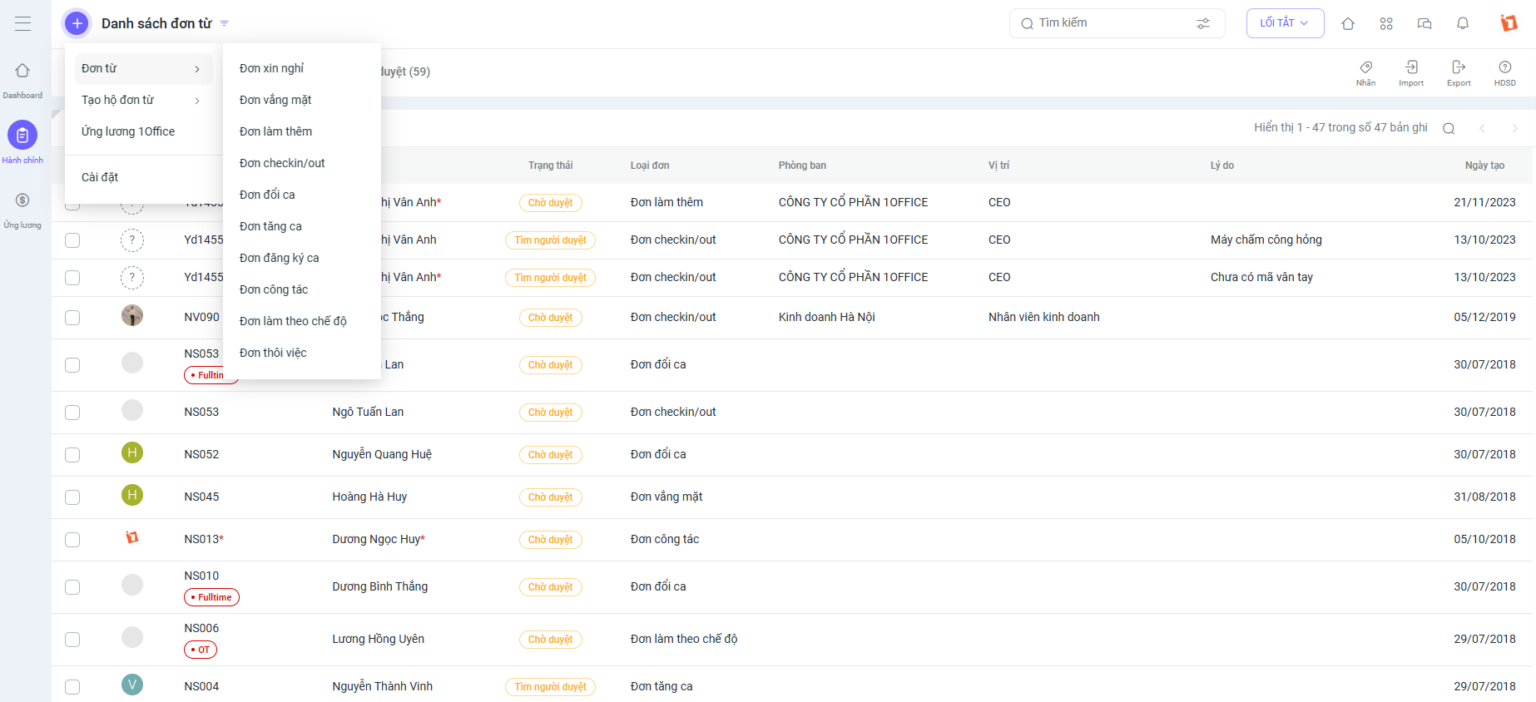
Submitting hard copy documents or emails to request approval can take a lot of time for both HR and the approver, and incurs costs related to stationery, storage, etc. Businesses can fully implement the 1HRM suite – a comprehensive solution for managing and digitizing requests with outstanding advantages such as:
- Digitize all types of administrative requests and approval processes
- Completely replace the traditional method of writing, submitting, and wet-signing requests
- Classify and organize requests scientifically, making them easy to look up and search for
- Automatically update data from approved requests to the timesheet
- Provide complete, accurate, and scientific statistical reports on requests
Get a free consultation and software demo
To complete the unpaid leave application process quickly and in compliance with procedures and legal regulations, you can refer to the information and sample unpaid leave request forms that 1Office has provided above. 1Office hopes that through this article, both the HR Department and employees have gained useful information and can establish clear regulations regarding unpaid leave requests within their company.
















