


 12/05/2026
  214 views
In a constantly changing world, a growth mindset (Growth Mindset) becomes a crucial factor for sustainable personal and organizational development. Introduced by Dr. Carol Dweck, this concept emphasizes that intelligence and abilities can be improved through effort and continuous learning. So, what is a Growth Mindset, why is it important in business management, and how can you cultivate this mindset? Let’s explore how to apply a Growth Mindset to foster innovation, flexibility, and success in the modern business environment.
Mục lục
- 1. What is a Growth Mindset?
- 2. Why is a Growth Mindset important for business development?
- 3. What are people with a growth mindset like?
- 4. The Difference Between a Growth Mindset and a Fixed Mindset
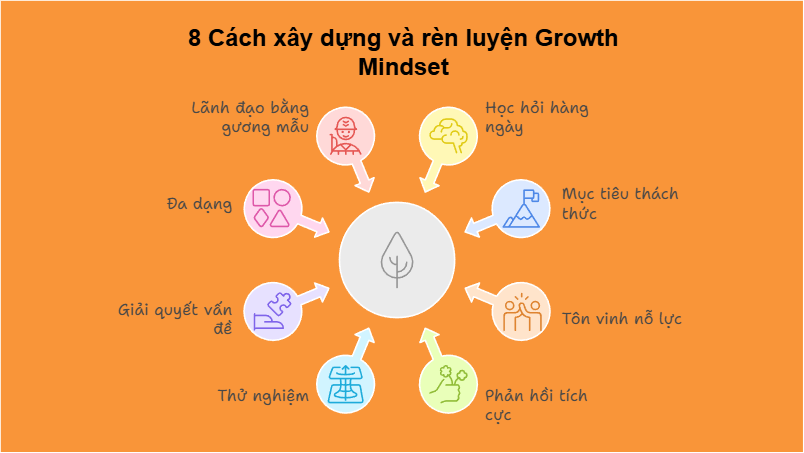
- 5. 8 Ways to Build and Cultivate a Growth Mindset
- 5.1. Encourage a Spirit of Daily Learning
- 5.2. Set Challenging Yet Achievable Goals
- 5.3. Celebrate Effort Instead of Focusing Solely on Results
- 5.4. Cultivate a Habit of Positive Feedback
- 5.5. Encourage Experimentation and Creativity
- 5.6. Train Problem-Solving Skills
- 5.7. Build a Team with Diverse Perspectives
- 5.8. Leading by Example
- 6. Applying Growth Mindset in Business Management
- 7. Conclusion
1. What is a Growth Mindset?
Growth Mindset is the belief that a person’s abilities, intelligence, and skills can be developed through effort, learning, and perseverance. This concept was researched and developed by Dr. Carol Dweck, who emphasizes that individuals with a growth mindset do not see failure as an endpoint but as an opportunity to learn and grow.

A growth mindset offers numerous benefits not only to individuals but also to organizations. People with a growth mindset tend to be more creative, flexible, and better at problem-solving. They also adapt easily to changing environments and often seek ways to motivate their teams to achieve success.
Individuals with a Growth Mindset often exhibit the following key characteristics:
- Receptiveness to feedback: They are not afraid of receiving comments from others, viewing it instead as an opportunity for improvement.
- Constantly seeking challenges: They enjoy setting new goals and are not afraid to face difficult decisions.
- Lifelong learning: They believe that learning is a continuous process and always look for opportunities to better themselves.
2. Why is a Growth Mindset important for business development?
In today’s business environment, a growth mindset has become a key factor that helps businesses survive and thrive for the following reasons.
2.1. Fostering a learning culture
When a business encourages its employees to adopt a growth mindset, it inadvertently builds a strong learning culture. This leads to employees feeling more comfortable sharing ideas, contributing initiatives, and experimenting with new methods. Such an environment not only fosters innovation but also creates development opportunities for every individual in the organization.
2.2. Embracing change

The business world is constantly changing, and companies must be able to adapt to survive. Employees with a growth mindset not only accept change but also proactively seek opportunities within it. They are willing to learn new skills and apply them in practice, thereby helping the business enhance its competitive edge.
2.3. Boosting work motivation
One of the most significant positive impacts of a growth mindset in a business is its ability to increase employee motivation. When people believe they can develop and progress, they naturally feel more engaged in their work. This not only makes them more effective but also contributes to creating a positive environment for the entire team.
3. What are people with a growth mindset like?
People with a Growth Mindset are those who believe that abilities and intelligence can be developed through effort, learning, and perseverance. They don’t see failure as an endpoint but as an opportunity to improve themselves.
✔ Persistent and resilient: Maintaining motivation even when facing difficulties.
People with a Growth Mindset believe that their abilities, intelligence, and skills are not fixed traits but can be developed through effort, learning, and perseverance. They are not afraid of failure, viewing it as an essential part of the growth process from which they can draw lessons to improve themselves.
✔ Embracing challenges: Always ready to face difficulties and find ways to overcome them.
One of the standout characteristics of people with a growth mindset is that they do not shy away from challenges. Instead of avoiding difficult tasks, they proactively seek opportunities to develop new skills, enhance their capabilities, and push their own limits. They understand that only by facing obstacles can they become stronger.
✔ Proactively seeking feedback: Viewing suggestions as opportunities for self-improvement.
Additionally, they are able to receive feedback positively. When given suggestions, instead of feeling criticized or discouraged, they see it as an opportunity to improve. They are willing to listen to others’ perspectives, analyze their weaknesses, and find ways to overcome them to grow every day.
✔ Learning from failure: Seeing mistakes as opportunities to grow, without fear of making them.
People with a growth mindset are also persistent and do not give up easily. When faced with difficulties, they do not get discouraged but strive to find solutions. They understand that success does not come overnight but requires time to learn, adjust, and continuously improve. It is this perseverance that helps them achieve long-term goals and attain sustainable success.
✔ Always seeking development: Continuously learning and honing new skills.
Furthermore, they possess a spirit of lifelong learning. They do not limit themselves to what they already know but always seek to expand their understanding, acquire new knowledge, and cultivate their skills. This helps them adapt quickly to societal changes and maintain a competitive edge.
✔ Inspiring others: Motivating the team to grow together and creating a positive environment.
In addition to their personal development, people with a growth mindset also have a positive impact on those around them. They inspire and encourage colleagues and friends to continuously learn and grow. In the workplace, they help build a positive culture where everyone is willing to support each other’s progress.
Thanks to these characteristics, individuals with a growth mindset often achieve success in both their professional and personal lives. They are not afraid of change, always seek opportunities for development, and know how to turn challenges into motivation to move forward.
4. The Difference Between a Growth Mindset and a Fixed Mindset
The two most common mindsets today, the growth mindset and the fixed mindset, not only affect how we face challenges but also determine our success or failure. Clearly understanding the difference between these two mindsets not only helps you recognize your current attitude but also opens the door to sustainable change and development. The differences between the two mindsets are summarized in the table below:
| Growth Mindset | Fixed Mindset | |
| View on ability | Believes that abilities can be developed through effort, learning, and perseverance. | Believes that abilities and talents are innate, fixed, and unchangeable. |
| Perspective on failure | Sees failure as a learning opportunity, analyzes causes to improve and try harder. | Fears failure, sees it as proof of weakness, and often avoids risky situations. |
| Attitude towards challenges | Accepts and seeks challenges for growth, always strives to overcome difficulties. | Avoids challenges, chooses easy tasks to protect their self-image. |
| Feedback and criticism | Welcomes feedback, seeing it as an opportunity to improve. | Often reacts negatively or ignores feedback, believing it cannot help them change. |
| Goal orientation | Focuses on the process, seeking improvement and self-development rather than just achieving results. | Aims only for the final result, often choosing safe, low-risk goals. |
| Reaction to others’ success | Is inspired by the success of others, seeing it as motivation to strive. | Feels envious or sees others’ success as a threat to their own worth. |
| Learning mindset | Always ready to learn new things, not afraid to admit weaknesses that need improvement. | Often limits themselves to what they already know, unwilling to experiment or learn more. |
| Long-term results | Often achieves personal growth and sustainable success thanks to a continuous learning attitude. | Prone to stagnation, lack of development, or missing major opportunities due to fear of failure and a lack of motivation to change. |
5. 8 Ways to Build and Cultivate a Growth Mindset
5.1. Encourage a Spirit of Daily Learning
A mindset of continuous learning is the crucial foundation for building a growth mindset in a corporate environment. This starts with creating a culture that encourages every individual to constantly explore and cultivate new knowledge and skills. When employees feel motivated by an environment that values learning, they will gradually form the habit of proactively seeking opportunities for self-development.
Businesses can support employees in developing a growth mindset by organizing internal training sessions, industry seminars, or funding their participation in external courses. However, for this to be truly effective, managers need to create a safe workspace where making mistakes is seen as an essential part of the learning process, rather than being criticized or judged.
5.2. Set Challenging Yet Achievable Goals
Setting goals not only provides direction but also motivates employees to unlock their own potential. However, to develop a growth mindset, goals need to be challenging enough to stimulate creativity and motivation, yet still achievable to avoid discouragement. This is an art that requires finesse from managers.
An effective strategy is to break down large goals into specific steps, making it easier for employees to track their progress and feel a sense of advancement. At the same time, regular reviews are crucial, not just to check effectiveness but also to make timely adjustments if needed. The support and encouragement of management throughout this process will help employees maintain their morale and focus more on the set goals.
5.3. Celebrate Effort Instead of Focusing Solely on Results

In a work environment that promotes a growth mindset, effort is always considered more valuable than the outcome. When employees feel their efforts are recognized, they are motivated to try new approaches, even if the results are not always as expected. This encourages them to step out of their comfort zones and learn from their own experiences.
Managers can apply this by providing positive feedback that goes beyond mere praise to explain why the effort was important. Public recognition or acknowledgment during team meetings is also an excellent way to boost overall morale and help the entire team see the value of perseverance and creativity.
5.4. Cultivate a Habit of Positive Feedback
Feedback is key to driving progress at work, especially in cultivating a growth mindset. An open work environment where employees can receive and give feedback positively will help them recognize their strengths and weaknesses and continuously improve.
To build this space, managers need to skillfully lead by providing specific, clear, and constructive feedback. At the same time, they should encourage employees to face feedback with a positive attitude, viewing it as an opportunity for development. It is crucial that feedback is accompanied by specific suggestions for improvement, rather than just pointing out mistakes.
5.5. Encourage Experimentation and Creativity
A work environment that fosters a growth mindset must create conditions for employees to experiment with new ideas and accept the risks of potential failures. This courage is what opens the door to groundbreaking and creative solutions.
Businesses can design innovation programs or allow employees to experiment on small projects where risks are controlled. More importantly, it is necessary to communicate that failure is not something to be feared but is part of the growth process. When employees feel supported by leadership, they will be more confident in stepping beyond their limits.
5.6. Train Problem-Solving Skills
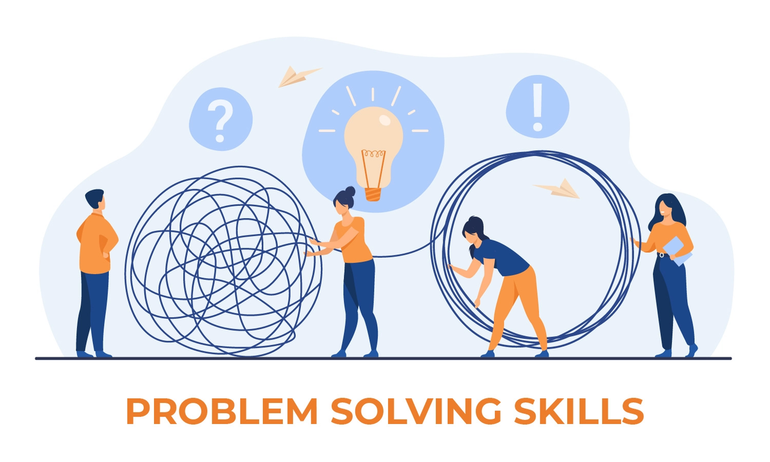
One of the core elements of a growth mindset is the ability to face and solve problems effectively. However, not everyone naturally possesses this skill. Therefore, businesses need to organize training programs focused on developing analytical skills, logical thinking, and creative approaches to problem-solving.
Practical training sessions with simulated scenarios or group activities will help employees practice their adaptability and flexibility in the face of challenges. Repeating these exercises not only helps employees improve their capabilities but also builds their confidence when dealing with complex issues.
5.7. Build a Team with Diverse Perspectives
A diverse work environment, where employees come from various backgrounds, will generate fresh and rich perspectives. This diversity not only stimulates creative thinking but also helps employees learn from one another, leading to more comprehensive development.
Businesses can promote interaction between departments or organize experience-sharing sessions, giving everyone the opportunity to be exposed to different working methods and perspectives. When employees understand the value of diversity, they become more flexible in their thinking and more willing to embrace new ideas.
5.8. Leading by Example
Leaders are the reflection of a growth mindset within the organization. When leaders are willing to admit mistakes, learn from failure, and continuously improve themselves, they not only inspire but also build trust within their team.
To achieve this, leaders should regularly share lessons from their personal experiences, especially stories about overcoming failure. This not only encourages employees but also creates a work culture where everyone feels safe and confident enough to develop.
6. Applying Growth Mindset in Business Management

6.1. Building a Culture of Learning and Development in the Organization
An organization with a strong learning culture will always maintain a competitive edge, especially in a constantly changing business environment. A growth mindset promotes a spirit of continuous learning, encouraging employees to constantly enhance their capabilities and be willing to experiment with new methods. This not only improves productivity but also motivates the team to achieve more comprehensive development.
6.2. Enhancing Adaptability to Change
The market is always in flux, and only businesses that adapt quickly can survive and thrive. A growth mindset helps companies and their employees become more flexible in embracing change. From adopting new technologies to adjusting business strategies, a progressive mindset is the foundation for an organization to overcome challenges and seize opportunities.
6.3. Motivating Through Recognizing Effort
Praising effort rather than focusing solely on results is an effective way to keep employees motivated. With a growth mindset, businesses can create an environment where everyone feels their efforts are valued. This not only increases engagement but also fosters a spirit of learning and continuous improvement in their work.
6.4. Encouraging Creativity and Innovation
Creativity and innovation are vital elements in business management. A growth mindset allows employees to experiment with new ideas without fear of being judged for failure. When failure is viewed as a learning opportunity, the organization has more space to create and improve processes, products, or services, helping the business grow sustainably.
7. Conclusion
Growth mindset is not just an interesting topic but a crucial concept for personal and organizational development. A progressive mindset not only helps individuals overcome challenges but also fosters a positive culture within the business. Through training and application in management, everyone has the opportunity to discover their limitless potential and contribute to the organization’s collective growth.
















