


 11/05/2026
  435 views
As technology continues to develop, electronic transactions have also become more common. To ensure legality and security when performing online procedures, personal digital signatures were created and have become one of the important tools used by many people today. So, what is a personal digital signature? Is its use mandatory? What is its legal validity? How do you create a personal digital signature? This article will answer all of the above questions. Let’s find out with 1Office now!
Mục lục
- 1. What is a personal digital signature?
- 2. The Importance of Personal Digital Signatures
- 3. Common Types of Personal Digital Signatures Today
- 4. Legal Regulations on Personal Digital Signatures
- 5. Guide to Creating a Personal Digital Signature
- 6. Some Examples of Personal Digital Signatures in an Organization
- 7. FAQ: Frequently Asked Questions
1. What is a personal digital signature?
Pursuant to Clause 6, Article 3 of Decree 130/2018/ND-CP, the concept of a digital signature is defined as follows:
| A digital signature is a form of electronic signature created by transforming a data message using an asymmetric cryptography system, whereby a recipient of the original data message and the signer’s public key can accurately determine:
a) That the aforementioned transformation was created using the private key corresponding to the public key in the same key pair; b) The integrity of the data message’s content since the aforementioned transformation was performed. |
Thus, a personal digital signature is a type of electronic signature created based on data messages using an asymmetric cryptography system. A personal digital signature has the same effect as a handwritten signature and can be used to authenticate an individual’s identity, ensuring the integrity and non-repudiation of information.
In a business, personal digital signatures are used in various cases, including:
- Signing electronic documents and records such as contracts, agreements, invoices, tax declarations, etc.
- Participating in online transactions such as declaring personal income, using Internet Banking, Mobile Banking, stock trading, online shopping, etc.
- Using online public services such as registering a business, business registration, applying for construction permits, etc.
2. The Importance of Personal Digital Signatures
Personal digital signatures are an important tool, offering many advantages over handwritten signatures. Some of the benefits of personal digital signatures include:
- Ensuring data integrity: Personal digital signatures use cryptographic technology to create a private key, which helps ensure data integrity by preventing information from being changed or modified after signing. This is crucial in electronic transactions to protect the rights of all parties involved.
- Shortening approval and processing times: Digital signatures help individuals and businesses conduct electronic transactions quickly and conveniently. Businesses can sign contracts, agreements, invoices, tax declarations, etc., without needing to print and deliver documents between individuals, departments, or to clients and partners, thereby saving time and costs.
- Minimizing administrative costs: Printing and delivering documents before and after signing can incur significant costs, especially for businesses with a large volume of paperwork. Therefore, signing digitally on digital signature software and electronic contracts helps businesses save on unnecessary expenses.
- Secure and confidential information: Personal digital signatures help prevent forgery and fraud, protecting the rights of parties in electronic transactions. This contributes to enhancing the reputation and demonstrating the professionalism and modernity of the business.
- Easy signing anytime, anywhere: Instead of only being able to sign documents in person at the office during business hours, personal digital signatures allow businesses to approve documents quickly and easily, anytime, anywhere, on any device with an internet connection. This saves time and costs, improving work efficiency.
3. Common Types of Personal Digital Signatures Today
There are currently 4 types of personal digital signatures on the market, including:
- USB Token Digital Signature: This is the most common type of digital signature today. The USB Token digital signature is stored on a USB Token hardware device. This device is compact and easy to carry, making it convenient for users to use their digital signature.
- SmartCard Digital Signature: This is another fairly common type of digital signature, stored on a SmartCard hardware device. This device is shaped like a phone SIM card, making it convenient for users to carry and use.
- HSM Digital Signature: This is a high-end digital signature used in large enterprises and government agencies. The HSM digital signature is stored on an HSM (Hardware Security Module) device, which offers high security and meets strict security requirements.
- Remote Digital Signature: This is a type of digital signature that does not require a hardware device. A remote digital signature is created using digital signature software and an internet connection. This type of signature is suitable for people who travel frequently and do not have time to visit certification authorities.
Each type of digital signature has its own advantages and disadvantages, and users should choose the type that best suits their needs and capabilities.
4. Legal Regulations on Personal Digital Signatures
With the development of technology, the state has now established legal regulations regarding personal digital signatures:
4.1. Who Can Use a Personal Digital Signature
According to legal regulations, any individual who needs to use a personal digital signature can register with a certification authority. After successful registration, the personal digital signature is used with the same legal standing as their handwritten signature.
4.2. Legal Validity of Personal Digital Signatures
According to Decree 130/2018/ND-CP, a personal digital signature has the same legal validity as a handwritten signature in electronic transactions. This means that electronic documents, contracts, and records signed with a personal digital signature have the same legal value as paper documents, contracts, and records signed by hand.
4.3. Conditions for Ensuring the Security of Personal Digital Signatures
According to the provisions of Article 40 of Decree 130/2018/ND-CP, a digital signature is considered an electronic signature and is secure when it meets the following conditions:
- The digital signature is created while the digital certificate is valid and can be verified by the public key recorded on that digital certificate.
- The digital signature is created using the private key corresponding to the public key on the digital certificate and is issued by one of the following organizations:
-
- National digital signature certification service provider;
- Government-specialized digital signature certification service provider;
- Public digital signature certification service provider;
- Specialized digital signature certification service provider for agencies and organizations that have been certified as meeting security standards
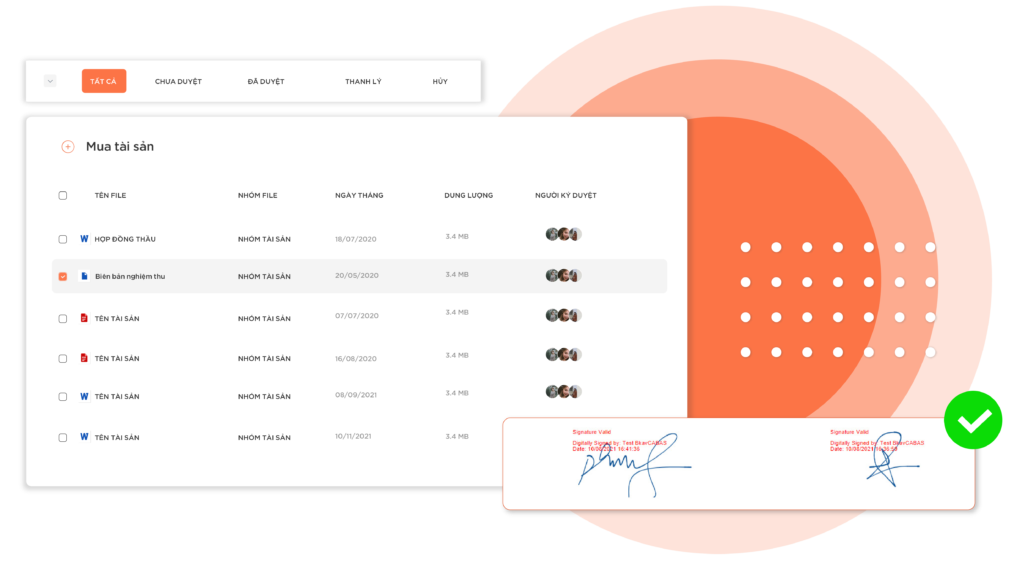
Explore the 1Office electronic digital signature software, certified to ISO standards and meeting the state’s security requirements for digital signing.
5. Guide to Creating a Personal Digital Signature
To obtain a valid personal digital signature, you need to perform two tasks: Create the digital signature and register it with the state/competent authority.
5.1. How to Create a Personal Digital Signature
Step 1: Choose a digital signature service provider
Individuals need to choose a reputable, state-recognized certification authority to ensure their personal digital signature is legally valid. For example, choosing 1Office, a reputable digital signature service provider licensed by the Ministry of Information and Communications.
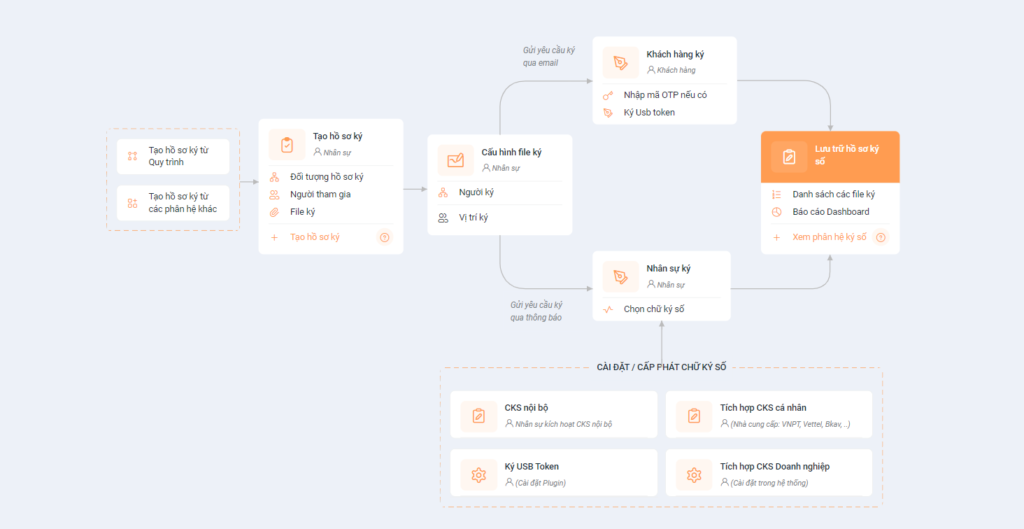
Step 2: Register and verify your information
To register for a digital signature, individuals need to provide information such as full name, date of birth, ID/Citizen ID number, phone number, email address, etc., and business information like the business license, etc.
Step 3: Submit documents and verify identity
Businesses need to contact the provider to select a suitable digital signature service package, then proceed to submit documents and verify information. 1Office digital signature service support hotline: 083 483 8888.
Step 4: Create the personal digital signature
After successful identity verification, the digital signature service provider will issue you a digital signature device. This device can be a USB Token, SmartCard, HSM, or a remote signature. You need to install the digital signature management software on your computer. Then, you use the digital signature device to create your personal digital signature.
Step 5: Store the digital signature
A personal digital signature is an important asset, so you need to store it safely and securely. Individuals can store the digital signature on the signature device, on their computer, or secure the password for accessing the digital signature.
5.2. How to Register a Personal Digital Signature
Here are the 5 standard steps to register a personal digital signature:
- Step 1: After successfully purchasing the digital signature, the individual needs to submit the personal digital signature registration documents via USB Token.
- Step 2: The provider reviews the personal digital signature registration documents.
- Step 3: After the documents are successfully reviewed, the USB is sent to the user to be installed and activated for signing.
- Step 4: Register an account with the General Department of Taxation.
- Step 5: After the National Electronic Authentication Center certifies the documents, the individual can start using the digital signature to sign electronic documents.
6. Some Examples of Personal Digital Signatures in an Organization
Below are some examples of personal digital signatures that businesses can refer to:
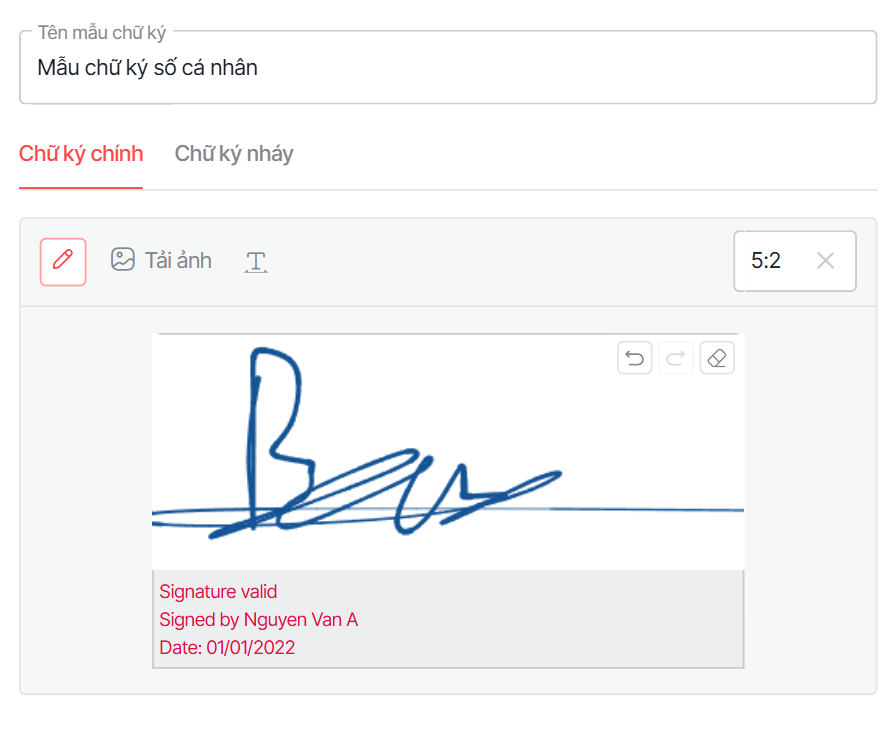 |
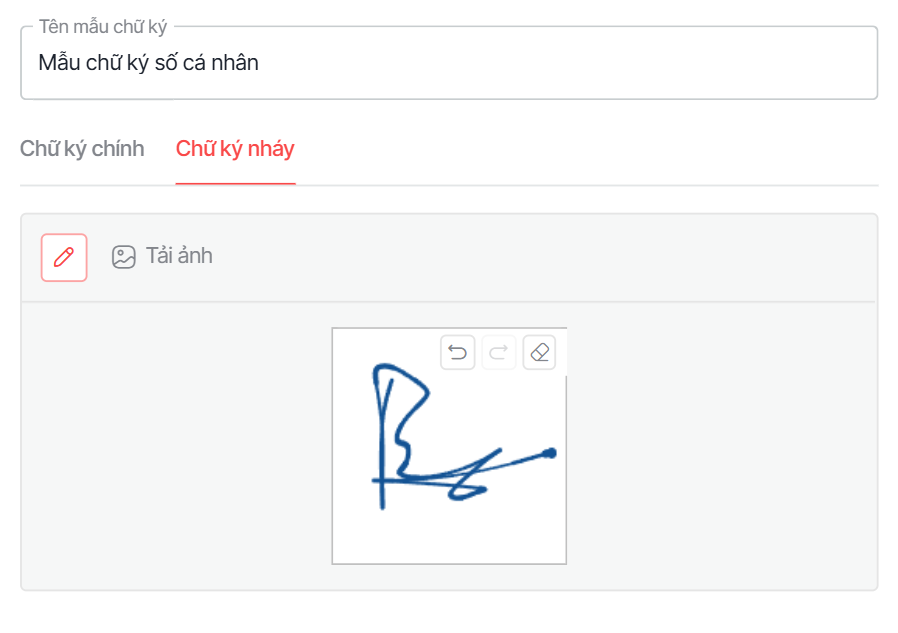 |
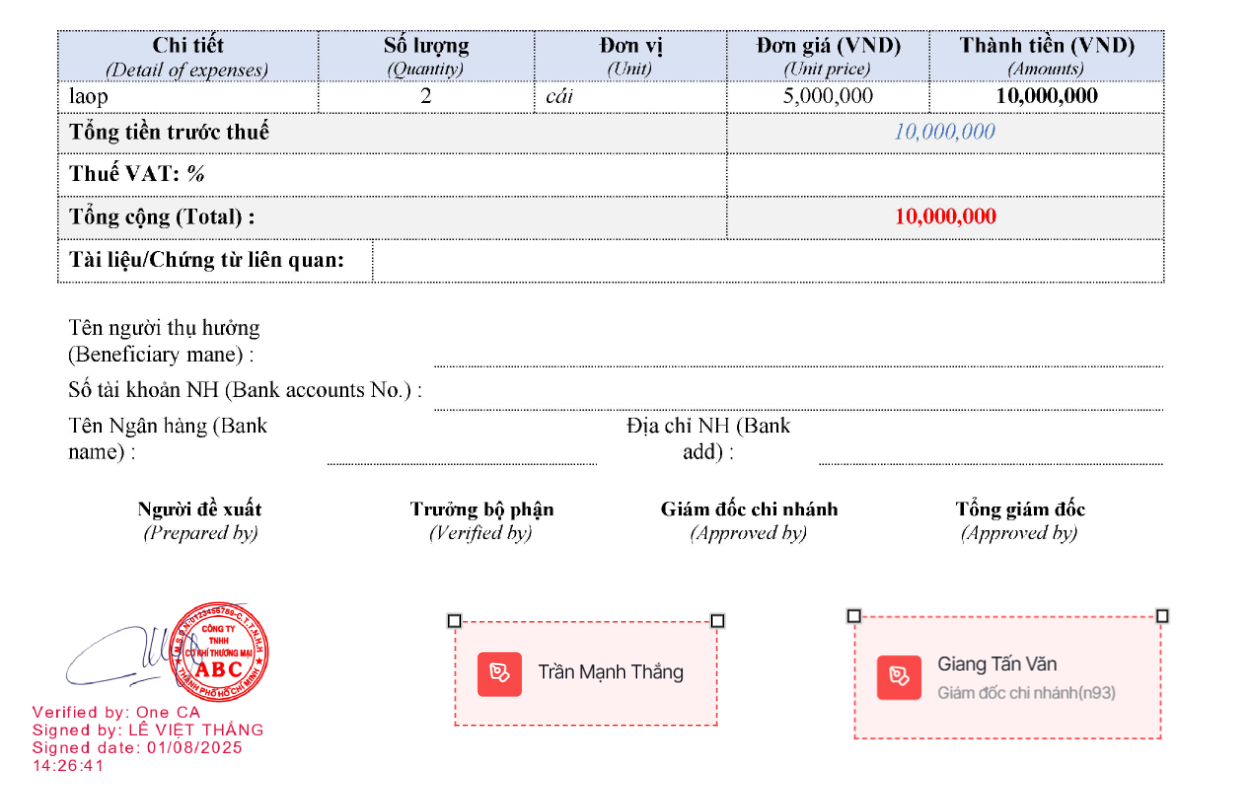 |
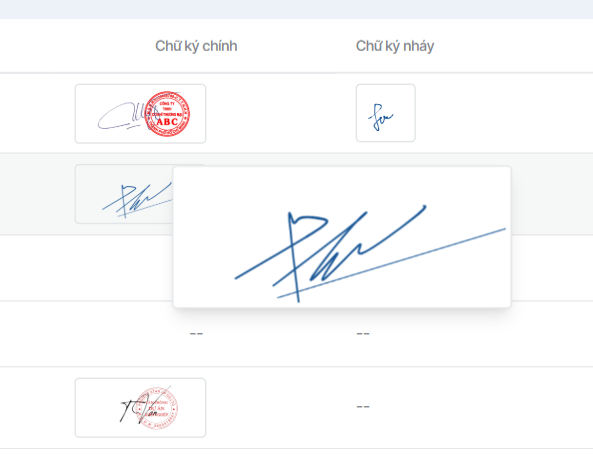 |
7. FAQ: Frequently Asked Questions
7.1. Can businesses sign labor contracts with digital signatures?
Yes, businesses can sign labor contracts with digital signatures. According to legal regulations, a personal digital signature has the same legal validity as a handwritten signature in electronic transactions. Therefore, for electronic labor contracts, employers can use digital signatures.
7.2. Can individuals sign labor contracts with digital signatures?
Similar to the question above, individuals can sign labor contracts with digital signatures. This is because a personal digital signature has the same legal validity as a handwritten signature in electronic transactions.
7.3. Criteria for choosing a personal digital signature provider
To choose a reputable personal digital signature provider, you should consider the following criteria:
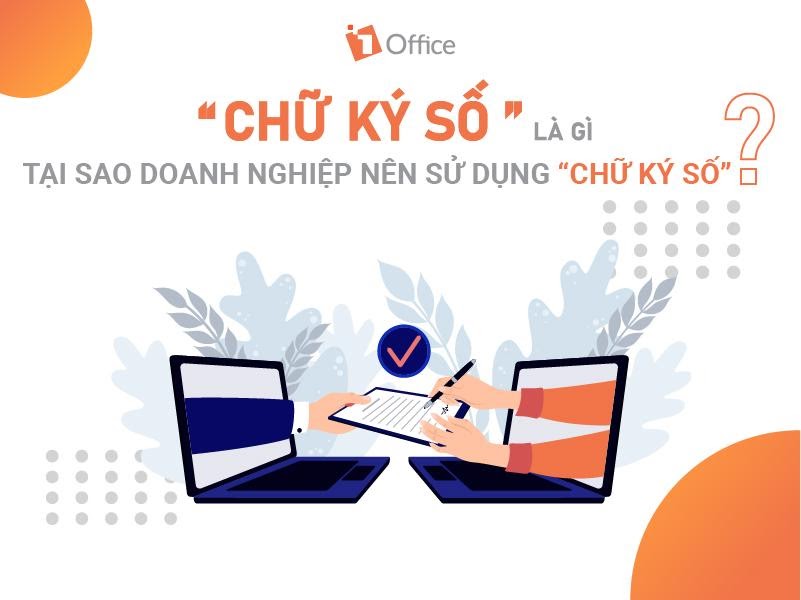
- Licensed by the Ministry of Information and Communications: This is the most important criterion when choosing a personal digital signature provider. Only organizations licensed by the Ministry of Information and Communications are authorized to provide digital signature services.
- Security Policy: A digital signature is an important asset, so you need to choose a provider with a robust information security system. You can refer to customer reviews before making a choice.
- Service Package Pricing: The cost of using a digital signature is a factor to consider. You should compare prices from different providers to choose a plan that suits your needs.
- Customer Care Service: You should choose a provider with excellent customer care service, ready to assist you when you encounter problems.
7.4. Why choose 1Office’s personal digital signature service?
1Office is an all-in-one business management platform that provides comprehensive technology solutions for businesses. Among them, 1Office’s personal digital signature service is highly regarded for the following advantages:
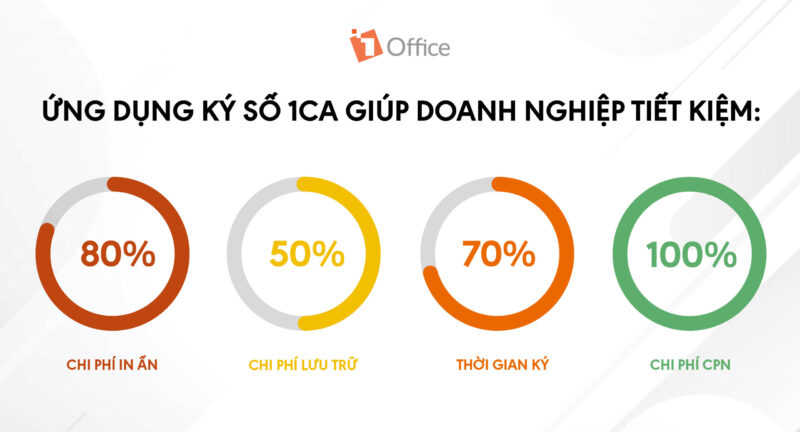
- Licensed by the Ministry of Information and Communications to provide digital signature authentication services.
- Provides high-quality personal digital signatures that meet standards for security and information integrity.
- 1Office’s personal digital signature service pricing is competitive, suitable for the needs and budgets of various customer groups.
- A professional customer support team is ready to answer questions and assist businesses when needed.
If you are looking for a reputable, high-quality, easy-to-use, and highly secure personal digital signature solution, then 1Office’s personal digital signature service is the right choice for you.
| 1Office Digital Signature Software – Digitally sign hundreds of contracts, work remotely without interruption |
|
Get a free demo to experience 1Office’s digital signature feature for individuals and businesses today!
The above is all the information about personal digital signatures that 1Office wants to share with you. We hope that through this article, your business has gained a more specific understanding of the importance of digital signatures, their legal validity, security conditions, and how to create a standard personal digital signature correctly. If your business needs more specific advice on 1Office’s digital signature software, please contact us via:
- Hotline: 083 483 8888
- Facebook: https://www.facebook.com/1officevn/
- Youtube: https://www.youtube.com/@1office-chuyendoisodn
















