12/05/2026
  416 views
Decision-making skills are one of the key factors that help you succeed in work and life. This skill not only helps you solve problems quickly but also builds trust and credibility with colleagues and partners. Let’s explore with 1Office methods to improve decision-making skills through this article, thereby enhancing work performance and achieving major career goals.
Mục lục
- I. What are decision-making skills?
- II. What is the role of decision-making skills?
- III. Types of decisions
- IV. 7 steps in an effective decision-making process
- 1. Step 1: Identify the issues that require a decision
- 2. Step 2: Gather information and assess the situation
- 3. Step 3: List feasible solutions
- 4. Step 4: Analyze & evaluate the pros and cons of each solution
- 5. Step 5: Choose and make a decision
- 6. Step 6: Implement the decision
- 7. Step 7: Monitor and evaluate the results
- V. Skills that support accurate decision-making
- VI. Barriers that limit decision-making ability
- VII. 9 Methods to improve decision-making skills quickly and effectively
- 1. Set goals
- 2. Practice consistency and independence
- 3. Understand your own strengths and weaknesses
- 4. Learn and continuously update new information
- 5. Practice making decisions in real-life situations
- 6. Learn from others
- 7. Take responsibility for every decision
- 8. Accept mistakes and learn from failure
- 9. Don’t over-analyze
- VIII. Principles to remember when making decisions
I. What are decision-making skills?
Decision-making skills are the ability to identify, analyze, evaluate, and choose the best solution to solve a specific problem or situation. This skill involves collecting and evaluating information, predicting potential outcomes, weighing risks and benefits, and ultimately selecting the most appropriate course of action.

This is a crucial and indispensable process in daily personal and professional life because every decision made can strongly impact the success of an individual and the entire enterprise. Therefore, this requires everyone to be decisive and insightful when making decisions.
II. What is the role of decision-making skills?
Effective decision-making skills help you solve problems thoroughly, plan for the future, and avoid choices that could lead to undesirable consequences. There are countless benefits to honing decision-making skills. Here are a few reasons why recognizing and developing these skills is important:
1. Improve self-confidence
Excellent decision-making skills help you become more decisive, thereby boosting your confidence in work and life. When you can evaluate and choose the best option, you will feel more confident in your own analytical and assessment abilities. This not only helps you make accurate decisions but also fosters a confident attitude when facing difficult situations and challenges.
2. Enhance communication skills

Good decision-making skills help you communicate your opinions and choices more clearly and persuasively. This improves your ability to communicate and interact with colleagues, customers, and partners. Making decisions also requires listening to and understanding others’ perspectives, which helps you develop effective listening and communication skills, laying the foundation for positive and collaborative relationships.
3. Improve leadership abilities
A leader needs the ability to make important decisions and guide their team in the right direction. Decision-making skills help you provide clear and transparent guidance, building trust and respect from team members.
4. Increase work performance
Effective decisions help optimize work processes, increase productivity, and minimize wasted time and resources. By making sound decisions, you can minimize mistakes and unwanted consequences, thereby enhancing work performance. This skill helps you work smarter, not only saving time but also achieving better results.
5. Risk management
Decision-making skills allow you to predict and assess potential risks, enabling you to plan appropriate responses. You will be able to prepare contingency plans and timely response measures, minimizing damage to the business.
6. Reduce Stress
When you are confident in your decision-making abilities, you will worry less about the consequences of your choices. Good decision-making skills help you control situations better, thereby reducing stress and pressure. You will feel calmer and more confident when facing challenges, knowing that you can make sound and effective decisions.
7. Build good relationships
Transparent and rational decisions help build trust and respect from colleagues and partners. The ability to make decisions with participation and consensus from everyone helps create a positive and collaborative work environment. Thanks to this skill, you can build and maintain good relationships, creating conditions for long-term cooperation and development.
III. Types of decisions
1. Programmed decisions
Programmed decisions are those made based on pre-established processes and regulations. This type of decision is often applied in repetitive situations where there are clear guidelines and specific standards. For example, processing orders or handling customer complaints according to company procedures. Programmed decisions help ensure consistency and efficiency, while minimizing errors and inconsistencies in operations.
2. Urgent decisions

These are decisions that need to be made immediately in urgent or unexpected situations. This type of decision requires quick reaction and flexible thinking to resolve the issue promptly. For example, handling a technical issue in the system or responding to a media crisis.
3. In-depth decisions
This is a type of decision that requires meticulous analysis and thorough research before being made. This type of decision is often applied to complex and highly impactful issues, requiring comprehensive consideration and evaluation of all relevant factors. For example, deciding to invest in a major project or changing the company’s business strategy. In-depth decisions often involve collecting and analyzing data, consulting with experts, and considering long-term impacts before making a final choice.
IV. 7 steps in an effective decision-making process
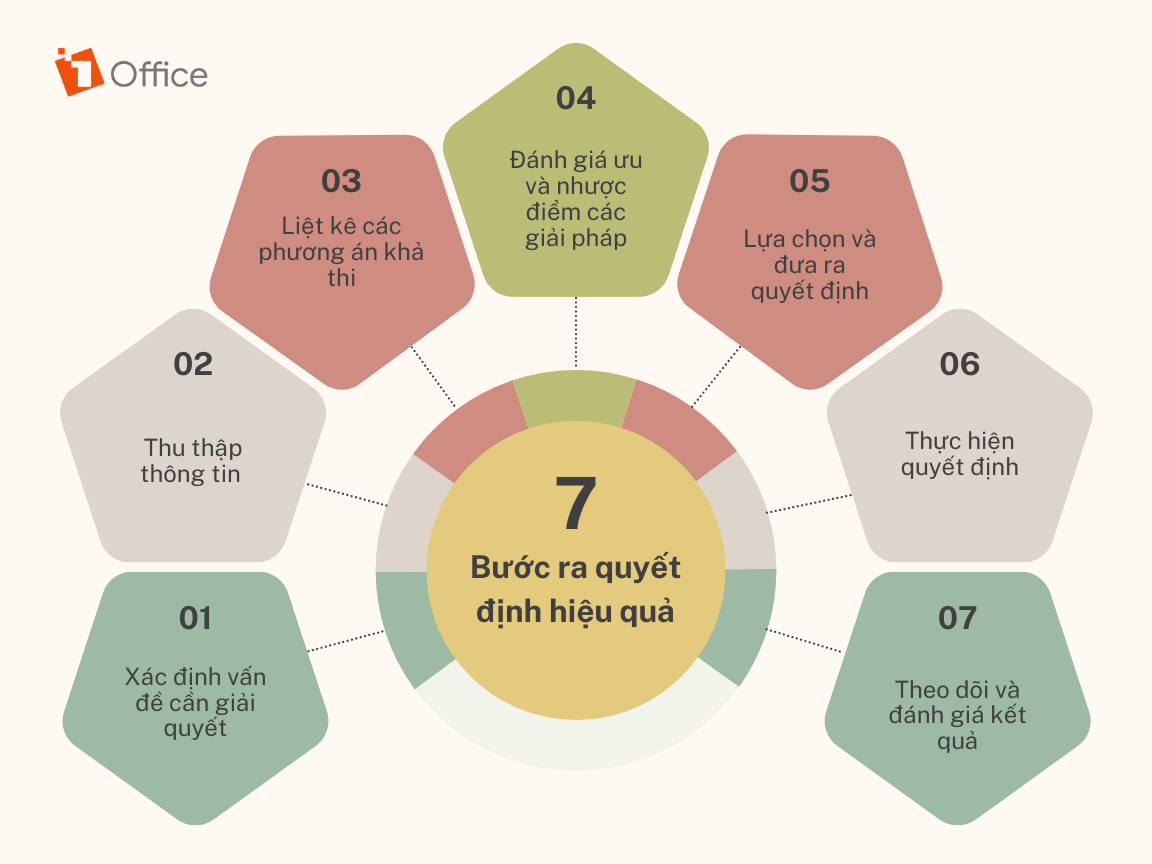
1. Step 1: Identify the issues that require a decision
First, you need to recognize and clearly define the problem or opportunity you are facing. Identifying the core issue will help you focus on the main goal and avoid irrelevant solutions.
The questions you will need to answer include:
- Where and what is the current problem?
- Does this problem really need to be solved and a decision made?
- What is the purpose and expected outcome after resolving the problem?
2. Step 2: Gather information and assess the situation
Next, gather information from reliable sources to get a comprehensive and objective view of the situation. This includes reviewing data, expert opinions, and factors that influence your decision. This process helps minimize errors and increases the likelihood of success.
3. Step 3: List feasible solutions
After gathering enough information, you need to list all feasible options to solve the problem. At this stage, you should combine creativity with established criteria to generate a list of potential solutions.
Your feasible options should ensure they:
- Address the identified problems
- Are suitable for the current situation and conditions
- Can minimize and control unexpected impacts and risks as much as possible
4. Step 4: Analyze & evaluate the pros and cons of each solution
Each option you propose will have its own pros and cons. Analyzing and comparing them will help you better understand the feasibility, effectiveness, and risks of each solution. This is a crucial step in identifying the optimal solution.
Each solution can complement and supplement the others. Therefore, don’t be rigid; be flexible in every situation.
5. Step 5: Choose and make a decision

Based on the analysis from the previous step, you will make the final decision. This decision should clearly reflect your or the organization’s goals and priorities. Sometimes, flexibility and adaptability also need to be considered so the decision can fit the actual situation.
6. Step 6: Implement the decision
After the decision is made, the next step is implementation. This includes detailed planning, resource allocation, and progress monitoring to ensure the decision is executed correctly and effectively.
7. Step 7: Monitor and evaluate the results
Finally, monitoring and evaluating the results of the decision is an essential step. This helps you determine whether the decision has achieved the expected effectiveness, allowing you to learn from the experience for future decisions.
V. Skills that support accurate decision-making
1. Critical thinking
Critical thinking will allow you to analyze and evaluate information logically and objectively. It helps you identify biases and false assumptions, leading to wiser and more rational decisions. Applying critical thinking helps you avoid common psychological traps and improves the accuracy of your decisions.
2. Emotional management
This is the ability to help you remain calm and focused when facing stressful situations. This is very important to avoid impulsive decisions and ensure that your decisions are based on reason rather than emotion. Good emotional management also helps you maintain positive relationships with colleagues and partners.
3. Creative thinking
Creativity is an important skill that helps you find new and unique solutions to complex problems. When you have creative thinking ability, you can look at problems from multiple perspectives and make unconventional decisions. This skill helps expand the range of options and improves the quality of decisions.

4. Teamwork skills
Effective teamwork helps you leverage the diverse opinions and experiences of team members. Collaboration and information exchange within the team help decisions be evaluated from multiple perspectives, minimizing risks and increasing the feasibility of the decision. Teamwork skills help ensure that decisions are implemented consistently and with consensus.
5. Leadership skills
Leadership skills Strong leadership skills help you guide and motivate the team towards a common goal. A good leader will have the ability to make timely decisions and inspire the team to implement them. Leadership also helps in setting priorities and managing resources effectively, ensuring that decisions are implemented efficiently.
6. Problem-solving skills
Problem-solving is an essential skill that helps you handle obstacles and find effective solutions. This skill includes the ability to analyze situations, identify root causes, and propose corrective actions. When you are good at problem-solving, you will be able to make faster and more accurate decisions.
7. Time management skills

Effective time management helps you prioritize important tasks and use your time wisely. This skill helps you avoid time pressure and have enough time to think carefully before making a decision. Time management also helps ensure that you can implement and monitor decisions effectively, while minimizing stress.
VI. Barriers that limit decision-making ability
Effective decision-making depends not only on knowledge and skills but is also influenced by various barriers. Understanding and identifying these barriers is the first step to improving decision-making skills.
- Lack of information: When there is not enough information or the information is inaccurate, your decision can be affected and lead to unexpected results.
- Time pressure: Being under pressure to make a decision in a short amount of time can lead to decisions that are not well-thought-out, thoroughly analyzed, or based on accurate information.
- Conflicting viewpoints: If the parties involved in the decision have different viewpoints, resolving conflicts and reaching a satisfactory decision can be a challenge.
- Lack of creativity: In situations that require decisions in complex circumstances, a lack of creativity and innovative thinking can lead to delayed or ineffective decisions.
- Lack of decisiveness: Without decisiveness, the decision-maker may hesitate and be unable to make a clear and quick decision.
- Being influenced by emotions: Your decisions can be made under the influence of personal emotions, which can lead to decisions that lack objectivity and bring negative results for the organization.
VII. 9 Methods to improve decision-making skills quickly and effectively
1. Set goals
Setting clear and specific goals is important to guide the decision-making process. Goals not only help you focus on what is important but also allow you to evaluate the effectiveness of the decision after implementation. When you have goals, it becomes easier to identify options and choose the most suitable one to achieve them.

2. Practice consistency and independence
This skill is very important for making decisions confidently and without being overly influenced by the opinions of others. By practicing self-confidence and independent thinking, you can make decisions based on your personal values and goals without feeling pressured by the majority opinion.
3. Understand your own strengths and weaknesses
There is an old proverb: ‘Know the enemy and know yourself, and you can fight a hundred battles without defeat’. This emphasizes the importance of understanding both your strengths and weaknesses before making any decision. This not only helps improve decision-making skills but also serves as a foundation for comprehensive personal development.
4. Learn and continuously update new information
Learning and updating information helps you get a more comprehensive view of the situation, thereby making decisions based on scientific and practical grounds. A deep understanding of the relevant field will help you minimize risks and optimize plans.
5. Practice making decisions in real-life situations
Practice is the most effective way to hone decision-making skills. By facing and resolving real-life situations, you will become more confident in making decisions and know how to respond to difficult situations.
6. Learn from others

Sharing and learning from the experiences of others is one of the most effective ways to broaden your perspective and improve your decision-making ability. Listening to different viewpoints helps you gain a multi-dimensional view and make more comprehensive and objective decisions.
7. Take responsibility for every decision
Accepting responsibility for every decision helps you learn from experience and grow. By taking responsibility for your actions, you will become more confident and capable of making more accurate decisions in the future.
8. Accept mistakes and learn from failure
Mistakes are an unavoidable part of the decision-making process. Accepting and learning from mistakes helps you not only develop your analytical skills but also become more flexible and creative in subsequent decisions.
9. Don’t over-analyze
Over-analyzing can lead to delays and missed opportunities. Instead, balance analysis with action to make decisions quickly and effectively. Sometimes, trusting your feelings and intuition is also an important part of the decision-making process.
VIII. Principles to remember when making decisions
1. Have a solid basis and accurate input data
The quality of the final decision depends on the accuracy and reliability of the data and research you have used. Ensuring that the information is thoroughly and comprehensively selected with a solid reasoning basis will help you avoid biases in the decision-making process. This is crucial to avoid confirmation bias, a common psychological phenomenon when making decisions.
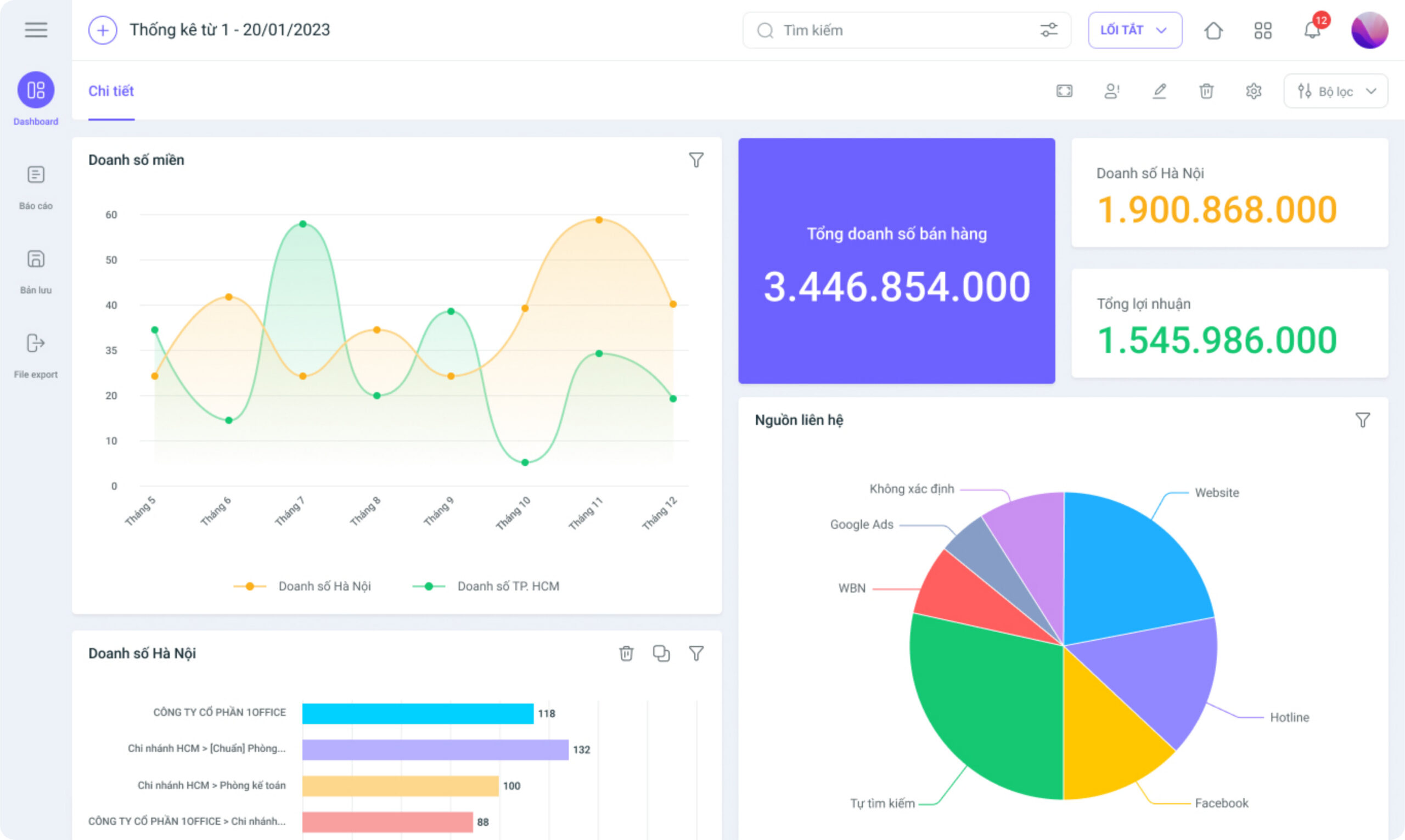
Today, there are many tools that support the synthesis and analysis of input data to optimize decision-making capabilities. Among them, 1Office software – The all-in-one business management platform, provides an outstanding automated evaluation and reporting system to help make your decision-making process more accurate and well-founded. With 1Office, leaders can easily track and analyze comprehensive data, gaining a holistic view of the business. This not only supports rapid decision-making but also ensures transparency and efficiency in business management.
Get a free consultation and software Demo
3. Ensure consistency
Decisions need to be made consistently throughout the organization to avoid confusion and conflict. This is especially important when decisions affect multiple departments or workgroups.
Each person needs to make decisions based on their authority and responsibility. This helps ensure that decisions are made by those with the necessary knowledge and competence.
5. Be fast, timely, and accurate
Time and accuracy are crucial factors in decision-making. Decisions need to be made quickly and in a timely manner, while also being accurate to avoid undesirable consequences.
Decision-making skills are not only a crucial element in management but also the key to achieving success in many different areas of life. Mastering and effectively applying decision-making skills will help you make smart choices, minimize risks, and maximize opportunities. Continuously train and perfect your skills, and apply the necessary tools to become an outstanding leader and an individual capable of overcoming any challenge. Don’t forget to follow our blog to stay updated with more useful knowledge on decision-making and other soft skills, helping you develop more comprehensively every day.