


 11/05/2026
  64000 views
The 4 functions of management are the foundation of most business operating models, but not everyone clearly understands how each function differs and how they are interconnected. Although MBTI in business management divides personnel into many different personality types at work, all of them need to ensure the presence of these 4 management functions. This article will help you understand planning, organizing, leading, and controlling in a way that is easy to understand, practical, and more applicable in management work.
Mục lục
1. What is the planning function?
The planning function is the first function in the business management process. This function helps leaders define organizational goals and build the business’s operational strategy. From there, managers will create additional projects and plans to serve the organization’s overall goals.

The main roles of the planning function are:
- Assessing the organization’s current situation and resources (human resources, physical resources, budget)
- Defining long-term goals for the organization’s operations: increasing profit, revenue, and number of employees
- Developing the necessary activities to achieve goals within specific timeframes.
Therefore, the planning function plays a decisive role in the development direction and operational goals of the business. In any business structure, from manufacturing to services, public or private, departments need people with planning skills to lead the organization. The planning function allows everyone in the organization to know the destination and what they are aiming for, in addition to allocating human and physical resources effectively.
For example, new businesses entering the market will plan for market coverage and customer outreach, whereas established businesses need plans to increase profits. These two different directions lead to different supplementary plans. One side might introduce new products to the market, while the other offers more promotional prices, usage combos, and freebies.
See more: 3 Modern 4.0 Management Models Leaders Need to Know
2. What is the role of the organizing function?
The organizing function is the process of establishing a personnel structure and allocating resources scientifically, aiming to transform strategic plans into specific tasks linked to the responsibilities and authority of each individual and department.
This function requires identifying what needs to be done, who is in charge, what the responsibilities of the departments are, and who will be accountable for the work.
- Creating an internal company environment to achieve goals
- Building an organizational structure and empowering departments and individuals appropriate for each job requirement.
- Communicating information, instructions, orders, and necessary information to perform the work, while also receiving feedback.
See more related articles:
- 5 levels of leadership and how to become a great CEO in business
- 6 Steps to build a detailed and effective human resource management process in a company
- What is Micromanagement? Should you apply micromanagement in your business?
5. The 4 Management Functions and the Business Development Cycle
Throughout the lifecycle of a business, from its inception to the expansion or saturation stages, the four management functions (planning, organizing, leading, controlling) are always present. However, the focus of application differs in each stage. If managers do not adjust accordingly, the business can easily go off track or experience slow growth.
Startup Stage: At this stage, the planning function plays a key role. The business needs to define its vision, mission, target market, and business model. The organizing function is basic: building a small, compact team with clear roles. Leading and controlling mainly revolve around maintaining the startup spirit and closely monitoring expenses.
Growth Stage: When the business starts generating stable revenue, the organizing function becomes the top priority. It is necessary to expand the structure, establish processes, and delegate authority to avoid chaos. Leading at this point focuses on personnel management, motivating, and engaging the team. Controlling is gradually applied to ensure the system operates in line with the planned strategy.
Expansion and Saturation Stage: In this stage, the controlling function is most prominent. The business needs to measure operational efficiency, optimize costs, and reduce financial risks. The planning function shifts from a long-term vision to a sustainable strategy, focusing on ESG and social responsibility. Leading and organizing are directed towards maintaining corporate culture and innovating the model to adapt to competition and technology.
A business’s development cycle is always linked to the four functions of management. The difference lies in leaders knowing which function to focus their efforts on at each stage. Good planning during the startup phase, tight organization during the growth stage, and effective control when mature – that is the key to sustainable business development.
6. Development Trends of the 4 Management Functions in the AI Era
The explosion of artificial intelligence (AI), big data, and automation is fundamentally changing how businesses perform the four functions of management. Not only does it save time and costs, but AI also provides faster prediction, analysis, and decision-making capabilities, opening up a completely new approach to management.
Planning – Based on data and intelligent forecasting: Instead of planning based on experience and manual reports, AI helps businesses analyze market data in real-time, forecast consumer trends, customer behavior, and cost fluctuations. This helps managers build more accurate and flexible strategic plans.
Organizing – Optimizing resources with automation: AI and enterprise management software (ERP, HRM) enable intelligent resource allocation: arranging personnel, finances, and physical resources based on performance and actual needs. As a result, businesses reduce waste, increase productivity, and can flexibly restructure when the market changes.
Leading/Directing – Leadership through data and digital experiences: AI assists leaders in measuring personnel effectiveness, analyzing engagement levels, and even suggesting ways to personalize leadership styles for each group. Digital communication tools (internal chatbots, smart collaboration platforms) help leaders communicate goals and inspire more quickly and effectively.
Controlling – Intelligent monitoring and early warnings: AI helps businesses continuously monitor financial, operational, and personnel KPIs. Early warning systems detect deviations and risks before they become serious problems. As a result, the control process is no longer reactive but proactive and preventive.
In the AI era, the four management functions remain unchanged in essence, but their implementation is completely different: data replaces intuition, automation replaces manual work, and forecasting replaces delayed reactions. Businesses that quickly integrate AI into their management will gain a superior competitive advantage and build a foundation for sustainable development.
7. Frequently Asked Questions about the 4 Management Functions
What risks does a business face if one of the four management functions is missing?
A lack of Planning causes a loss of direction; a lack of Organizing causes resource overlap; a lack of Leading makes personnel passive; and a lack of Controlling leads to goal deviation and serious waste.
Which function is considered the most important in the management cycle?
Planning is the most important because it is the initial foundation. If the planning is wrong, all subsequent organizing, leading, and controlling stages become meaningless and wasteful.
How can the coordination between the Organizing and Leading functions be most effective?
There needs to be a clear job description (JD) and a seamless communication system. Good organizing helps employees know their roles clearly, while good leading motivates them to perform their work willingly.
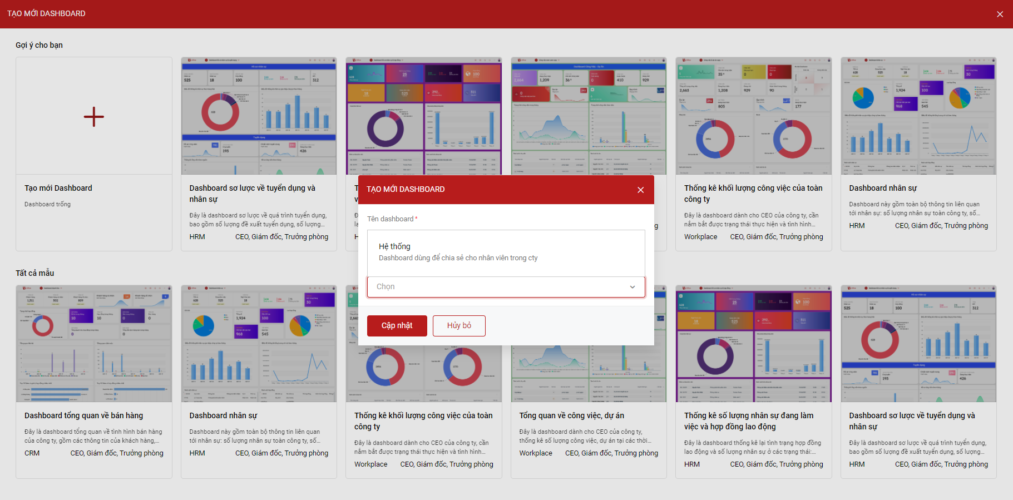
To smoothly operate all 4 management functions on a single platform, businesses can use the 1Office ecosystem. The platform helps leaders from strategic planning, resource allocation, and work management to tracking automated management reports accurately and effectively.
Register for a free feature Demo!
Which functions should middle managers focus on the most?
Middle managers typically focus most heavily on the Organizing and Leading functions to turn high-level strategies into concrete actions and directly lead their teams in execution.
How can the controlling function be implemented without putting negative pressure on employees?
Shift the mindset from “monitoring to find faults” to “tracking to provide support.” Use fair, transparent metrics and provide constructive feedback to help employees self-adjust their performance.
8. Conclusion
Through this article, 1Office hopes to have provided useful information for those interested in business management. These 4 management functions run through the entire operational process of a business, impacting every task, from small to large, across different departments. In summary, the 4 management functions are considered the “guiding principles” for management in today’s businesses.
For more details, please see:
- Hotline: 083 483 8888
- Fanpage: https://www.facebook.com/1officevn/
- Youtube: https://www.youtube.com/channel/UCeTIRNqxaTwk0_kcTw6SxmA
















