


 11/05/2026
  357 views
What is Business Intelligence, and what benefits does it bring to businesses? If you struggle with metrics daily and monthly and still can’t keep up with advances in data analysis, you need to know about Business Intelligence. It is a combination of skills, processes, and software applications that help businesses benefit from analyzing business data and making decisions that drive growth and profitability. Let’s explore the benefits of Business Intelligence in this article.
Mục lục
1. What is Business Intelligence?
According to research on the practical use of KPIs in businesses, only 36% of leaders use KPIs extensively throughout their organizations. They all have KPIs to clarify goals and measure their success. However, they often lack a standard measurement method and struggle to keep up with advances in data analysis and business administration reporting. Effective management comes from smart data management.

Business Intelligence (abbreviated as BI) is a technology-based system for analyzing data to provide useful information for leaders and managers to make informed decisions and create new opportunities for the business. BI involves a combination of business data analysis, data mining, data visualization, data tools, infrastructure, and methods to improve the speed of business operations.
2. How does Business Intelligence work?
Business Intelligence (BI) support tools bring together multiple data sources. This allows businesses to gain deeper and smarter insights. The goal is to create new opportunities and turn them into successes.
Types of Business Intelligence tools include: Spreadsheets, digital dashboards, reporting and query software, data visualization software, corporate performance management software, mobile utilities, and many other tools.
The 5-step process of a Business Intelligence analysis system:
- Step 1: Data sources are integrated into cloud storage
- Step 2: Datasets are organized and prepared for analysis
- Step 3: Users run analytical queries based on the data
- Step 4: Results are displayed synchronously and visualized on a dashboard or in a report.
- Step 5: Your business can create plans and make decisions for the future or a new phase based on the overview and post-analysis data.
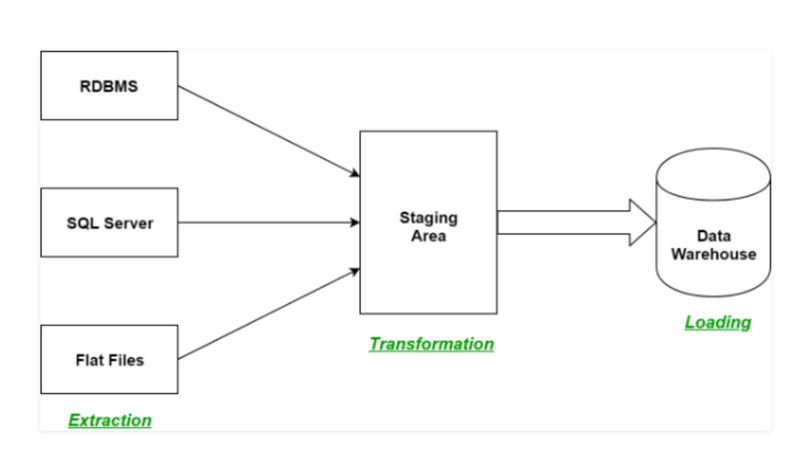
Sample data sources used to build business intelligence can include:
- Customer Relationship Management (CRM) systems
- Supply chain information
- Sales performance dashboards
- Marketing analytics
- Call center data
From the definitions above, it is clear that Business Intelligence brings significant value to business leaders in particular and to the business as a whole. So, what are the benefits your business can gain from Business Intelligence?
3. What are the benefits for businesses that apply Business Intelligence?
BI offers many advantages for small and medium-sized enterprises. It is considered the best system for SMEs to create a competitive advantage and drive outstanding growth. Here are 5 benefits for businesses when applying business analytics technology:
3.1 Easier to identify target audiences
Business operations often face difficulties in classifying target audiences and providing effective customer care. By applying Business Intelligence to business management, you can easily identify different types of customers. This is because small businesses now have the opportunity to promote their services to more audiences by using various online channels. This, in turn, generates multiple customer sources and different approaches.
BI software can collect customer data, allowing managers to identify ideal buyers. At the same time, you can bring your products and services to the target market most effectively to boost sales and increase profits.
3.2 Identify market trends
50% of teams and customers are more likely to use Business Intelligence tools post-pandemic than before. Businesses can develop a competitive advantage by identifying new opportunities and establishing data-driven strategies.
You can leverage external market data with internal data to detect new sales trends by:
- Analyzing customer data
- Analyzing market conditions
- Identifying current and potential business issues.
3.3 Increase revenue and reduce excess costs

The second benefit of Business Intelligence is the opportunity to boost revenue and cut down on excess costs. First, BI allows you to set appropriate KPIs or goals that align with your business strategy. When you use BI effectively, you are more likely to see the big picture of your business operations. This means you will see if your revenue is potentially increasing.
Additionally, a Business Intelligence system also helps you find ways to cut excess costs. For example, you might be spending too much on marketing campaigns that are not delivering results. Based on centralized, aggregated data, you can easily rebalance your costs and business activities. From there, you can focus your capital on activities that are likely to generate good sales for the business.
You might be interested in: The Business Reporting System in the 4.0 Era
3.4 Create a Competitive Advantage and Speed
Failing to address issues with accuracy and speed can have an adverse impact on your business. By using BI analytics technology, you can leverage data to ensure key stakeholders receive the information they need at the right time. Ultimately, this accelerates the decision-making process for upcoming activities.
Track competitors’ sales and marketing activities, and create ways to differentiate your products and services. Processing large amounts of data efficiently will also give you a competitive edge. Using a Business Intelligence tool can help you budget, plan, and forecast much more effectively than your competitors.
3.5 Facilitate Business Collaboration
With smart business data management software, it becomes easier for teams in small and medium-sized enterprises to export and share data. In a business, there are many projects to be carried out. This means you need an intelligent system, like a scientific scrum model, where continuous communication, cooperation, and collaboration are key to driving the business forward. It is crucial that all team members can easily access relevant, updated data and use it in real-time.
3.6 Promote a Data-Driven Culture

Data loss and manipulation are very common for businesses. It is important to keep data centralized and under control. With Business Intelligence, you can ensure that the right people have access to the right data provided by the business leadership.
3.7 Enhance Accountability & Streamline Processes
A Business Intelligence system establishes accountability within the business organization. This is because there must be accountability and ownership for the company’s performance results against its set goals. This system also helps managers get a holistic view through typical BI features like dashboards, scorecards, tags, etc.
BI also eliminates all the complexity associated with business processes. It also automates analysis by offering predictive analytics, computer modeling, benchmarking, and other methodologies.
In the digital era, if your business does not embrace the new trends in management integration, it will certainly not create the competitive momentum needed to grow. Adopting, researching, and applying new terminology to business operations will bring new value to your company.
However, to get the most comprehensive and practical overview of Business Intelligence, let’s explore the BI software applications available today.
| Read more: TOP 8 best business data management software today |
4. What are the functions of Business Intelligence?
Typically, a Business Intelligence system is applied in businesses to perform the following main functions:
- Supporting accurate data-driven decision-making (Decision support)
- Reporting based on queries (Query and reporting)
- Online analysis (Online analytical)
- Statistical analysis
- Making trend predictions (Forecasting)
- Data mining
Note: BI is considered a business analysis technology; however, this system can be applied in many different industries such as education, healthcare, etc.
5. BI systems suitable for businesses
Before deciding to optimally apply Business Intelligence for your business, you need to know the trends in BI.
5.1 Current Business Intelligence trends
- Artificial Intelligence – AI:
AI now handles complex tasks previously performed by human intelligence. This capability is being leveraged to provide real-time data analysis and dashboard reporting.
- Collaborative BI:
BI software combined with collaboration tools, including social media and other latest technologies, helps enhance the working and sharing capabilities of teams to make collaborative decisions.
- Embedded BI:
Embedded BI allows for the integration of BI software or some of its features into another business application to enhance and expand its reporting functionality.
- Cloud Computing:
Many businesses apply BI software when it is provided via cloud computing. In the next 5 years, it is predicted that metrics for cloud-based analytics will grow 4 to 5 times faster.

So, to keep up with new trends, what Business Intelligence software should businesses use?
5.2 The best comprehensive sales management software today
On the market today, there are many different Business Intelligence software options, which gather processes, data transformation technologies, and smart business organizational structure models. However, they do not offer fully centralized management on a single system.
Currently, more than 5,000 businesses nationwide have chosen to trust and use CRM software from 1Office. The sales management software’s features are built by 1Office with a variety of functions that allow users to monitor and adjust Marketing, sales, customer care, and purchasing campaigns, and generate reports on a single system. In addition, the CRM sales management software is also directly integrated with the Workplace module to enhance coordination between departments in sales activities.
- CRM: A module for managing all business operations from A to Z, from the customer approach process to regular customer care. This module helps all users leverage operations to easily identify effective types of business reports.
- Workplace: An internal social network and work resources. This module includes workflows for each individual and department, helping managers easily assign tasks and monitor work progress.
Additionally, with the 1Office all-in-one business management software, you can:
- Save costs by paying for only one software instead of buying multiple separate ones.
- Easily manage and process data centrally on one system.
- Ensure privacy and security or assign permissions for monitoring and processing.
- All data is analyzed and stored on the cloud.
- Access easily on any device such as mobile, PC, laptop, or tablet.
In conclusion, this article has partly explained what Business Intelligence is and its benefits when implemented in businesses. To analyze current data, store the entire historical system, and ultimately devise new strategies and opportunities for a competitive advantage, it is necessary to apply smart and effective software. Contact us via Hotline: 083 483 8888 for a direct consultation on Business Intelligence software applications for businesses today.
For more detailed information, please contact us via:
- Hotline: 083 483 8888
- 1Office Fanpage: https://www.facebook.com/1officevn
- Youtube: https://www.youtube.com/c/1OfficeNềntảngquảnlýtổngthểDoanhNghiệp
















