


 13/05/2026
  284 views
Employee engagement is no longer an unfamiliar term for HR and managers. However, not everyone fully and correctly understands its meaning. Join 1Office to learn what Employee engagement is and discover Employee engagement activities that help develop employees and promote internal culture within a business.
Mục lục
- 1. What is Employee Engagement?
- 2. Misconceptions about Employee Engagement
- 3. The Role of Employee Engagement for Businesses
- 4. Levels of Employee Engagement
- 5. Methods for Evaluating the Effectiveness of Employee Engagement Activities in a Business
- 6. Solutions to Enhance Employee Engagement in Your Business with 1Office Software
1. What is Employee Engagement?
Employee engagement, simply put, is the level of enthusiasm and dedication an employee has for their job and their organization. An engaged employee feels that their presence in the organization is meaningful and that their efforts make a difference. This engagement is the driving force that motivates them to give their all to their work and be dedicated to the organization.
2. Misconceptions about Employee Engagement
Employee Engagement is not employee satisfaction
Many managers focus too much on improving employee job satisfaction without realizing that this doesn’t make them more engaged with the organization. Satisfaction is a short-term state that can change quickly depending on circumstances. It says nothing about an employee’s level of investment in the company or how hard they are working towards the organization’s mission.
For example, an employee might feel satisfied after receiving a raise but then quickly fall into a state of complacency, as they only need to maintain the same level of productivity to earn their desired salary. In reality, salary and bonuses are not the core motivation that drives them to work every day.
Implementing policies and rewards to make employees satisfied with their jobs inadvertently creates a “comfort zone” for them, causing them to become complacent with their current situation and stagnate. As a result, satisfaction not only fails to improve productivity but also causes the business to stall.
In contrast, Employee Engagement is built on a voluntary spirit, stemming from an employee’s passion and responsibility for their work. Employee engagement is a deep and long-lasting connection with the organization.
See more: Risks in Human Resource Management and How to Mitigate Them
3. The Role of Employee Engagement for Businesses
Businesses that value talent believe that people are the greatest leverage for business success. A Harvard Business Review survey indicates that 92% of executives believe engaged employees are more effective, and companies with high employee engagement levels grow by 10%. This is just one of many statistics on employee engagement that proves its value within an organization. In reality, Employee engagement plays a crucial role in organizational development with the following benefits:
3.1. Increased Employee Productivity
Gallup research shows that engaged employees are 17% more productive than their colleagues. This productivity stems from a passion for their work and a constant drive to improve results to contribute value to the organization.
3.2. Reduced Turnover Rate
Employee engagement plays a crucial role in retaining talented employees. Engagement creates a deep relationship between employees and the organization when they see potential for growth and are recognized for their contributions. Many organizations build attractive HR policies that help employees become more engaged with the company, thereby reducing the turnover rate.
3.3. Increased Customer Satisfaction
Employee engagement has a strong impact on customer service. When employees are invested in their work, they are more enthusiastic and take better care of customers, thereby building strong customer relationships and enhancing the customer experience.
3.4. Lower Absenteeism
With engaged employees, businesses can minimize absenteeism and turnover. Because these employees are committed to the company’s mission, they always have a sense of responsibility for their work and perform at their best. Some large organizations have achieved great success with strategies to reduce employee turnover. Learn more here: What is Turnover Rate? How to Reduce the Turnover Rate in Your Business.
3.5. Better Employee Health
Engagement has a positive impact on both the physical and mental well-being of employees. An employee who recognizes the value and meaning in their work will always maintain a healthy body and be full of energy to work hard. Surveys show that engaged employees are less likely to be obese or suffer from chronic diseases, eat healthier, and exercise more regularly.
4. Levels of Employee Engagement
Employee engagement measures how employees feel about their organization. Based on their perception of the workplace, employees are classified into four main groups:

- 4 Levels of Employee Engagement
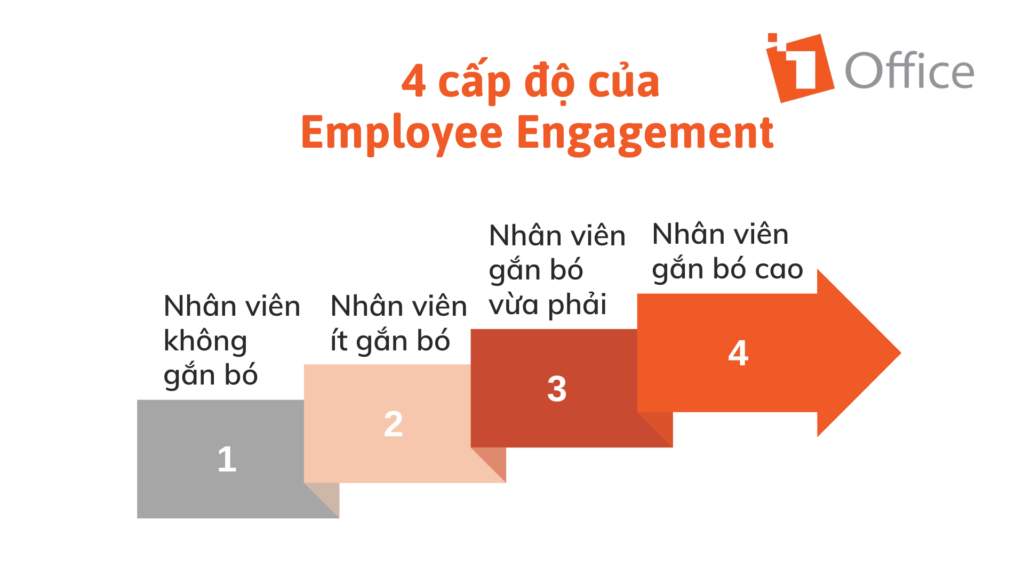
- Highly Engaged Employees – Highly engaged employees are those who are fully dedicated and have a long-term commitment to the organization. When employees feel connected to their colleagues and love their work, they want to stay and go the extra mile to help the organization succeed. They may even encourage and motivate other employees.
- Moderately Engaged Employees – These are employees who are moderately engaged with the organization. They like their company but are not fully integrated into the work environment. These employees are capable of performing their duties within their scope of responsibility, but they lack breakthrough performance or creative ideas.
- Barely Engaged Employees – Barely engaged employees often feel indifferent to their workplace. They lack motivation and only put in the minimum effort to achieve their goals.
- Disengaged Employees – These are individuals who feel they do not fit in with the organization and are at a high risk of leaving. They lack commitment to the organization and their work, leading to low performance, and may even neglect or fail to complete their tasks.
| Read more: 15 essential human resource management skills for businesses |
5. Methods for Evaluating the Effectiveness of Employee Engagement Activities in a Business
Before you can improve employee engagement, you must know to what extent they are engaged with the organization. How do you measure employee engagement?
5.1. Using the eNPS (Employee Net Promoter Score)
eNPS is an index for measuring employee engagement. This is the easiest method to implement for evaluating the effectiveness of employee engagement activities in a business. With this index, managers will survey employees with a single question: “On a scale of 1 to 10, how likely are you to recommend our company as an ideal place to work to your friends and acquaintances?”
After collecting responses, the business will determine the level of employee engagement based on the three categories below:
- Group scoring 9–10: These are extremely loyal and engaged employees who always strive to convey the positive aspects of the organization to others.
- Group scoring 7–8: These employees are moderately engaged but are likely to leave the organization for a better offer. They are passive, falling between supporting and opposing the business.
- Group scoring 0–6: These are detractors who are not highly engaged and spread negative information about the organization by word-of-mouth.
5.2. Employee Interviews
Businesses can conduct employee interviews to measure their engagement level through group interviews or 1-on-1 interviews. Through these conversations, managers can better understand the problems and difficulties employees are facing at work, as well as their thoughts on company policies. Note that when conducting interviews, it’s necessary to create a comfortable atmosphere and be ready to listen so that employees can open up and share.
These interviews can be incorporated into the internal training plan. Additionally, you can also use the BMTI personality test to get the most comprehensive aspects for candidate evaluation.
5.3. Employee Lifecycle Surveys
Employee lifecycle surveys help you understand what is happening at key moments in the employee journey. This allows leaders to optimize the employee experience and retain them—regardless of where they are in their tenure.
- Onboarding Stage: What are new hires’ perceptions of the company environment and culture? What are their future prospects?
- Employment Stage: What are the reasons employees stay with the company? What might cause them to leave? What can the company do to prevent that?
- Exit Stage: Why do employees leave the company? How might this impact those who remain?
6. Solutions to Enhance Employee Engagement in Your Business with 1Office Software
Improving and enhancing employee engagement is not an easy task for businesses. But with a specific strategy and the support of an HR management platform, businesses can retain true talent.
6.1. Don’t Overlook Training
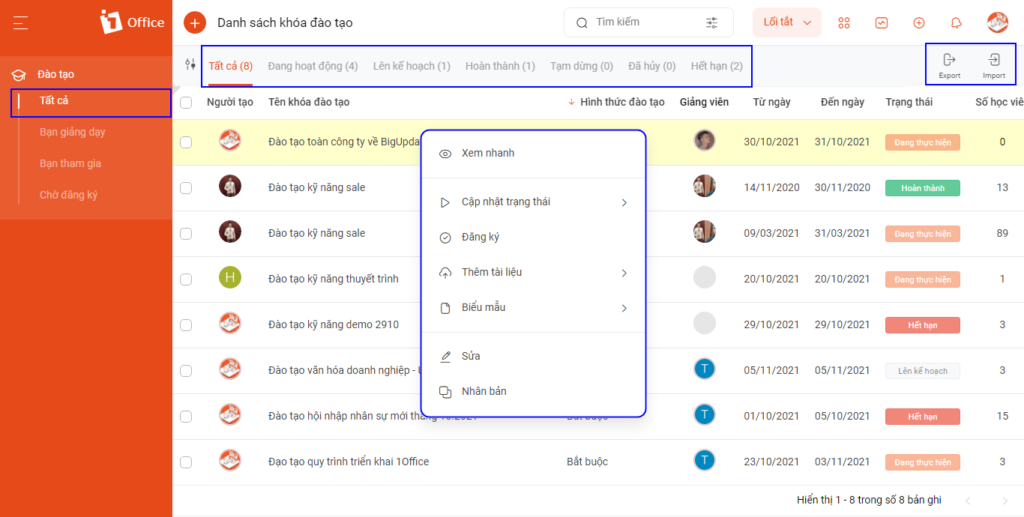
Training is one of the activities businesses cannot afford to overlook if they want to improve employee engagement. Training helps employees clearly understand the organization’s mission, thereby adjusting their behavior and equipping them with the necessary skills to achieve set goals. When employees receive clear guidance, their commitment and responsibility to their work will be enhanced.
HRM Software from 1Office provides a training feature that helps businesses implement effective training strategies. The HRM toolkit includes features for managing and storing training programs and evaluating employees post-training, helping businesses improve training quality and enhance the employee work experience.
See more: 5 steps to build an effective internal training process for businesses
6.2. Internal Communications – The Bridge Between Employees and the Business
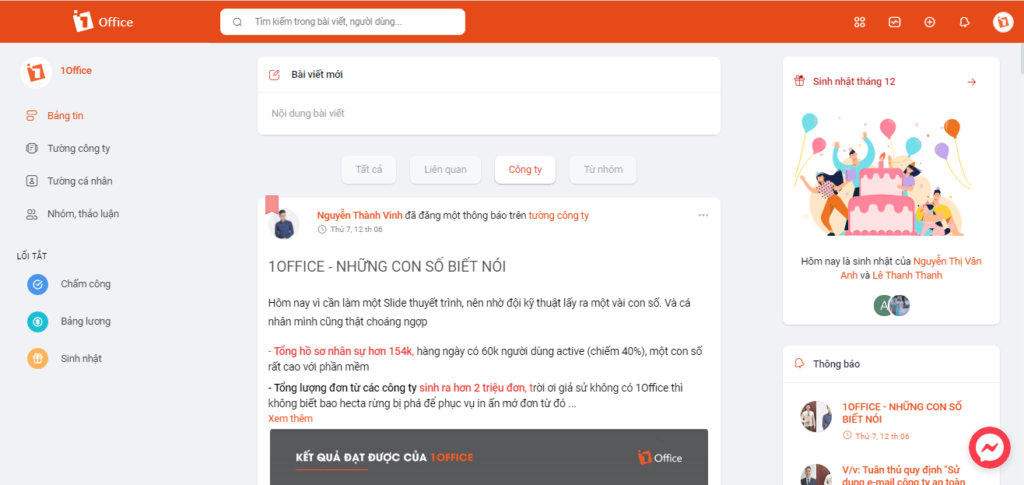
Internal communication is considered the soul of corporate culture. Communication is the key to boosting morale, motivation, and bridging the gap between members of the organization. If you use the corporate communication channel effectively, you will surely increase your employee engagement index significantly!
The internal social network of 1Office provides businesses with a space to connect and increase solidarity among members. Here, managers can communicate all information to employees, and employees can also freely share thoughts, suggestions, ideas, or simply memorable moments at work with each other.
See more: What is Internal Communication? Secrets to Building Effective Internal Communication
6.3. Set clear goals and direction
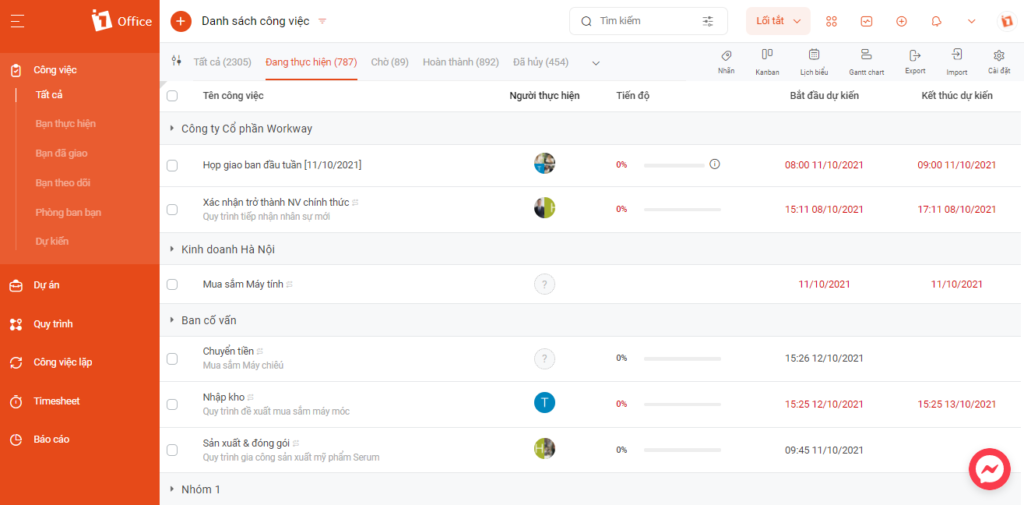
Without clear goals and direction, employees will lose their way and not be aware of their role in the organization. This will discourage them and increase the likelihood of them leaving the company. Therefore, when assigning tasks, you need to clearly outline the scope of an employee’s responsibilities and point out the tasks they need to perform to achieve their goals.
1Office’s task assignment feature supports scientific monitoring and management of employee tasks, helping employees follow processes and building a set of criteria to evaluate their performance, giving them a frame of reference for their efforts.
6.4. Evaluate and recognize employee efforts
Every employee wants to be recognized for their contributions to the organization. Recognizing efforts is a crucial task in a business if you want to increase employee engagement. You need to let your employees know that their participation is meaningful to the organization. When they are fairly evaluated for their contributions, employees will be more motivated to contribute and help the organization grow stronger.
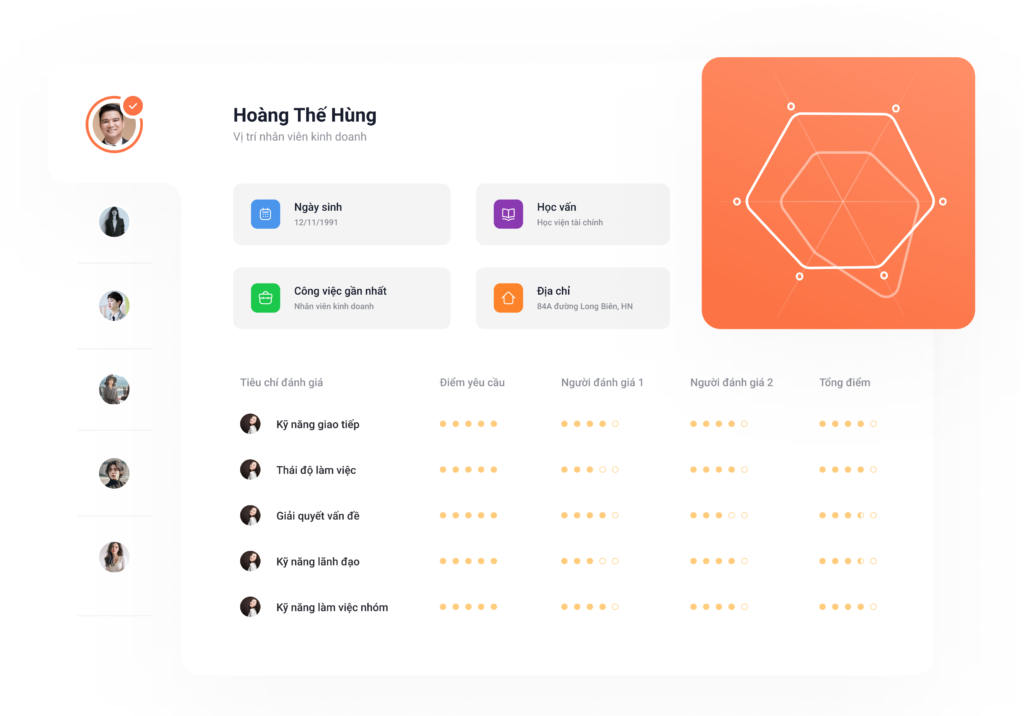
1Office provides a competency assessment feature based on KPIs and the ASK competency framework, helping businesses comprehensively evaluate both the skills and attitude of employees. This provides a basis for rewarding and recognizing deserving employees.
Above, we have provided you with insights into what Employee Engagement is, as well as a solution to improve Employee Engagement in your business with the 1Office all-in-one business management software. Register to experience it today!
















