10/05/2026
  11483 views
Fixed cost is a crucial concept in corporate financial management. A clear understanding of its nature, examples, and calculation methods will help managers make effective business decisions. In this article, 1Office will provide you with detailed information about fixed costs, helping businesses better understand their role and importance in business operations.
Mục lục
- 1. What are fixed costs?
- 2. Types of Fixed Costs
- 3. How is Fixed Cost (FC) calculated?
- 4. The Significance of Fixed Costs
- 5. How Do Fixed Costs Affect Business Profits?
- 6. Measures to Optimize Fixed Costs in a Business
- 7. How do fixed costs and variable costs differ?
- 8. Fixed Costs in Modern Business Models
- 9. Frequently Asked Questions
- 10. Conclusion
1. What are fixed costs?
Definition of fixed costs
Fixed costs are expenses that a business must pay periodically and that do not change with the level of business activity or production output over a specific period.

Characteristics of fixed costs
- Stability: Fixed costs remain almost constant in value over a defined period, such as a month, quarter, or year.
- Invariability: Fixed costs (FC) do not change with fluctuations in production volume or revenue.
- Periodicity: Businesses must pay these costs periodically and mandatorily, regardless of whether their business operations are profitable or not.
Examples of fixed costs
Rent for office space, salaries for office staff, bank loan interest, insurance premiums, depreciation of fixed assets, etc., are all costs that must be paid regardless of whether the business is producing or operating.
| For further reference: |
2. Types of Fixed Costs

Based on management factors, fixed costs can be classified into:
Committed Fixed Costs: These are costs that a business must pay related to its basic operations and are independent of production levels or sales volume. Regardless of how much is produced or sold, this cost remains unchanged. Examples: rent, machinery costs, fixed maintenance costs, etc.
Discretionary Fixed Costs: These are costs that can be controlled or adjusted by the business’s management. They arise when the business begins production and can be increased or decreased depending on the company’s decisions. Examples: advertising costs, product research and development costs, etc.
Based on allocation factors, fixed costs include the following types:
Periodic Fixed Costs: These are fixed costs that the business has budgeted for in advance and must pay on a fixed cycle, regardless of production output or sales volume. Examples: annual insurance premiums, monthly rental fees, etc.
Allocable Fixed Costs: These are fixed costs that a business can allocate to specific products or projects to calculate the cost of goods sold. Examples: fixed machinery costs can be allocated to the product cost based on the number of units produced, asset depreciation costs, etc.
3. How is Fixed Cost (FC) calculated?
There are two common formulas for calculating fixed cost (FC):
Direct Method:
| FC = Σ Fixed Costs = Total Costs – Variable Costs |
In this formula, fixed costs include expenses that do not change with the level of business activity or production output. For example, rent, depreciation of fixed assets, bank loan interest, insurance premiums, etc.
Activity-based method:
| FC = Highest/Lowest activity cost – (Variable cost per unit x Highest/Lowest activity units) |
Where:
- FC: Fixed Cost
- Highest/Lowest activity cost: The highest/lowest cost a business must pay within a specific period, regardless of the level of business activity or production output.
- Variable cost per unit: The variable cost for one unit of a product or service.
- Highest/Lowest activity unit: The highest/lowest number of products or services a business produces or sells within a specific period.
If there are many constantly changing variable costs, the business can calculate the variable cost per unit based on a relative average.
4. The Significance of Fixed Costs

Fixed costs play a crucial role in corporate financial management. A clear understanding of the significance of fixed costs helps businesses make effective business decisions and optimize profits. Below are some key significances of fixed costs:
- Predicting minimum cost levels: Businesses can predict the minimum cost they need to pay over a certain period based on fixed costs. This helps them create effective financial plans, calculate accounts receivable, secure working capital, and avoid financial risks.
- Basis for calculating product/service costs: Fixed costs are one of the key factors in calculating the cost of products and services. Businesses need to allocate fixed costs reasonably to each product or service to ensure competitive pricing and profitability.
- Making effective production and business decisions: Analyzing fixed costs helps leaders evaluate business performance, determine the break-even point, and make effective production and business decisions. For example, a business might decide to increase production volume to reduce the average fixed cost per product, or cut unnecessary fixed costs to increase profits.
- Evaluating business performance: Comparing actual fixed costs with budgeted fixed costs helps evaluate business performance and control costs effectively. From there, businesses can adjust their business plans accordingly to achieve their set goals.
Additionally, fixed costs have other significances for businesses, such as being a basis for assessing financial risks, planning financial reports, and evaluating asset utilization efficiency.
5. How Do Fixed Costs Affect Business Profits?
Fixed costs always exist regardless of whether revenue increases or decreases. This is a factor that directly impacts the profit margin and financial security of a business.
Key impacts:
- When revenue increases: Fixed costs remain unchanged in the short term, so an increase in revenue helps the profit margin expand quickly. This is why large-scale manufacturing businesses often achieve outstanding profits when they increase production volume.
- When revenue decreases: The business still has to bear all fixed costs (such as staff salaries, machinery depreciation, office rent). This causes profits to drop sharply, potentially leading to losses.
- Impact on the break-even point: The higher the fixed costs, the greater the revenue needed to break even. This puts more pressure on the business in its early stages.
- Risks and opportunities: A business with high fixed costs can easily run into difficulties when the market fluctuates, but if the market is favorable, they benefit greatly from “cost leverage.”
Fixed costs are both an opportunity to maximize profits and a potential risk if revenue is unstable. Businesses need to manage fixed costs tightly to maintain financial balance.
6. Measures to Optimize Fixed Costs in a Business
In financial management, fixed costs often account for a large proportion and create long-term pressure on a business, especially when the market fluctuates or revenue declines. If cuts are made drastically, such as mass layoffs or eliminating an entire cost category, the business may lose its competitive advantage and weaken its operational capacity. Therefore, instead of “blindly cutting,” businesses need to optimize fixed costs strategically: saving money while ensuring the system operates smoothly and is scalable.
Specific measures:
- Outsourcing: Instead of maintaining a permanent staff for all activities, businesses can outsource services such as accounting, marketing, and IT to reduce the burden of salaries and benefits.
- Utilize shared spaces and assets: Use coworking spaces or optimize machinery capacity to avoid wasting costs on premises and depreciation.
- Apply technology: Use software for HR, financial, and operational management to replace permanent staff and automate processes, helping to save costs in the long run.
- Negotiate long-term contracts: For fixed costs like rent, businesses can negotiate long-term contracts to receive preferential and stable pricing.
- Diversify revenue streams: Keep fixed costs reasonable while creating multiple revenue channels to spread risk. This is an indirect way to effectively optimize the burden of fixed costs.
Optimizing fixed costs doesn’t mean cutting indiscriminately, but requires flexible management, applying technology, outsourcing, and making the most of existing assets. By doing so, businesses can both reduce financial risks and increase their competitiveness.
7. How do fixed costs and variable costs differ?
Businesses need to clearly distinguish between fixed costs and variable costs to manage expenses effectively.
| Characteristics | Fixed Costs | Variable Costs |
| Definition | Costs that do not change with the level of business activity or production volume. | Costs that change with the level of business activity or production volume. |
| Characteristics | Easy to predict and calculate in advance. Fixed costs exist even when there is no activity. | Difficult to predict and calculate in advance. Variable costs are zero if there is no activity. |
| Examples | Rent, depreciation of fixed assets, bank interest, insurance fees. | Raw materials, production staff wages, energy costs, transportation costs. |
| Impact on product cost | Decreases as production volume increases | Increases as production volume increases |
| Inclusion in inventory | Not included at the time of inventory valuation. | Included at the time of inventory valuation. |
| Graph | Horizontal straight line. | Upward-sloping straight line. |
| Significance | Helps predict minimum cost levels, serves as a basis for calculating product and service costs, and helps businesses make effective production and business decisions. | Helps businesses evaluate business performance and control costs effectively. |
Comparison of fixed costs and variable costs
8. Fixed Costs in Modern Business Models
Although fixed costs (FC) are a general concept, how they are formed and impact profitability varies significantly across different business models. Understanding the specific nature of FC in each industry helps businesses proactively build financial strategies, control risks, and optimize their cost structure.
8.1. Fixed Costs in the SaaS (Software as a Service) Model
SaaS companies typically have high fixed costs during the product development phase, but the cost to serve each additional customer is very low. This creates a clear economy of scale as the user base grows.
Typical fixed costs in SaaS include:
-
R&D costs and the technical team for product operation.
-
Infrastructure systems (servers, security, CI/CD).
-
Management, office, and permanent staff costs.
-
Long-term marketing costs with annual commitments.
As the number of customers increases, fixed costs are spread more thinly across each user, helping to expand profit margins. However, SaaS also faces high risks if the churn rate is high or customer acquisition costs exceed the capacity to be absorbed by the fixed costs.
8.2. Fixed Costs in the Manufacturing Model
In manufacturing, fixed costs are the foundation for ensuring capacity and output quality. This is the sector with the highest proportion of fixed costs due to its reliance on fixed assets and heavy infrastructure.
Typical FC in manufacturing:
-
Depreciation of machinery, production lines, and factories.
-
Land lease, warehousing, insurance, and periodic maintenance costs.
-
Salaries for factory management and staff that do not vary with production volume.
A key characteristic of the manufacturing model is step-fixed costs: when a business expands capacity (buys more machines, opens new workshops), fixed costs will “jump” to a new level. Therefore, optimizing equipment effectiveness (OEE), reducing downtime, and using leasing instead of purchasing are common ways to reduce the pressure of fixed costs.
8.3. Fixed Costs in the Retail Model
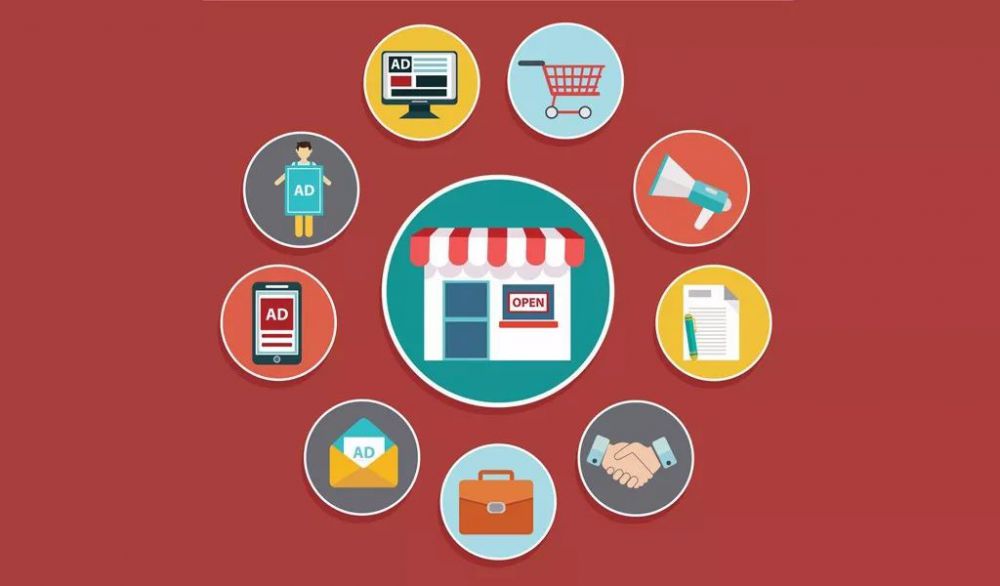
Fixed costs in retail are heavily concentrated on premises and permanent in-store staff. This is the governing factor in the ability to maintain and expand the point-of-sale system.
The main fixed costs in retail:
-
Rent for premises and associated service fees.
-
Permanent shift-based staff: managers, security, cashiers.
-
Store equipment: POS, furniture, lighting, signage.
In an omnichannel model, many fixed costs (like the CRM system, central warehouse) are allocated to both online and offline channels, helping to optimize costs. Strategies like pop-up stores, franchising, or optimizing sales floor space help businesses be more flexible in managing fixed costs.
8.4. Fixed Costs in the Service Model
The service sector is the industry group with the most flexible fixed cost structure. Most fixed costs are related to personnel and office space, but the degree of fixedness varies greatly depending on the type of service.
FC in a service business typically includes:
-
Salaries for permanent staff (specialists, managers, administrative staff).
-
Office costs: rent, utilities, basic IT systems.
-
Costs for training, certification, and maintaining standards.
For knowledge-based services (consulting, accounting, law), fixed costs are primarily in high-quality personnel. Meanwhile, services like healthcare and logistics have large fixed costs related to machinery and facilities. Increasing the billable utilization rate, using flexible staffing, and optimizing office space can significantly reduce fixed costs.
8.5. Comparison of Specific Fixed Costs Across Models
Each business model has its own FC structure, leading to different operational strategies:
-
SaaS: High initial FC but easy to scale; FC/customer decreases rapidly with growth.
-
Manufacturing: Large and step-like FC; profit fluctuates significantly with production volume.
-
Retail: FC is closely tied to store location; difficult to adjust in the short term.
-
Services: More flexible FC, focusing on personnel and office infrastructure.
Thanks to these characteristics, managers can better predict the break-even point, adjust expansion models, and make more accurate financial decisions.
8.6. Important Notes for Optimizing Fixed Costs
To manage FC effectively, businesses need to combine quantitative analysis with strategic decisions:
Some important notes:
-
Clearly separate FC – VC using the high-low method or regression analysis.
-
Consider converting FC to VC (outsourcing, leasing assets, using SaaS software).
-
Plan ahead for step-fixed costs when scaling.
-
Track KPIs appropriate for each model: LTV/CAC (SaaS), OEE (manufacturing), sales/m² (retail), utilization rate (services).
FC optimization must be performed continuously, based on actual data and market changes, to ensure the business maintains long-term flexibility and competitiveness.
9. Frequently Asked Questions
10. Conclusion
The above is all the information that 1Office wants to share with you about fixed costs and variable costs, including definitions, characteristics, classifications, examples, calculation formulas, and their significance. We hope this article is helpful to you!
Additionally, to effectively manage cash flow and control fixed costs, using the 1Office CRM expense management software is an effective solution in the 4.0 era. The software has many useful features, helping businesses automate the expense process, track cash flow in real-time, send alerts and reminders for due payments, monitor expense fluctuation reports, and more.
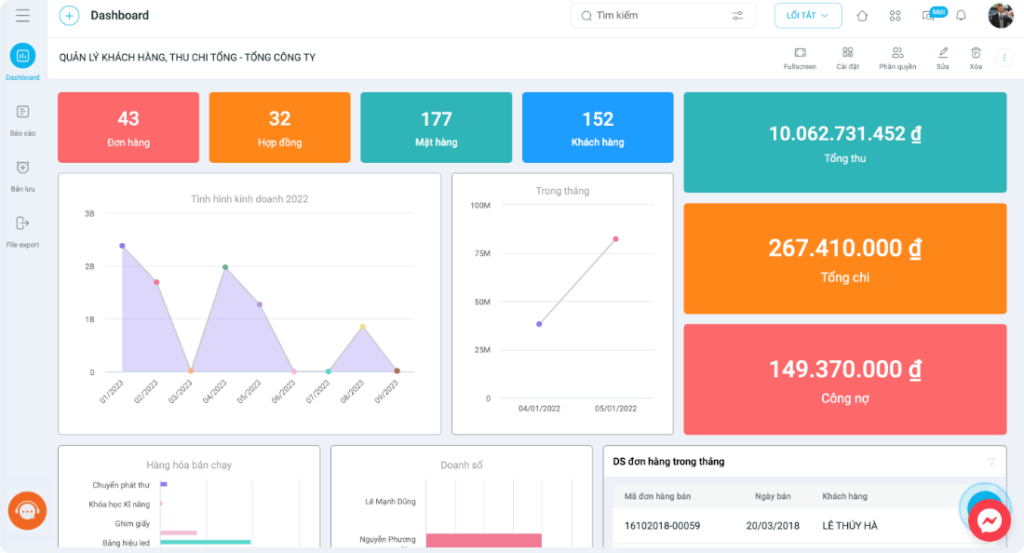
With over 5,000 business customers who have been and are using the 1Office CRM software. Experience our free expense management feature with us today!