11/05/2026
  652 views
A business plan is the foundation that helps a business define its goals, control its operations, and allocate resources more effectively. But what is a business plan, what content should it include, and where should you start to avoid being long-winded and unfocused? This article will help you understand the important steps and how to build a suitable plan for your business.
Mục lục
1. What is a business plan?
A business plan is a document that describes in detail a company’s business process for a month, a quarter, or a year. It helps the business evaluate its performance and find new ideas and strategic directions for future growth and progress.
2. Why do businesses need to create a business plan?
To achieve sales goals, a business cannot do without a detailed and complete business plan (whether large or small). Therefore, a perfect plan will bring the following benefits to a business:
2.1. View all business operations
A business plan helps you see the big picture of the entire company more easily. From the data, you can grasp information such as sales figures, product quality, marketing costs, etc. In other words, creating a business plan provides a solid foundation for expanding your strategy, vision, and goals.
2.2. Track business progress
With a detailed business plan template, you can regularly track progress and acquire new knowledge to adjust the plan to suit the business’s current situation. Understanding work progress helps you promptly devise solutions and easily resolve issues that arise.

2.3. Save time and effort
Currently, businesses often spend a lot of time creating plans and business performance reports. This not only costs you a lot of effort and money but also leaves no time to expand the company’s business strategy. Therefore, creating a business plan will help you track important metrics and allocate time reasonably.
2.4. Manage cash flow effectively
A good business plan will help you manage cash flow effectively, such as business expenses, asset purchases, or debt payments. A company’s profitability can be affected when customers pay late or when excessive inventory impacts cash flow. A complete plan will help you identify and easily adjust for that problem.
See more: Revealing 3 sales department organizational structure models for every business
3. 3 rules for building a business plan for your company
3.1. Keep the content concise and succinct
This is the first criterion you should note when creating a business plan. A long, rambling plan will bore the reader, making it impossible for them to grasp all the information, and they might even give up halfway through due to a lack of engaging and stimulating content. Moreover, a business plan cannot be perfected in a short time, so errors, additions, or revisions during the process are unavoidable.
3.2. The plan needs clear objectives
Any plan needs to have clear objectives to provide direction and outline the strategy that the individual or business desires. Business objectives are like a compass that guides the company’s path. When a business sets the right objectives, it helps the organization shorten its path to success.
3.3. Describe the business plan clearly and understandably
Before you start implementing the business plan, you need to ensure it is suitable for various audiences, such as your boss, employees, partners, and customers. Each person has a different level of awareness and understanding, so they may not fully comprehend everything you present. Therefore, to have a complete plan suitable for all audiences, you need to be flexible in using language that is appropriate and easy to understand. In particular, you should add a glossary to help readers better understand technical terms, abbreviations, etc.
Additionally, to enhance the execution efficiency of your business plan, you can use 1Office’s business management software to help you manage work and plans comprehensively. With many smart features, you can easily create plans and track work progress. Furthermore, you can assign individuals to each task to monitor the plan in detail, clearly, from anywhere and at any time.
For consultation and support on using the software, please register here, and 1Office experts will contact you today.
| Read more: How to build a successful strategy with the BSC model |
4. Steps to create a detailed business plan for a business
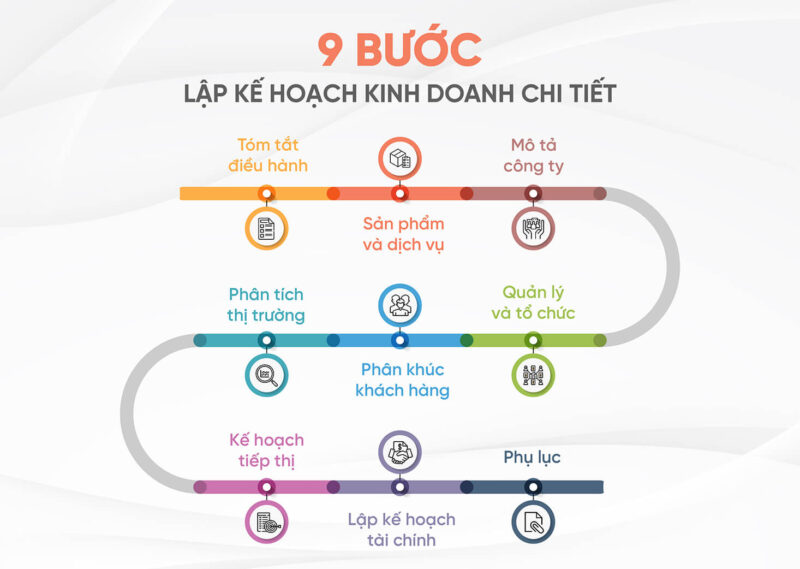
To create a complete and detailed business plan, you can refer to the 9 steps below for maximum effectiveness:
Step 1: Executive Summary
First, the business needs an executive summary that includes an introduction and a brief overview of the business plan. It should detail your business, the problem it solves, your target market, and financial highlights. The purpose of the executive summary is to distill everything that follows and provide reviewers, such as potential investors and lenders, with information about your business to further persuade them.
Step 2: Company Description
This is an important section to include in your business plan. Here, the company can outline the products and services it offers, including pricing, product lifespan, and consumer benefits. Below are some items you should include in your business plan:
- Your business structure (sole proprietorship, general partnership, limited partnership, or corporation)
- Your industry
- Your business model
- Your business’s vision, mission, and values
- Background information or history of the business
- Short-term and long-term business goals
- Your team, including key personnel and their salaries
Step 3: Products and Services
Your products or services will be featured in most areas of your business plan, but it’s important to have a section that provides key details about them for interested readers. If you sell many items, you can include general information about each of your product lines; if you only sell a few, provide additional information on each one. Describe new products you will launch in the near future and any intellectual property you own. Explain how they will improve profitability.
|
Read more: 3 types of business leverage to help businesses optimize profits |
Step 4: Market Analysis
Third, companies need to identify their target market. Regardless of the type of business you are starting, you need to choose the right market for your product, including information such as: target audience, gender, interests, etc., to help you quickly reach potential customers. If you choose the wrong market, or the right market at the wrong time, it will be very difficult to achieve your stated business goals.
Step 5: Customer Segmentation
To do business effectively, you need to define your customer persona: who they are, their age range, and whether your product meets their needs. Below are some characteristics of a customer persona that you need to understand:
- Where they live
- Their age
- Their education level
- Common behaviors
- What they usually do in their free time
- Place of work
- What technology they use
- Their income level
- Their life mottos and opinions
Step 6: Marketing Strategy
Marketing is how a company advertises and introduces products to attract and retain customers, as well as how it reaches consumers. This means you must list the communication channels to reach customers to achieve your set goals. It will also outline the plans, marketing campaigns, and the types of media on which those campaigns will run.

Most marketing plans include information on 4 main topics
- Price. How much does your product cost, and why did you make that decision?
- Product. What are you selling, and how do you differentiate it in the market?
- Promotion. How will you get your product to your ideal customers?
- Place. Where will you sell your product?
Step 7: Operations Management
The business plan includes a section describing the company’s actual operations, such as: personnel, equipment, inventory, processes, organization, and other core operational elements required to produce your product or service. The operational plan must include information about:
- Production: creating what you sell, how long it takes, details of the development and manufacturing process
- Facilities: office, factory, rent or mortgage costs, maintenance, and expenses.
- Supplies: Raw material chain and suppliers, inventory management, overseas or domestic sourcing, and fulfillment
- Equipment: including rental or purchase costs, maintenance, and depreciation
- Premises: Which team members will work where? Do you plan to have a physical location or retail space?
Step 8: Financial Planning
In addition to the factors above, businesses must pay special attention to the financial element, as every company needs a budget when creating a financial plan. Therefore, companies should include costs in their financial plan and future projections. These costs include expenses related to personnel, production, marketing, or any other costs related to the business.
Step 9: Appendix
The appendix here includes all the supporting documents for the rest of your business plan. It includes various types of documents to be included in the report’s content, such as: supporting documents, confidential documents, and some other materials.
5. Detailed Business Plan Templates
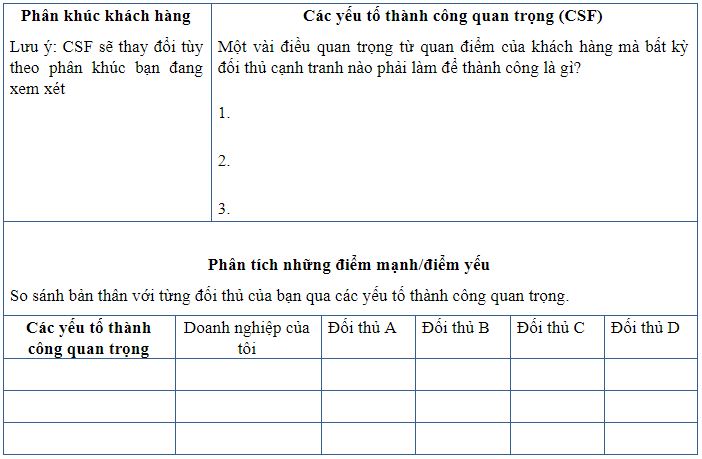
Template 1: Marketing Analysis Action Plan
This template will help you develop a marketing plan for your business as part of a marketing guide.
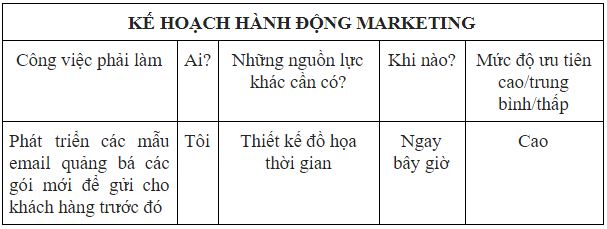
Template 2: Marketing Action Plan
A marketing plan involves advertising products to customers by selecting marketing channels to reach potential customers. A marketing plan will include:
- Pricing strategy
- E-marketing
- Advertising channel selection
- E-marketing
- Public relations or communication strategy
Template 3: Sales Marketing Action Plan
The sales marketing action plan template will allow you to describe tasks month by month and how you will market your business. From there, you will have a complete marketing plan for your business.
The content required in a sales and marketing plan will include:
- ABC analysis, where customers or products are divided into 3 groups: A, B, and C
- Developing future scenarios
- Creating a sales strategy and marketing channels

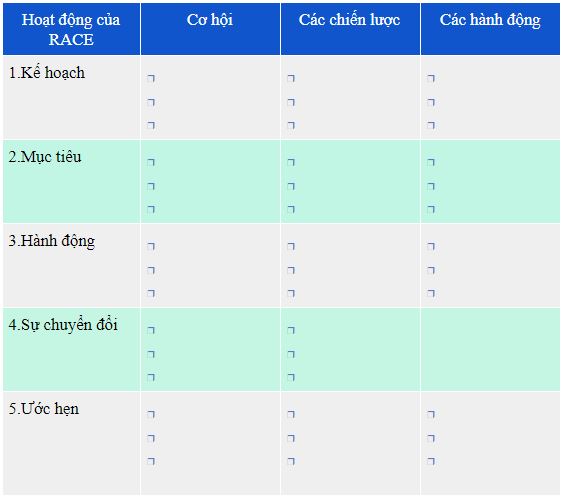
Business Plan Template 4: Digital Marketing Action Plan
With the digital marketing plan template, you should pay attention to several issues such as:
- Build the plan based on customer needs, what customers want, and what they desire to have
- Ensure the plans have a clear vision and strategy for a fixed or longer period
- Set specific, feasible, and achievable goals
- Regularly review and update the established plans
6. FAQ about Business Plan Templates
Do I really need to create a business plan?
Yes, you do. Even if you think you have a clear idea of how you will start and grow your business, writing it down forces you to be more objective and pay attention to details. It’s human nature to be optimistic about future plans. However, the process of drafting the plan will help you assess whether you have truly considered all relevant factors, or if the plan’s success depends on outcomes you cannot guarantee.
How many pages should a business plan be?
Depending on your direction, a business can create different sales plans. There is no rule for how many pages a business plan should be. Therefore, you will need to plan how much detail is necessary for it to be a useful document, especially if you intend to use it to raise capital. You will need to thoroughly complete each section of the business plan template; you should use bullet points to make it easier to read.
How long will it take me to write a business plan?
There is no specific timeline for creating a business plan for a company; it will depend on the amount of time dedicated to it each day. Researching information and data can take several months, or even years, to plan. For short-term plans, you can focus your time to complete them in the shortest possible period. As for long-term plans, they will require more time to complete.
Who should be responsible for creating a business plan?
Usually, it’s the board of directors or the person in charge of business, in coordination with relevant departments. The person primarily responsible needs to understand the company’s objectives, available resources, and practical implementation capabilities.
Thus, the article above has provided users with detailed information about business plans and guidance on how to create a standard, professional business plan for 2026. We hope this article will provide users with practical knowledge to apply in creating business plans that boost sales and bring the highest profits to the company.
In the article above, we have provided the most detailed information about business plans as well as detailed instructions on how to create a proper business plan. We hope that after reading this article, you will have more knowledge and experience in creating sales plans to bring the highest efficiency and success to your work.
For more detailed information, please contact us via:
- Hotline: 083 483 8888
- 1Office Fanpage: https://www.facebook.com/1officevn
- Youtube: https://www.youtube.com/c/1OfficeNềntảngquảnlýtổngthểDoanhNghiệp