


 12/05/2026
  347 views
In the midst of the digital age’s rapid changes, businesses face numerous challenges in work management. As a result, project progress management or work management often remains weak and easily “shaken”. Faced with challenges and opportunities to race to the finish line, leaders are compelled to change both their mindset and technology to achieve excellence in their progress and to boost the entire enterprise’s development. Join 1Office to explore an effective project progress management process in the article below.
Mục lục
1. What is project progress management?
Project progress management is the process of tracking and monitoring a project’s execution to ensure tasks are completed on time as planned. This process helps managers clearly understand the project’s progress; monitor completed, ongoing, and pending tasks; coordinate resources, and anticipate risks to ensure the project is completed on schedule.
2. Challenges businesses face in project progress management
- Employees easily forget tasks and client appointments
Paper, pens, or notebooks are all items easily found in stores or bookstores around the city. However, managing work with these tools is not yet optimized due to both objective and subjective reasons, such as documents getting damaged, moldy, eaten by termites over time, or lost. Consequently, long-term document storage becomes more difficult.

For the reasons above, company employees often forget tasks and client appointments, even after taking notes as reminders.
- Inability to prioritize important tasks
An ineffective project progress management process and task assignment among departments leads to “chaotic” situations, work backlogs, and important tasks being easily “sidelined” or “forgotten”.
- Slow response when resolving incidents
Managing time and project progress with traditional methods involves many cumbersome and inconvenient steps. Therefore, when an incident occurs during project execution, managers are forced to meet directly with departments, hold meetings, or contact the responsible units to resolve it thoroughly.
| Read more: A-Z Guide to Effective Construction Investment Project Management |
- Passive in monitoring and tracking project progress
If leaders are passive in monitoring project progress and only rely on daily, weekly, or monthly reports, the business is more likely to face obstacles and unexpected issues.

Project progress tracking should be conducted proactively, orderly, and with a clear plan to promptly address issues when they arise, preventing small errors from escalating into major setbacks.
- Takes up too much space for document storage
Storing and managing work with hard copies actually takes up a lot of space because different types of documents require different storage areas.
Currently, the cost of building or renting storage space is very high due to rising real estate values. Therefore, the inconvenience of manual methods always has leaders racking their brains to find solutions and make changes.
- Managing work with Google Drive is convenient but not optimal
Compared to the traditional method of managing hard copies, using Google Drive is more convenient. However, the biggest problem with this project progress management method is that businesses still have to do everything manually, from entering and updating data to regular storage and cleanup.
Reviewing and tracking work progress also consumes a lot of time, effort, and human resources. In addition, managers remain passive in monitoring, interacting, and requesting project progress reports from their subordinates.
3. 6 Steps to Build an Effective Project Progress Management Process for Businesses
1. Identify Work Items
The first step in the project progress management process is to identify major work items. In this step, the manager needs to map out the tasks, the time required to complete each item, and assign resources to each task. To easily manage project time, you should break down the tasks into smaller items and set specific completion times for each small item.
2. Sequence the Tasks
After identifying the major work items, the next step is to create a project plan to arrange these tasks in a seamless sequence. This helps the manager get an overview of the tasks and their interdependencies within the overall project. To arrange tasks effectively and scientifically, within each major work item, you should identify the tasks that need to be completed so that preceding tasks can support subsequent ones.
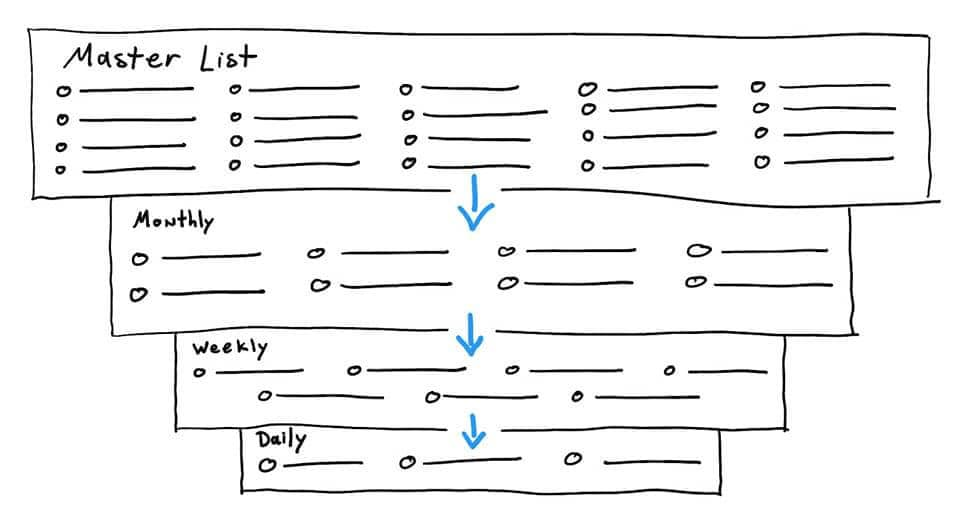
An effective method that helps managers arrange tasks scientifically and in a controllable manner is the Master list method.
| >> Read more: 12+ Professional Excel project management templates for all project types |
3. Assess necessary resources
To keep the project on schedule, identifying resources is an essential factor in the project schedule management process. At this stage, the manager needs to determine the necessary resources to perform tasks and achieve the best results. The tasks here include analyzing the human resources to be allocated to the work, calculating the required project management cost norms, the time to perform the work, and the equipment to plan the allocation for activities appropriately.
4. Determine the time to perform tasks
In project schedule management, determining the time is the backbone that helps build a project schedule plan in the right direction. There are several ways to accurately estimate the project implementation time:
- Consult expert opinions: get well-founded assessments of the project implementation time, saving research time.
- Compare with the duration of similar previous projects: This helps to relatively estimate the time and resources needed, thereby adjusting the schedule plan accordingly.
- Estimate time using PMI parameters (Parametric estimating)
- Three-point estimating method: Evaluate the time to complete a task in the project from 3 perspectives: optimistic, pessimistic, and most likely. The three-point formula to determine the task duration is: (Pessimistic time + 4*Optimistic time + Optimistic time)/6.
5. Develop the project management schedule
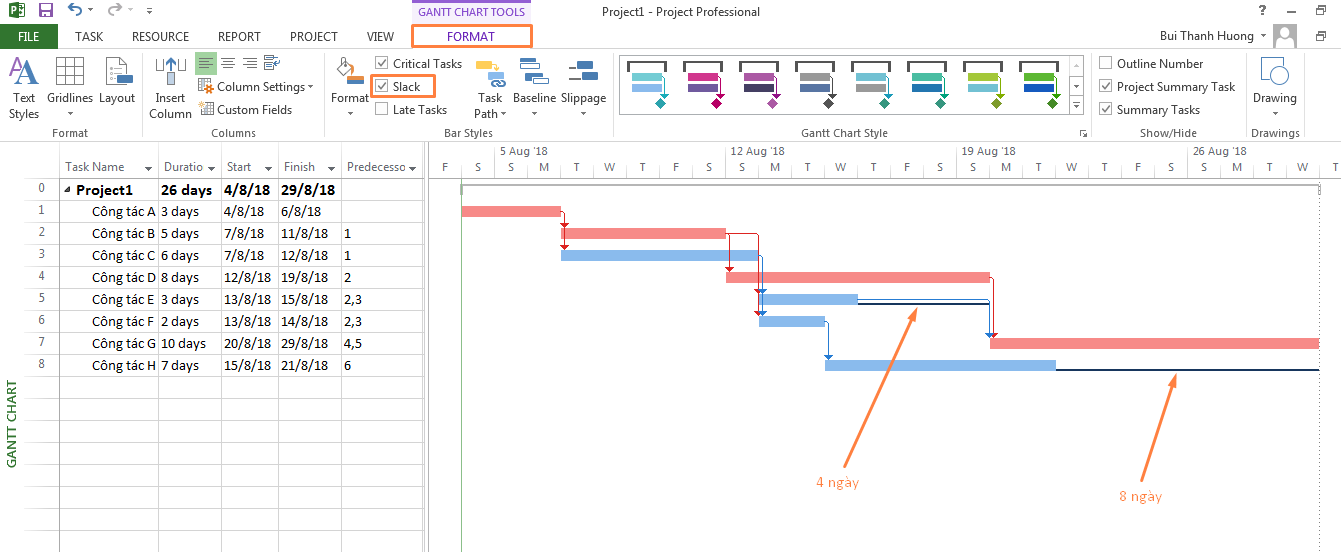
Developing a plan for the project management schedule will help the manager get a general overview of the implementation time for each work item as well as each phase of the project. This also serves as a basis for the manager to compare the actual time with the time in the schedule management plan. When the implementation is behind schedule, the manager can analyze which stage is causing the delay to make appropriate adjustments.
The most commonly used tool for building a project schedule is the Critical Path Method (CPM), which helps shorten the schedule and build scenarios for external impacts (if-then) with the Critical Chain Method (CCM).
6. Monitor project progress
Tracking and monitoring the project implementation process helps managers identify and implement measures to overcome potential risks.
Learn more about managing project schedules and creating effective work reports with:
Top 10 Project Management Software for Effective Project Schedule Planning and Monitoring
4. Ways to manage project schedules for the best results
Below are some tips to help managers effectively manage project time and schedules.
1. Understand the project tasks clearly
To manage a project effectively, you first need to clearly understand the content of each task, the definition of done for those tasks, and the project’s overall direction. A fairly common project task management method is the Agile model.
2. Handle situations flexibly
During project implementation, unexpected impacts are unavoidable. The leader must be flexible in coordinating tasks to adapt to each situation. Sometimes, an overly rigid implementation can cause your project to fall behind schedule or encounter efficiency problems.
To get a comprehensive overview in the project management model and detect potential issues early, many business owners are now actively applying the best project management software tools to their operations.
3. Ensure data is continuously updated
To manage projects remotely effectively, data must be updated promptly and completely. A single incorrect data point can affect the entire implementation process. Therefore, using project schedule management software is an effective method.
4. Ensure the schedule is met
Tasks must be completed on schedule. Delays will affect subsequent tasks and consume more of the company’s resources.
5. Teamwork capability
To successfully implement a project, you need to create an environment where team members can interact and communicate easily and seamlessly. This is considered a trend in modern project management today.
6. Apply software technology in schedule control
1Office software is an effective project and process management solution that acts as an assistant for project implementation units. With a set of smart project management features, managers and employees can easily plan and prioritize important tasks. The software helps employees be more proactive in summarizing, reporting results, and tracking the project’s progress. This helps minimize time, effort, and costs for the business.
Get a free consultation & Demo
Project time and schedule management is a crucial process in a business. With a flexible solution and a diverse set of features, 1Office will meet all project management needs and bring the best efficiency to the company’s project implementation processes.
Contact us:
- Hotline: 083 483 8888
- Fanpage: https://www.facebook.com/1officevn/
- Youtube: https://www.youtube.com/channel/UCeTIRNqxaTwk0_kcTw6SxmA
















