3 Stages of Digital Transformation for Rapid Business Growth in the 4.0 Era


3 stages of digital transformation help your business break through in the 4.0 era are Digitization, Digitalization, and Digital Transformation, respectively. Let’s explore1Office the details of each digital transformation stage in the article below!
Mục lục
I. The 3 Stages of Digital Transformation in a Business
Digital Transformation is the process of converting activities from traditional manual methods to modern ones by applying advanced technologies.
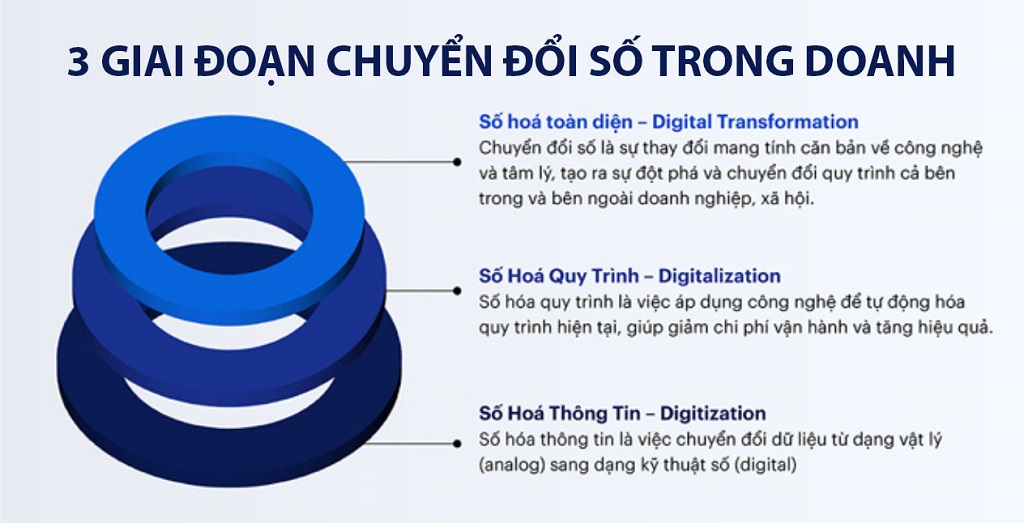
Currently, digital transformation activities in a business are divided into 3 main stages as follows:
Stage 1: Digitization
Digitization is the first stage in the digital transformation process, helping businesses “get acquainted” with digital transformation activities. The activities in this stage are quite simple. It mainly focuses on converting the way a business stores and aggregates data from a physical (analog) format to a digital one.
This means: Instead of storing and aggregating information in the form of paper documents, memory cards, tapes, etc., the business will store and aggregate information in formats like Excel, PDF, Word, etc.
To digitize information effectively, businesses need to follow these steps:
- Identify and select the information to be digitized (Including: documents, files, records, customer data, product data, etc.)
- Organize and classify information based on criteria (For example, document type, date, origin, etc.)
- Find and select a digitization solution.
- Build a security layer to protect the information.
- Guide and train all personnel on how to digitize information.
Small and medium-sized enterprises are often in the first stage of digital transformation because the volume and complexity of their data are still low. And if businesses want to achieve high efficiency in the next digital transformation stage, they must do well in the digitization stage.
>> See more: Examples of Digital Transformation – 5 latest digital transformation trends today
Stage 2: Digitalization
Digitalization is the use of technology to automate processes. Stage 2 delves into two main factors: processes and people. Successfully implementing digitalization activities in this stage will help businesses boost their business operations with low operating costs.
The main activities in the digitalization stage include:
- Analyze and evaluate information to determine digitalization needs and goals.
- Find and select methods for process digitalization. This includes improving, changing, or renewing activity processes.
- Apply technology – software to support process digitalization activities.
- Train and develop personnel on how to use digital processes.
Basically, digitalization does not change a company’s business model. It is suitable for businesses with many complex work processes or those wishing to optimize efficiency and productivity. For example: manufacturing, commercial businesses, etc.
*Note: Process digitalization requires a detailed plan to ensure activities achieve the desired goals.
In the digitalization stage, businesses cannot overlook the 1Office BPA solution. This is a toolset that brings many outstanding benefits to businesses, such as:
- Optimize business processes to 100% standard
- Implement and link processes between departments
- Conveniently monitor and evaluate process efficiency
- Integrate multi-platform digital signatures directly into the process
- Automate all operations within the process
Phase 3: Comprehensive Digitalization – Digital Transformation
Comprehensive digitalization (Digital Transformation) is the process of changing a company’s entire business model and operational methods through digital transformation activities. This is the turning point that helps businesses create a breakthrough in the process of business digitalization.
Digitalization activities impact all aspects of the business comprehensively and holistically. Specifically: business strategy, corporate culture, business processes, human resources, customers, etc.

*Note: The phases of digital transformation are closely linked. Therefore, for a business to reach the comprehensive digitalization phase, it must first successfully implement phases 1 and 2.
II. Factors affecting digital transformation activities in businesses
Digital transformation is not just about applying technology to a company’s business and development activities. It also involves many important factors, such as:
- Human resources system operating mechanism: This is how a business organizes, manages, and develops its human resources to implement activities. Identifying the skills and capabilities of personnel is essential for a successful digital transformation. This process ensures that departments and individuals participating in the digital transformation achieve maximum efficiency.
- Operational process: The sequence of implementing activities within the business needs to be optimized, eliminating unnecessary steps. The operational process must be streamlined so that digital transformation activities can proceed more quickly.
- Business management system: To digitally transform, a business must provide and implement business management systems. This is a mandatory condition when a business wants to carry out digital transformation.
- Digitalization solution: Choose technology platforms/software that suit the business’s needs. The business will be able to optimize costs while still improving business efficiency during digital transformation. Avoid using digitalization solutions that exceed the company’s capabilities and needs.
- Organizational culture capability: The digital transformation effort should have the approval of the members involved. A positive, innovative, and creative environment will be the foundation for each individual’s development, promoting the digital transformation process within the business.
III. 5 Effective Digital Transformation Steps for Businesses
Based on the 3 phases of digital transformation and the factors involved in digital transformation activities, proceed with the transformation in the following 5 steps:
Step 1: Define Digital Transformation Goals
What are the company’s digital transformation goals? This is an issue that any manager needs to clarify when wanting to implement digital transformation activities. This activity helps the business clearly define its digital transformation strategy and actions. From there, it can focus resources on implementing the short-term and long-term goals that have been set.
Digital transformation goals are determined based on an assessment of the company’s resources, capabilities, and needs. Specifically: human resource capabilities, financial capacity, current state of digital transformation, corporate culture, etc.
Step 2: Assess the Current State of the Business
Assessing the current state of the business is the process of evaluating various activities within the company, such as operational status, structure, processes, work efficiency, etc. This helps you get a comprehensive overview of the company’s condition and its ability to implement digital transformation.
Below are some activities for assessing the current state of the business when implementing digital transformation:
- Assess the company’s current organizational structure, work processes, and information storage methods.
- Review and evaluate the technology systems and software the business is currently using.
- Collect and analyze relevant data
- Assess the corporate culture and work environment.
- Evaluate personnel: work capabilities, work attitude, working hours, etc.
- Research and evaluate the market, trends, and customer requirements.
*Note: The scope of evaluation will depend on the business’s digital transformation goals.
Step 3: Estimate the Investment Budget
Estimating the investment budget for digital transformation involves determining the amount of money needed to implement digital transformation activities within the business. With clear budget estimates, the business can proceed accordingly and devise suitable implementation strategies.

To estimate the investment budget, businesses need to consider the following factors:
- The business’s financial and human resources
- Digital transformation needs
- Digital transformation goals
- The business’s operational capacity for digital transformation
- The cost of software and tools required for digital transformation
>> See more: Method for Calculating Variable Costs and Fixed Costs
Step 4: Develop a Digital Transformation Plan and Roadmap
Based on the results from the three steps above, the business proceeds to build a detailed digital transformation plan and roadmap. In it, the content must be presented clearly and specifically so that members involved in the digital transformation process can understand and follow the plan correctly.
A digital transformation plan is a detailed description of the goals, activities, processes, tasks, resources, and other related content that the business will follow to implement digital transformation activities.
A digital transformation roadmap consists of the timelines and stages that the business defines for carrying out digital transformation activities. The stages correspond to specific activities and certain results that must be achieved to contribute to the overall goal.
Step 5: Implement and Evaluate Effectiveness
The business proceeds to implement activities according to the plan. At the same time, it continuously monitors the work to ensure the progress and effectiveness of the digital transformation.
Depending on the business’s digital transformation goals, the effectiveness of the digital transformation activities is measured based on evaluation criteria such as:
- The level of revenue growth after applying digital transformation.
- The quality and work progress of personnel after applying digital transformation.
- Evaluation of the business’s operating costs before and after applying digital transformation.
- The processing speed of procedures, processes, etc., in business operations.
Step 6: Continue to Optimize and Improve
It doesn’t just stop at evaluating the effectiveness of the digital transformation. The business needs to continue optimizing and improving to achieve the best results. Assessments of the pros and cons of the digital transformation process are an important basis for the business to determine its next course of action.
The main tasks in this step include:
- Collecting feedback from individuals or organizations involved in the digital transformation process. Methods include surveys, interviews, workshops, etc.
- Based on feedback and evaluations, adjust and improve the digital solutions that have been implemented.
- Searching for more suitable digital transformation methods.
- Comprehensive training and development of personnel’s knowledge, capabilities, and skills.
- Continuing to monitor and evaluate the effectiveness of digital transformation according to predefined indicators.
>> See more: Automation Solutions – The Secret to Increasing Work Productivity Effectively
IV. Secrets to Help Businesses Succeed in Each Stage of Digital Transformation
As can be seen, digital transformation in a business is divided into 3 stages at different levels. So, how can a business successfully undergo digital transformation in each stage? Businesses cannot overlook the following methods:
Build a System of Guidance Documents
The digital transformation process is a long-term and sustainable process within a business. Applying technology platforms will take a certain amount of time for participants to get accustomed to and use them effectively. The best way for a business to optimize costs, time, and effort during digital transformation is to build a system of guidance documents.
Form a Network Coordination System
Forming a network coordination system is a way for the business to clearly define the tasks, roles, and responsibilities of each individual/organization involved in digital transformation activities. This helps the business ensure smooth coordination, closely monitor work progress, and enhance transformation efficiency.
Train and Develop Human Resources
In digital transformation, people are the most important factor. Even if a business applies the most advanced technologies, if users do not know how to apply them, the digital transformation activity becomes meaningless.
Digital transformation demands high-quality personnel. They must be people with sufficient knowledge, skills, and qualifications to be able to adopt and apply new technologies. Therefore, digital transformation activities must go hand in hand with human resource training and development.
>> See more: Human Resource Development Strategy for Businesses
Consult with experts
Seeking advice and support from experts is a method used by many businesses. An expert’s perspective will help businesses gain a comprehensive and detailed understanding of digital transformation techniques, strategies, and solutions. In particular, it helps you avoid the mistakes that other businesses have made.
Use technology and tools related to digital transformation
Technology is the means by which businesses carry out digital transformation. With outstanding advantages over traditional methods, technology helps businesses make breakthroughs in their business operations.
The software that businesses use should have data synchronization and integration capabilities to optimize management activities. If a business uses many different software for different tasks, it will be very difficult to control and achieve high efficiency. Naturally, this activity will lead to many disadvantages such as being time-consuming, labor-intensive, etc.
Therefore, using comprehensive business management software is the top optimal choice for businesses. Trusted by thousands of businesses of all sizes, 1Office‘s business administration software has helped many businesses achieve outstanding growth in business efficiency. The software provides a complete set of tools to help businesses operate with the following 3 main modules:
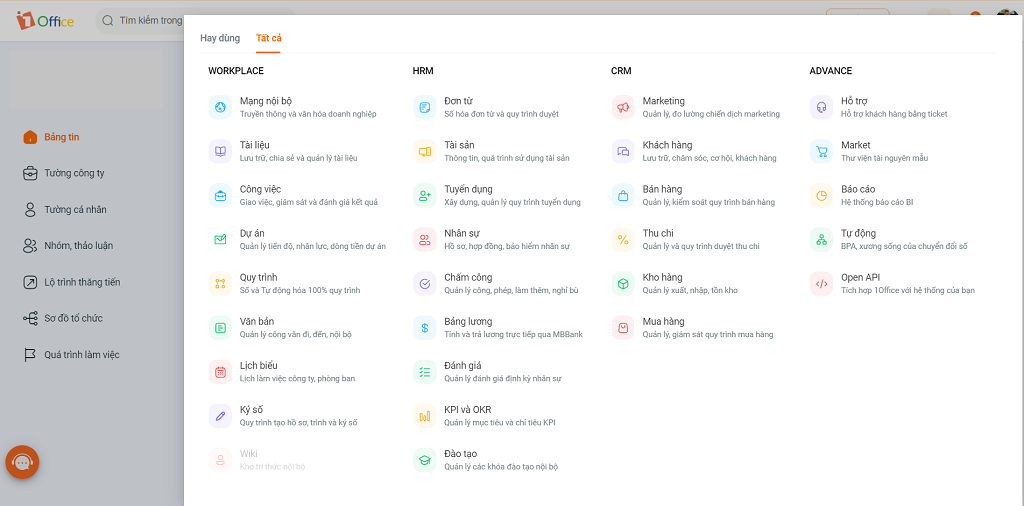
- WORKPLACE Module: Provides tools to support personnel. Includes: internal network, digital signature, tasks, processes, projects, documents, and schedules.
- HRM Module: Provides tools to support human resource management activities. Includes: recruitment, ASK competency assessment, personnel, timekeeping, payroll, KPI management, assets, and requests/forms.
- CRM Module: Provides tools to support marketing, sales, and customer care management activities.
Thus, the article above has summarized the 3 stages of digital transformation as well as related information about digital transformation. We hope this information is useful to our readers. We wish you success!