


10 tips to reduce employee turnover every CEO & HRM should know


Currently, the labor market is facing many risks and challenges from various factors. This creates waves of employee turnover in businesses. When the turnover rate is high, businesses incur significant costs, affecting employee productivity and business results for the period. So, what are the causes of employee turnover, and how can this metric be improved? Let’s find out in the article below.
Mục lục
- 1. What is Employee Turnover?
- 2. Factors Affecting the Employee Turnover Rate
- 3. How to Calculate the Employee Turnover Rate
- 4. Consequences of Uncontrolled Employee Turnover
- 5. Solutions to Reduce Employee Turnover Rate
- 5.1 Standardize Entry-Level Recruitment Criteria
- 5.2 Thoroughly Screen and Select Candidates
- 5.3 Survey Current Employee Satisfaction
- 5.4 Accurately Assess Employee Capabilities
- 5.5 Build and Develop Corporate Culture
- 5.6 Interview Employees Who Intend to Resign
- 5.7 Have a Clear Development Path for Employees
- 5.8 Communication between superiors and subordinates
- 5.9 Competitive compensation and benefits
- 6. Proactively track employee turnover rates with 1Office
- 7. Conclusion
1. What is Employee Turnover?
Employee turnover is the change in personnel within a business over a period of time. This change has negative impacts on the operations and activities within the organization. Employee turnover can result from various factors, including changes in the business environment, company policies, working conditions, employee satisfaction levels, and career development opportunities. Currently, to measure the level of employee turnover, companies often use the employee turnover rate metric.

2. Factors Affecting the Employee Turnover Rate
Prolonged employee turnover can have negative impacts on the operations as well as the activities taking place within the organization. Therefore, managers need to clearly understand the factors affecting the employee turnover rate, including:
- Work Environment: A positive and supportive work environment can minimize the employee turnover rate.
- Salary and Benefits: Competitive salaries and attractive benefits help retain employees.
- Career Development Opportunities: Opportunities for promotion and training can increase employee satisfaction and commitment.
- Relationships with Colleagues and Managers: Good relationships between employees, colleagues, and managers can create a friendly work environment and reduce the resignation rate.
- Job and Fit: The alignment between an employee’s skills and job requirements can affect their satisfaction and decision to stay.
- Company Culture: A positive company culture and strong core values can create employee engagement and loyalty.
- Health and Safety: Safe working conditions and concern for employee health can positively impact the employee turnover rate.
- Organizational and Management Changes: Major changes in organizational structure or management can create instability and affect employees’ decisions.
- External Factors: Economic fluctuations, pandemics, changes in residence, and other objective factors can also affect the employee turnover rate.
3. How to Calculate the Employee Turnover Rate
The employee turnover rate represents the ratio of employees who leave their jobs compared to the average total number of employees in a month, quarter, or year at the organization. Based on this rate, managers can determine the frequency of personnel changes and better understand the labor situation at the company. The formula for calculating the employee turnover rate is as follows:
Employee Turnover Rate = Number of Employees Who Left / Average Number of Employees During the Period
The result obtained after applying the above formula will quite accurately reflect the personnel situation within the organization. According to research by Dr. John Sullivan, a long-time expert in corporate human resource management, managers can evaluate the employee turnover rate based on the standards below:
- Below 3%: Stable workforce; the number of employees leaving is mainly due to objective factors. If it’s due to subjective factors, the company should reconsider its approach.
- From 3 – 5%: The turnover rate is still under control.
- From 5 – 8%: The company is facing personnel issues and needs to take measures to retain talent.
- From 8 – 10%: The company’s human resources are unstable, possibly due to a poor company culture or environment causing employee dissatisfaction.
- Above 10%: The company needs to seriously review its personnel issues and find timely solutions.
4. Consequences of Uncontrolled Employee Turnover
4.1 Impact on Company Brand
A company’s image and brand play a crucial role in its success. Every individual and organization wants to leave a good impression. However, a business with a high employee turnover rate will create a negative impression, especially for customers and potential candidates.
Additionally, a staff shortage can lower the morale of remaining employees, leading to discouragement and a lack of motivation. All these factors can affect business goals as well as the customer experience.
4.2 Increased Costs
Recruiting and training new employees is very costly, including expenses such as advertising, retraining, losses from new employee mistakes, and other potential logistical and equipment costs. According to one survey, up to 56% of businesses spend up to 20 million VND per hire, and 10% of businesses spend around 50 million VND for a recruitment drive.
4.3 Impact on Productivity
When old employees leave too quickly while new ones arrive, it can create a sense of confusion and uncertainty for those who remain. Furthermore, conflicts often arise between old and new employee groups due to unresolved biases from previous issues. When friction exists between both sides, collaboration and achieving common goals become very difficult.

4.4 Impact on Business Results
Today, customers care not only about product quality but also about the company’s brand. When employees leave in large numbers, product consumption can decline. If this situation persists, loyal customers may leave, and finding new ones will become more difficult.
5. Solutions to Reduce Employee Turnover Rate
5.1 Standardize Entry-Level Recruitment Criteria
By establishing clear and appropriate standards for each job position, organizations can select candidates with higher capabilities and a better fit for the job requirements and company culture. This helps minimize the risk of losing employees due to incompatibility and enhances staff stability. Additionally, standardizing recruitment criteria helps increase employee satisfaction and commitment to their work and the organization, thereby reducing their likelihood of leaving and boosting overall work performance.
5.2 Thoroughly Screen and Select Candidates
Screening and assessing work motivation along with cultural fit is extremely important, as it directly affects recruitment effectiveness and the employee turnover rate. Therefore, organizations should measure the turnover rate of new employees to specifically evaluate recruitment quality.

In reality, many new employees leave within the first two months due to a lack of clear motivation, unclear work purposes, or accepting the job as a temporary option while waiting for another opportunity already determined by their family or themselves, or because they do not fully understand the nature and pressure of the job. Therefore, recruiters need to apply testing and interviewing techniques to screen and select suitable and stable candidates.
5.3 Survey Current Employee Satisfaction
To understand employee satisfaction levels and the causes of dissatisfaction, and then take appropriate measures to retain and develop the capabilities of each employee and the entire workforce. As a result, overall management and specific HR policies are reviewed, adjusted, and communicated to employees in a timely manner, ensuring consistent implementation.
5.4 Accurately Assess Employee Capabilities
Recognizing and accurately assessing employee capabilities is not simple; it requires leaders to have skills in understanding and precise evaluation. When you can identify an employee’s strengths and weaknesses, you can assign tasks that match their abilities. This helps prevent employees from feeling pressured or discouraged and reduces the risk of them wanting to leave the organization.
5.5 Build and Develop Corporate Culture
Corporate culture and the work environment are important factors that help employees stay with the organization long-term. When the company organizes internal activities, fosters connection, and maintains a comfortable work environment, employees will feel satisfied, work more effectively, and tend to stay with the business longer.
5.6 Interview Employees Who Intend to Resign

Very few companies conduct thorough exit interviews with departing employees; most only ask for the reason superficially. The HR department should have a brief conversation to thoroughly understand the reasons for departure to develop preventive solutions for similar cases. If the reason for leaving is within the company’s ability to resolve, make an offer to retain them.
5.7 Have a Clear Development Path for Employees
To keep employees more motivated, the company needs to provide them with a clear roadmap for their work and opportunities for advancement. This helps employees understand their current position and what is needed to achieve their personal goals. From there, they can focus their efforts and discover a passion for their work.
5.8 Communication between superiors and subordinates
Communicating with subordinates is a very important factor, but not every manager is proficient at it. When you have good communication skills, you will understand your employees and can find common ground in your work. Only when you truly understand your employees can you effectively convey work direction, helping them trust and stay with you for the long term.
5.9 Competitive compensation and benefits
Salary and compensation and benefits are what everyone cares about when starting a job. Policies such as salary increases, recognition of employee achievements, and a clear reward system help employees become more committed to their work and the organization. Good compensation is also an important factor in enhancing competitiveness in the workplace and attracting talented personnel.
6. Proactively track employee turnover rates with 1Office
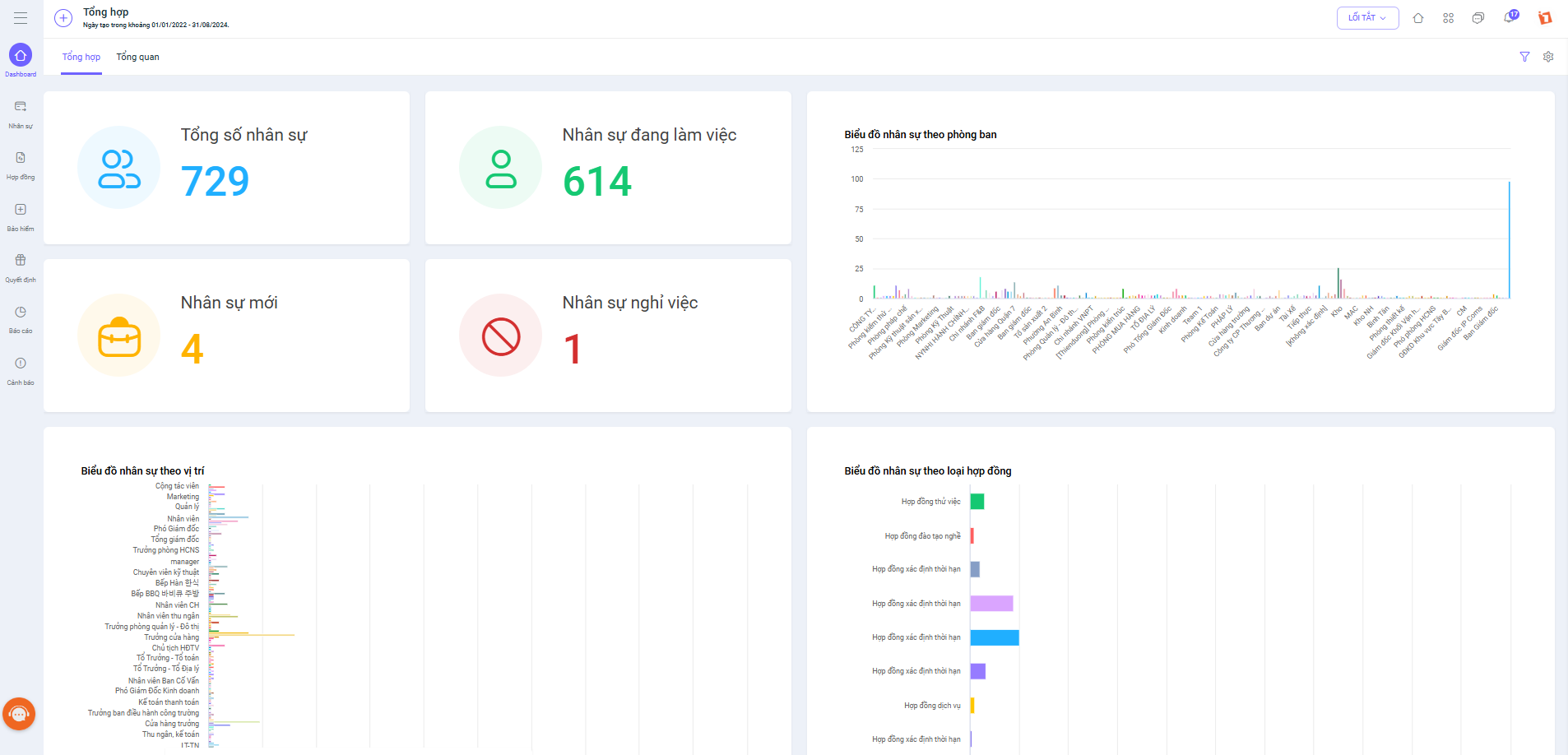
Now, instead of manually using Excel to track employee turnover—a task prone to errors—you can use specialized software in this field. 1HRM is a comprehensive human resource management solution, part of the 1Office business management solution suite, trusted by many businesses with over 100 employees in Vietnam, thanks to the following modern features:
- Track employee turnover trends and analyze reasons for leaving over selected time periods.
- Store employee information, contract records, and scanned documents without manual data entry.
- Leaders can monitor the work progress of each employee, knowing who has received rewards or disciplinary actions.
- Store information on employee transfers between departments and divisions.
- The management board can monitor overview HR reports with visual charts and can customize the information fields in the reports.
7. Conclusion
The above is an overview of employee turnover and solutions to help businesses minimize employee departures. High employee turnover can seriously affect an organization’s development; therefore, HR managers and business leaders need to focus on and implement timely measures to mitigate this situation.




