13/05/2026
  404 views
For a business to grow, its leaders must know how to use human resources effectively. Therefore, the organization must have talented human resource managers to assist them. In this article, let’s learn about what an HR department is and how to build an HR department for SME business models.
Mục lục
I. What is an HR department?
The HR department (Human Resources department) is the human resources administration division of a business, established with tasks such as: ensuring the organization’s employees are managed, and creating policies and regulations to protect workers’ rights. Additionally, this department is also responsible for recruiting, dismissing, and enforcing policies and regulations for staff members.
II. The main functions of an HR department
1. Recruitment and training
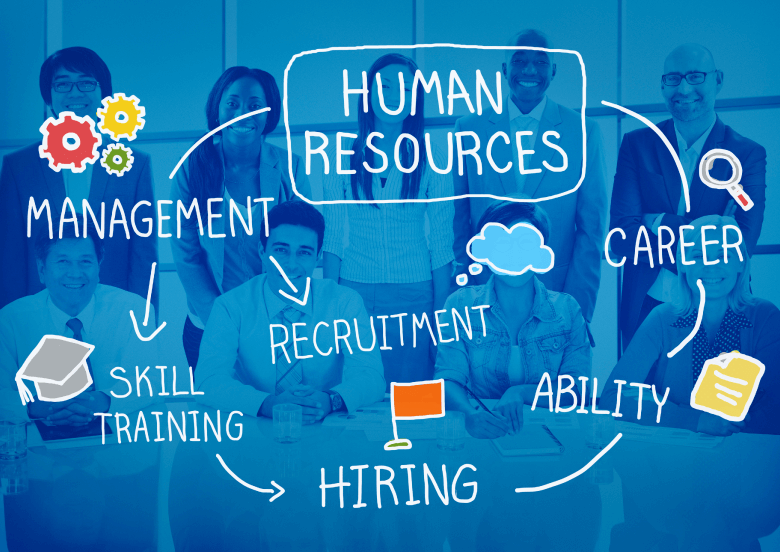
Recruitment and training are among the main tasks that HR must handle. This job often requires HR staff to post job advertisements on social channels, professional recruitment platforms, and more. In addition, training new employees is also a key responsibility for an HR professional. The HR department often publishes training materials, including handbooks that detail all aspects of the job.
| Read more: Optimal HR management process for businesses |
2. Storing employee records
Each employee will have their own personnel file, resume, etc. Therefore, the human resources department is responsible for storing and managing this data, both in paper and online formats.
3. Implementing internal communications
Internal communication is the method that helps strengthen relationships between employees and between employees and leadership. When disputes or misunderstandings arise between employees or between employees and managers, HR officers act as mediators. Employees are encouraged to bring relevant issues to the attention of the HR department for resolution.
4. Planning for employee performance improvement
To maximize employee productivity, training is often conducted regularly or when the company’s products are improved. The HR department can conduct on-the-job training or hire training experts to enhance the awareness of employees and managers.
5. Updating and changing company policies
The business market changes over time, and the policies that a company sets for all resources in its operational processes must also constantly change and be updated. The HR department is responsible for introducing new updates when old policies are no longer optimal in the current context and disseminating them to employees and specific departments.
Sometimes a policy should be updated in response to an event. HR must always be involved and consulted on these decisions.
See more: HRM Software & the role and importance of HRM in business
III. Building an effective HR department for your business
According to statistics up to the end of 2021, Vietnam has about 870,000 active enterprises, with over 97% being SMEs (Small and Medium-sized Enterprises). A small enterprise will have from 20 to under 100 employees, while a medium-sized enterprise will have from 200 to 300.
With the demands of the current business environment, effective human resource management is considered a critical factor that every organization must prioritize. Therefore, businesses in general, especially small and medium-sized enterprises, are always looking for solutions to build an effective HR department. Below are the important factors in the process of building a human resource management department within a business:
1. Benefits of an HR department for a business
- Helps SMEs with long-term human resource planning:
Currently, businesses determine personnel surpluses or shortages based only on the workload defined by each department, not on future changes in science, technology, or product/service demand.
- Building a systematic employee training process:
Small and medium-sized enterprises often have a situation where earlier employees guide and pass on their experience to newcomers. Few businesses pay attention to and build systematic job descriptions and instructions for new employees. Therefore, having an HR department will help the organization establish a formal training process, making it easier for new employees to integrate and understand the products better.

- Supporting employee evaluation:
Annually, businesses conduct employee performance reviews to consider salary increases, terminations, etc. Therefore, HR will provide some international standard competency assessment models to help leadership get a specific and accurate view of each individual’s capabilities. Some competency assessment models include: ASK, etc.
- Creating a competitive advantage:
HRM helps you build a strong human resource base for business growth. The HR department helps the CEO find personnel who fit the company’s operating model and retain them through policies and benefits.
Read more: What is an HRBP? Detailed HRBP job description in a business
2. What to focus on when building a human resource management department
- Set clear strategic goals:
The HR department will help the company build a strong workforce to align with the organization’s development plan. Therefore, the organization needs to have a vision and a specific mission statement to serve as the backbone for its goals, and specific recruitment and training plans for the business.
- Develop and support company values:
As the department that works primarily with employees, all feedback for the company will be processed and received through HR. Gathering employee opinions is easier in an SME. This can help employees stay with the organization longer.
- Build a performance management process:
Performance management helps provide employees and managers with a clear understanding of what they have achieved and what they need to continue striving for.
- Invest in Training and Development:
Small and medium-sized enterprises (SMEs) often have limited capacity to invest in T&D due to a lack of resources and financial constraints. However, in smaller organizations, especially startups, employees may take on roles, particularly management positions, without prior training.
| Read now: Building an HR strategy map – A tool to optimize the human resource management process |
3. How to effectively manage human resources in a business
Managing personnel is always a challenge for HR. A business cannot grow without policies and regulations to manage its human resources. In this section, we will explore the HR management models you need to know to apply them effectively to your business.
| Read more: 5 Effective Human Resource Management Models Every HR Professional Needs to Know |
Building a human resource management system is extremely important. Have you ever thought about applying technology to human resource management?
IV. Digitize the human resource management process with the 1Office solution
With the 1Office HRM feature, managers will receive the following benefits:
- Smart recruitment process, with automated progress reports for recruitment campaigns.
- Store labor contracts and personnel contracts on the system without having to manage them on paper.
- Automated timekeeping and payroll system; Payroll formulas are specifically built for each business.
- Reports on employee performance evaluation.
Thus, the article above has introduced users to what an HR department is, as well as the steps for effective human resource planning for businesses. It also presents a human resource management solution with 1Office software, helping managers save time and effort to steer an effective recruitment plan. We hope this article provides you with useful knowledge to implement and build a long-term, sustainable human resource strategy for your business.
For more details, please contact us via:
- Hotline: 083 483 8888
- Fanpage 1Office: https://www.facebook.com/1officevn
- Youtube: https://www.youtube.com/c/1OfficeNềntảngquảnlýtổngthểDoanhNghiệp