


 13/05/2026
  3553 views
We are living in the era of the internet boom, where information is transmitted without limits at any time, anywhere. “Cloud computing” is a phrase that has been mentioned quite a lot in recent years because it is perhaps the most powerful hallmark of the 4.0 technology era. So, what is “cloud computing” and what benefits does it bring to businesses? Let’s find out with 1Office in the following article!
Mục lục
I. What is cloud computing?
Cloud computing (Cloud Computing) is a computing model that uses computer technologies and is developed based on the Internet. The term “cloud” here is a metaphor for the Internet (based on its layout in computer network diagrams) and an allusion to the complexity of the infrastructure it contains.
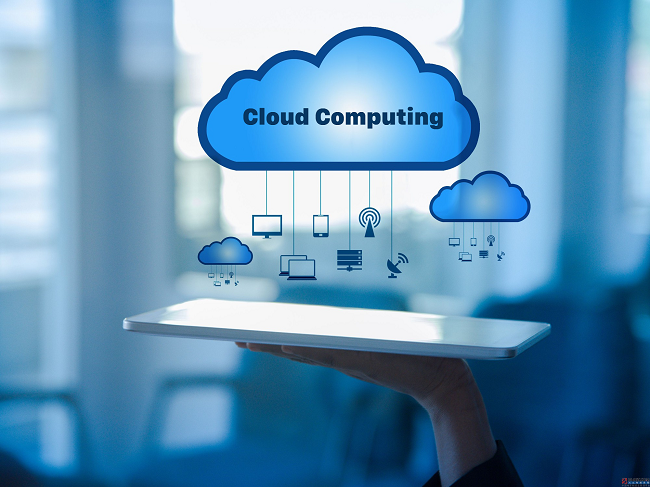
“Cloud computing” is perhaps the most powerful hallmark of the 4.0 technology era
In recent years, this technology has created a revolution in the computer industry, fundamentally changing the way resources are used, operational structures, as well as the storage, distribution, and processing of information. Most of us have been and are using one or more services that apply cloud computing technology in our daily lives as well as in business management.
In this model, all information technology-related capabilities are provided as “services,” allowing users to access technology services from a provider “in the cloud” without needing knowledge or experience with that technology, nor do they need to be concerned with the infrastructure that supports it.
See more: Digital transformation trends in businesses for 2020-2021
II. The benefits that cloud computing brings to businesses
1. Cost optimization
Initially, many businesses were concerned about the cost of using a cloud-based server. However, with this technology, businesses can minimize or completely eliminate initial capital investment because there is no need for an on-premise data center (no installation of servers, hardware, software, equipment depreciation, etc.).

Businesses can save a lot of costs by using cloud computing
If you are worried about paying for features you don’t use, most cloud computing services charge based on what the business uses, meaning you pay for what you use. In addition, system installation and administration will become easier, making your seemingly difficult and daunting IT projects more user-friendly than ever.
See more: Digital transformation stories from major brands around the world
2. Cloud computing offers high flexibility
The cloud provides businesses with greater flexibility compared to storing on a local server. You can scale these resources up or down instantly to increase and decrease capacity as your business needs change. If you need more bandwidth, a cloud-based service can meet that demand immediately instead of going through a complex (and expensive) update to your IT infrastructure.
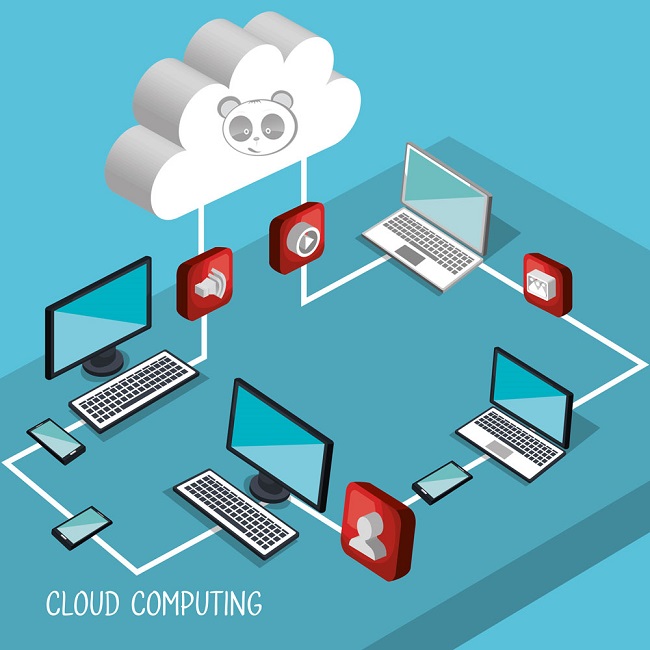
Cloud computing technology is highly flexible
65% of respondents in an InformationWeek survey said that the ability to quickly meet business needs is one of the most important reasons for businesses to move to a cloud environment.
3. Adaptability
Cloud computing can adapt to any change, such as an increase in the number of website users, freely switching from a hybrid to a private network, or temporarily expanding capacity, very easily without any additional costs.
For example: Your business can choose to increase website user support from 2,000 to 10,000 people a day during an upcoming promotion without worrying about the cost.
4. Data security
Imagine what would happen if you lost your personal laptop with a lot of important data inside? Cloud computing will help solve the above problem safely.

Users won’t have to worry about data theft when using cloud computing
With this technology, all your files are stored digitally in the cloud computing infrastructure, so there will be no more lost data or hardware failures. You can even erase data remotely to prevent your assets from falling into the wrong hands.
5. Mobility
Cloud computing allows access to company data via phones and smart devices. Users can access their accounts on the go, 24/7, through any device, anywhere in the world, as long as they are connected to the internet.
This is very convenient for employees who are far from the company, on leave, or on business trips and cannot be present. Therefore, it is not surprising that organizations that value employee satisfaction will always consider expanding their use of the cloud.
See more: 14 golden principles in business administration by Henri Fayol
6. Sustainability
True sustainability requires solutions that address waste at every level of a business. Using cloud computing is more environmentally friendly and results in a smaller carbon footprint.
By purchasing servers and other equipment designed to minimize energy use, cloud service providers reduce idle energy costs and maximize their utilization through flexible allocation of computing resources.

Cloud computing contributes to environmental protection and sustainable development
Cloud infrastructure supports environmental proactivity, powering virtual services instead of physical products and hardware, cutting paper waste, improving energy efficiency, and (by allowing employees to access from anywhere with an internet connection) reducing travel-related emissions.
Cloud computing promises not only to save costs at the organizational and business level but also to contribute to the larger societal goals of energy efficiency, environmental protection, and sustainable development.
See more: Digital Transformation in B2B Commerce: A “Lifesaver” for Businesses
7. Automatic Software Updates
The advantage of cloud computing is that the server is located outside the company’s infrastructure, in a secure location, giving the business peace of mind. Cloud-based applications automatically refresh and update themselves, instead of forcing the IT department to perform manual, organization-wide updates. This saves time, money, and resource effort.
According to PCWorld statistics, 50% of cloud adopters do not need as many internal IT resources.
III. The Secret to Successful Digital Transformation for Vietnamese Businesses
The 4th Industrial Revolution has been strongly impacting the globe, forcing governments and businesses worldwide to face major challenges and requiring changes to adapt to technological and scientific advancements.
In response to this trend, the Vietnamese government is also gradually applying it to management and building an e-government, with policies and laws being amended to create a legal system suitable for current trends.
In addition, the Vietnamese government also encourages industries and businesses to apply digital transformation in all fields, such as: business digital transformation, digital transformation in banking, digital transformation in education, in communications, etc.
1Office – The All-in-One Business Management Solution
Understanding the difficulties businesses face during the digital transformation era, 1Office provides an all-in-one business management solution with a suite of digital tools to help businesses improve work efficiency, manage projects and campaigns, thereby saving time, costs, and other resources.
With the Workplace tool suite, departments can easily search and filter information. Managers can easily access and track project progress without needing to be physically present. Digitizing all images and data helps businesses easily reach and attract potential customers.
In addition, the HRM tool suite can solve all human resource management problems by quickly digitizing all data. The process of nurturing, classifying, and screening candidate profiles during recruitment is also carried out in detail with a clear and transparent process.
This helps managers clearly grasp the personnel situation, then gain a comprehensive view of human resource fluctuations to address them promptly.
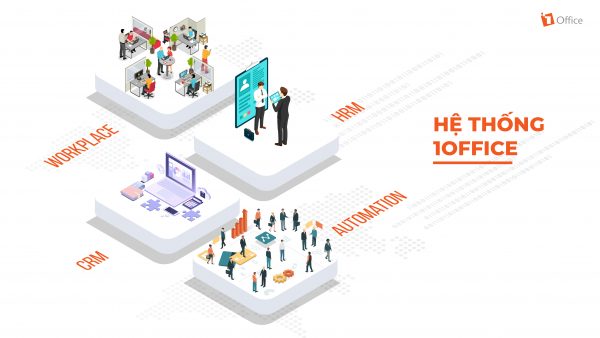
1Office offers high security, helping businesses store data centrally on one software thanks to cloud computing technology
Furthermore, the data security feature is also enhanced, minimizing the risk of external information leakage and preventing malicious actors from exploiting it, which could harm the company’s reputation.
Anyone in the company can easily use the 1Office software. With simple and easy-to-understand operations, managers and employees can interact with each other, freely discuss and share everything through the internal network, helping to save time and improve work efficiency.
In addition, 1Office has been selected by the Ministry of Information and Communications as a pioneering platform in the national digital transformation program, offering a solution that brings sustainable efficiency to businesses.
If you are facing difficulties in your digital transformation process, please register for a trial to receive a consultation. 1Office will help you resolve these challenges quickly!
See more:
What is Digital Transformation: The Future Step for Businesses
The Import-Export Industry in the “Storm” of Digital Transformation
The Current State of Digital Transformation in Businesses Today
















